
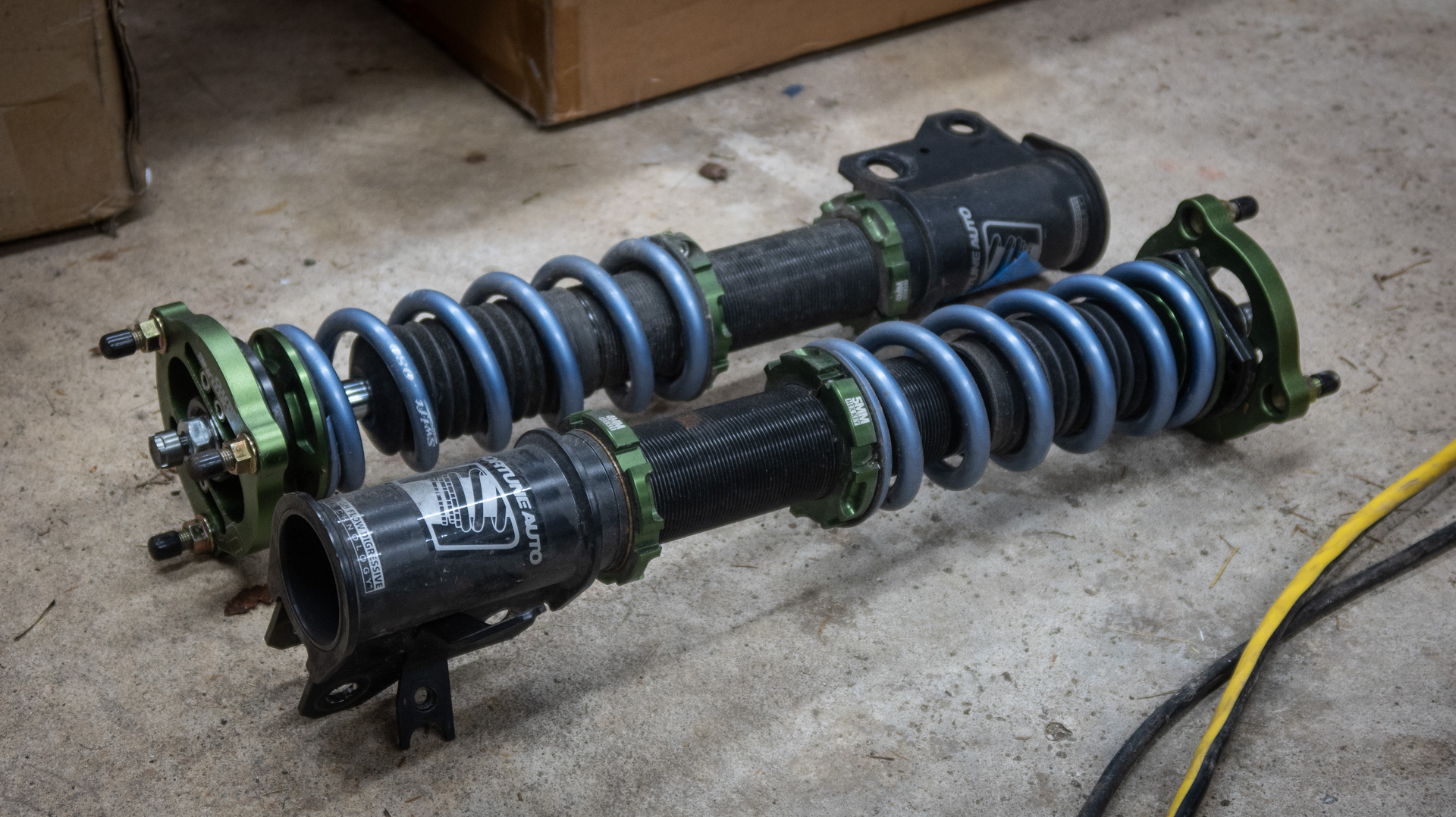
“I need new shocks. What should I get?” This is a prompt you’ll see almost every day in car forums and Facebook groups. Inevitably, somebody will reply, “Just get coilovers.” That is bad advice. Coilovers can be great, and the Fortune Auto 500s I ran on my Honda Civic Si were excellent. But even the best coilovers are a big commitment, radically altering the personality of the car they’re bolted to. Having now run three distinctly different styles of suspension on my Civic, I’ve got a good dose of insight for anyone looking to change their shocks, struts, and springs.
Fortune Auto—High-Tier Rebuildable Coilovers, Made in America
I met one of Fortune Auto’s reps at a SEMA show years ago, which led to the company sending me a set of its 500 Series coilovers with Swift springs to test and talk about. We wrote about the fundamental differences between coilovers and standard shock/strut/spring suspension last year, and got into configuring alignment settings, too.
Now that I’ve put a few thousand road miles on them and run them in several different racing events, I can finally do a proper review, and here’s the TL;DR version: At their best, they’re fantastic. At their worst, they’re tolerable. Ultimately, I recommend them, but only to drivers willing to tilt the “performance/comfort” balance of their car significantly deeper into the side of stiffness. And more importantly, they should really only be run by people willing to test, tweak, and adjust their cars after the initial installation. Even these expensive coilovers, on their softest setting, felt considerably more aggressive than a decent-quality set of shocks, struts, and springs … as they should! But not everyone realizes this when they’re clicking “add to cart.”
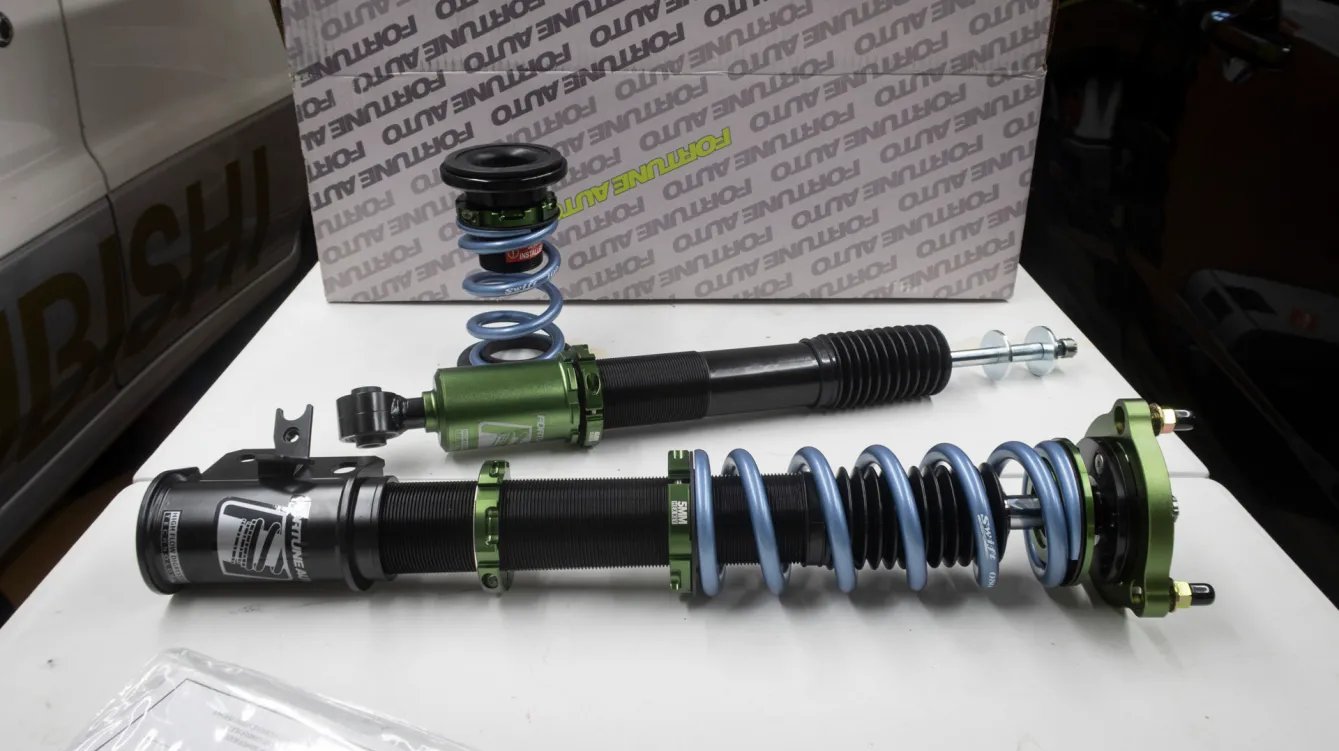
I had three main takeaways from running Fortune Auto 500s in autocross, hillclimb, ice racing, loads of northeastern backroads, NYC streets, and many long highway trips over 16-plus months. One, FA makes a beautiful product and has spectacular customer support. Two, the 500 Series coilovers improve vehicle responsiveness in aggressive driving enough to be worth their price, without a doubt. But the third, and potentially most important note I have, is that you need to be realistic about where you drive and what the rest of your vehicle’s setup is before switching from shocks to coils. Stiffer is not always better, and in fact, it’s not always necessarily faster.
A car on coilovers can become unsettled on rough terrain more easily than you might expect, compared to one running standard shocks and springs. That’s why I keep saying “when they’re good, they’re great,” not just that they’re perfect all the time.
On a few super-smooth sections of road near my house, the car felt like a fighter jet at an aggressive clip. But on some beat-up mountain roads I raced on, it seemed like there wasn’t enough suspension travel to properly absorb the energy from road imperfections. You’d feel vibrations more acutely. As a result, I felt I could have carried more speed more comfortably with regular old shocks and struts in certain (rough) driving situations.
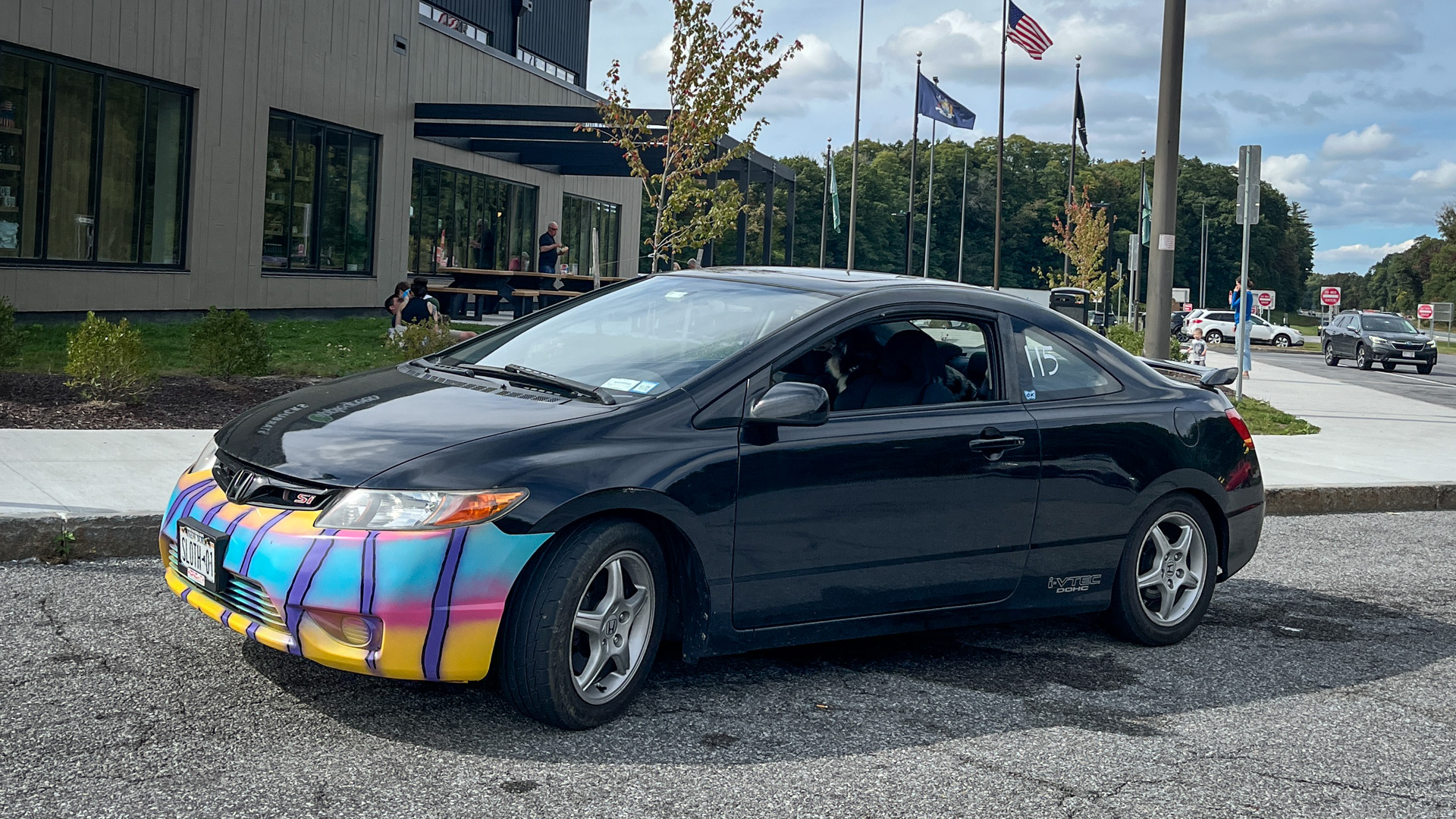
FA offers a huge range of suspension products—the 500 Series is the softest and effectively the most street-friendly, though my contact at the company said “we (the FA staff) all run (stiffer) 510s on the street.” Fortune Auto is based in Virginia; I guess they must have glassier roads than I do, because I would absolutely not want to go any stiffer where I drive in rural NY.
Fortune Auto Build Quality and Support
I’ve handled quite a few aftermarket parts in my ten-plus years covering cars (and far longer modding them). The Fortune Auto 500 coilovers are pretty, but more importantly, very well-made and robust. The images you’re seeing are after they spent over a year under my Civic, including winter driving. One rubber spring isolator for the rear got cracked, but this would have no impact on performance. And otherwise, all my Fortune Auto equipment still looked great.
During my installation and after some early test-driving runs, I had a few phone calls with Fortune Auto’s support team (as a customer, not identifying myself as actively reviewing the company’s product), and each time, I got in-depth answers to my questions and plenty of patience. Simply put, the company’s people were great to deal with.
You’ll have to wait a bit for FA suspension parts, because they’re made to order. But the company takes its craft seriously and is happy to get on the horn to help people get the most from these products.
500 Series Coilovers vs. Good Shocks and Springs
The FA 500s, even at a tall ride height (they can drop the car between one and almost three inches), with a soft spring rate and rebound set softly, were far less forgiving on imperfect roads. With 24 rebound adjustment notches and a wide range of height settings, there’s a lot you can do to fine-tune the ride. But make no mistake, bumpy roads can create a pogo-stick experience that gets old if you’re not really into high-performance driving.
Scroll through these images to see how the coilovers looked when I pulled them, after a casual car wash, and about 16 months of Northeastern driving before that.
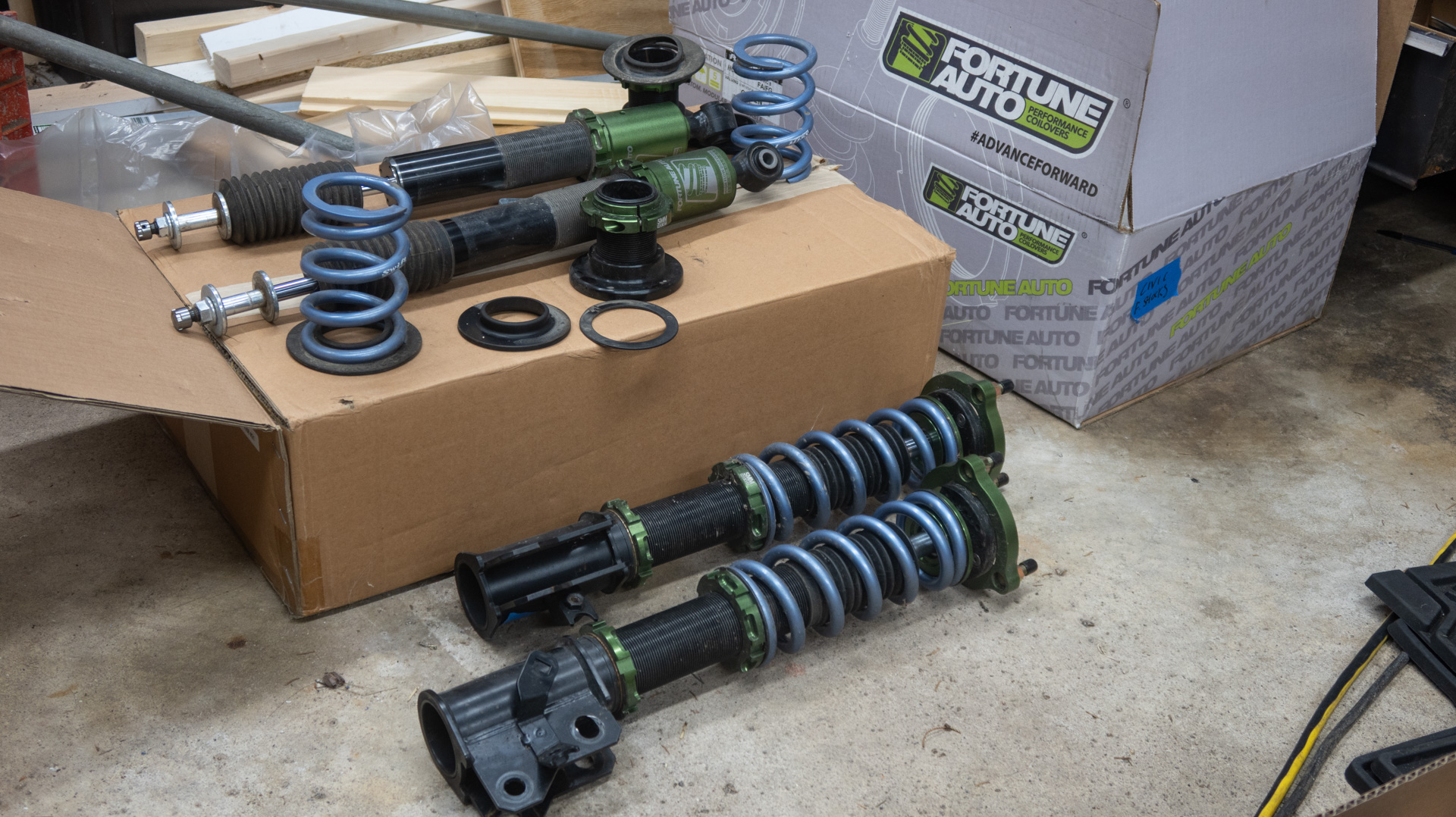
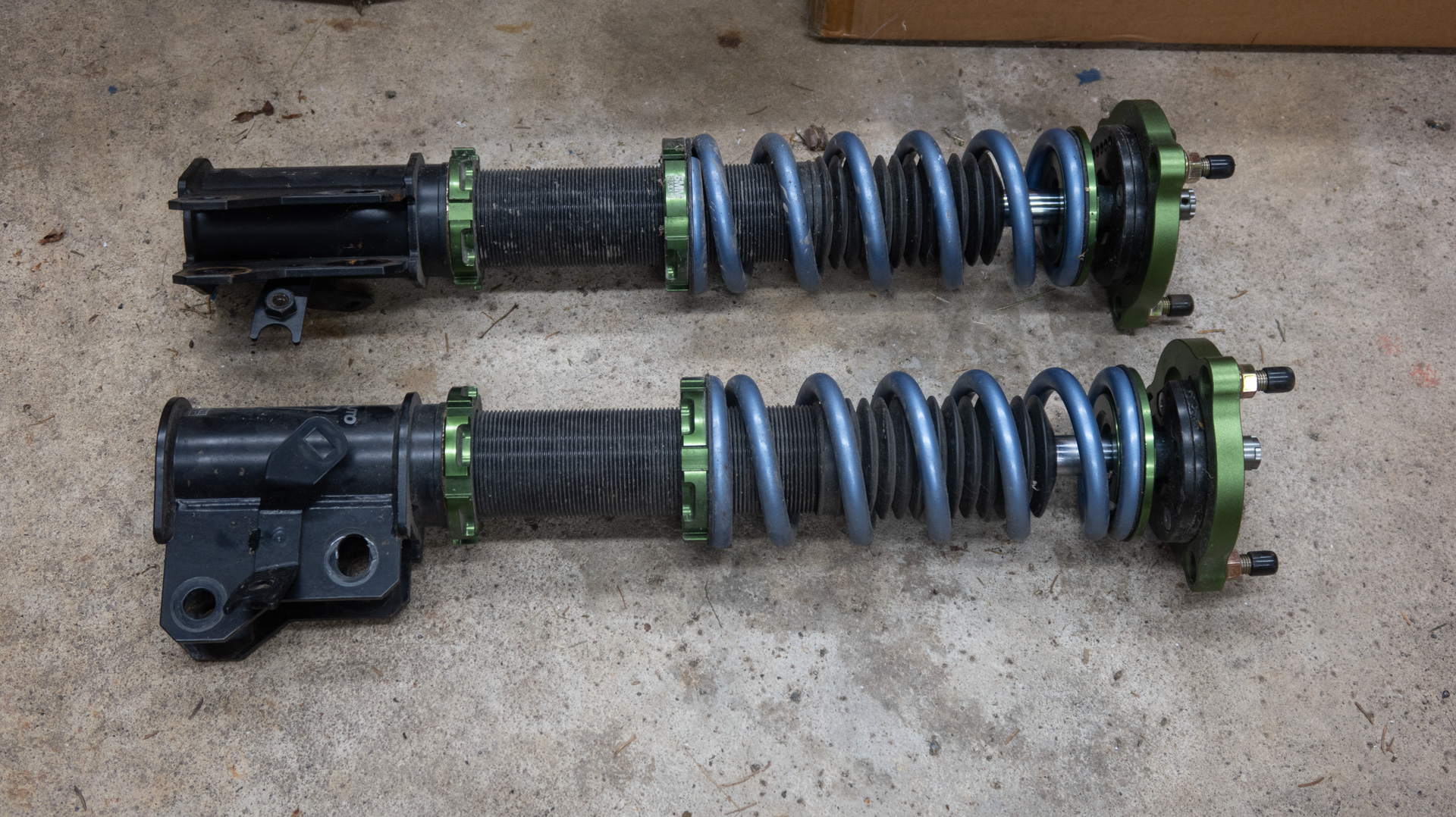
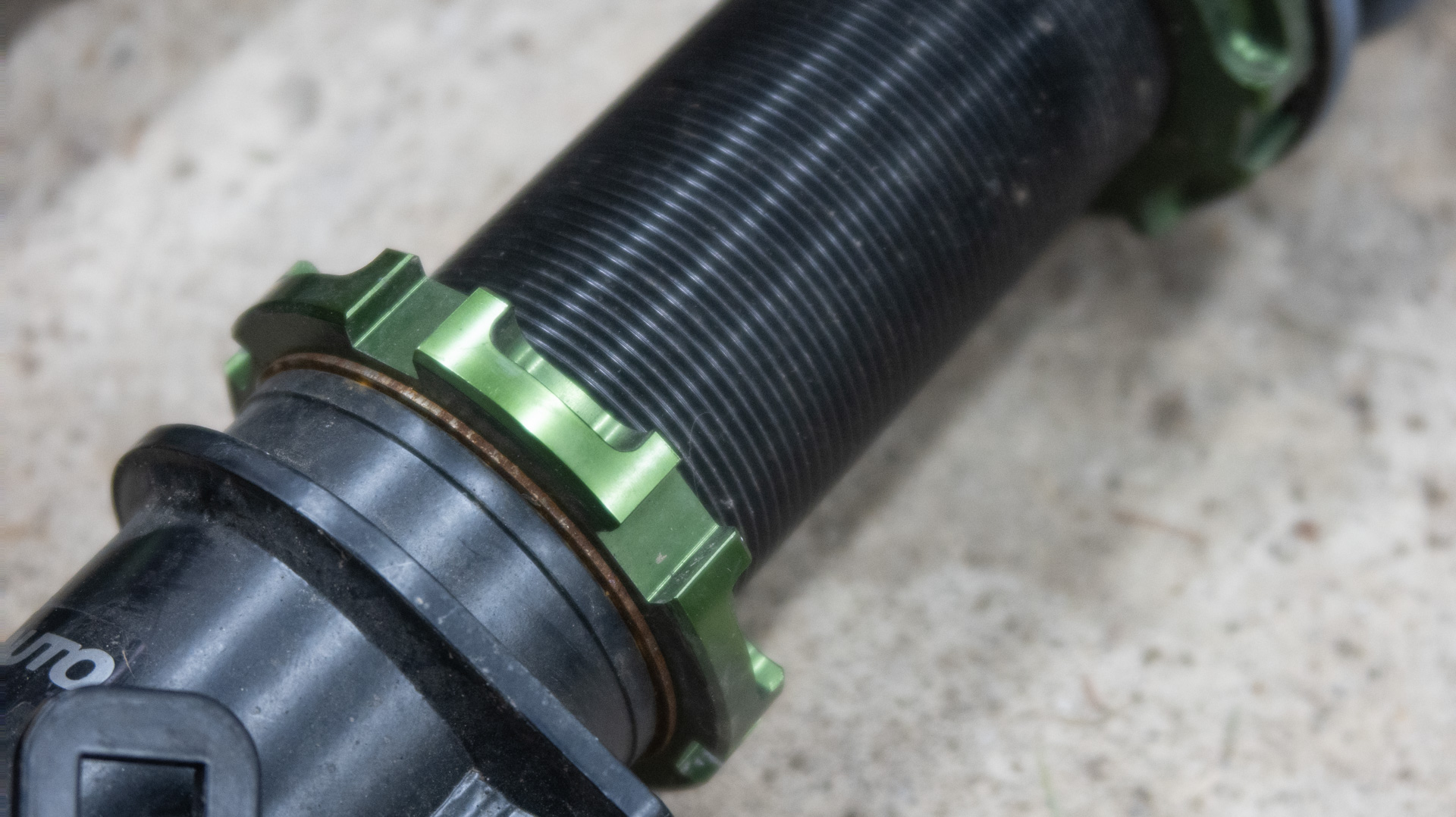
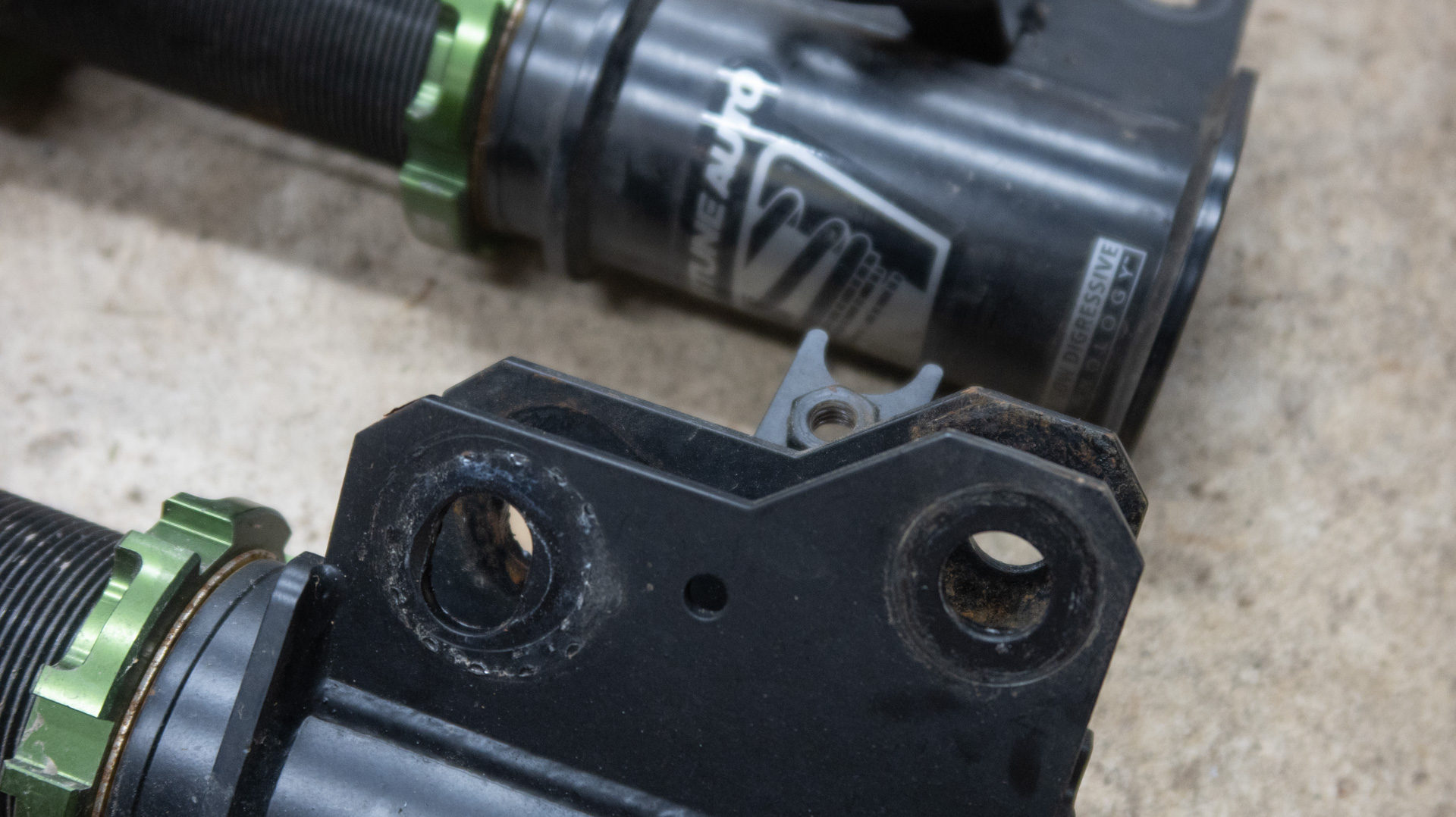
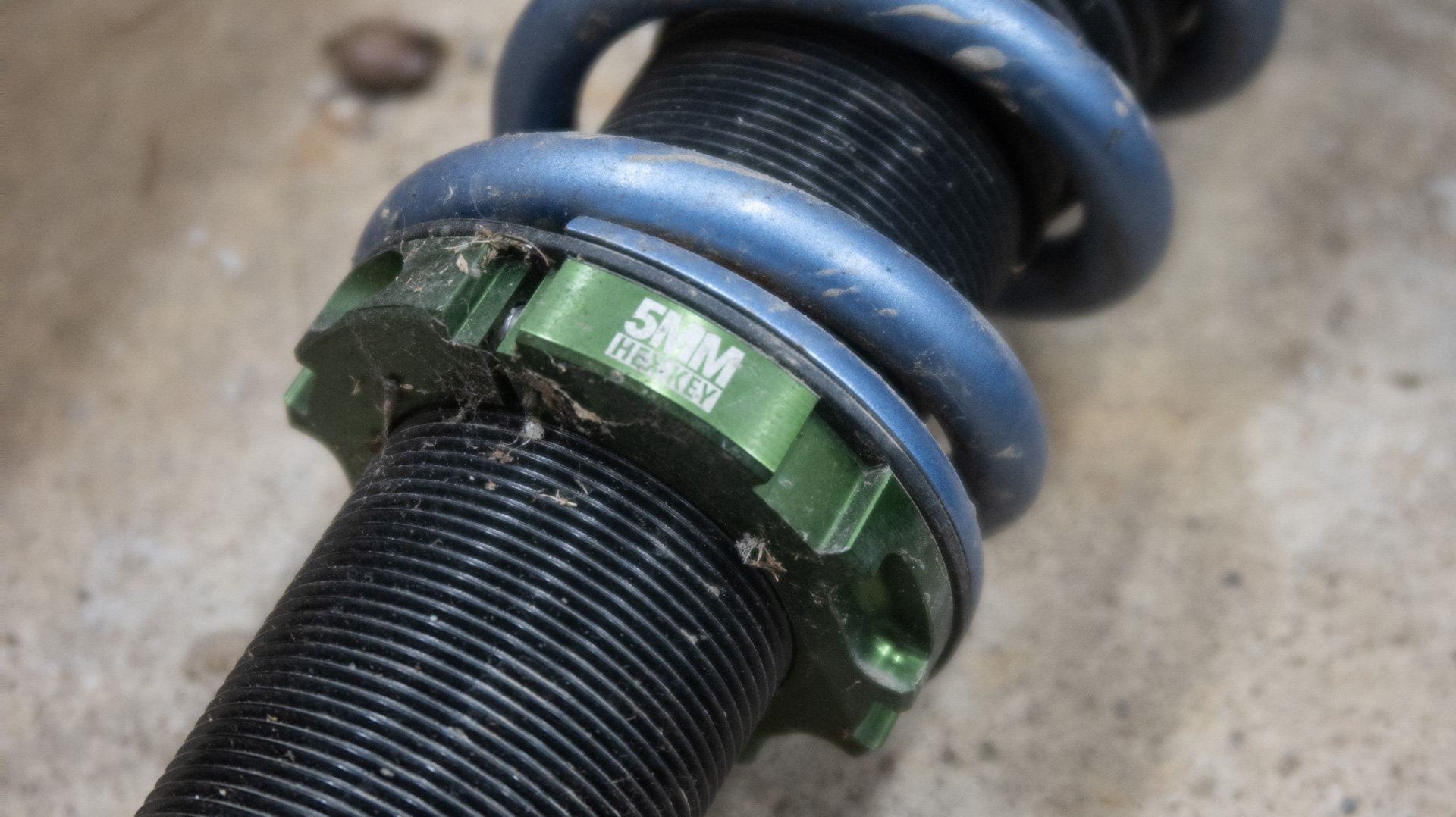
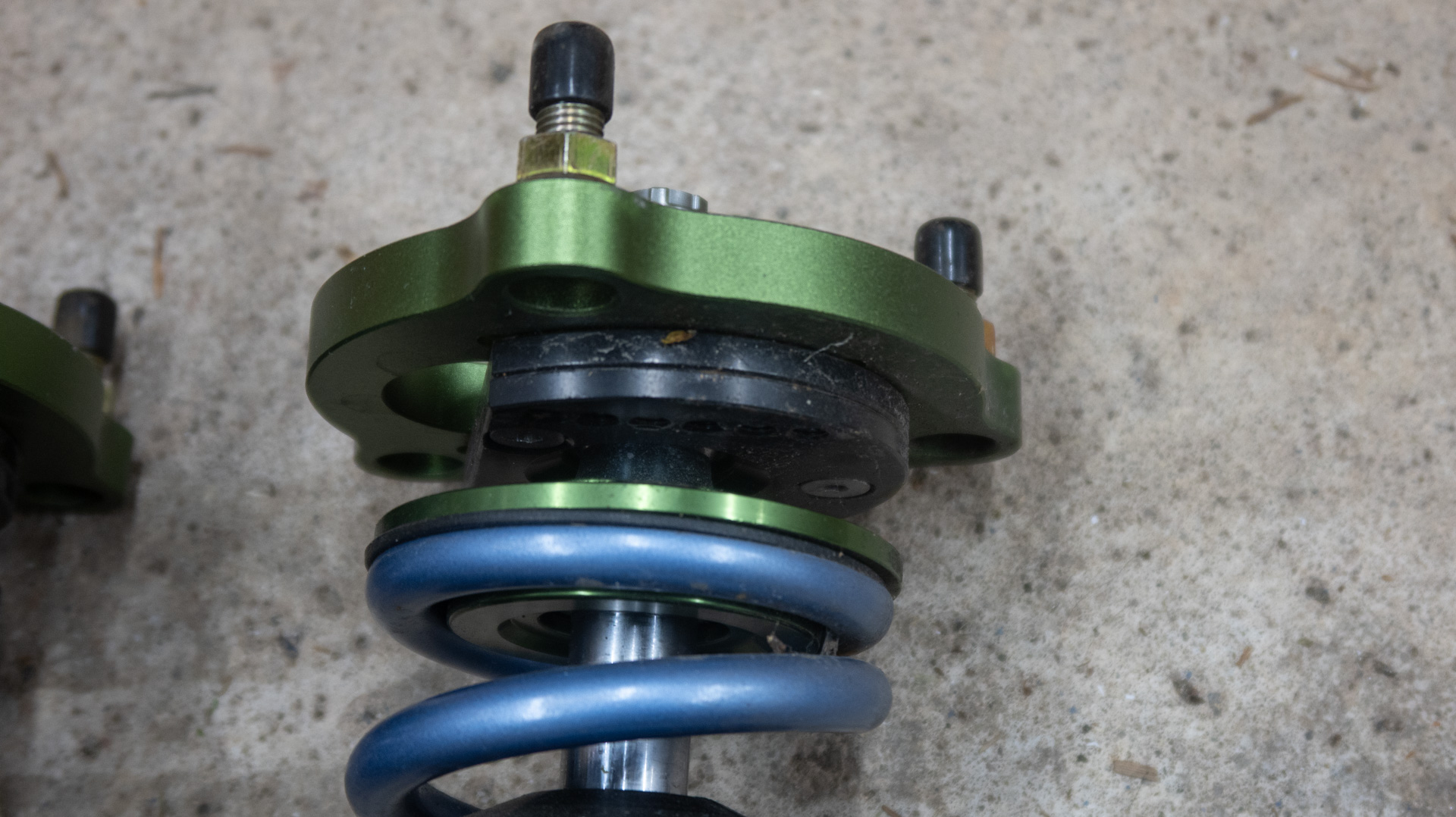
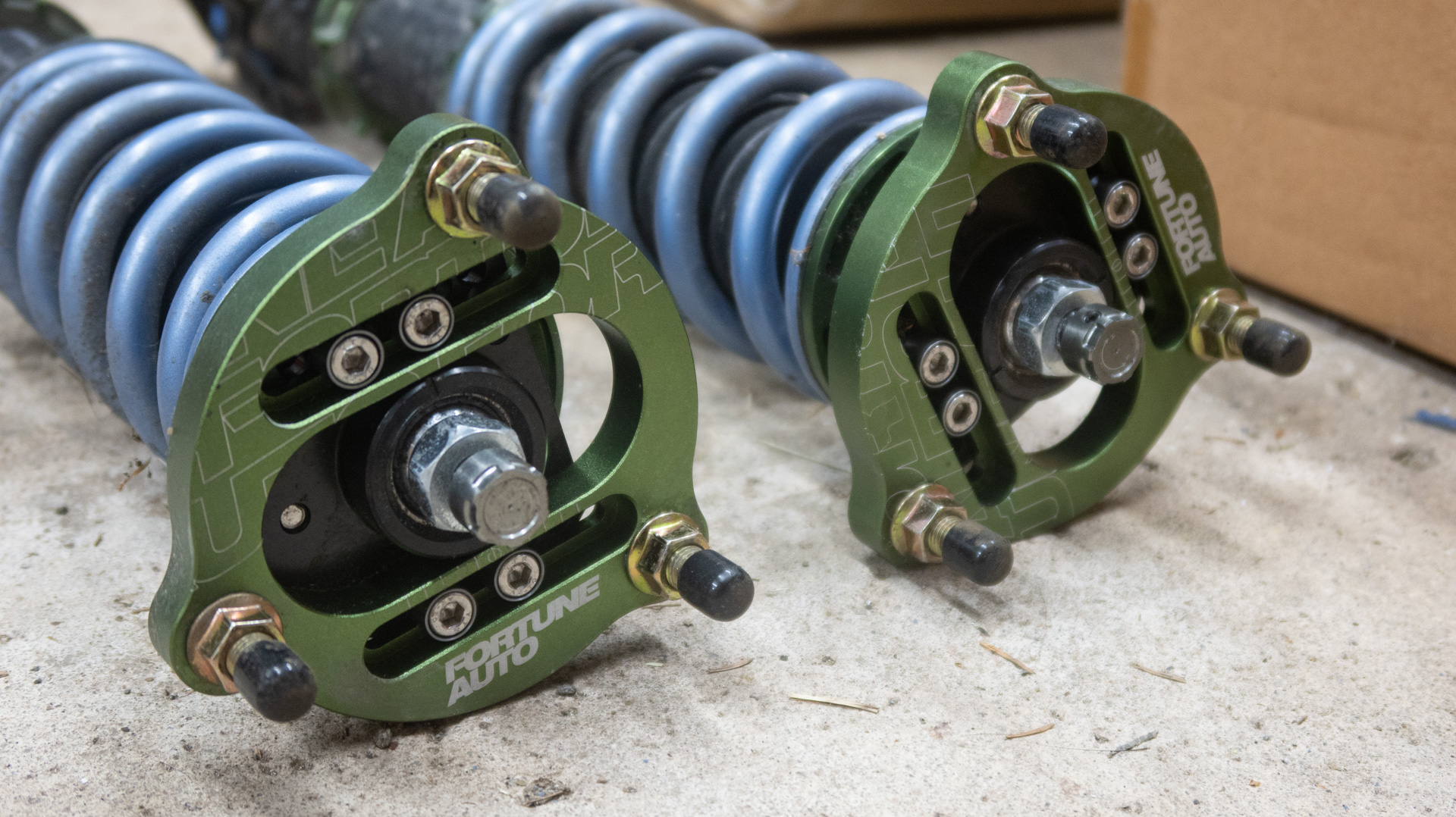
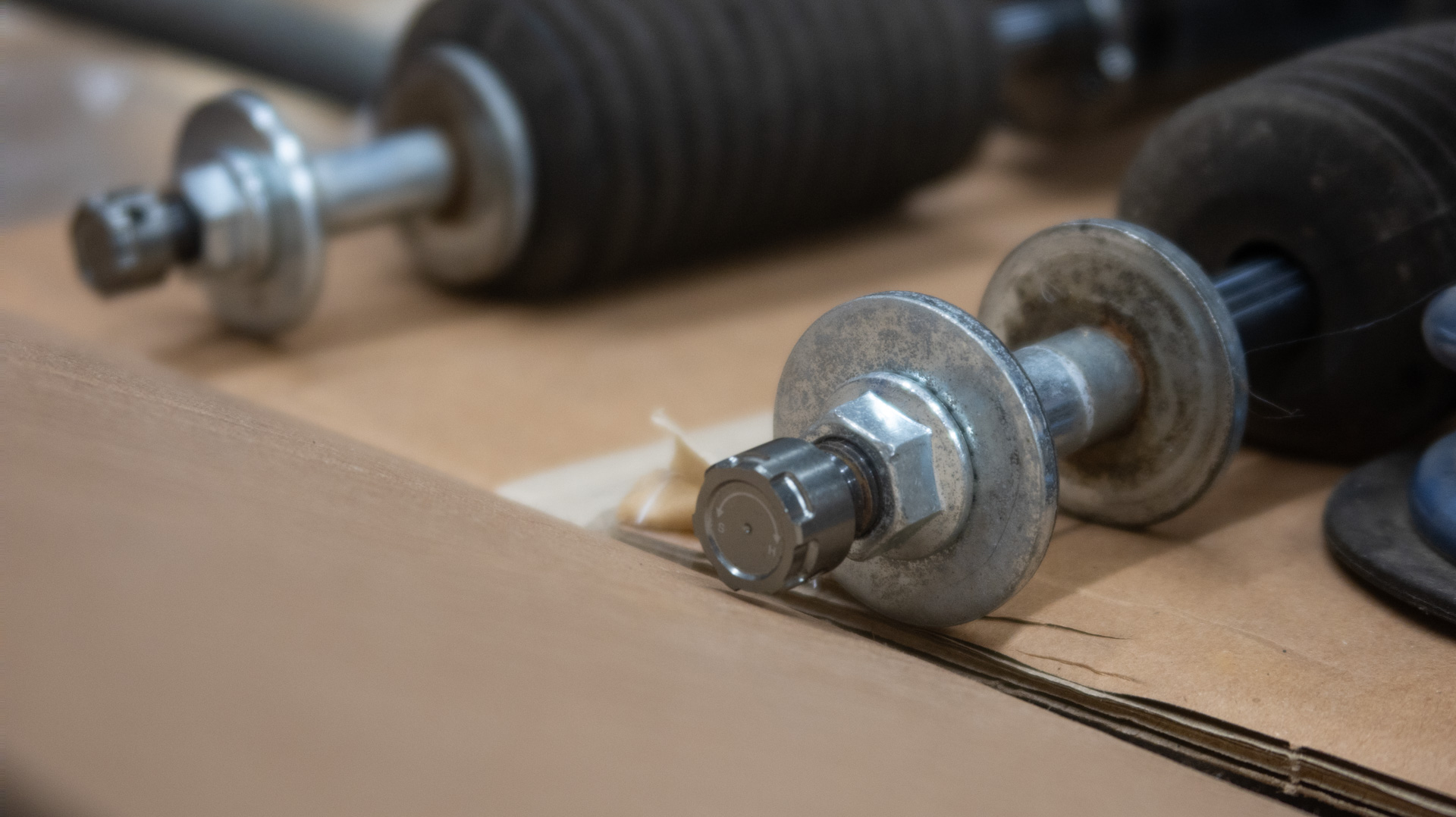
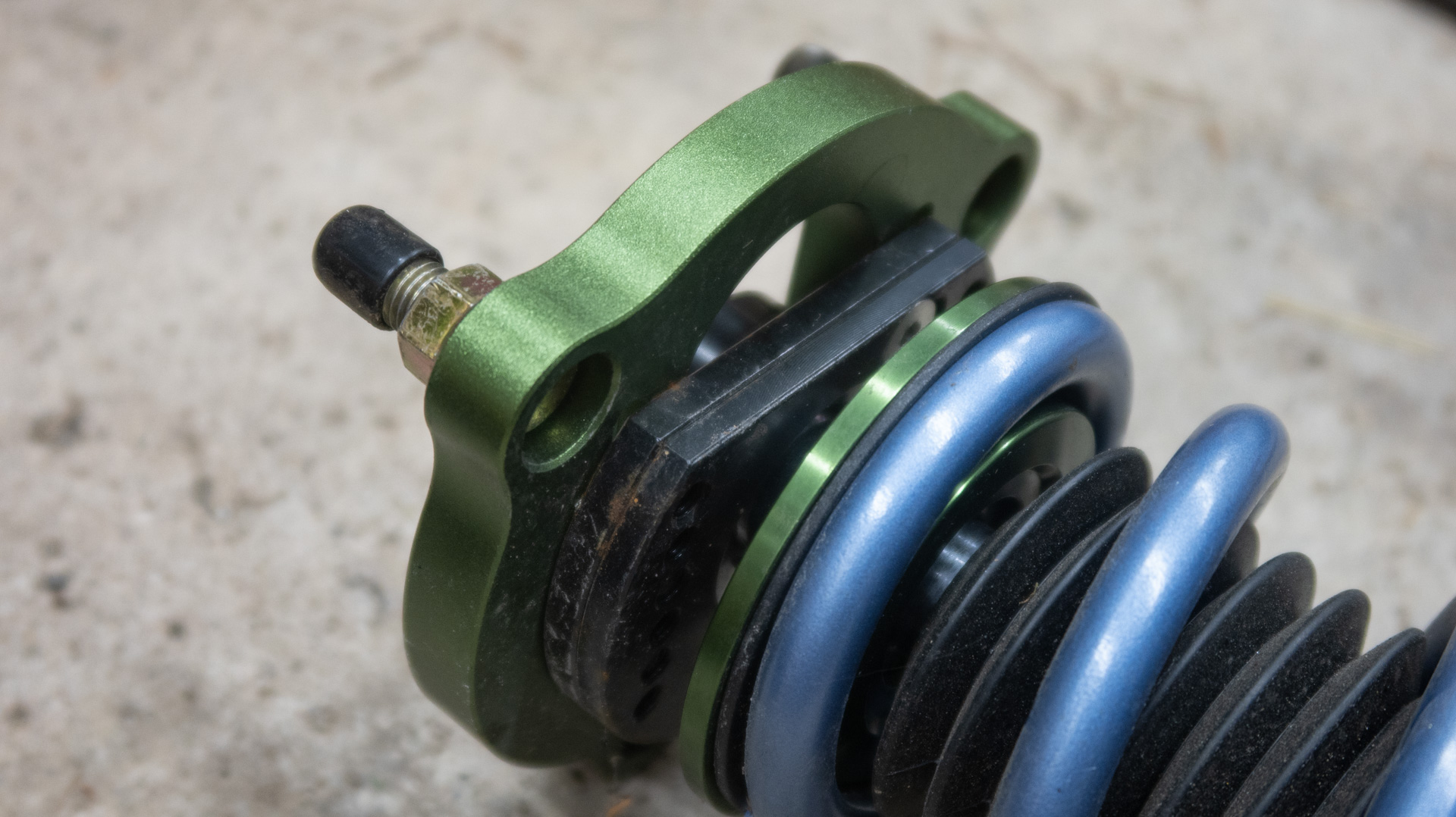
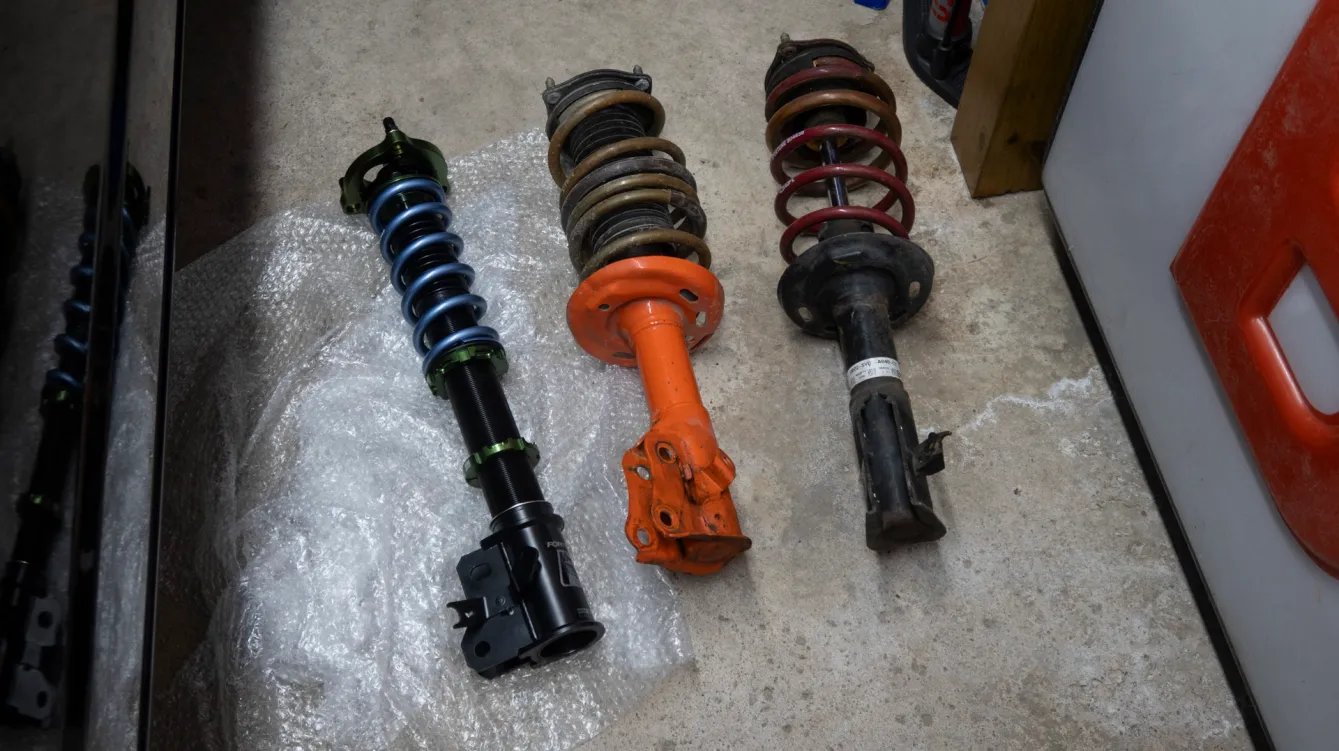
I went from a set of Koni STR.T shocks and struts paired with Tein High.Tech springs to my Fortune Auto 500 coilovers with upgraded Swift springs. The spring rate, recommended by FA’s people during initial consultation (they’ll help you pick specs when you tell them what kind of driving you’ll do), was 8K/10K, with 127mm front stroke and an 8-inch spring.
I picked the Koni/Tein combo years ago because research indicated it’d be the softest, slightly, performance-bias OEM+ setup I could configure. It only lowered the car by just over half an inch, effectively preserving the factory ride quality over rough roads while letting me initiate turns a little more aggressively without as easily invoking understeer or getting too much body roll. Absolutely anyone could handle that setup.
On the right backroads, I loved how planted the car felt with these. Considering how stiff and responsive they felt on clean surfaces, they contended with road bumps well. But it still felt a lot rougher than my spring and shock setup.
I do understand those who are willing to absorb the rougher ride over chipped asphalt in exchange for how crisply the car corners when conditions are right. With good tires and Fortune Auto 500s, I was able to rip around autocross cones like they had their own gravitational pull. Transitioning between lefts and rights was wonderfully seamless; with minimal body roll, I could cut through slaloms far more quickly than I could with the previous setup.

My Civic wasn’t powerful enough to really benefit from increased grip at a launch, but the confidence and consistency these coilovers delivered made high-performance driving very rewarding.
Ultimately, I swapped the car’s $2,500 Fortune Auto coilovers back to its previous $1,000 Koni/Tein setup. Because while the coilovers felt incredible when conditions were right, I, personally, got a little too tired of the stiff ride after more than a year.
Plenty of people out there are more hardcore than I, so I’m not saying this will be your experience. But on a casually sporty car making about 200 horsepower, especially one that spends a lot of time on rough roads, I found more joy in the comfort of springs and shocks than the performance gains from coilovers.
The Truth About Tuner Car Suspension Mods—Caveat Emptor
All amateur car modders eventually realize the truth that professional automotive engineers learn at school—every car component is part of a system, and every system must balance performance, comfort, and cost.
When it comes to tuning a car that’s already been on the road for some years, this balance is even more delicate—bushings are worn, connected parts are fatigued. Swapping in a fresh set of high-end coilovers (at least, high-end in relation to what’s readily available for the FG2 platform) on a 15-year-old Civic is going to exacerbate the frailty of any related component that might be aged. How are your sway bar bushings? Tie rods? How about your subframe bushings? Motor mounts? Stiffening your suspension will send vibrations further down the line to other places.
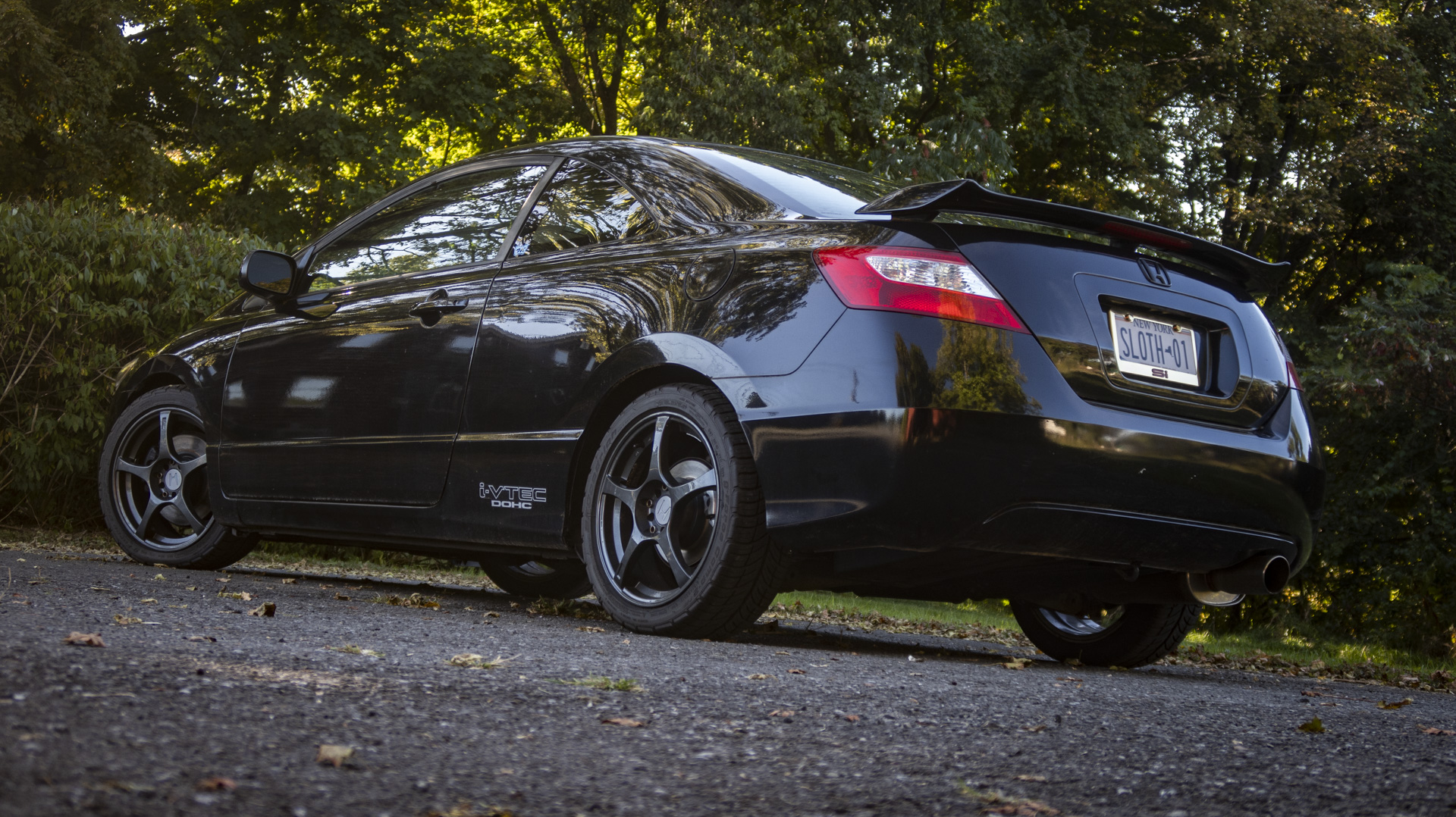
There’s more to think about, too. You know your tire tread pattern has a huge impact on handling, but so does the sidewall stiffness and even air pressure. If you’re running aftermarket wheels, their offset will also play a role in how your suspension feels, practically speaking.
If you do run adjustable coilovers, you’ve got to think critically about how to set them up. It’s not as simple as “softer and taller equals more comfort.” You don’t necessarily want to max out the ride height on adjustable coils, as that might yield unfavorable rebound in certain places. Then there’s the adjustable rebound itself—you’ve got to be ready and willing to spend time dialing all that stuff in for different road conditions if you really want your money’s worth from a good set of coils.
All this to say, if you’ve decided to get coilovers, Fortune Auto 500s are a great choice. However, don’t pivot to coils just because they’re cool. Think long and hard about what you want to accomplish with your car, and how much time and energy you want to spend tweaking settings. Plus, of course, how deep you’re willing to go, replacing adjacent bushings and mounts to ensure the rest of your car can keep up with coils.
For the tinkerer who’s looking for great performance in high-stress driving situations, hell yeah, coilovers are awesome. Just understand that they’re not a set-and-forget kind of upgrade, and even the most streetable coil option comes with a significant NVH penalty.
Had good or bad coilover experiences you’d like to share? Drop me a line at andrew.collins@thedrive.com.
Loading comments…
Comments couldn’t be loaded. Please refresh the page.