
My first experience with TuxMat came a long time before any official product test. I once got picked up from a Miami hotel by a TuxMat-equipped Mercedes EQS, and I remember thinking how nice a job these mats did of balancing a robust-but-classy aesthetic that fit the car really well. And, of course, the really neat feature about these is how completely they cover the bottom half of the car interior.
Since then, we’ve put them in sedans, crossovers, and trucks, and I’ve been pleased to see how well TuxMat car mats are fitted to not just specific models, but specific trim levels. Plenty of custom mat companies offer model-specific options, but TuxMat really gets down to a level of granularity that other aftermarket companies don’t really touch. That’s the domain of Sam Cheng, TuxMat’s Director of Product Development, and his team.
I love industrial design in general, and have been getting into 3D digital design in particular since I started 3D printing (the two concepts kind of go hand-in-hand, of course). It was pretty fun to nerd out with Sam a little bit about how TuxMat makes the designs for its vehicle-specific mats.
TuxMat’s commitment to a superior-fitment, trim-specific design philosophy means that product development is a lot more arduous than it would be for even just a make/model-specific mat set.
As he was telling me about the company’s workflow and design process, Sam explained that late-model cars tend to have more physical variation across trim levels than they did in the past, giving examples of moving consoles, bench seats versus captains’ chairs, and optional ice boxes. “That customer … bought the car with the ice box and the subwoofer, and the mat is not trying to bend over it—it actually goes around those curves.”
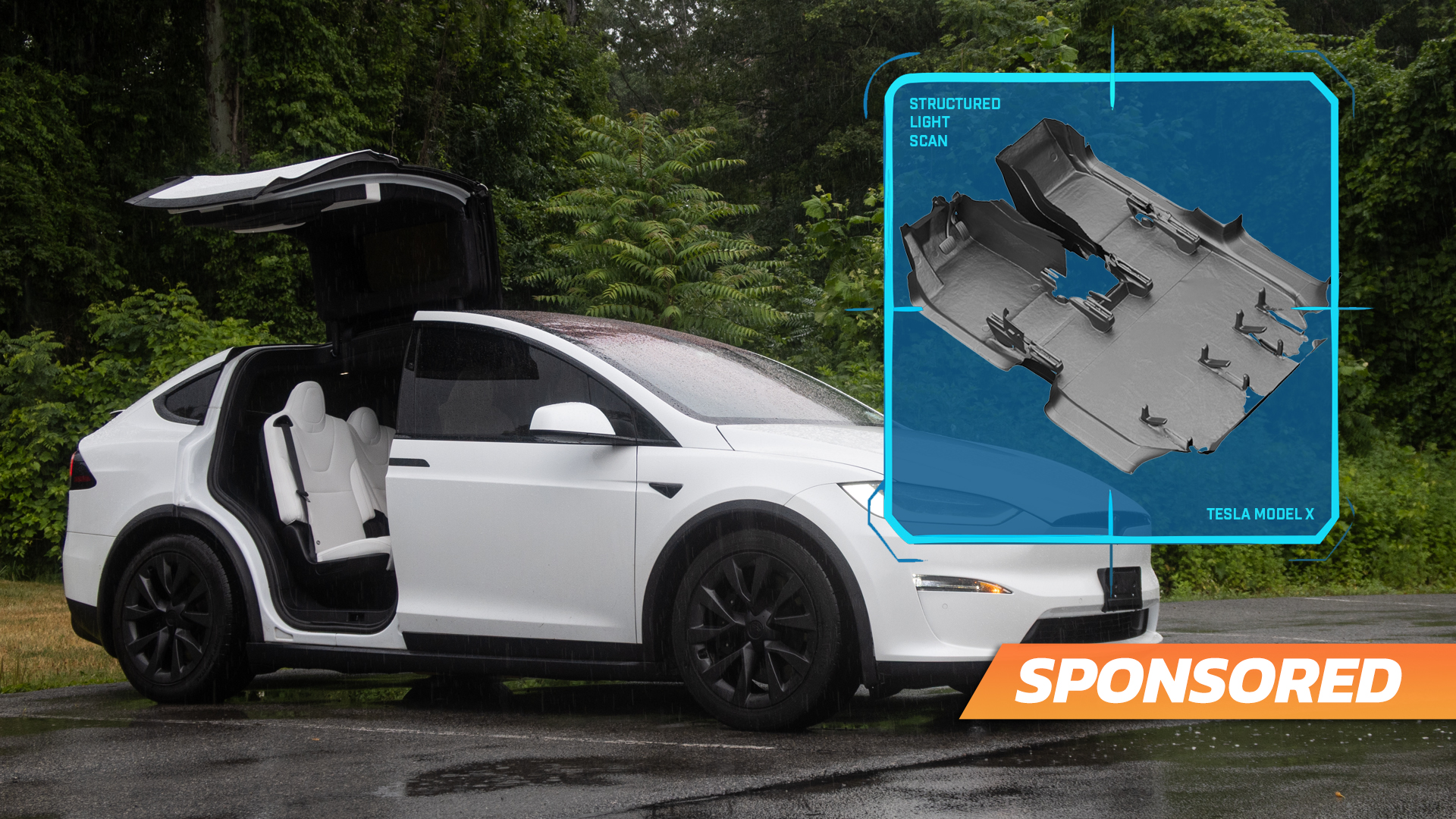
Naturally, getting all those measurements is a little more involved than tape-measuring lengths and widths. TuxMat goes through a complex 3D-scanning and data clean-up process to create models of car interiors. The development process utilizes advanced scanning equipment that employs “structured light,” combining laser lines, blue LEDs, and infrared light to effectively scan various textures and light-absorbing surfaces.
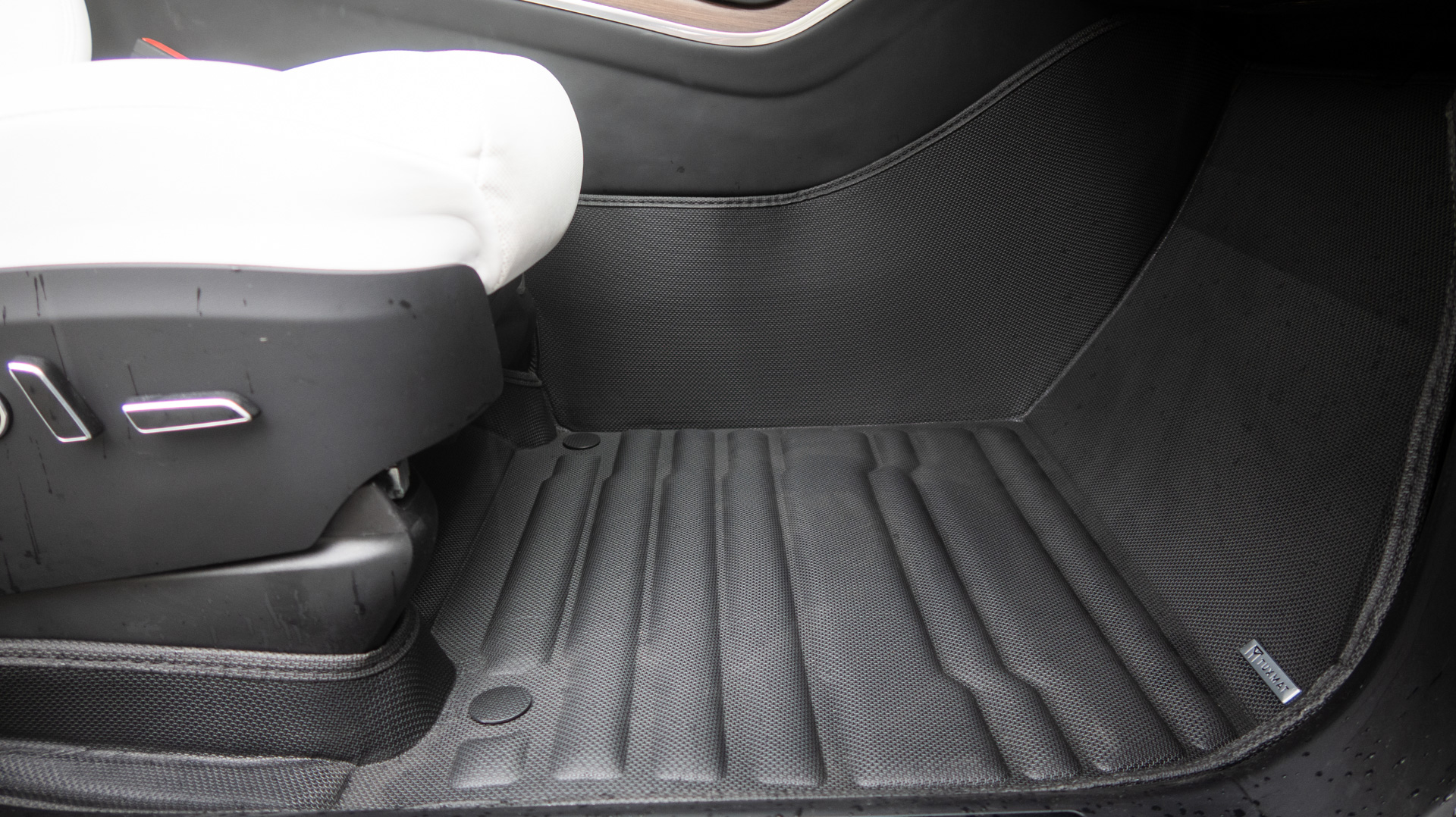
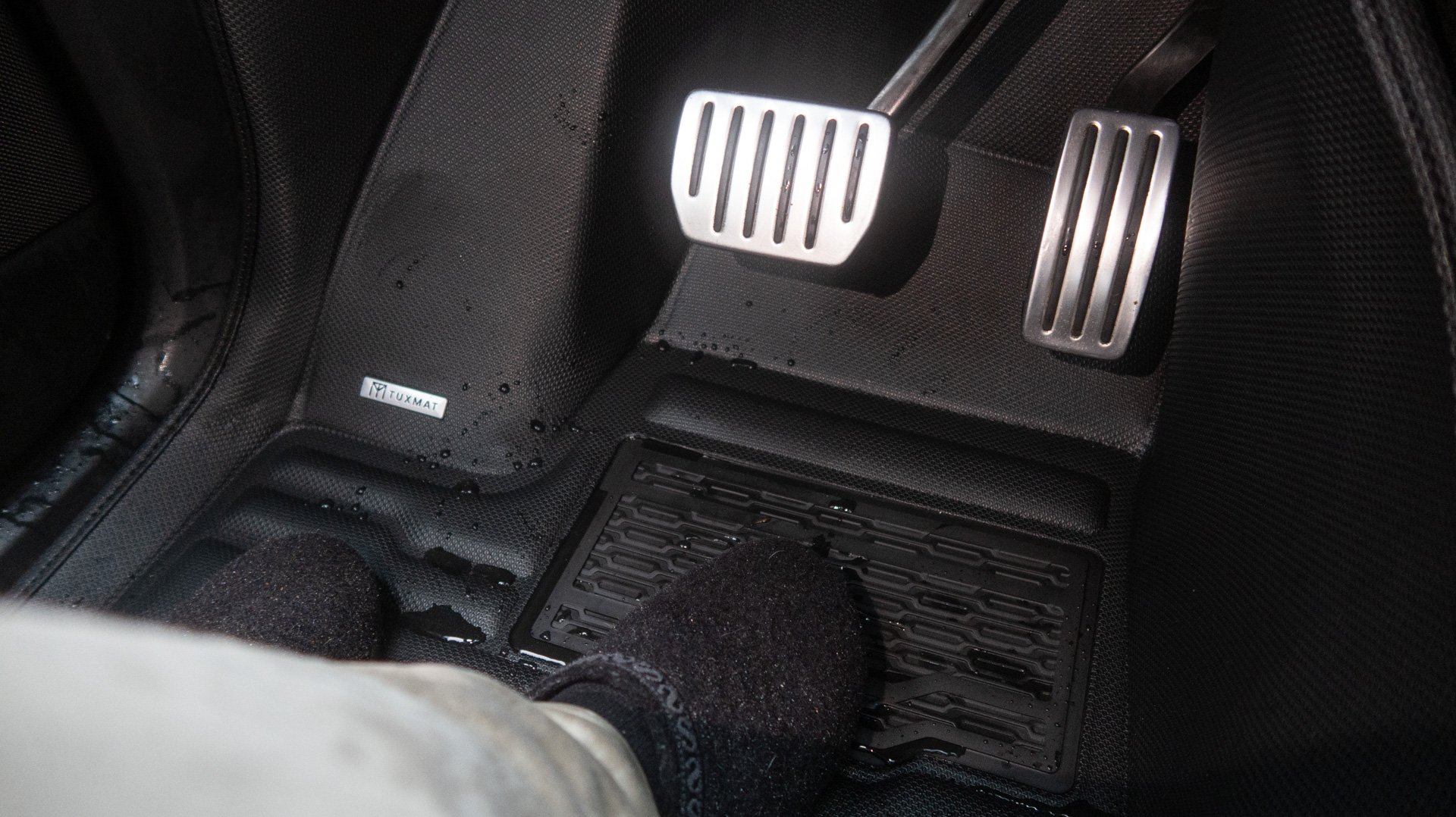
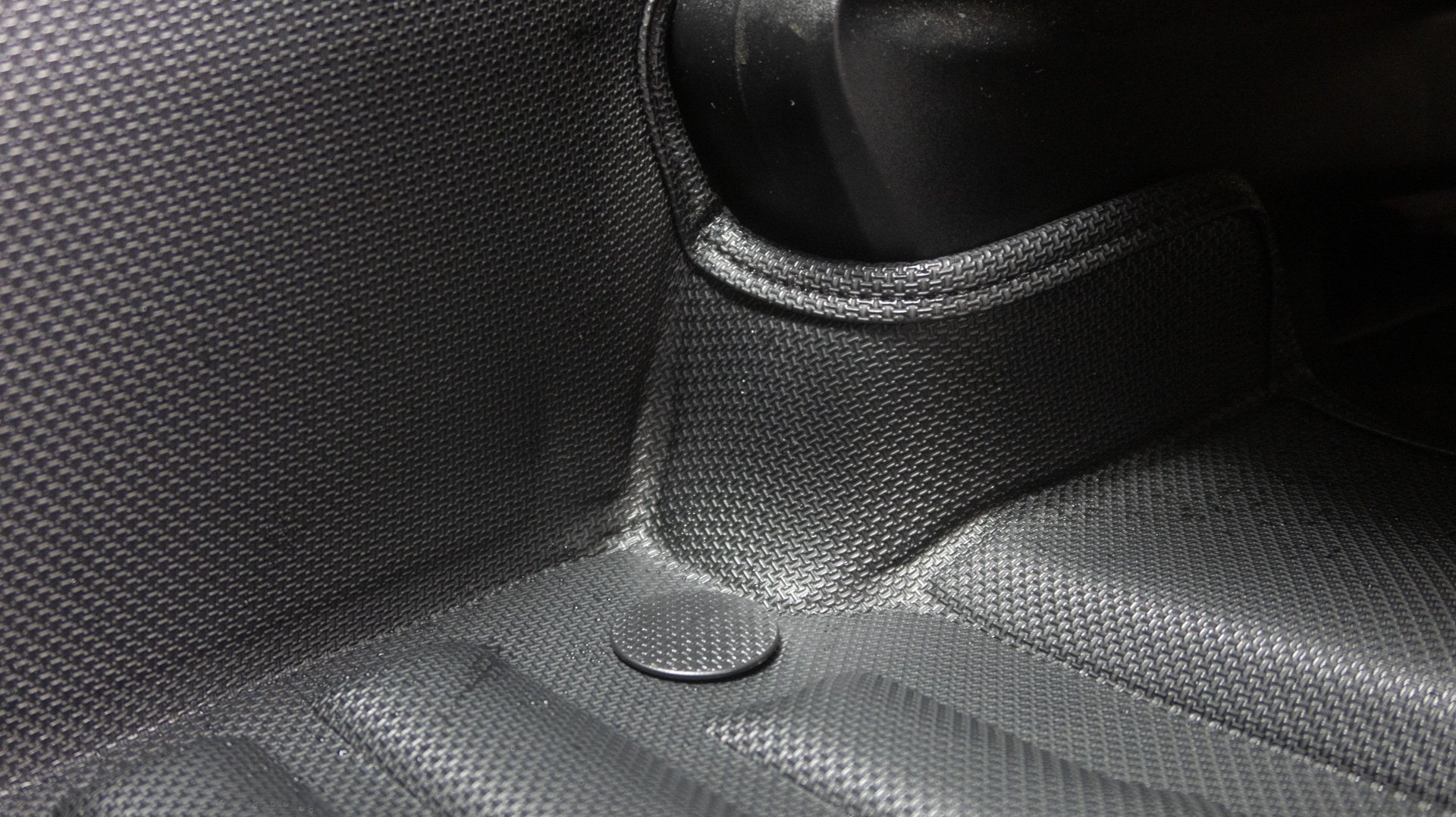
Sam explained that the scanning process typically takes about two and a half hours, depending on the size of the vehicle, after which the team cleans up its resulting polygon data. Blind spots in tight areas are addressed by taking multiple scans from different angles and stitching them together to create a high-fidelity model.
“We have a team of designers who are extremely experienced, know about our coverage needs, and they sort of go and design the mat to the best of our ability without compromising safety. We’ll design in safety features that make sure we clear the pedal and adhere to the OEM retention,” Sam said. “So we actually have a lot of unique parts. You know, Mercedes has a different way of holding down the mats to Subaru, to Kia, to others. So, we’ll scan all those, document, and get the exact matching hardware that clips in nicely to the OEM style. We’ll do that for every single area. And then work with our factory to create molds that create these mats. And that’s just one of the steps—then mats are test-fitted and refined.”
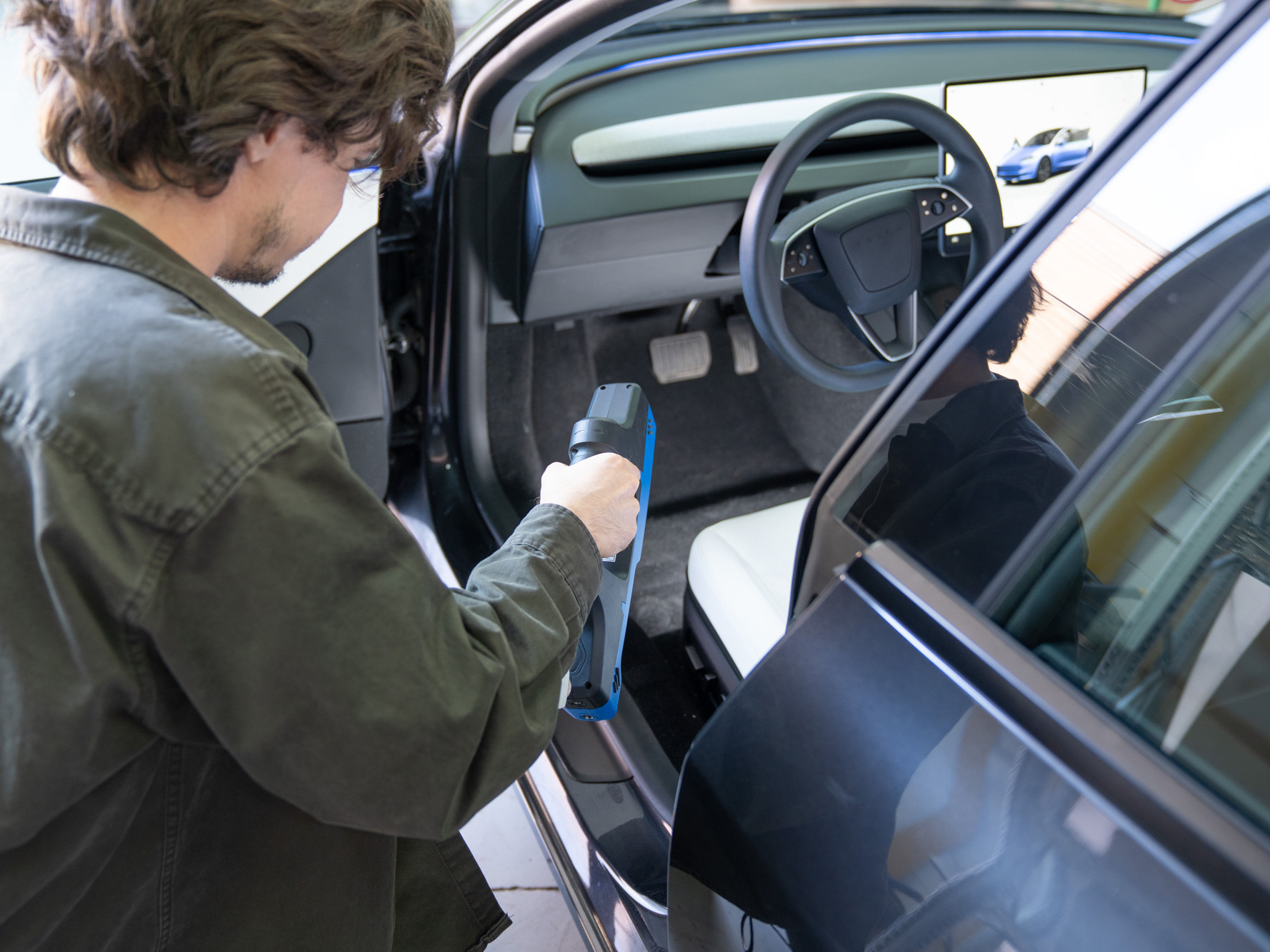
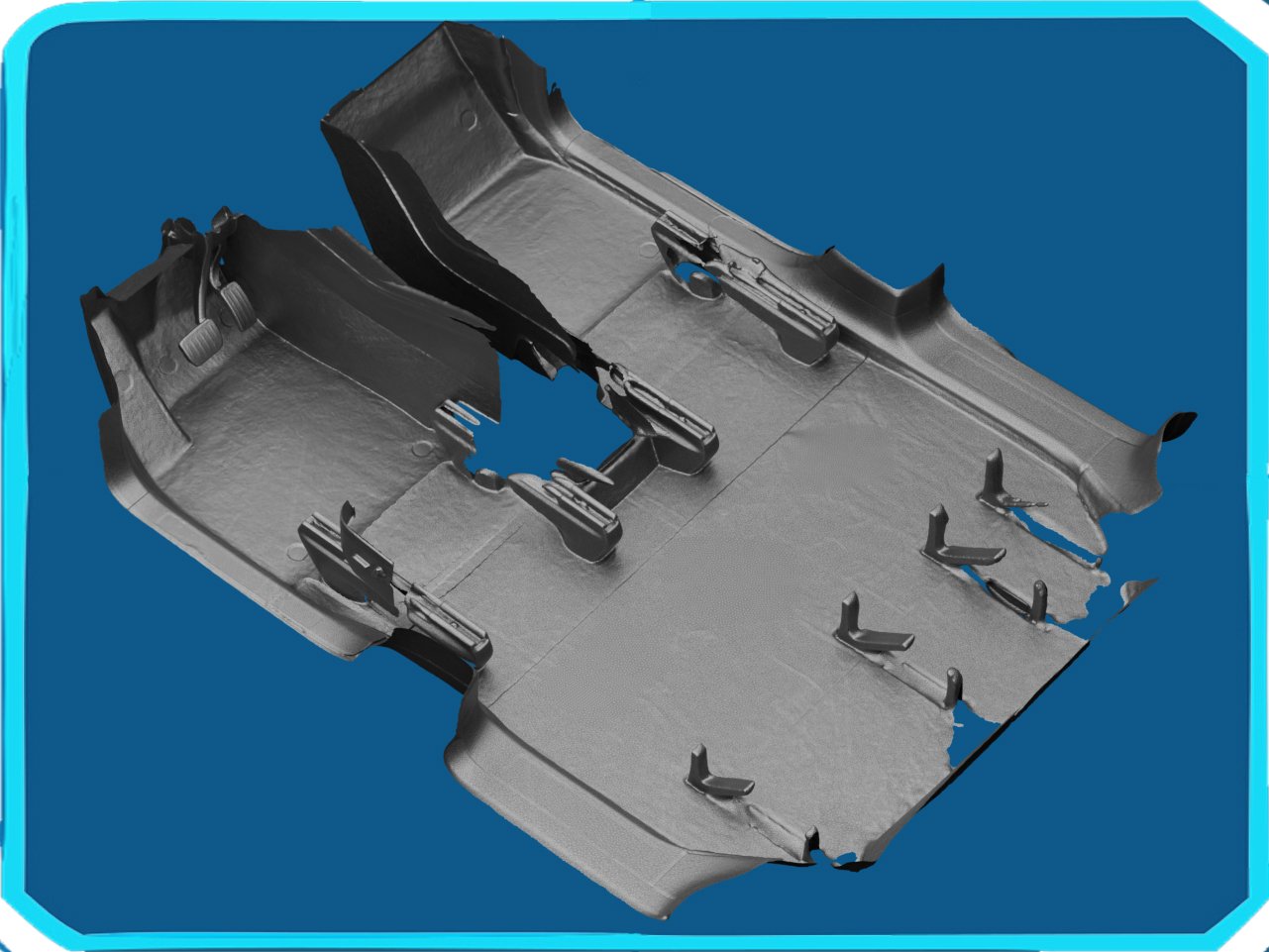
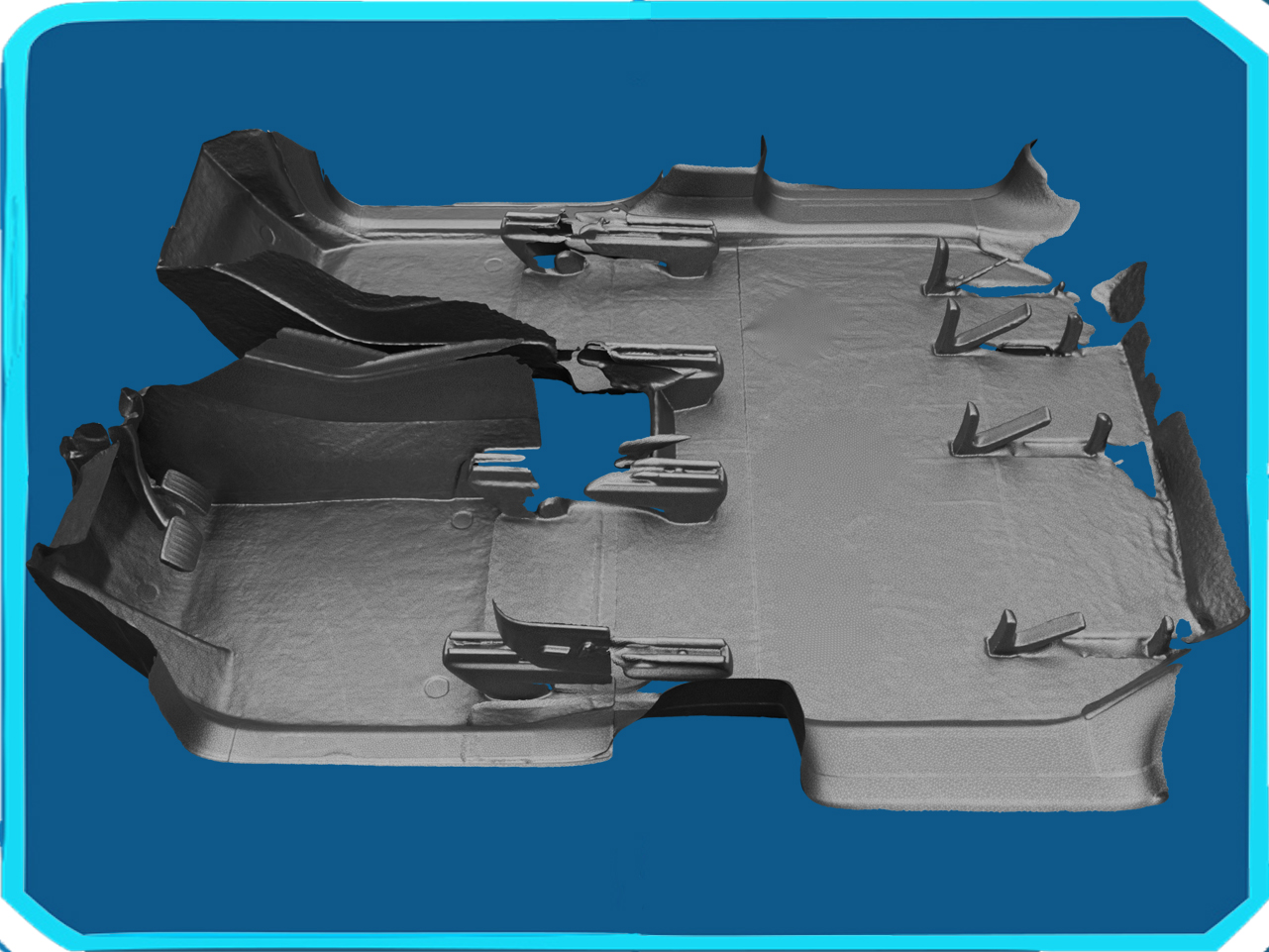
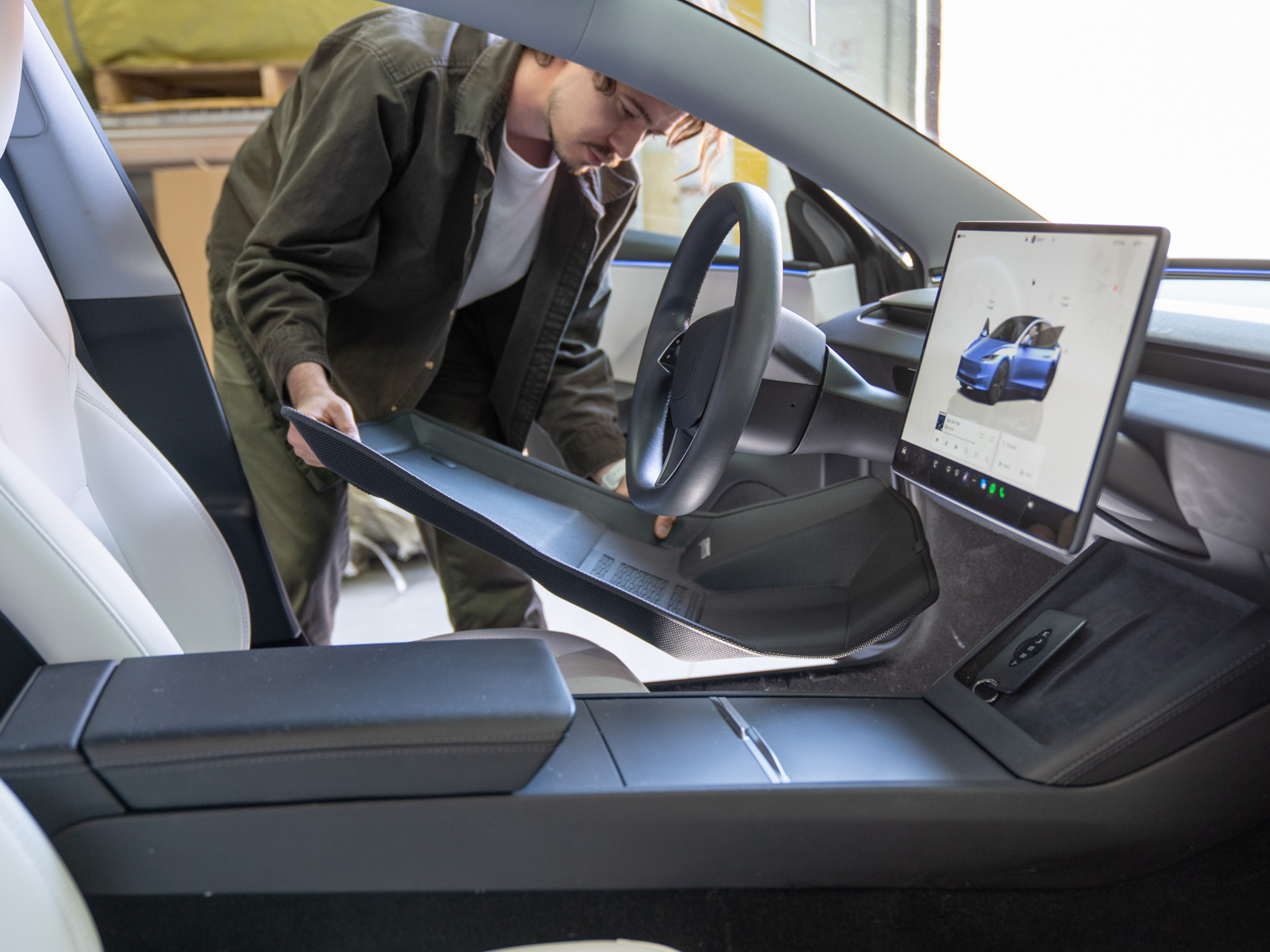
TuxMat is currently shipping its second generation of mats, informed by the company’s ever-increasing breadth of knowledge and experience. “… sometimes we’ll go look at customers who’ve had cars for a while, and we actually look for scuff marks. Dirt marks and such are potential opportunities for us, really, right? It’s like, you might not think you’re going to step there, but you actually will brush your boot against it.” Observations like that are what got TuxMat started down the path of comprehensive-coverage fitment in the first place.
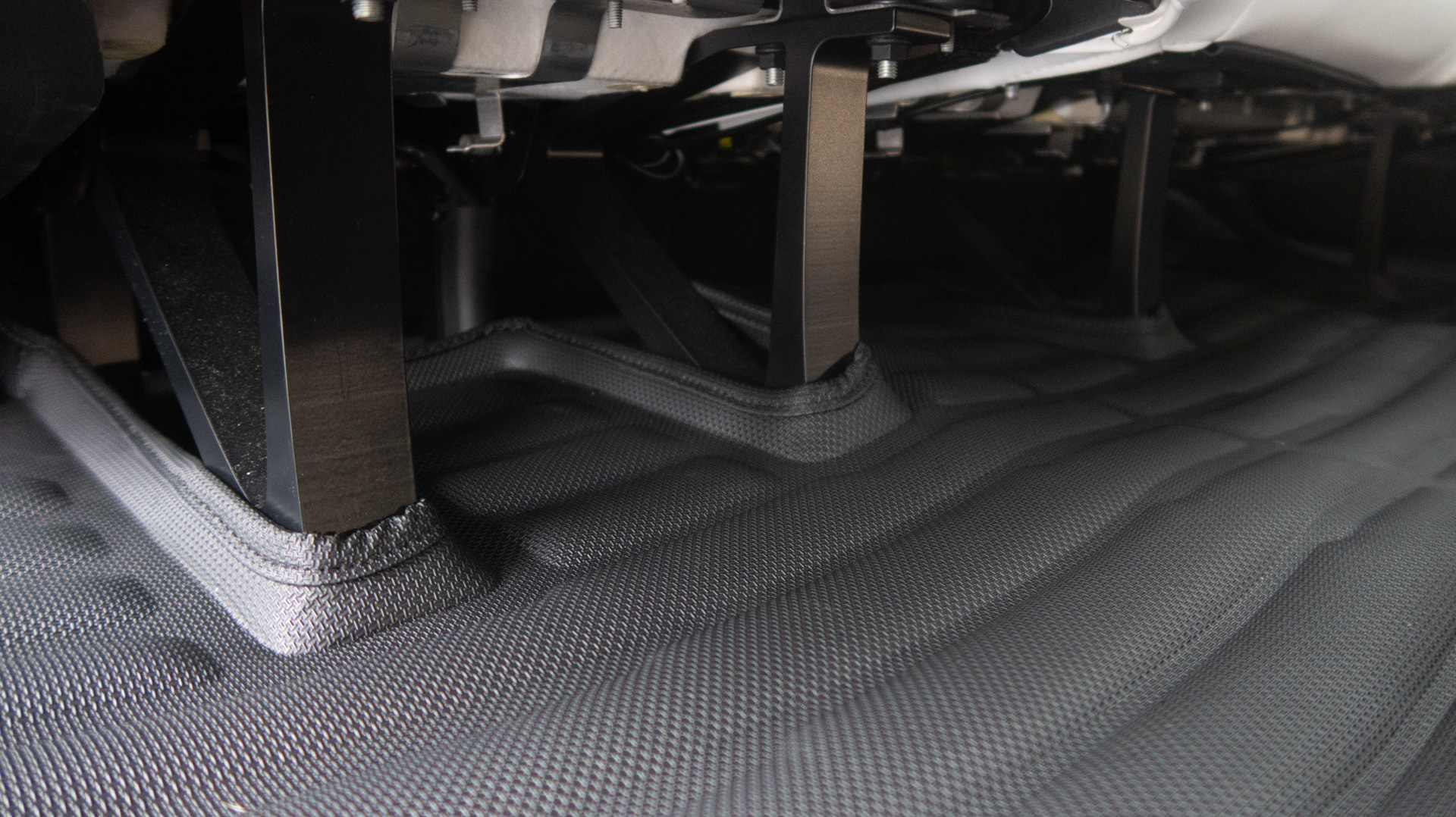
“Each car is a completely different design challenge,” Sam told me. With the Tesla Model X, for example, “I just remember those seat rails—the way those seats move forward and backward, and the way we had to tackle that, was way different than how we tackled, recently, Lucid Gravity, which had a weird folding geometry that we had to do some simulations on.”
At the same time, now that TuxMat has a decade of operations under its belt, it has a deep library of internal knowledge that can still help inform adjacent product development. Sam used the example of the new Toyota RAV4 and 4Runner, some of which have “a kind of weird step” to accommodate hybrid batteries below the floor. “And so we just went in and pulled up the data and looked at it,” adapting a solution from another project to help with another.
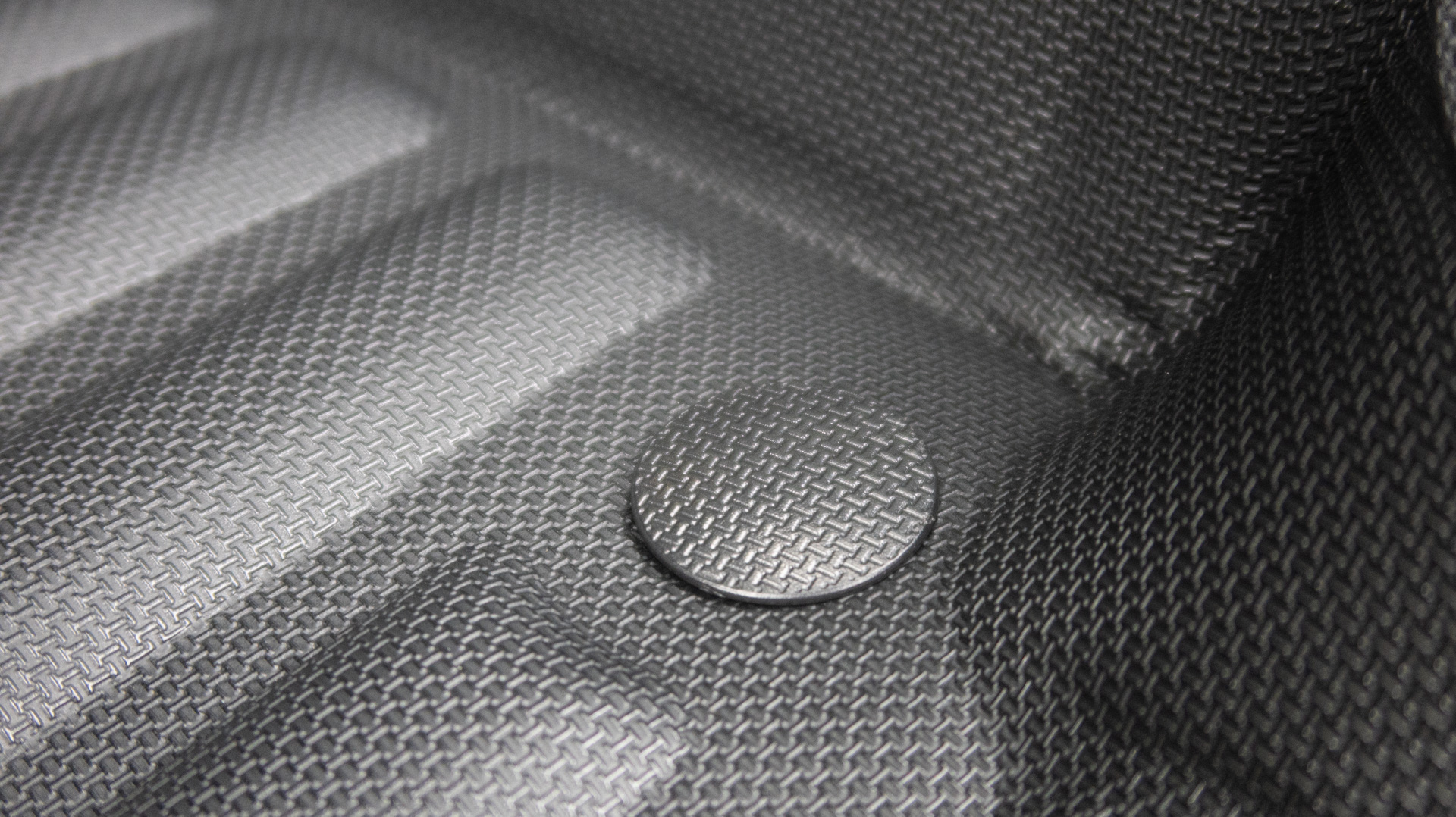
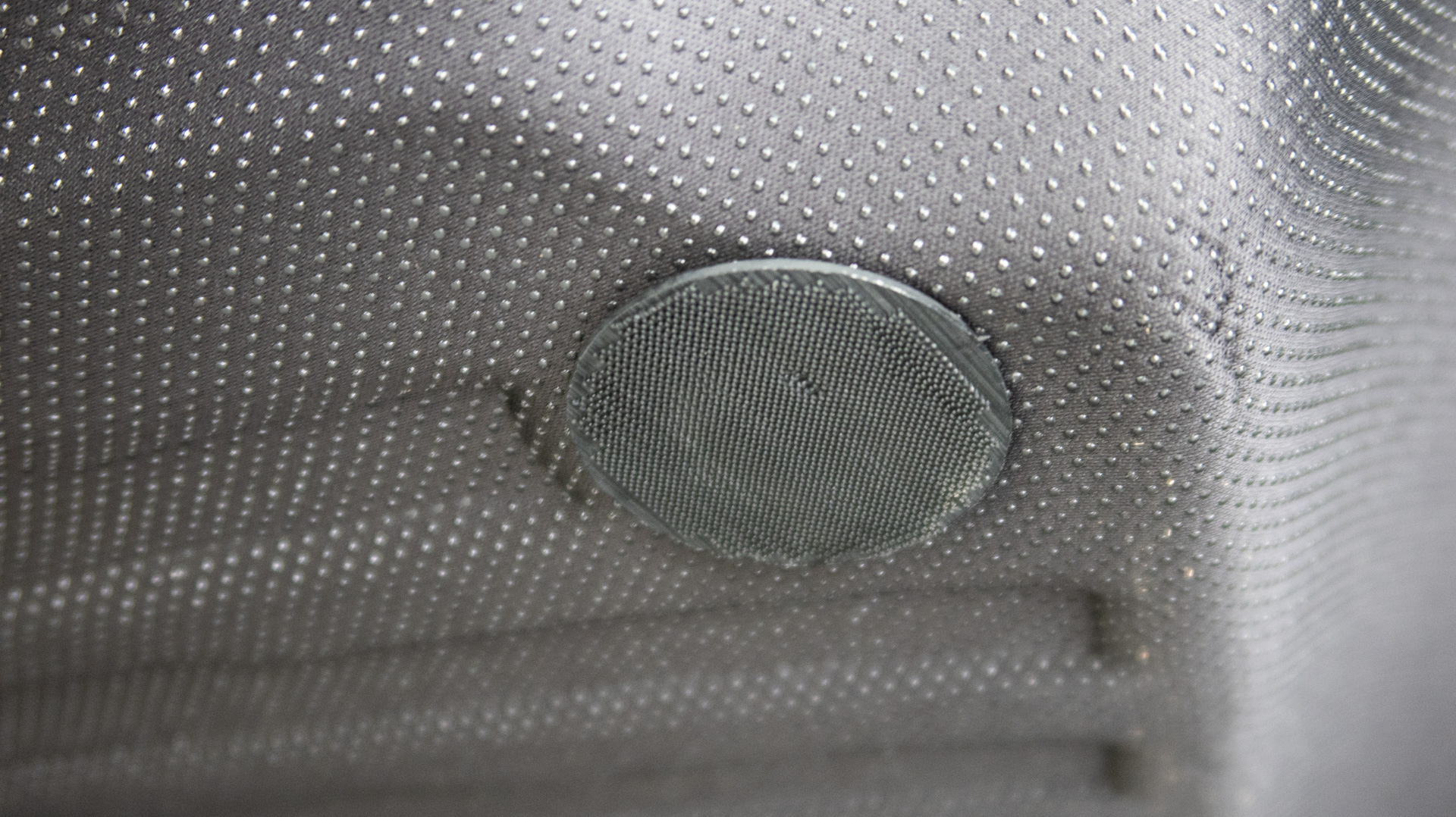
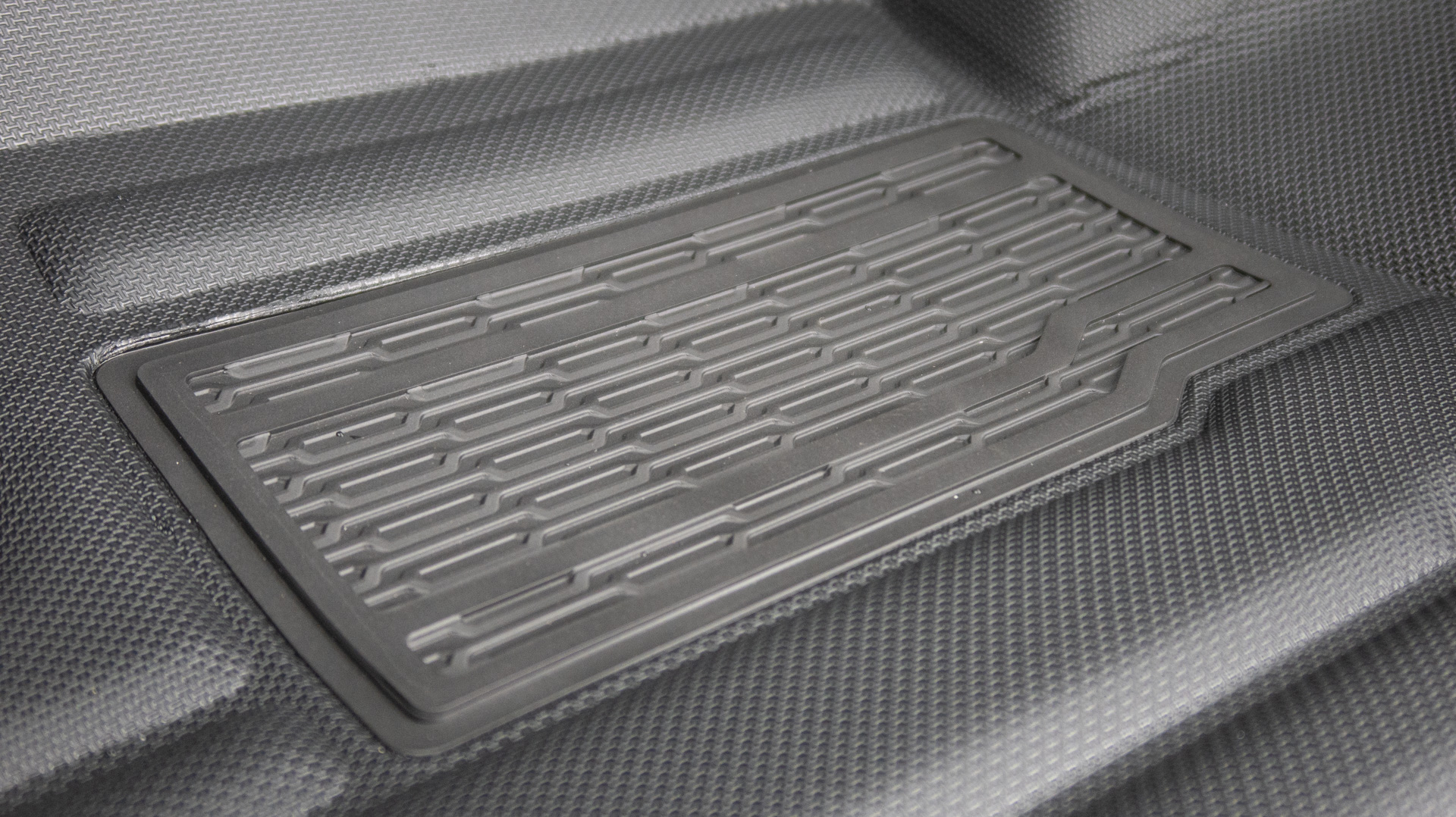
While fitment is critical, so too is material selection. TuxMat car mats have a unique multi-level makeup called TriForce™, which gives it a plush feel without losing TuxMat’s signature crisp edges. Sam walked me through how it works.
“Ours is a tri-layer construction. We have a vinyl layer on the top, a mid-layer which is the EVA foam layer, and then there are grip dots on the bottom.” That TriForce™ construction is how TuxMat is able to make a product that is both plush where you want it to be and stiff where you need it to be.
“And that’s what kind of separates us,” Sam elaborated. With cheaper mats, you “step in and it’s a hard plastic—especially in the winter, it just feels like ‘clack clack clack.’ Whereas we step in, and it’s really soft and plush. I remember when I put in TuxMat in my car—I drive a van, so the whole back got the new material. My two daughters were so excited. They actually took off their boots and were like, ‘Oh, I don’t want to get the mat dirty. It’s so soft.’ … But our top material is quite easy to clean … Even after a whole season of salt and mud and so forth, it’s pretty easy to spray down and doesn’t stain.”
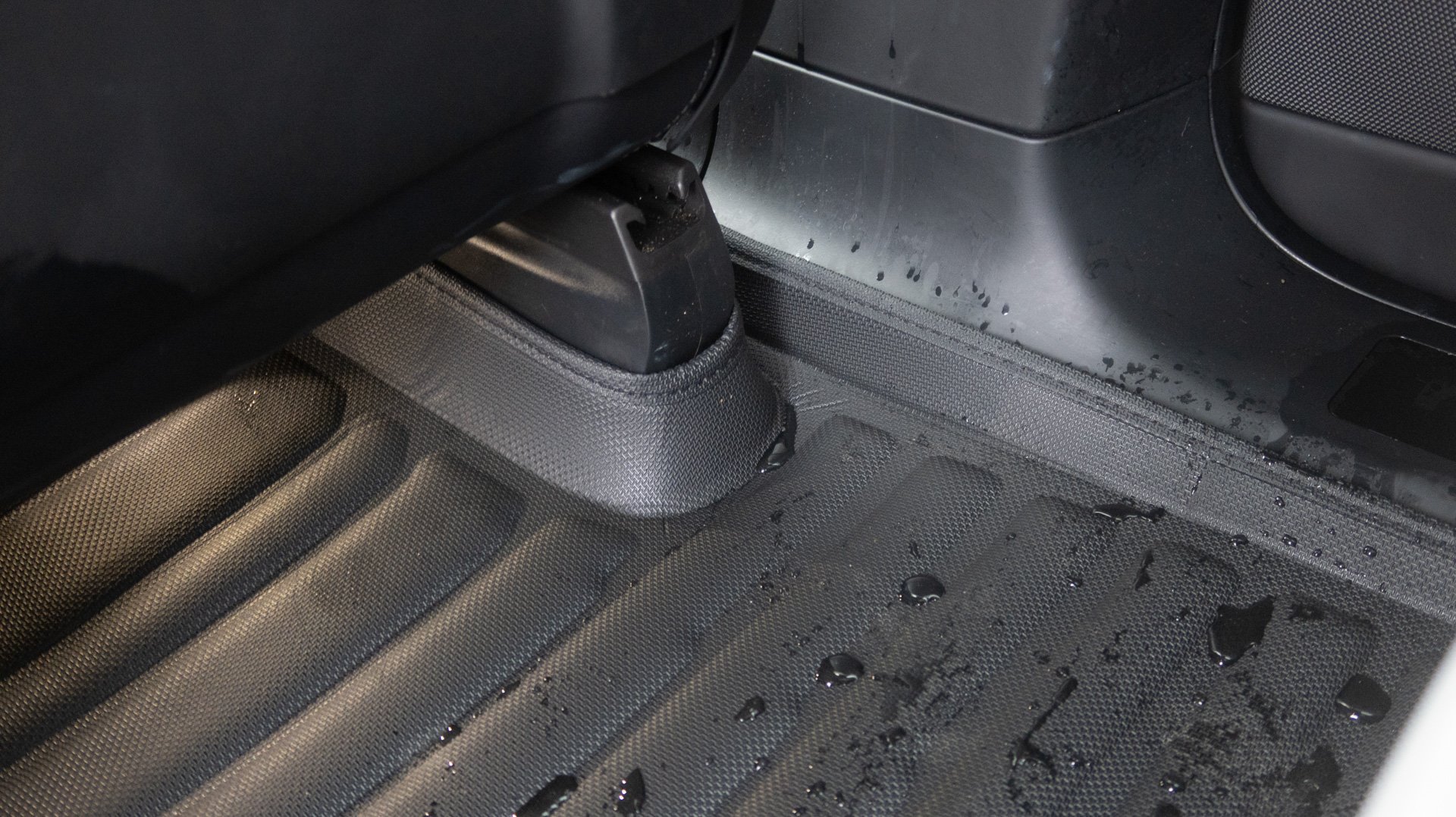
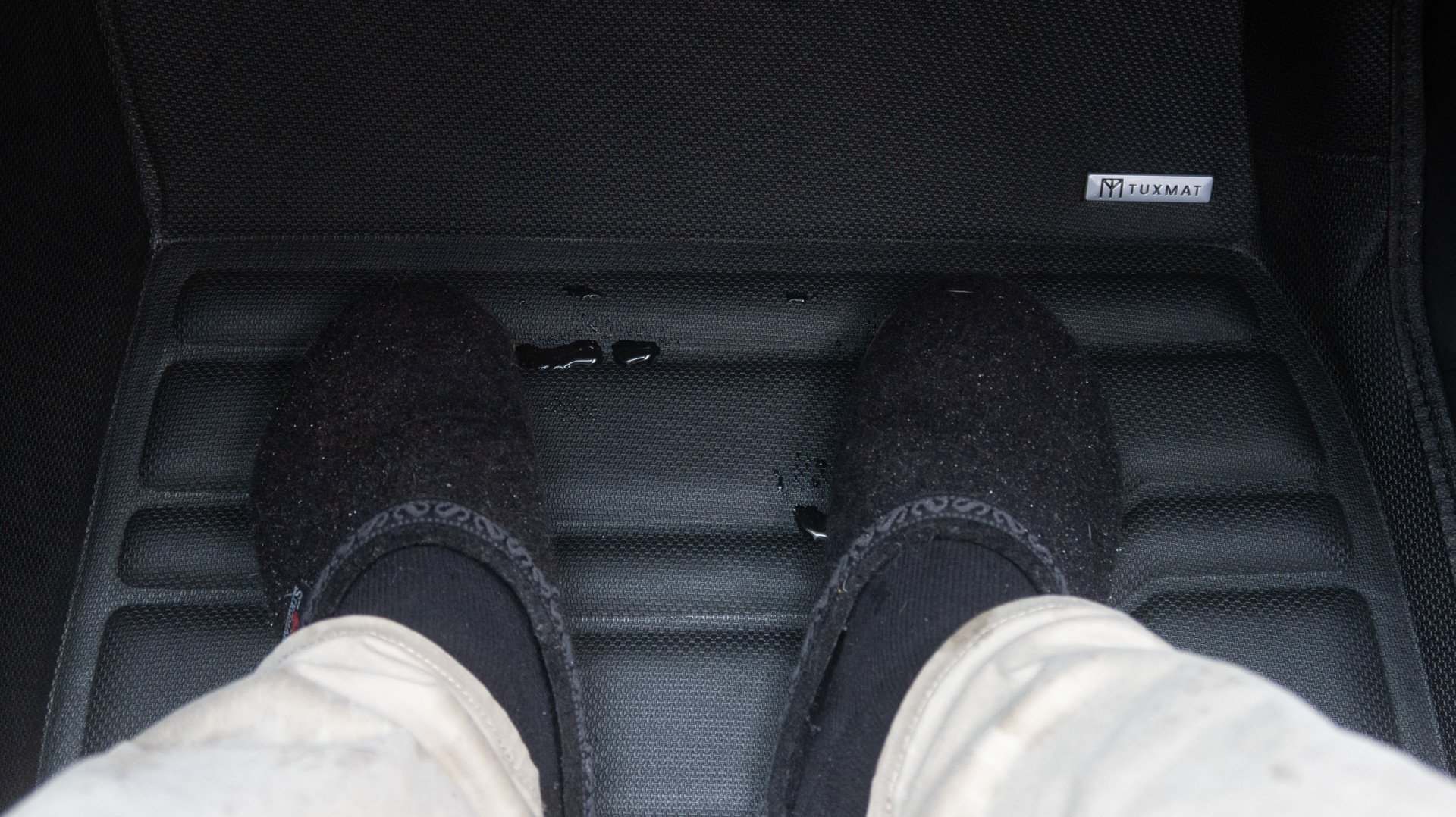
Besides fitment and maintenance, there’s one more piece of the puzzle: Durability. TuxMat car mats need to be able to take boots, sandals, paws, claws, and whatever else is going to grind on them for hours and days. “We did, in-house, build what we call a ‘fatigue tester’ … we have this crazy machine that you can strap on a boot with weights that can simulate people walking, grinding [the mats] with different substrates for thousands of cycles, doing cycle testing.”
At the top of this story, I described TuxMat’s aesthetic as “robust-but-classy.” What I meant by that is its products have hard, but clean, structural lines and decorative elements. The material has some give, but it has a James Bond wetsuit vibe, rather than the Austin Powers pleather-adjacent one some aftermarket mats have.
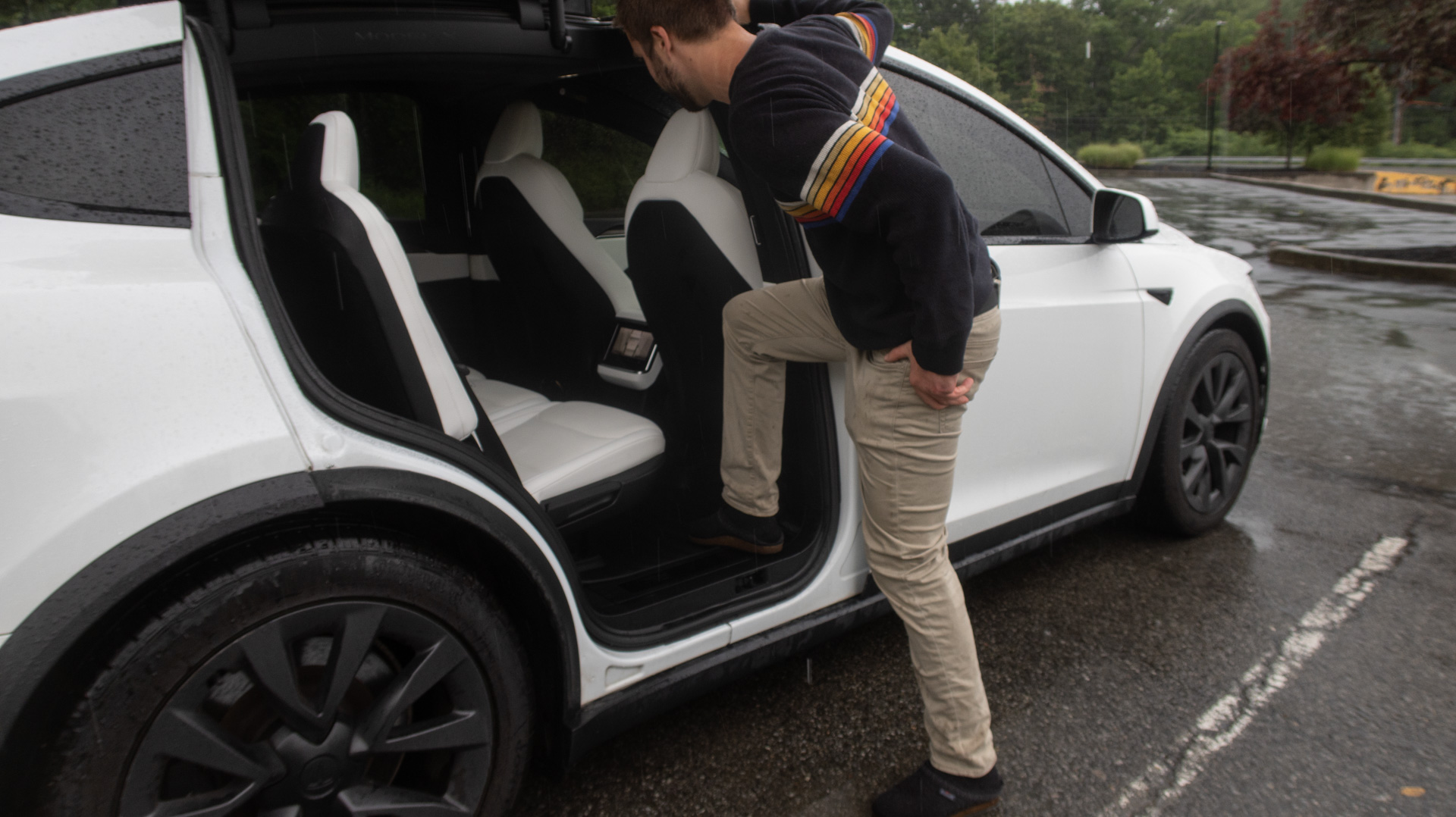
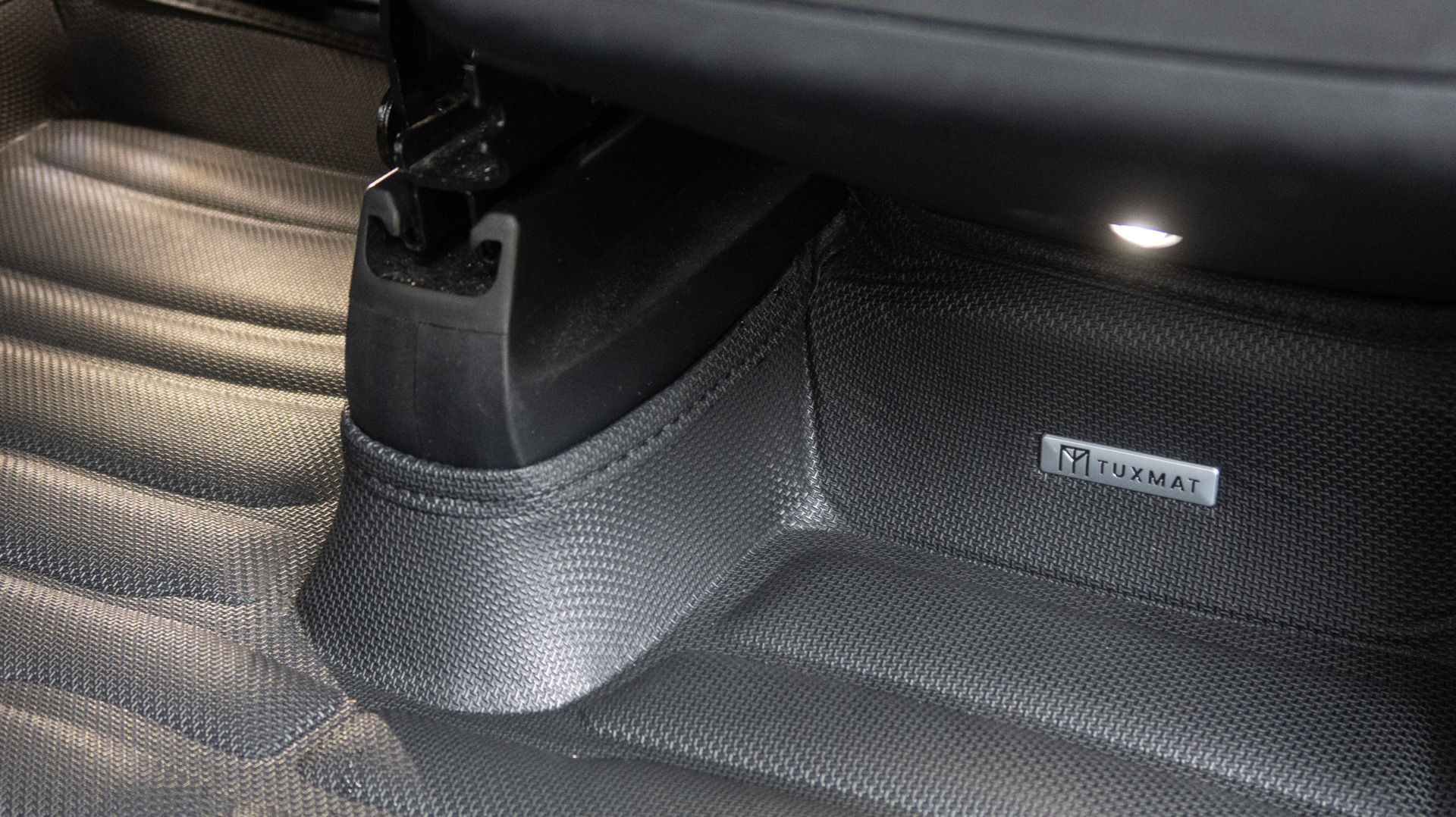
The mats you’re seeing here are in a five-seat Tesla Model X. I think you’ll agree that this is a great example of OEM-fitted clips, the side-wall tucking, and the zero-gap finish.
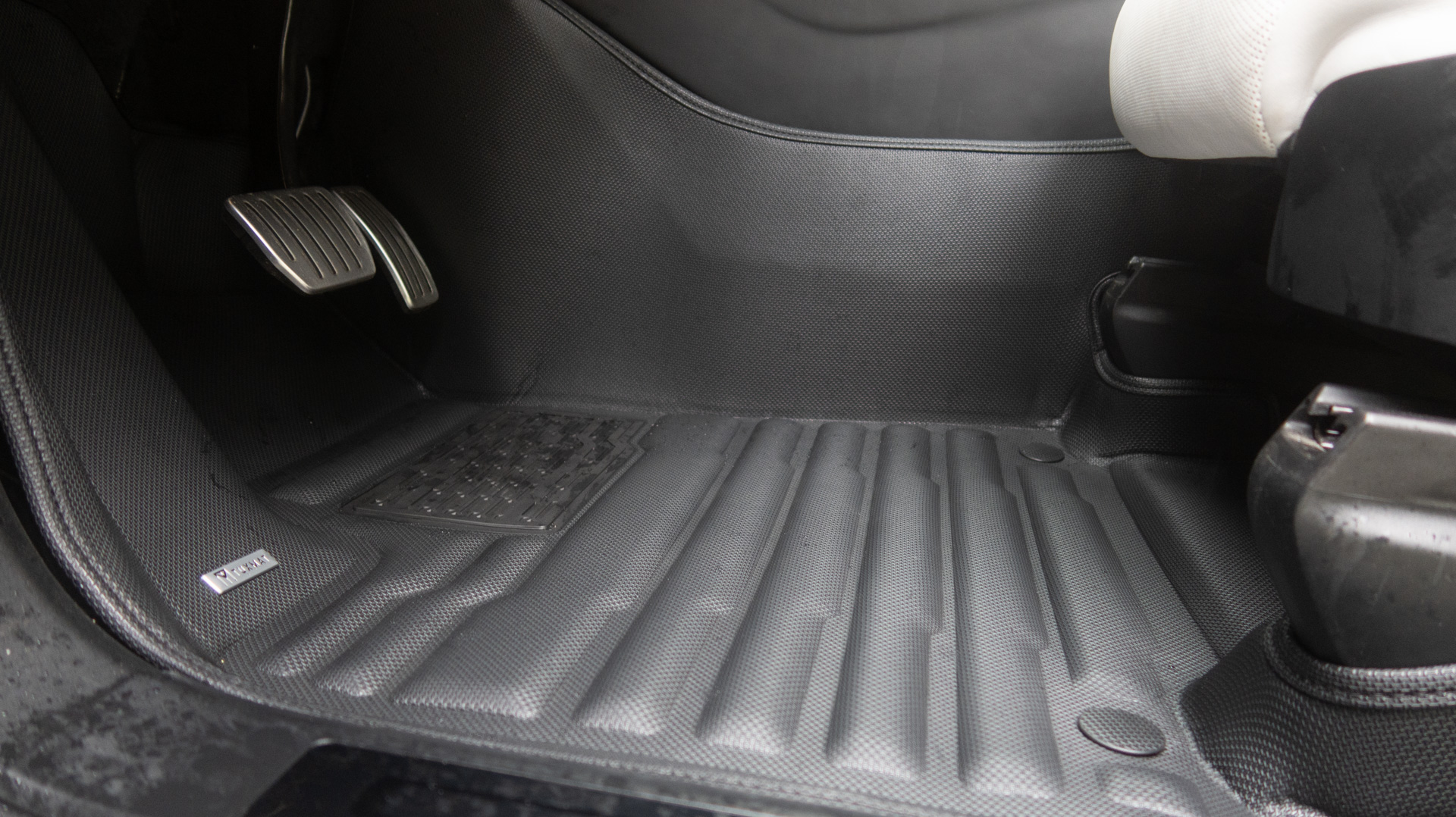
That combo of high-end execution, perfect fitment, and comprehensive zero-gap floor coverage makes TuxMat a supremely nice floor mat. To apply that to your own car, check out TuxMat’s full fitment catalog—and make sure you click down to your specific trim level!