
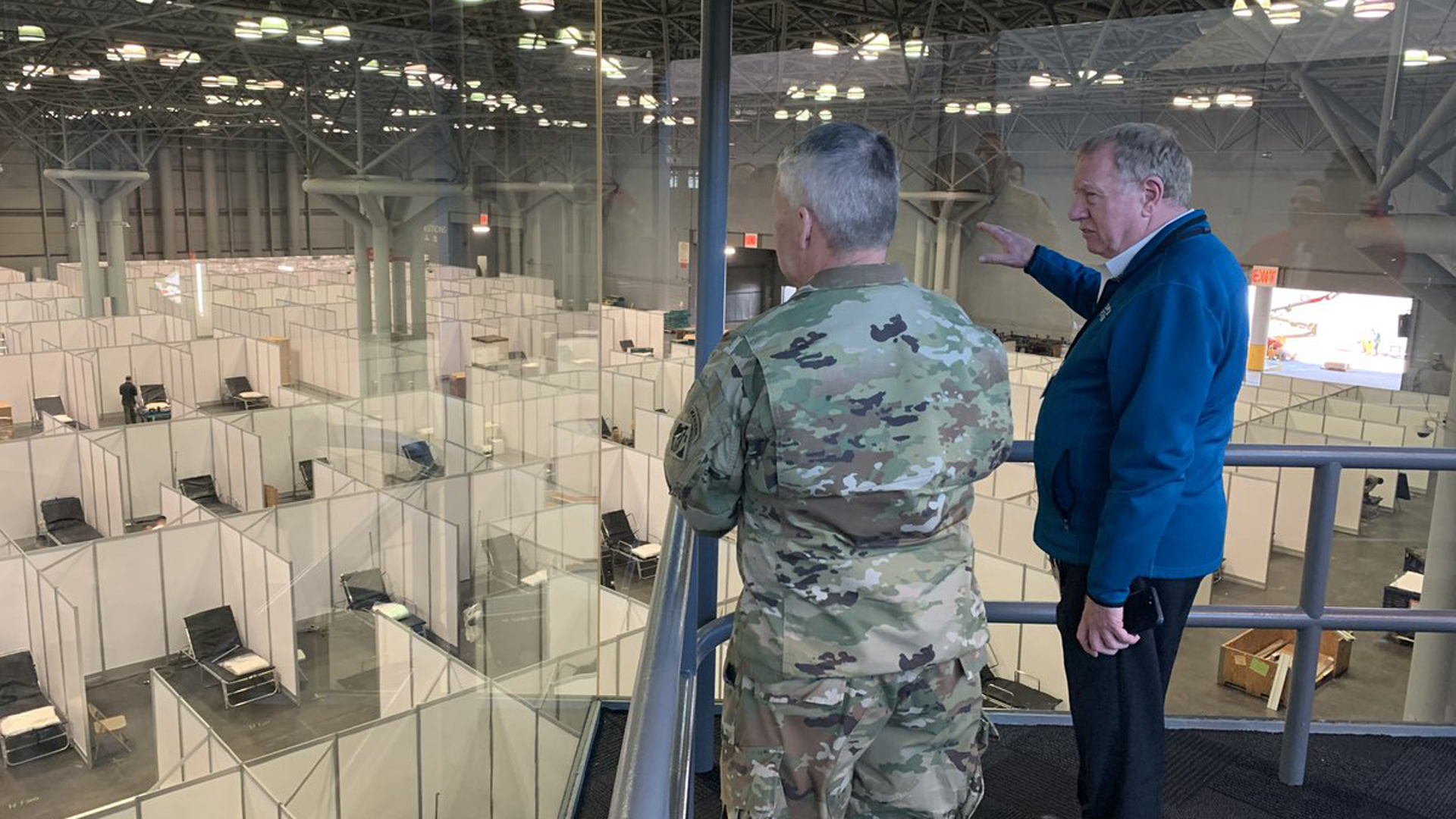
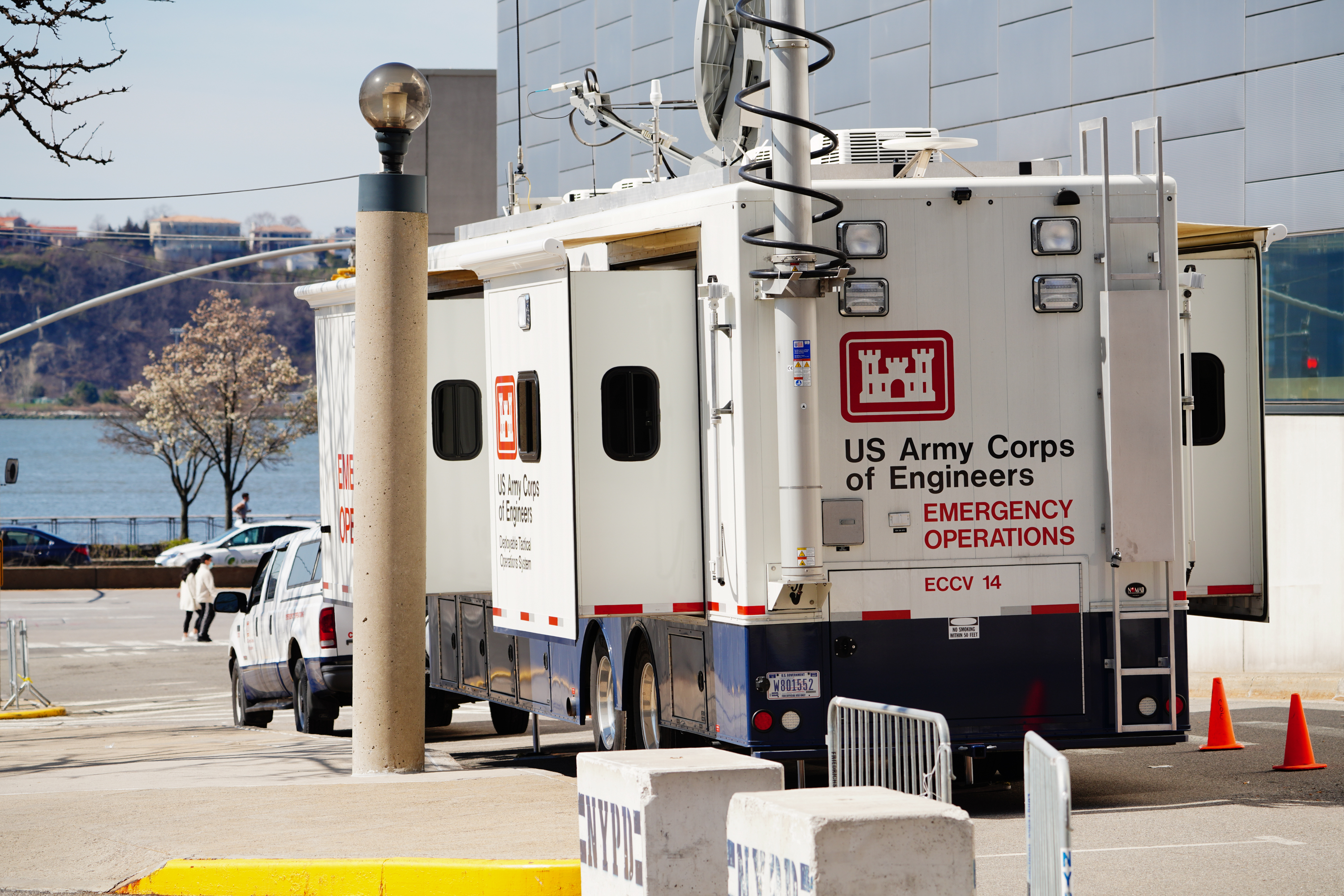
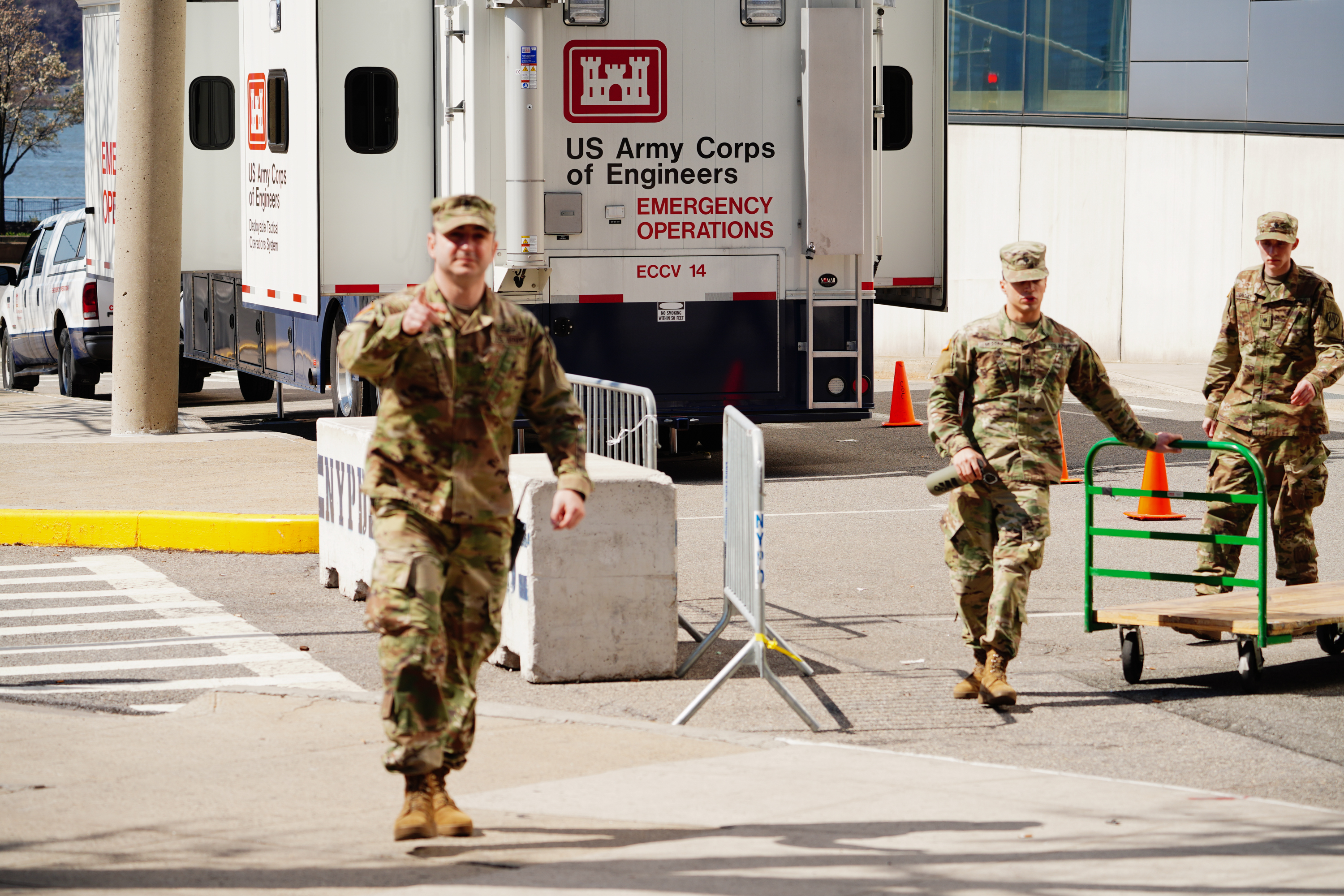
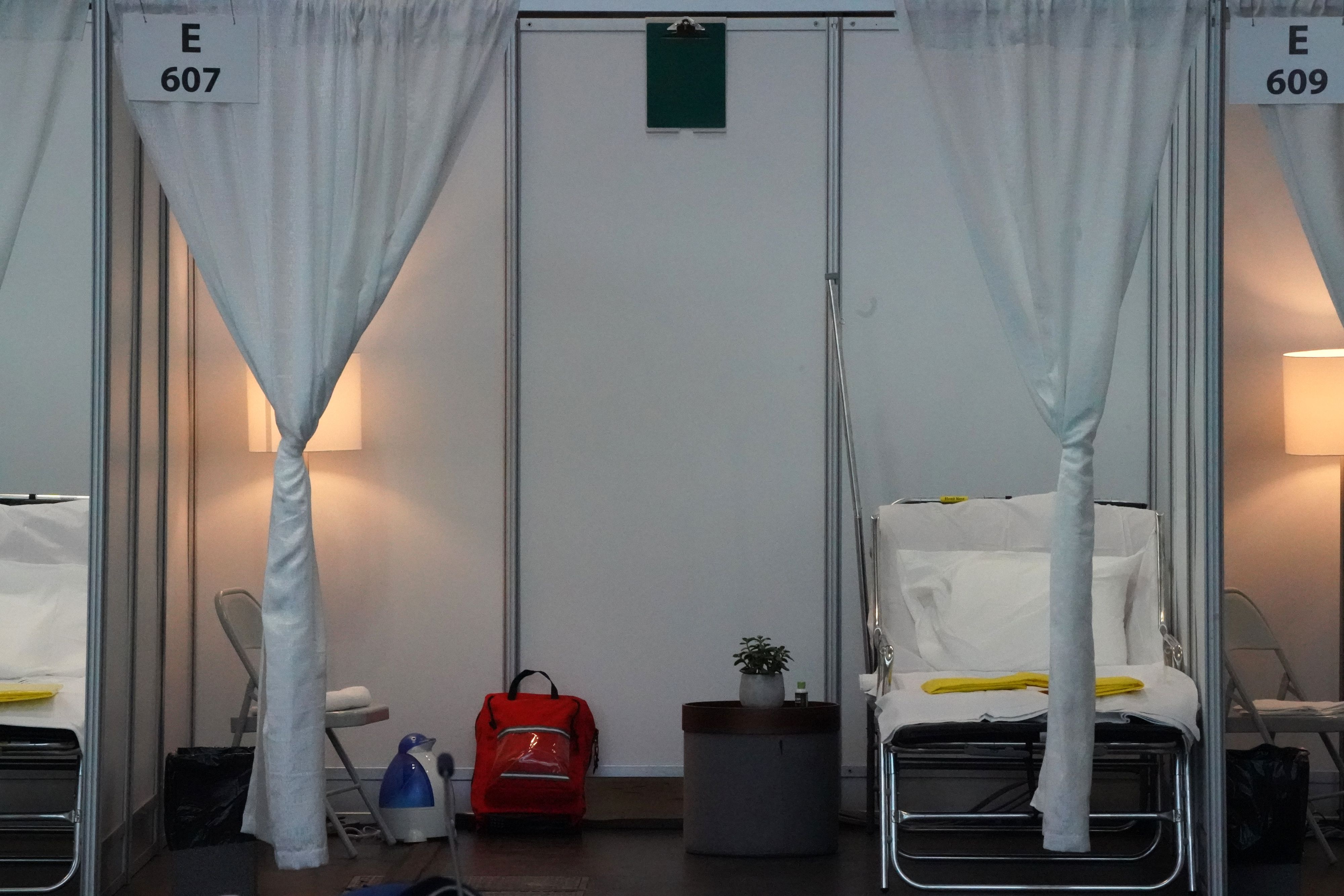
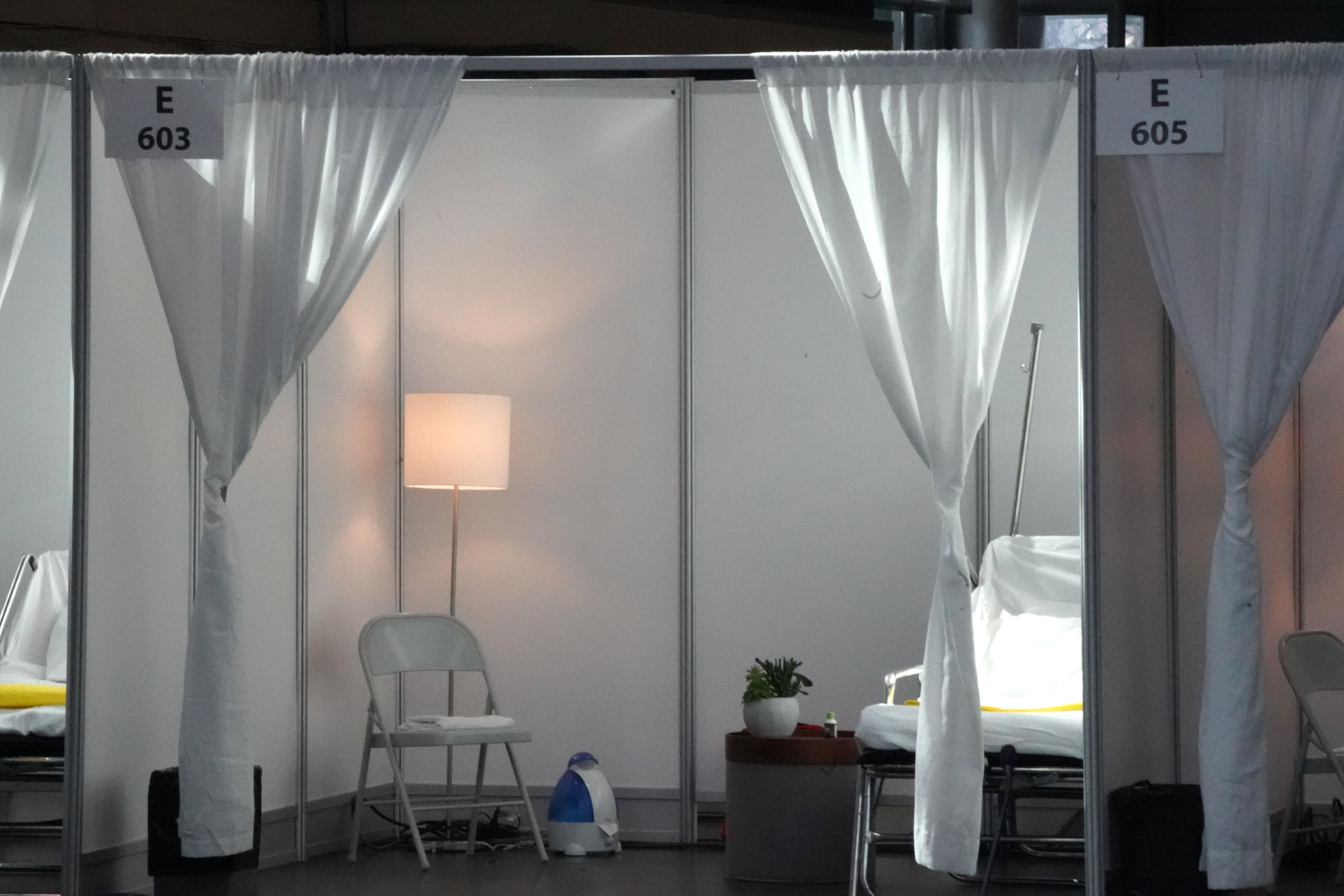
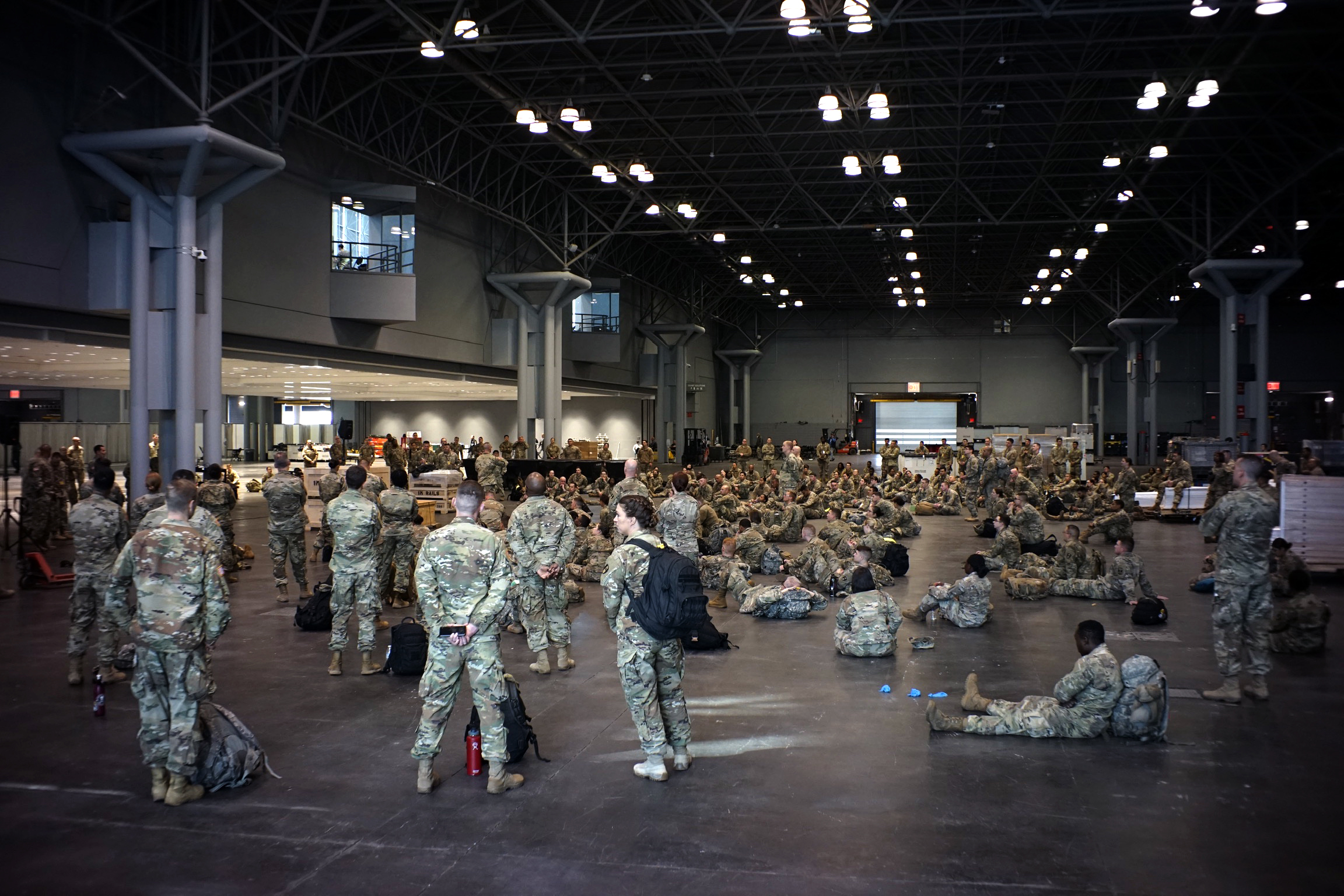
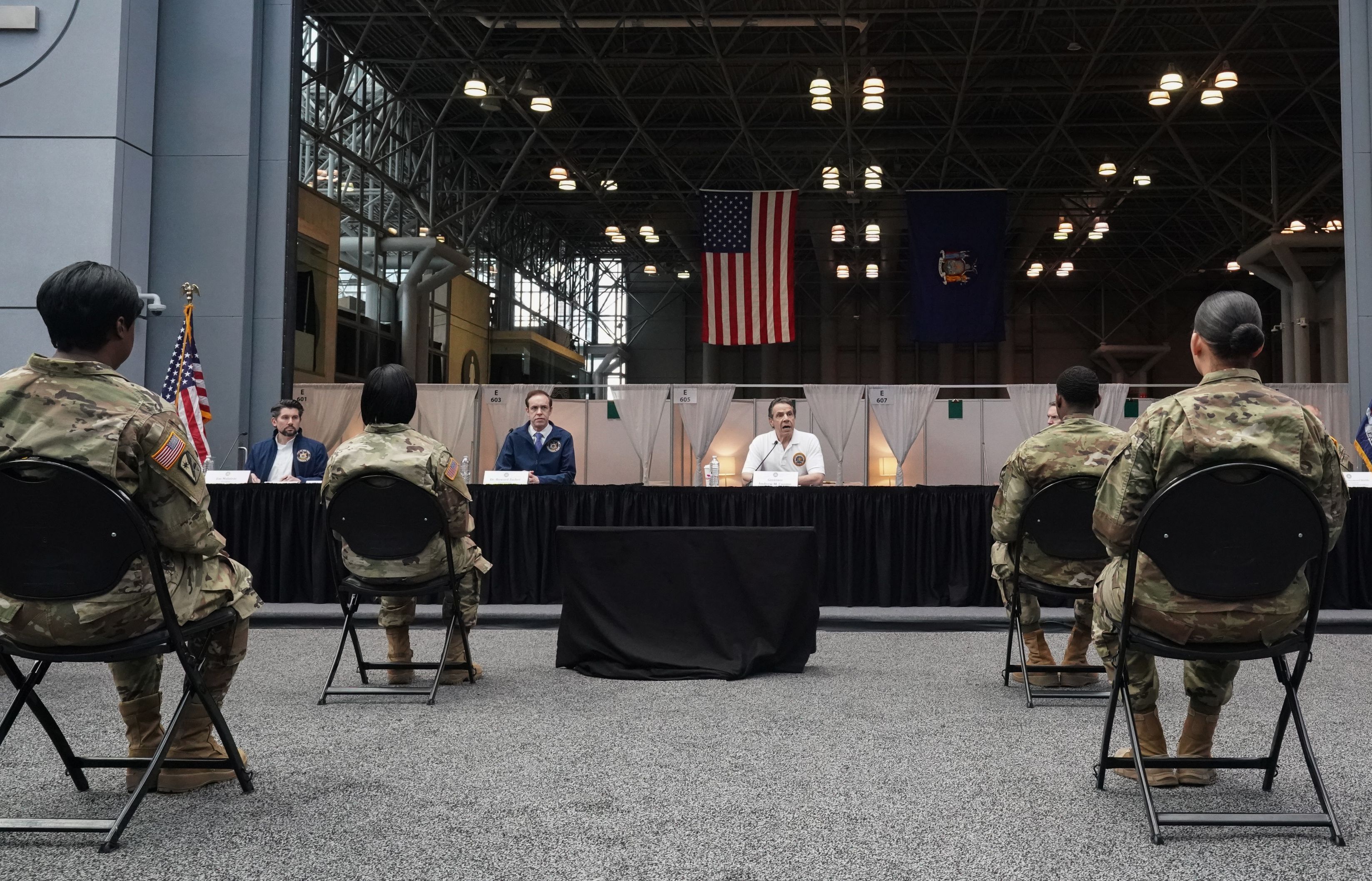
Around this time on a normal year, New York City’s Jacob K. Javits Convention Center would be bustling with construction workers and, eventually, packed with brand new cars. But this is no ordinary year for New York City, or anywhere else. The home of the New York Auto Show is now playing host to a makeshift emergency hospital to aid in the ongoing coronavirus pandemic, and new photos from the U.S. Army Corps of Engineers give us a stark look at the terrifying new reality this outbreak has created.
Here are the photos in question, tweeted yesterday afternoon by the Corps:
And for comparison, here’s what the floor looks like when it’s in full auto show mode, like last year:

The New York Auto Show has been postponed to late August, pushing back an event that draws hundreds of thousands of prospective car buyers as well as executives, auto industry officials and journalists from across the world.
Over the past week, the convention center on Manhattan’s West Side—one of the largest in the country—has been converted into a field hospital and emergency management center by city officials, the National Guard, the Federal Emergency Management Agency and other groups working in tandem. New York Gov. Andrew Cuomo also holds regular news briefings there.
The coronavirus outbreak, and the COVID-19 disease it causes, is already straining New York’s health care system to its limits. The city is now Ground Zero for the pandemic in the U.S., with 84 deaths on Thursday alone, more than 15,000 diagnosed cases and nearly 5,000 people hospitalized, the New York Post reported.
The Javits Center is getting 1,000 beds, but not to treat COVID-19 patients. Instead, it will provide emergency relief to the city’s overburdened hospitals by treating other kinds of patients, which in theory should help slow the virus down. Here’s Quartz to explain why this is so important:
Thomas Quigley, director of healthcare at the global architecture firm HOK, explains says that erecting a separate hospital for non-Covid cases will help stem the spread of the virus. “What you want to do is decant or direct the less acute and non-Covid-19 patients away from the current hospital,” he explains. “The temporary hospital allows for clinical care in a medically supervised environment, where they are less likely to become infected and can receive the appropriate care.”
He says that the Javits Center’s location, access to transportation, and wide, open floor plans make it an excellent spot for such a facility. “It has space, and lots of it,” Quigley explains. “The space is configured with large, open, structural bays with high ceilings. I suspect…they could erect entire military tent hospitals inside of the building.”
Cuomo has said that the city has about 53,000 hospital beds available, but data suggests as many as 110,000 could be needed. Stories out of New York’s other hospitals have been absolutely horrific so far, and it’s likely the city hasn’t even reached the peak of the epidemic yet.
Loading comments…
Comments couldn’t be loaded. Please refresh the page.