
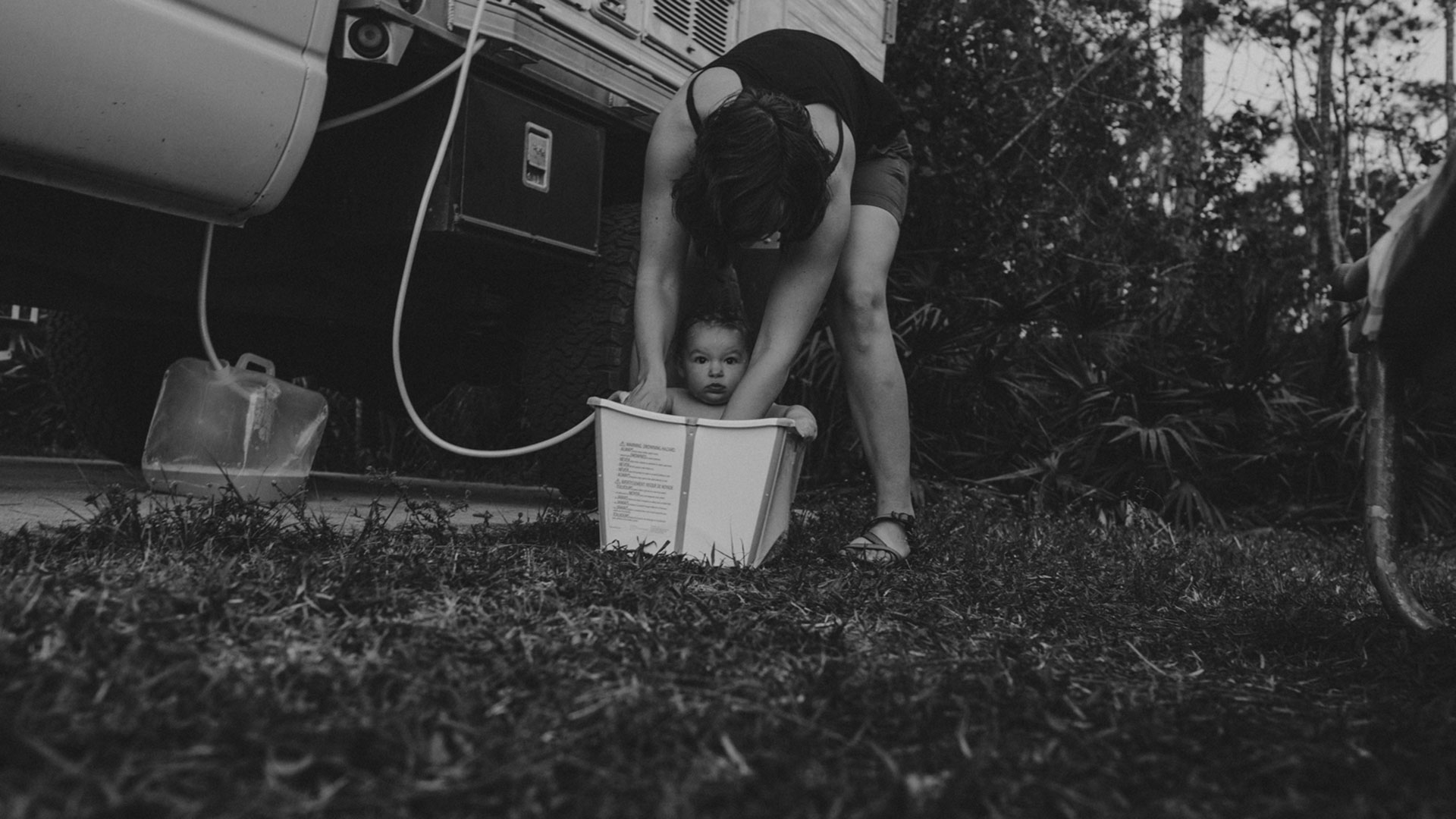
Behind every business is a dumpster. The world is full of them, you learn. That’s a good thing for us. We pack everything in, everything out. Every last shred of paper, every tin can, an astonishing number of diapers and wipes, food scraps. It all goes into a bag, and after a few days, the bag goes into an accommodating receptacle in whatever town we’re wandering through.
We throw away less than we once did. Plan our shopping around what gets tossed and forego anything with excess packaging. We refuse shopping bags outright, an advantage of the ability to wheel our cart right up to our refrigerator.
That fridge is small, about the size of a dorm fridge, but it holds everything we need for a week. Whole milk is the main concern. Our daughter drinks it down like a calf, and our grocery trips are predicated by the slosh of a half-gallon jug. There may be no better way to feel the pulse of a place than to wander its grocery aisles. We’ve shopped the sprawling, polished concrete floors of a Los Alamos supermarket, shelves packed with options, and the cramped, cracked linoleum aisles of a Green River grocer. We’ve witnessed first-hand how big of a role your zip code plays in how well you eat.
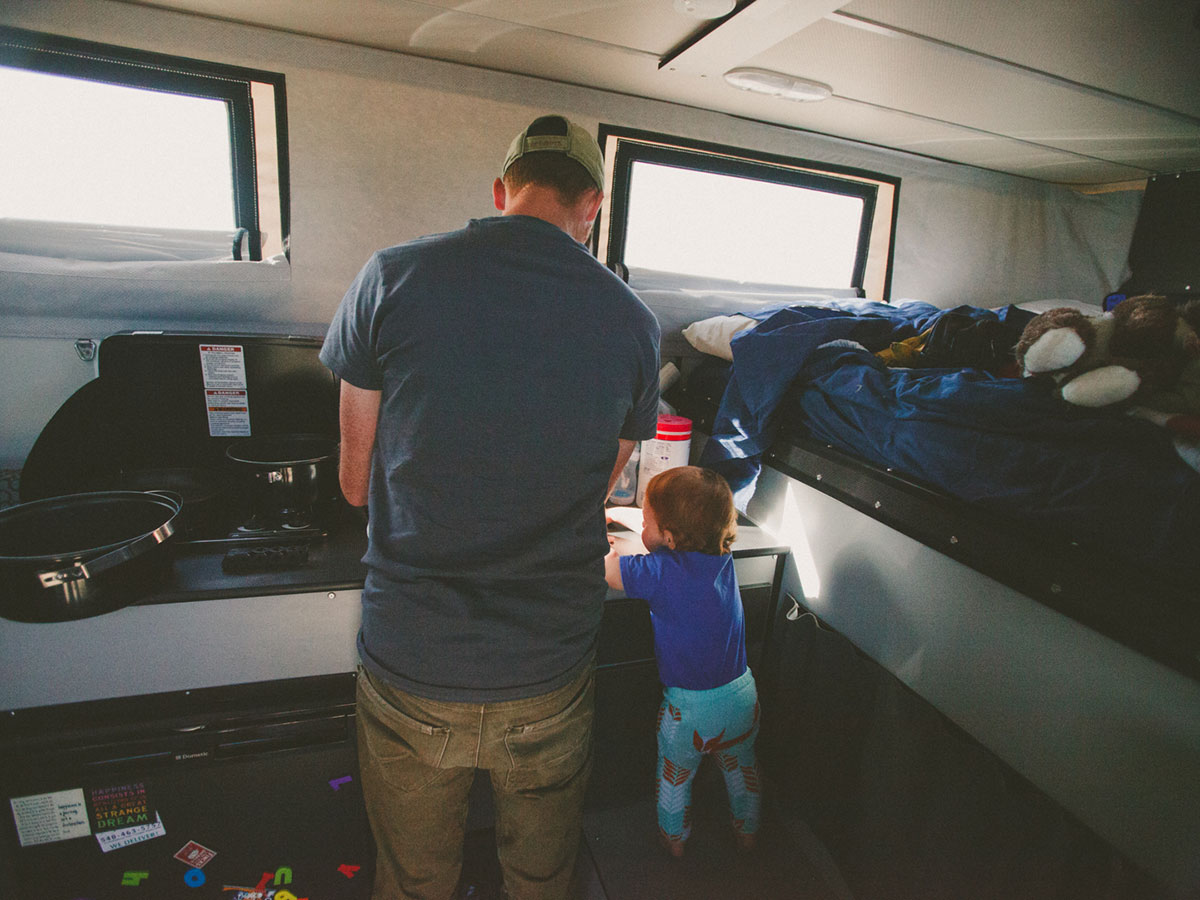
We don’t have a zip code but we do all right. I cook more than I did, conniving ways to make a decent meal with one pot. That means lots of pastas, lots of chicken. There’s time for breakfast tacos in the morning, tortillas piled with egg, bacon, cheese, roasted red peppers, avocado, and salsa. Or French toast. Maybe pancakes—oatmeal if we’re in a rush. Instant coffee is a drag, but easier to contend with than grounds and filters. Sandwiches for lunch. Or cheese and crackers.
There’s a stove inside, but counter space is tight and floor space is tighter. I cook outside when I can. Fire up the Partner Steel stove and make quick work of whatever I’m into. Do the dishes after while Beth keeps kiddo entertained.
Scrubbing and rinsing plates for breakfast, lunch, and dinner sucks up three gallons of water a day. There’s a 20-gallon fresh water tank onboard. We can run it dry in four days, depending on how we use it. Showers or emergency laundry cut that time shorter. We top it off again at campgrounds or accommodating fuel stations.
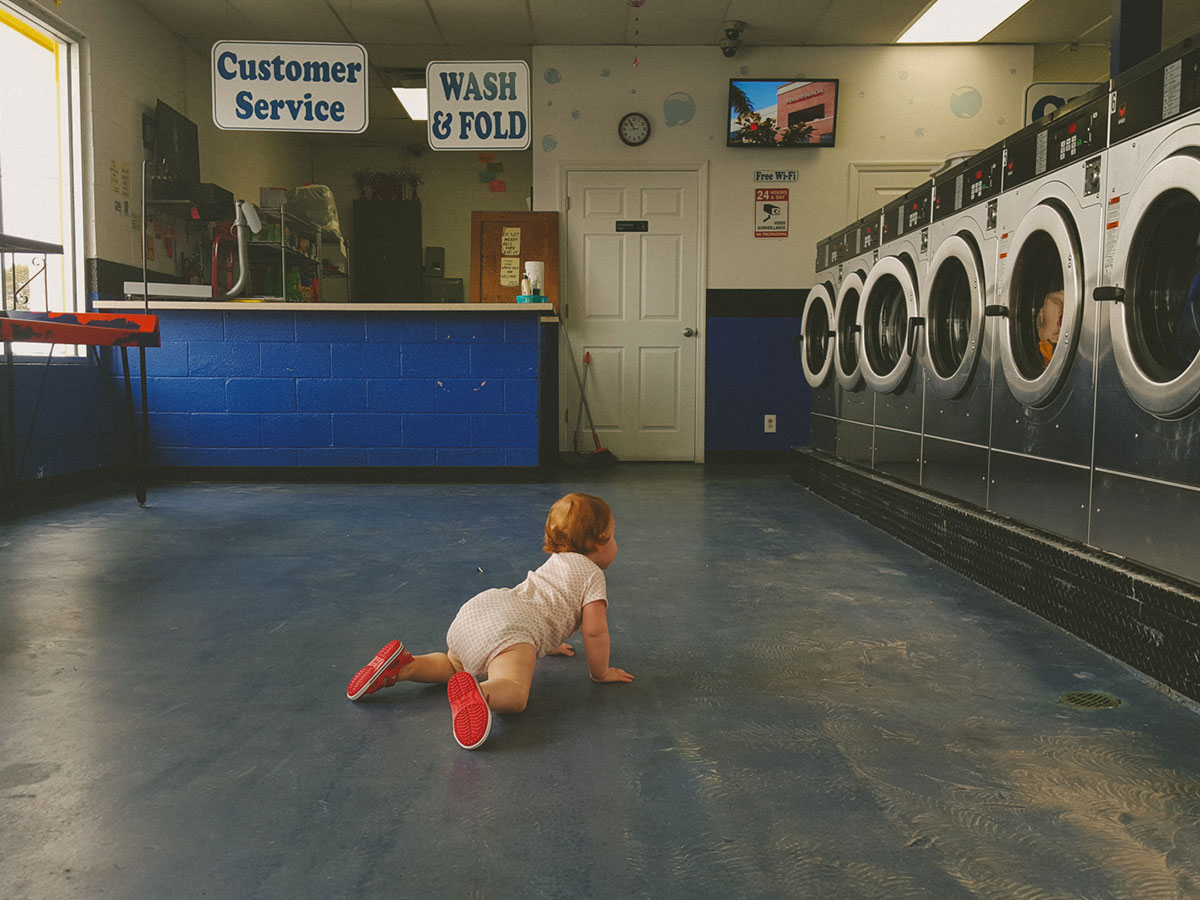
We packed enough clothes for two weeks or so, longer if we can stand to go grubby. If we’re in a pinch we’ll fill our daughter’s bathtub with Woolite and water and get to scrubbing. Hang our necessaries on a line and let them dry. Mostly, we haunt Laundromats. Spend an hour or two washing and folding while kiddo crawls around on the floor and makes friends with lint.
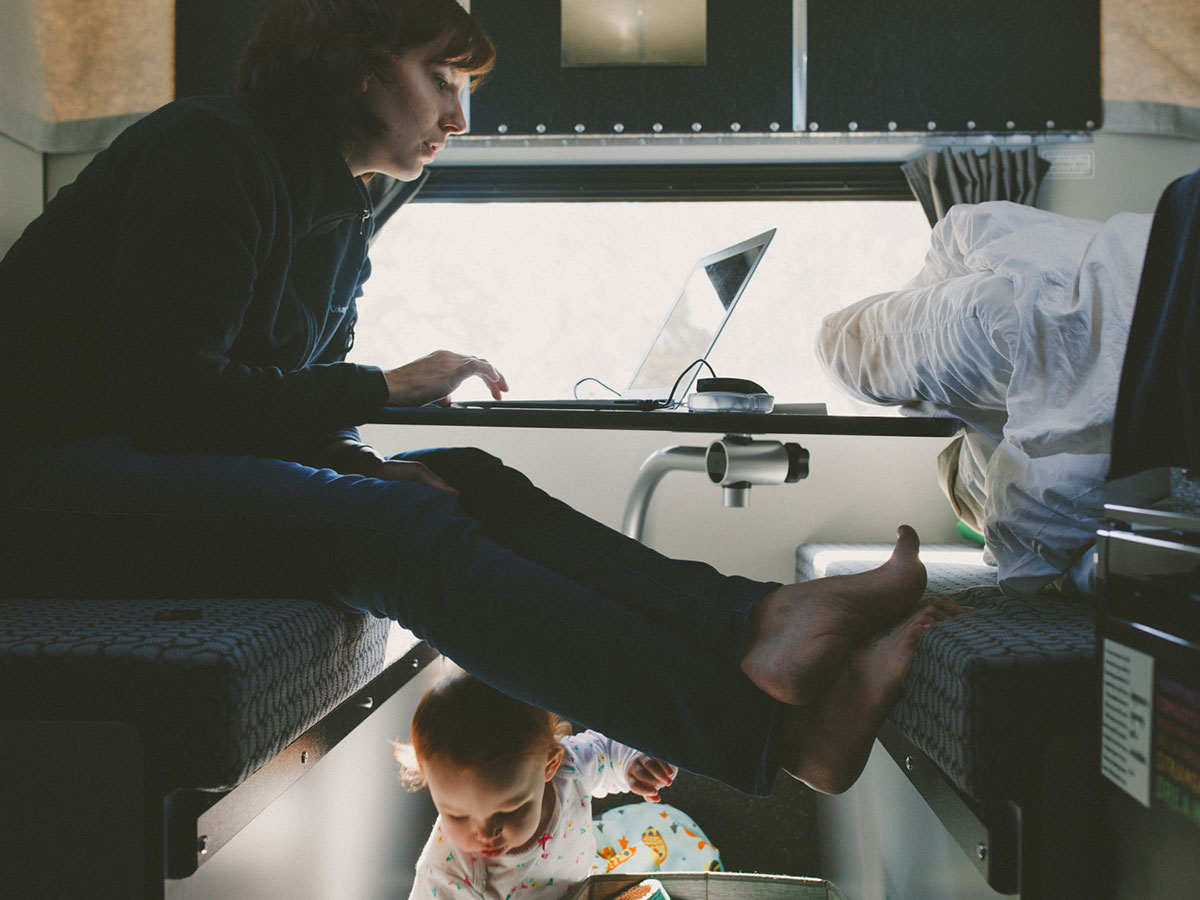
I am consumed with our consumption: water, power, fuel. The solar panel on the roof puts out enough juice on sunny days to carry us through the night, keeping the refrigerator running and the lights on. Charging our array of necessary devices. Still, I watch the charge controller, eyeing the available volts and worrying. A string of cloudy days will mean idling the truck to top off the camper’s two deep-cycle batteries.
We’ve been cursed with cold weather, and that means keeping the furnace lit, burning through propane. The camper’s two small bottles are refillable and good for about a week when the nighttime temperatures drop below freezing. If it gets too cold, I leave the water heater on to keep the tank from freezing, then bursting. Our nights fall into a cadence of fans and blowers.
It’s a rhythm. When we travel, I check the boxes. Make sure the truck has diesel. Top off the propane when we can. Fill the water. Empty the cassette toilet. Keep an eye on the pantry.
Keep rolling, always.
Loading comments…
Comments couldn’t be loaded. Please refresh the page.