
Welcome to The Downshift (TDS for short), a daily sweep of the morning’s top headlines from the auto industry and car culture, curated by The Drive’s editorial team. Each story gets a short summary and a link to the original source if you want to dive deeper.
Here’s what’s happening on Monday, September 14, 2026:
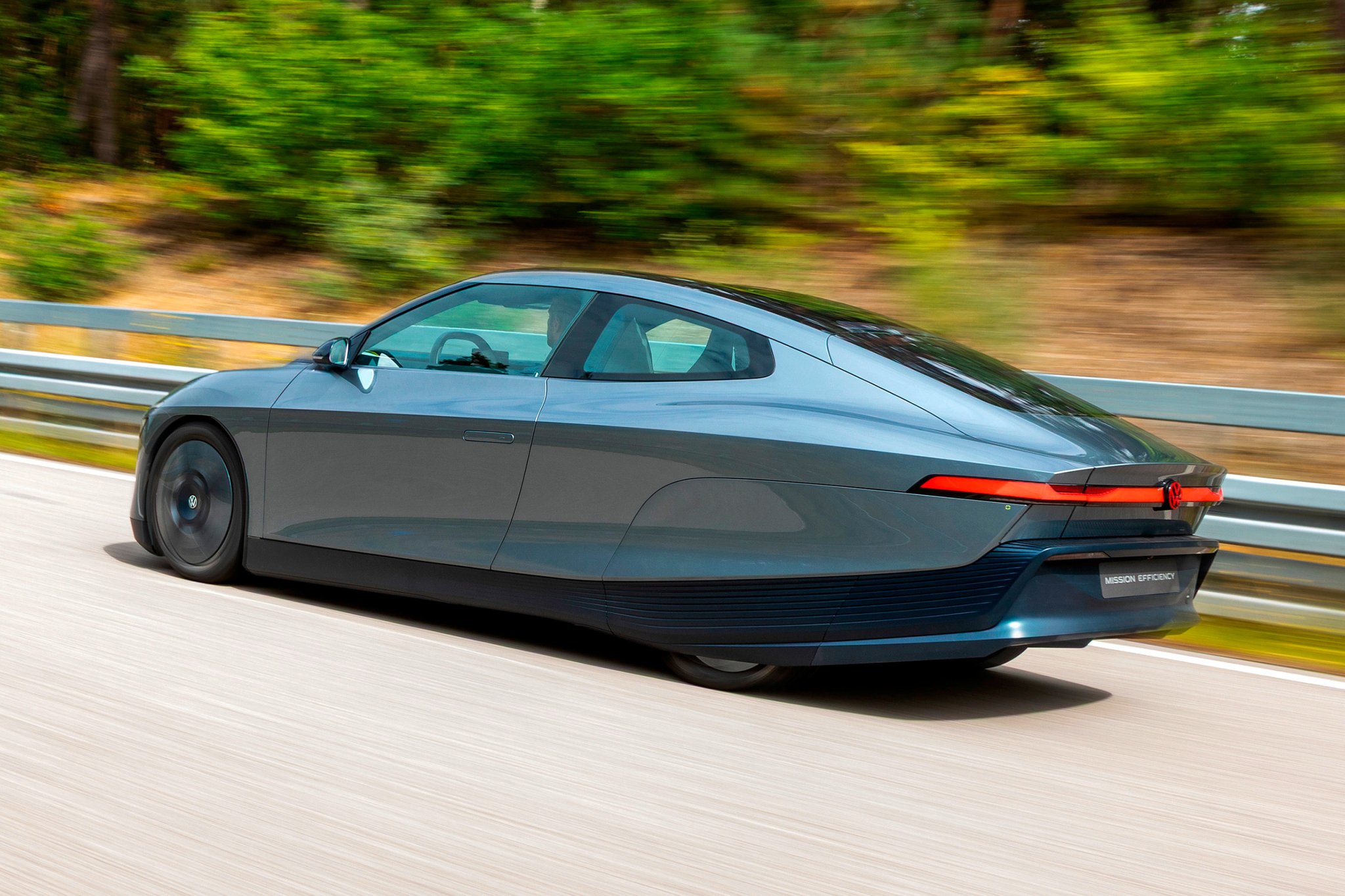
🔋 Volkswagen has revived the soul of its record-setting XL1 EV in a new prototype, called Mission Efficiency. The company calls it “the world’s most efficient near-production electric car,” with a tapered, teardrop shape that achieves an impossibly low drag coefficient of 0.158, well below that of any other road-legal vehicle. It has two doors, a relatively small 55-kWh battery, and achieved a stunning 8.3 miles per kWh and 457-mile range, only needing to recharge once over an 800-mile journey from Wolfsburg to Vienna. While VW is quick to point out that everything the Mission Efficiency is doing is technically achievable at series production scale today, there is no indication the company will sell the vehicle. [Volkswagen]
Correction 3:45 p.m. ET: An earlier version of this article mentioned an 800-mile max range for the Mission Efficiency. This estimation appears to be incorrect, and we’ve corrected the story to more closely represent the vehicle’s theoretical range on a full battery based on the data VW shared, which lacked a max-range figure. We regret the error, and kudos to our friends at The Autopian for sounding the alarm on this one.
🌏 President Donald Trump said in a Fox News interview that he would be open to Chinese automakers selling cars in the U.S., with conditions. “Now, if China wanted to come in, and open a plant to build their cars here, I’d be OK with it—Japan does it—but they hire our people. The big thing is they hire our people, they use our people. What I don’t want is them to build in Mexico and just, you know, build it inexpensively and ship it across the border.” [Automotive News]
🛢️ Ford is recalling 223,474 F-150 pickups, across model years 2023 through 2027, for fuel tanks that aren’t properly secured to the vehicle and could detach while driving. [Reuters]
💨 In other Ford news, “sources familiar” say the automaker has eliminated auto start/stop from the 2027 Bronco Sport. The EPA recently took aim at the feature, which was commonly incorporated by automakers to meet emissions regulations even though it was never mandated by law. The Trump administration’s gutting of emissions controls linked to its repeal of the endangerment finding—the legal basis that required federal regulation of greenhouse gases—encourages OEMs like Ford to sell cars without the functionality, a prospect that CEO Jim Farley favors for the company’s bottom line. In August, Farley said, “EPA’s announcement this week will give us more flexibility with respect to our product mix and volume. Once finalized, this will provide further opportunities to improve profits next year and beyond.” [Ford Authority]
🏭 An interview with Toyota’s new CEO, Kenta Kon, delves into the many miniscule efforts the company is making to reduce different types of parts, and consolidate certain components across its entire model ranges. Seat components, door handles, and side mirrors are examples of areas where Toyota has slimmed down its offerings, as Kon has vowed to cut costs spent in unnecessary or less-noticeable areas. [Automotive News]
🐎 Ferrari has introduced a new, special track-version of its 296 GT3 Evo race car, called the 296 GT Modificata. It’s much more powerful than the GT3 version, making 720 horsepower, with more aggressive aero including a massive rear wing. [Ferrari]
🤖 Hyundai’s next-generation driver-assist platform co-developed with Nvidia, which is planned to allow for Level 2++ functionality, has been delayed until a 2029 launch. [Reuters]
🏁 Weekend race results:
- NASCAR O’Reilly Auto Parts Series at Gateway: Jesse Love for Richard Childress Racing
- IGTC Suzuka 1000km: Laurin Heinrich, Alessio Picariello, and Julien Andlauer for AO by Absolute Racing
- European Le Mans 4 Hours of Silverstone: Matthias Kaiser, Jake Hughes, and Ben Barnicoat for Algarve Pro Racing
- MotoGP at Misano: Marc Marquez for Ducati
- Formula 1 Spanish Grand Prix: Kimi Antonelli for Mercedes
- NASCAR Cup Series at Gateway: Kyle Larson for Hendrick Motorsports
Got a tip or feedback for TDS? Reach out to tips@thedrive.com
Loading comments…
Comments couldn’t be loaded. Please refresh the page.