
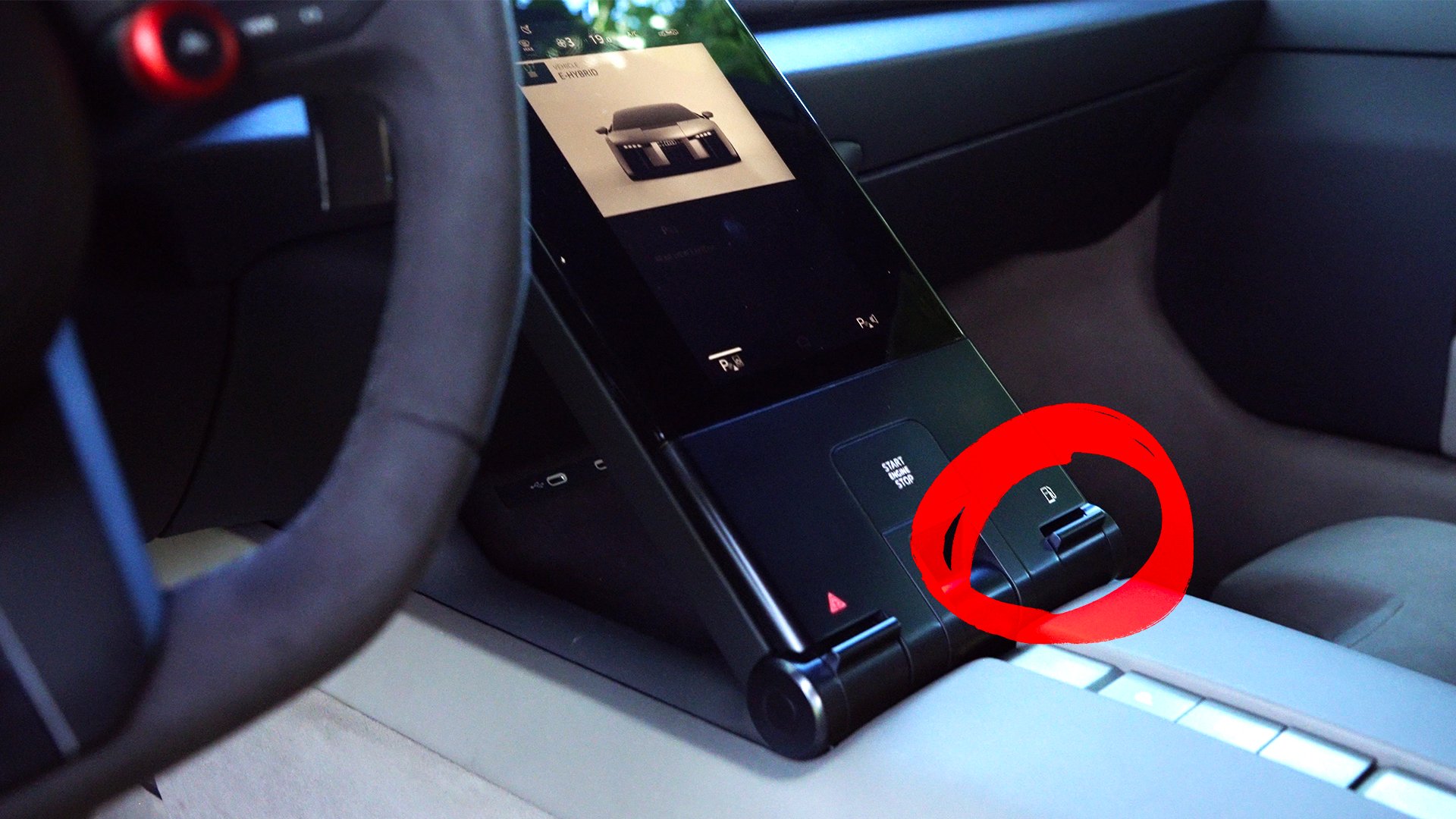
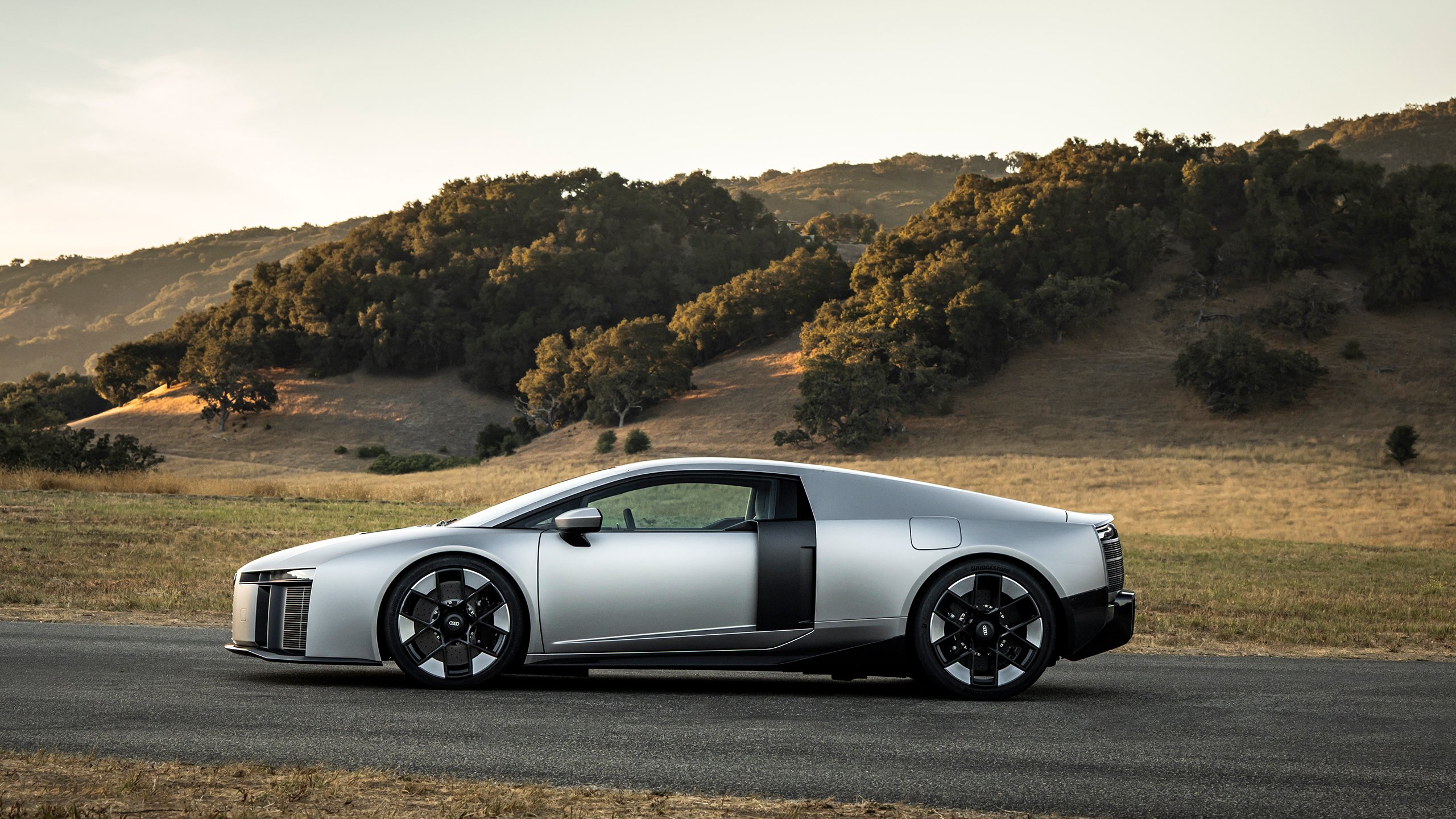
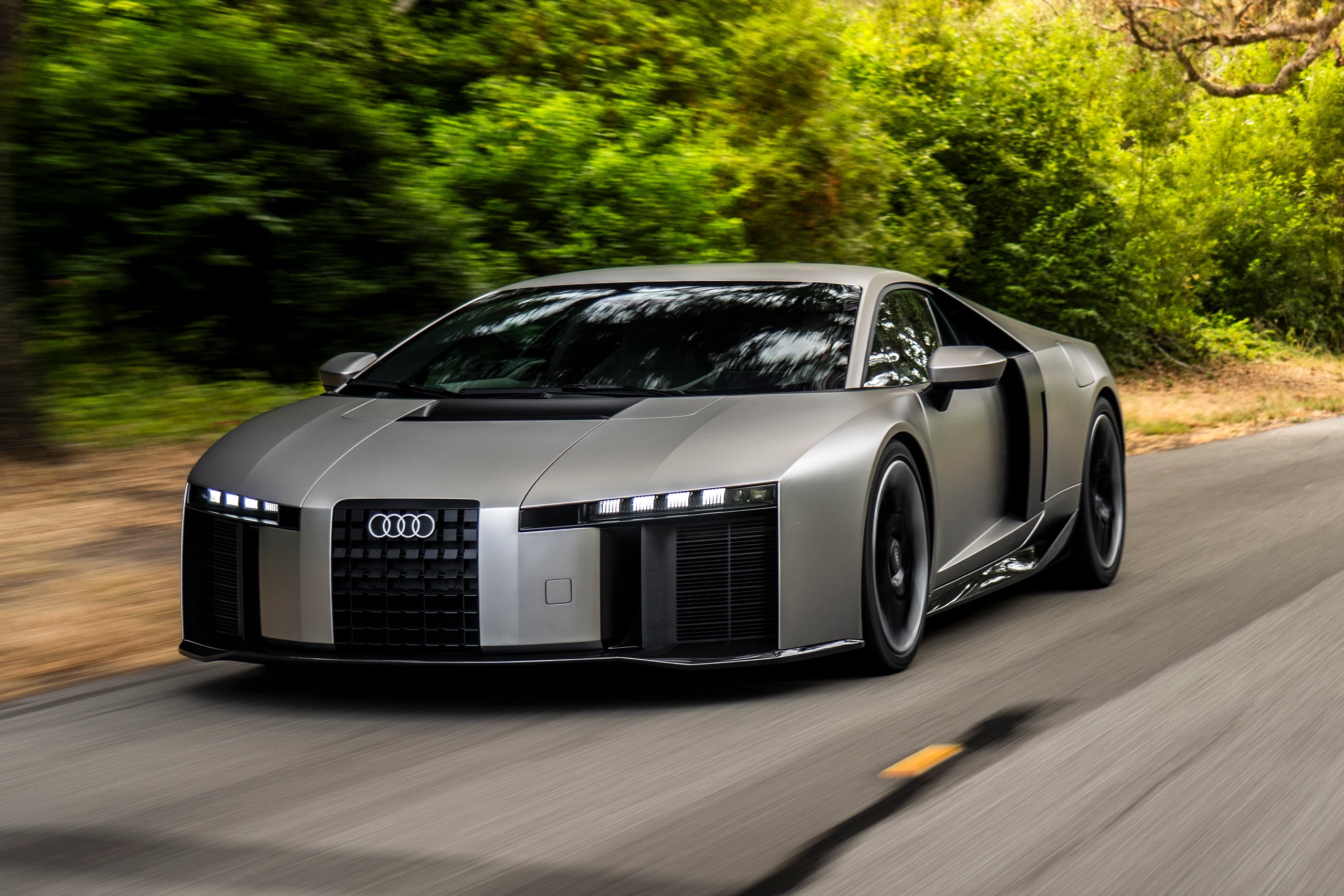
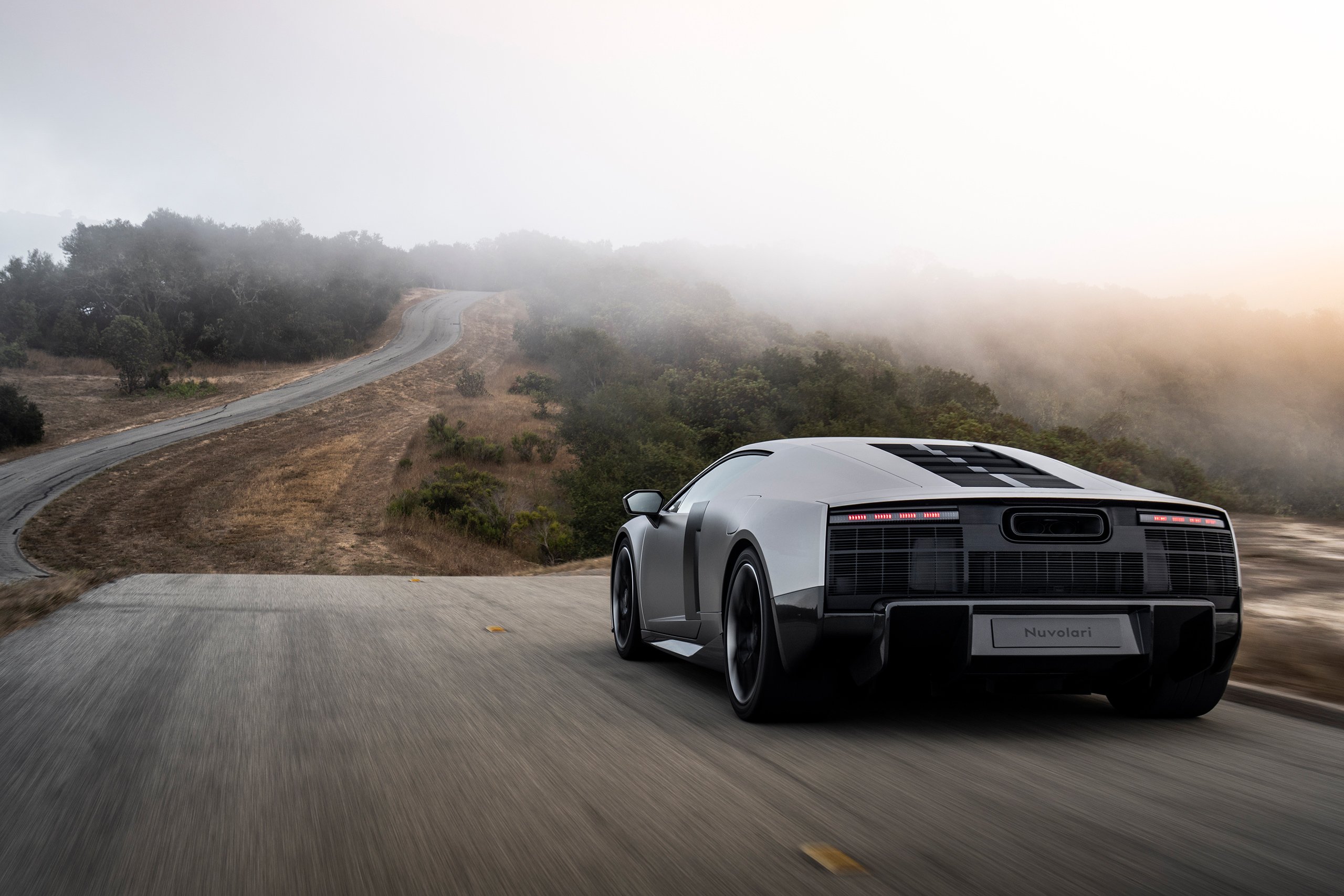
There’s something different about the Audi Nuvolari. Maybe it has something to do with the fact that pretty much nobody saw it coming, or maybe it’s the uncompromising Bauhaus ethos toward its design, an aesthetic that almost makes the last-gen R8 look cute by comparison.
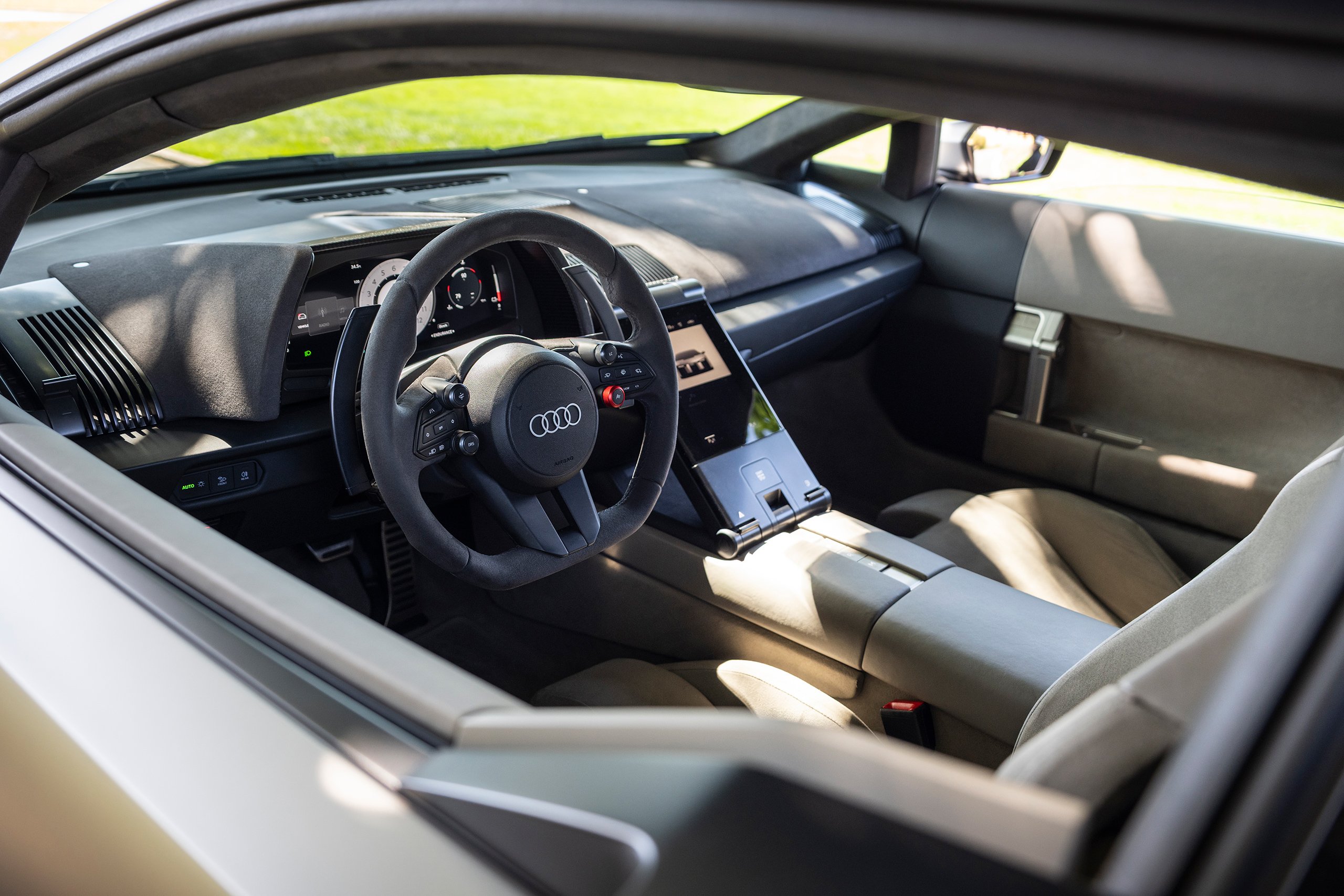
Whatever it is, every aspect of the Nuvolari feels purposefully crafted—which is why its ginormous fuel door release and hazard light switches, located at the bottom corners of the slanted infotainment screen, are so strange. Apart from the usual controls on the steering wheel, the engine start/stop, the push-button gear selector, and the window and lock switches on the doors, they’re among the few actual buttons in cabin. Hazard light controls need to be prominently placed, but the fuel door release? That’s odd.
Our editor-in-chief Kyle Cheromcha recently got up close with the Nuvolari during Monterey Car Week. He also had an opportunity to speak to Massimo Frascella, Audi’s Chief Creative Officer and Head of Design, about the influence Audi’s new supercar will have on the rest of the lineup. Naturally, the big button was one of his first questions.
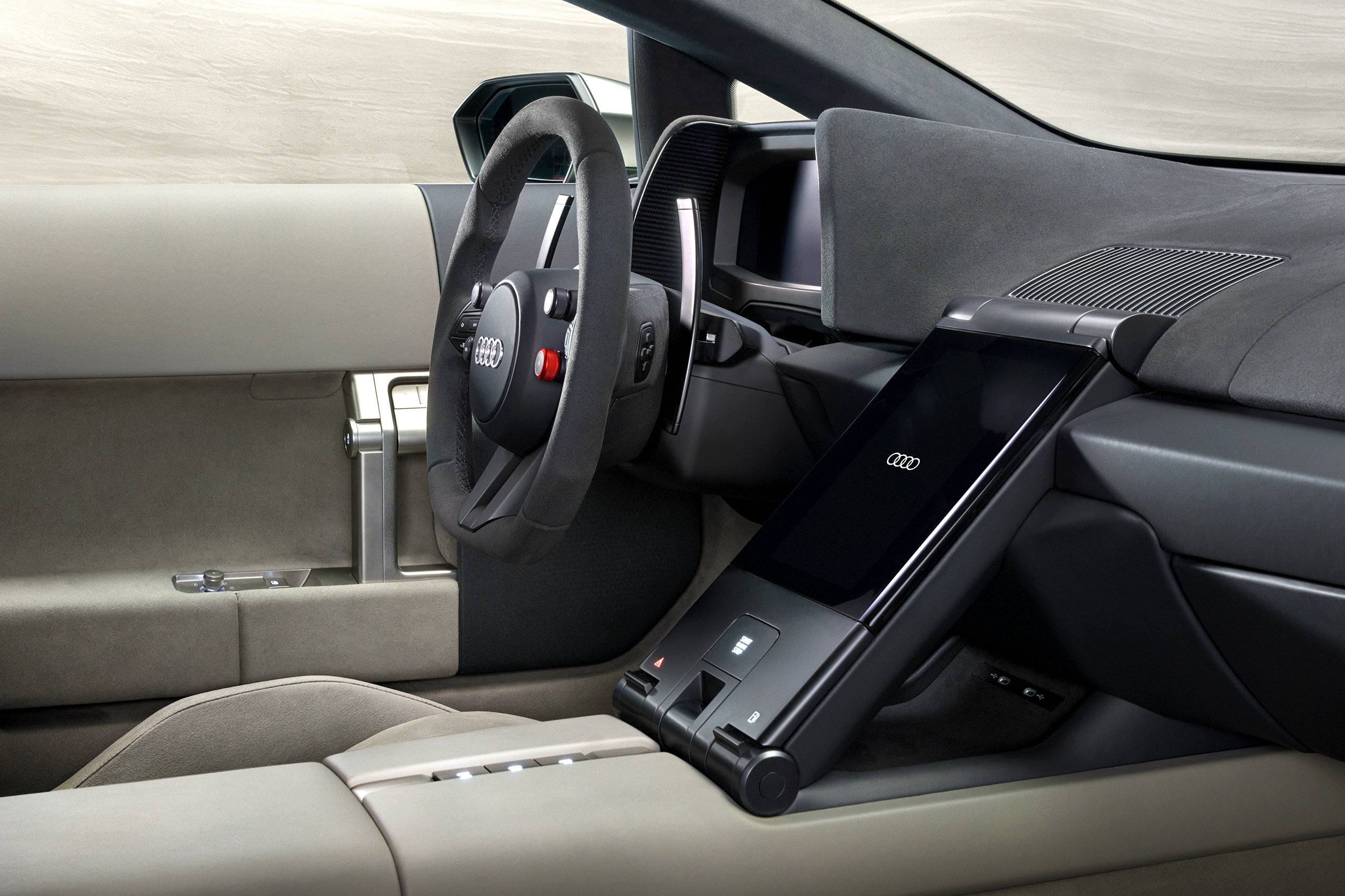
Frascella paused, exchanged a knowing look with the PR person sitting in on the interview, and chuckled. When Kyle pressed again, he gave a very non-specific answer.
“I think that was a place that felt logical and timed in the development of the interior,” Frascella said, shortly before adding that there was “no particular reason” for its location. “It’s interesting. It’s not something that I particularly go to and it’s interesting that you actually pointed it out.”
Interesting indeed. Though he did leave one clue for us to chase: “timed in the development of the interior.” The Nuvolari shares a platform and powertrain with the Lamborghini Temerario, much like the old R8 did with the Gallardo and Huracan. The Nuvolari was also taken from design sketch to final prototype in a ridiculously short amount of time, just 405 days. Could the Lamborghini platform and compressed development timeline have something to do with it?
As it turns out, yes. Most likely anyway. We started digging, and we found that while the Temerario has a completely different interior, it has a fuel door release button in the exact same spot. It just doesn’t look like it at a glance it’s a small button located flat on the horizontal part of the center console, below the floating infotainment screen. In the Audi, it’s that big rocker switch that appears to be on the infotainment panel. But side by side, you can see that the position is the same. The hazard switches to the left also match.
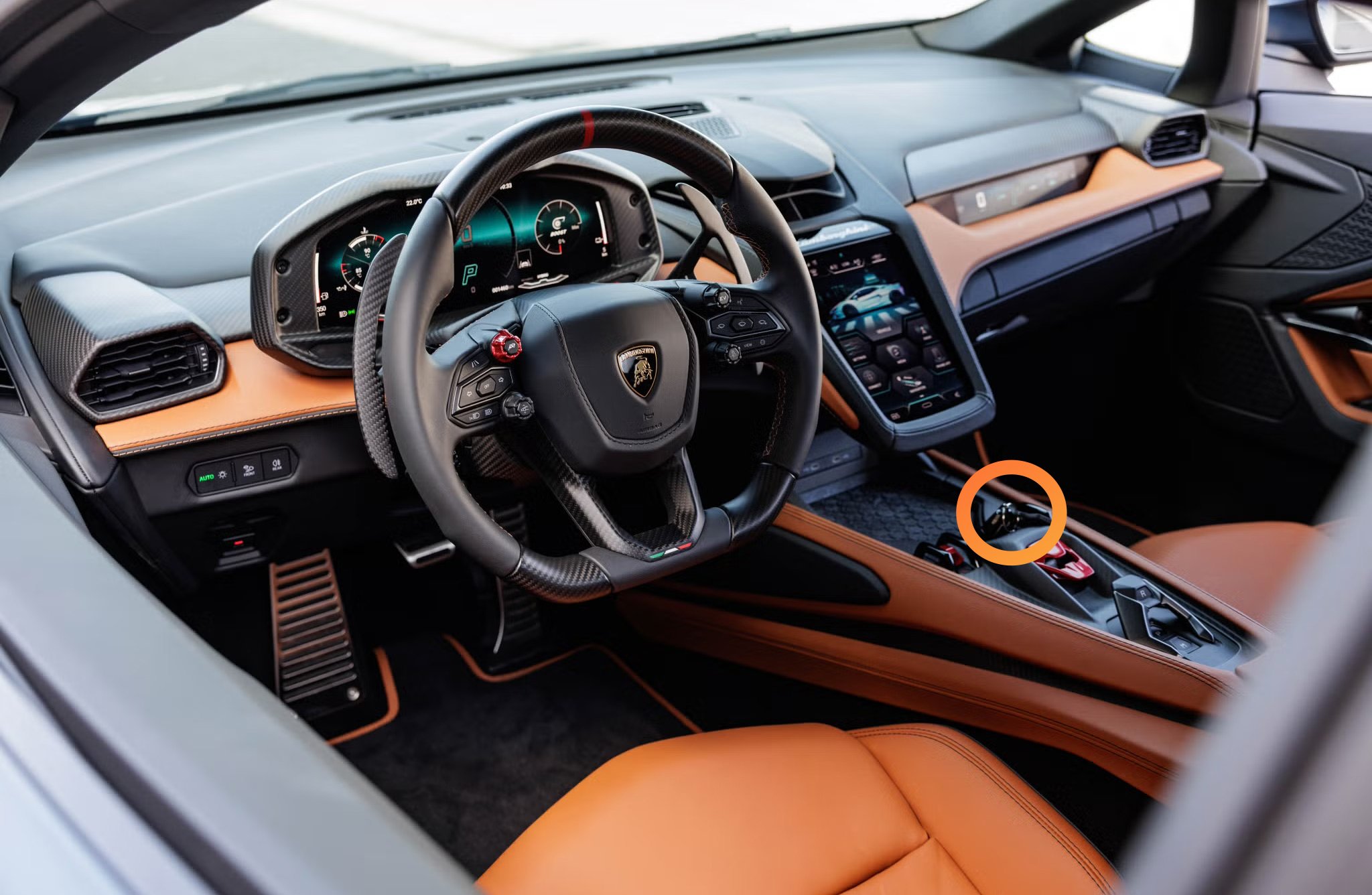
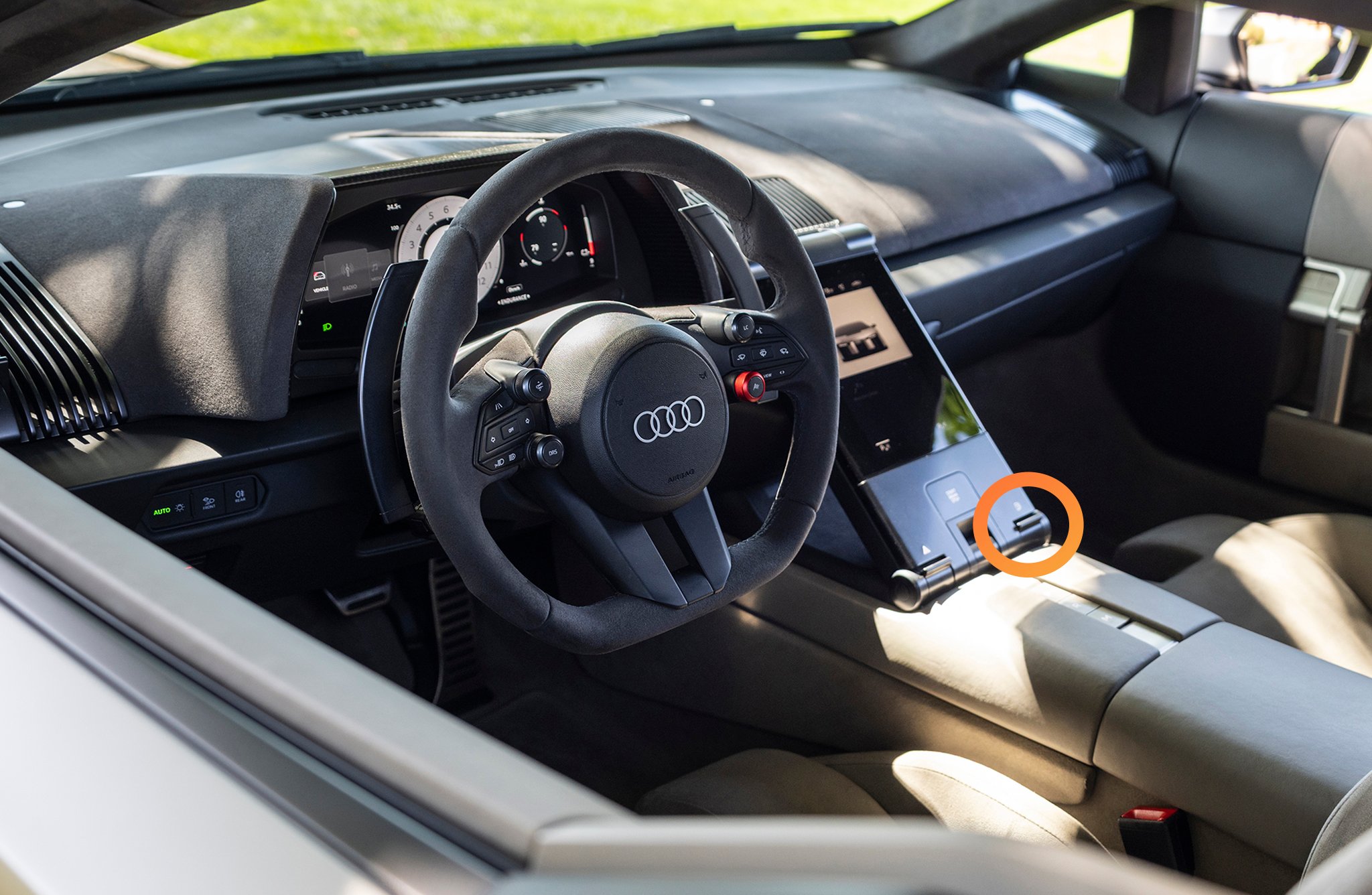
It would appear that Audi didn’t have the bandwidth to rewire the cabin and relocate those buttons as the Nuvolari came together, so it employed an admittedly smart design trick to hide the identical positioning as much as possible. Audi won’t comment on it further, so we can’t say that with 100% certainty, but it’s the only explanation that makes sense.
This is kind of silly, but we’re not trying to throw shade on Audi at all. The Nuvolari is a massive achievement, and if anything, this is just a fun easter egg for nerds like us who wonder about the size and placement of buttons. No one is trying to cover up that the Nuvolari is based on the Temerario. And it’s a credit to Audi that the fuel filler release button might be the biggest tell in the whole car—apart from the screaming V8.
Got a news tip or another weird observation about a car? Hit us up at tips@thedrive.com
Loading comments…
Comments couldn’t be loaded. Please refresh the page.