
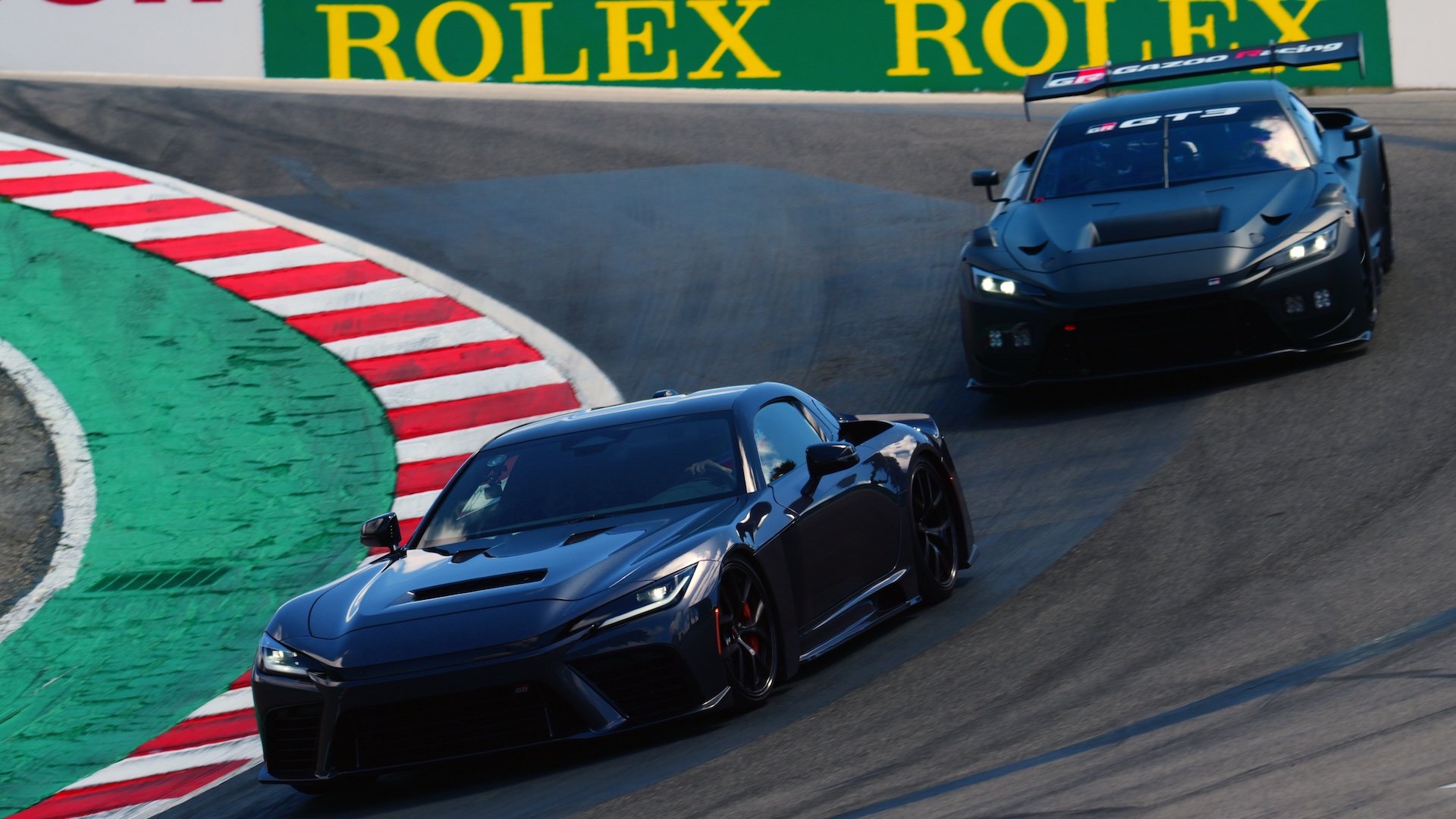
Earlier this week, we reported that the U.S. allocation for Toyota’s newest supercar, the GR GT, was basically sold out. Emphasis on basically, because the automaker later clarified that no money has exchanged hands yet, but they’re well aware that there’s more demand than there is supply—and that’s on purpose.
During last weekend’s engineering briefing at Laguna Seca, Toyota Senior Vice President of Automotive Operations Andrew Gilleland shared a few more interesting details about the project with me. Specifically, the business case for the enormous expenditure of building a new halo car and a GT3 race car at a time when the economy isn’t exactly booming.
Gilleland was candid about the project’s complex economics and went so far as to say that the “car itself makes no financial sense.” However, he also expanded on Toyota’s plans to make sound long-term financial decisions, as the street and track versions of the supercar reach more buyers over the years. He explained that one of the new car’s key attributes is its versatility, not just from a track and performance perspective, but for the drivers themselves.

After hearing the words “gentleman driver” mentioned several times during the briefing, I asked Gilleland if that was Toyota’s primary business model and how it expected to put cars in customers’ hands—be it a one-make series, customer cars via established teams, or maybe even something like Ferrari’s Corse Clienti.
“We have talked about doing customer races, since there really isn’t a customer racing program from Toyota today,” Gilleland told The Drive. “This car was designed, built, and engineered to be a customer racing car, so when [pro racer] Jack Hawksworth says it’s easier to jump in and drive, that is on purpose. We want that gentleman driver to get into this car and be able to drive it fairly quickly. That has been a big focus of the development of the GT3 car.
“I think the car itself makes no financial sense, but what does make sense is that it shows what the company is capable of and creates that halo car. I mean, we race to make a statement—every car company does—but it ultimately shows what we’re capable of,” he added.
Hawksworth, who has raced in everything from IndyCar and IMSA to the 24 Hours of Le Mans, also shared his experience as a development driver for the GR GT and GT3 programs. He went into detail about how much more versatile the cockpit is compared to the current Lexus RC-F race car, and how it can fit a wider range of drivers (in terms of size and skill). He described it as being much more “spacious and comfortable”, meaning it would be less intimidating to new drivers and would provide a flatter learning curve. This would effectively make the car an “easier sell.”
Gilleland also emphasized that Toyota’s customer racing program would greatly depend on production cadence and output. And even once Toyota figured that out, it would need to learn many other aspects from its current racing programs before deciding on a specific route.
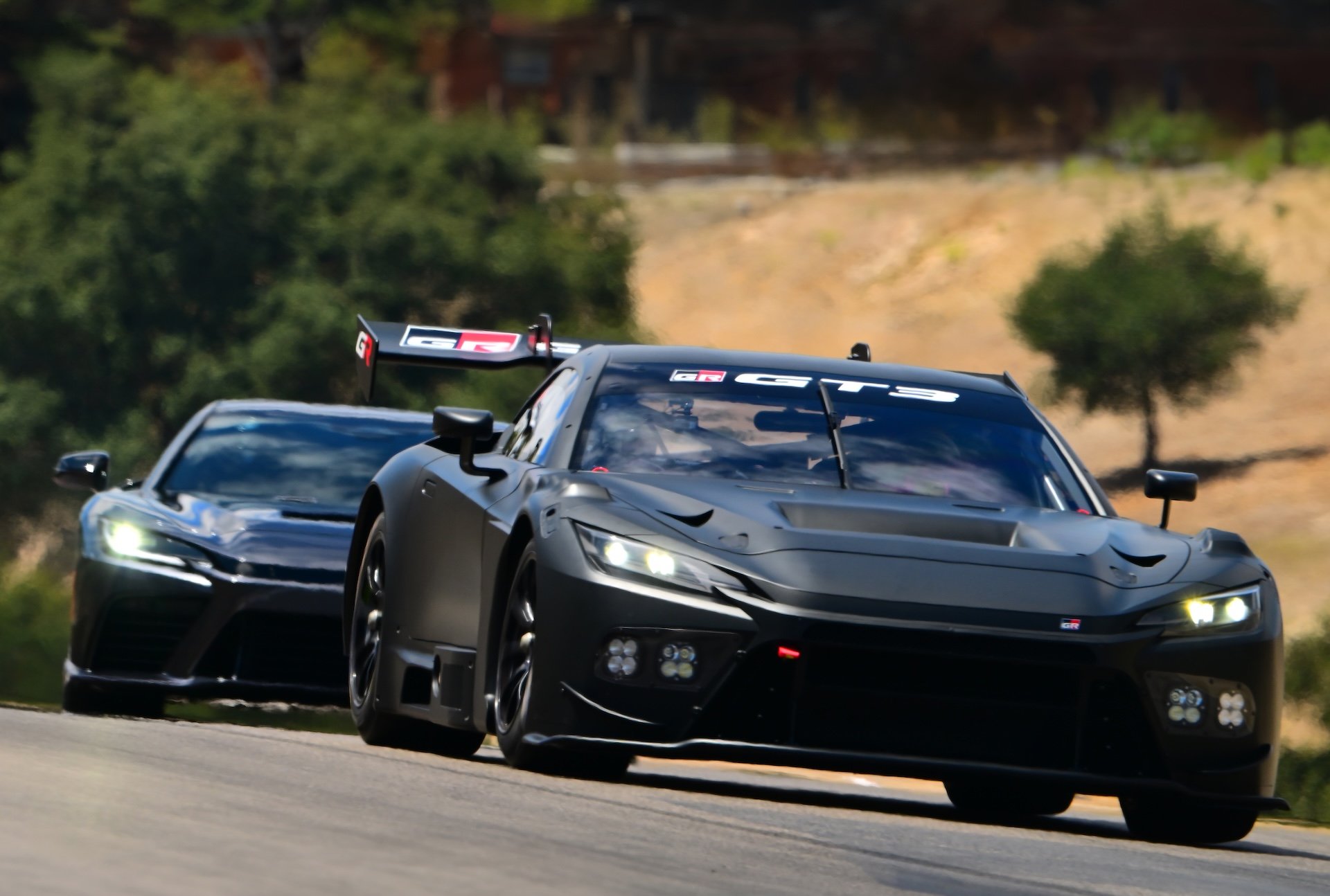
“The issue really comes down to the production levels we can achieve, so for us, in 2027, it’ll just be [IMSA’s] Vasser Sullivan Racing, but in the 2028 racing calendar year, we will have a customer program,” Gilleland added. “It’ll be small to begin with. Do I see a day, maybe five or six years into the life cycle, when we’ll be able to sell one [GT3] to a customer? Yeah.”
“Frankly, this is one of the reasons we’re doing GR Cup and GT4; to understand customer racing and what we need to do as an OE and what the teams need to do—so that’s part of the genesis of the GR Cup,” Gilleland said. “The other part is track and development. What the GR Cup taught us is: what kind of support do we need, and what kind of racing engineering—even how many haulers do we need for parts?”
“Also, the problem is that these things are spaceships, you know, so you’re gonna need some level of support trackside,” Gilleland explained. “We’re trying to create a ladder program for a customer racing, and we’re developing that internally with TRD today to ensure we can support it.”
The tenured executive wrapped up by saying that this whole project really came down to Akio Toyoda’s vision that he established decades ago, when he set out to rid the automaker of numb cars that weren’t fun to drive. His goal was to build a world-class sports car, and this is the fulfillment of that dream.
“The technology that goes into this [GT3] car and the road-going car, you can get that in a Camry,” said Gilleland. ”I think one of the obvious big passions when Akio first took over as CEO 20 years ago was that he felt the cars were numb and not exciting or fun to drive. Now, the cars have evolved, so if you go get in a new Camry, it’s actually fun to drive. They fixed the problems, and it’s now fun without being harsh or uncomfortable.”
“We race to win, and we want to win more races, but we also use racing to develop our people. When we look at the GR GT and GT3 from a financial standpoint, it’s not just about the cars but also about what racing does for the brand and the entire ecosystem,” he concluded.
Got a tip? Email us at tips@thedrive.com
Loading comments…
Comments couldn’t be loaded. Please refresh the page.