
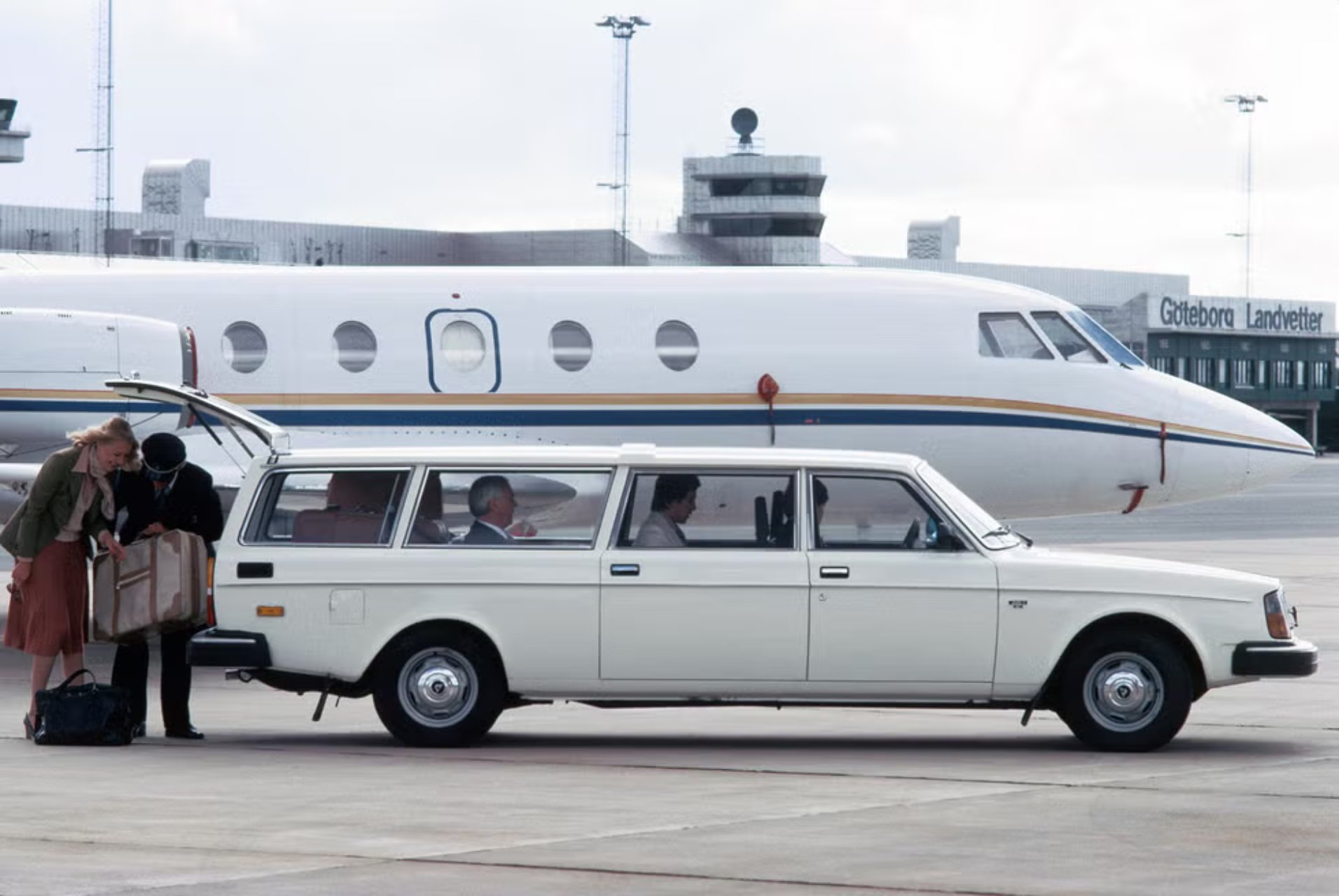
Back before we had gargantuan three-row SUVs to haul stuff around in, station wagons were often configured as utility vehicles. Prime example: the Ecto-1. Before it was re-tasked as an otherworldly urban assault vehicle, it served New York City as an ambulance. And while the Ghostbusters’ ride was effectively coach-built by Miller-Meteor using GM engines and underpinnings, other niche models, like this Volvo 245 Transfer, came that way straight from the factory.
You’ll need to break out your browser’s translator (or speak Swedish) if you want to dive deep under the hood of this oddball long-roof model. The brochure showcases it as a taxi cab, but it was also marketed as a solution for rural ambulance and school bus services. According to Teknikens Värld, the added length made it both difficult to maneuver and more expensive to fill up if you drove it around town a lot, but that’s what you get for stretching out what was already a pretty long car in 1977.
The standard 240 wagon was around 190 inches long, which is somewhere between the Honda CR-V and Accord; the 245 Transfer, meanwhile, checked in at about 220 inches. That’s about six inches shy of a 2026 Chevy Suburban. The difference is stark in photos.
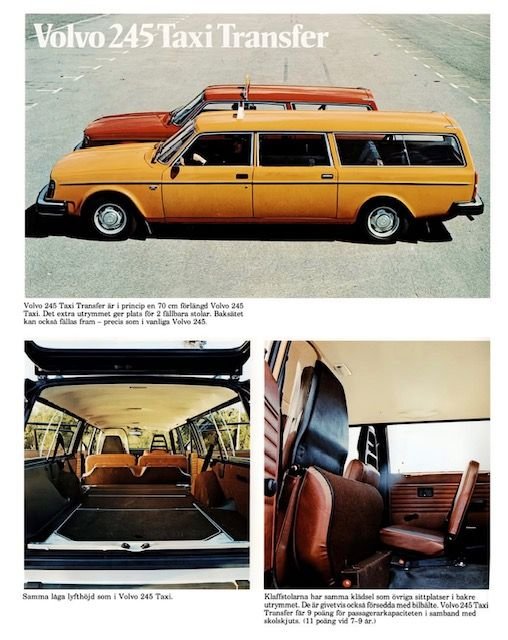
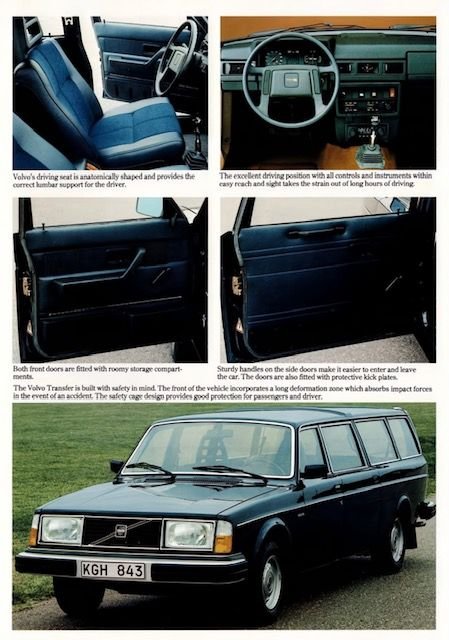
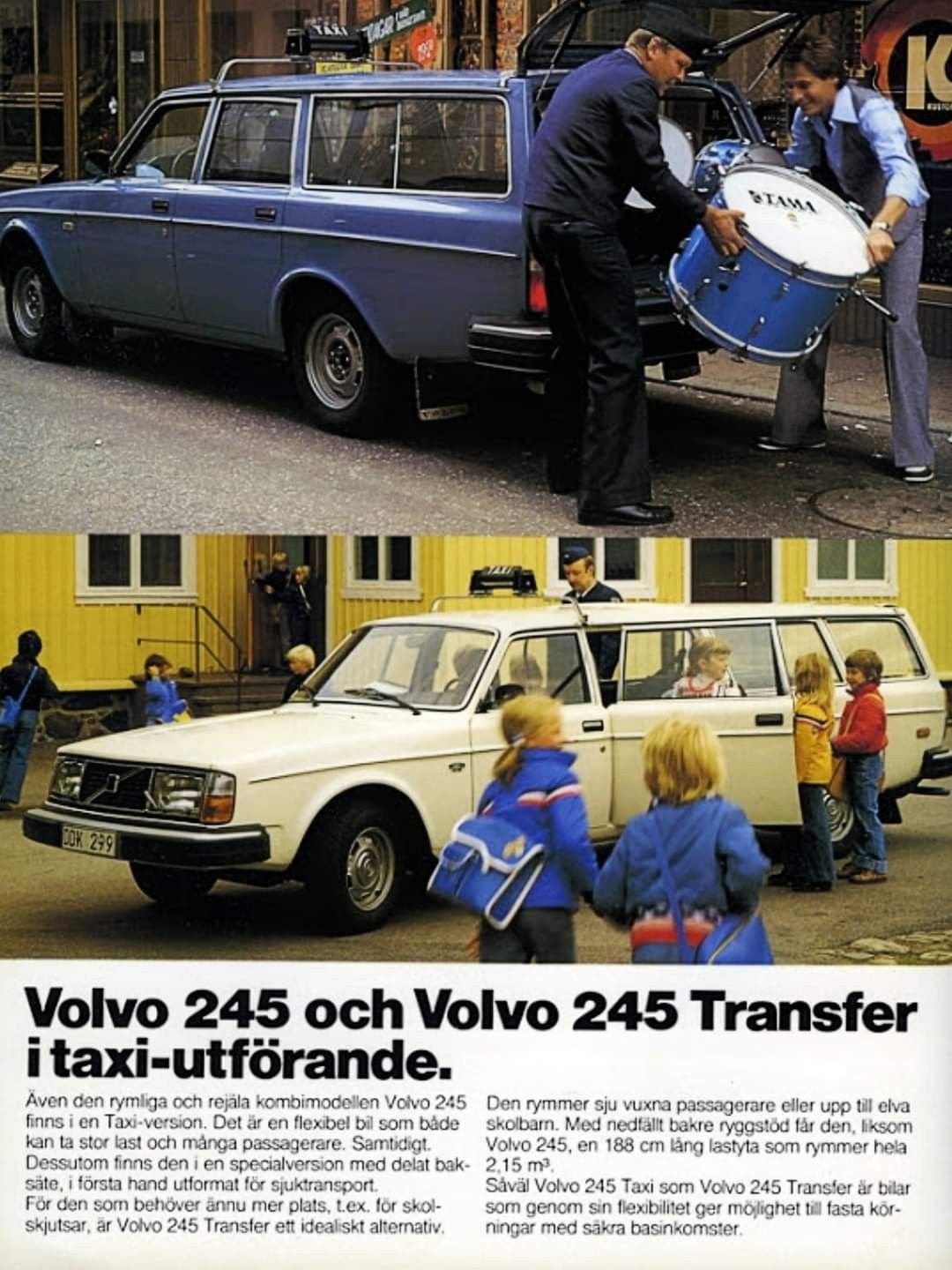
Despite the funky proportions, the 245 Transfer’s vitals stack up pretty well against a modern three-row SUV’s. It could seat seven in its standard configuration, but the school bus layout accommodated up to 11 kids (and, presumably, an adult driver). Passenger models were also sold as airport shuttles and sightseeing coaches.
Those who valued the rear cargo space could have them without the extra seats, leaving a six-foot-deep hatch area to fill with… well, drums, apparently. And yes, it was also available a hearse. Only 280 were reportedly built.
It might be the right size and shape, but the 245 Transfer lacks one thing modern SUVs don’t: power. The 245 Transfer was built between 1977 and 1982, so it overlapped with the introduction of a diesel engine to the 240 lineup, but most 240s of the day shipped with a 2.1-liter four-cylinder making about 100 horsepower. There doesn’t appear to be any consistent documentation of exactly what powertrains these had when they left the factory. Presumably, they’d have been offered with whatever had the most torque.
Got a story tip? Let us know at tips@thedrive.com!
Loading comments…
Comments couldn’t be loaded. Please refresh the page.