
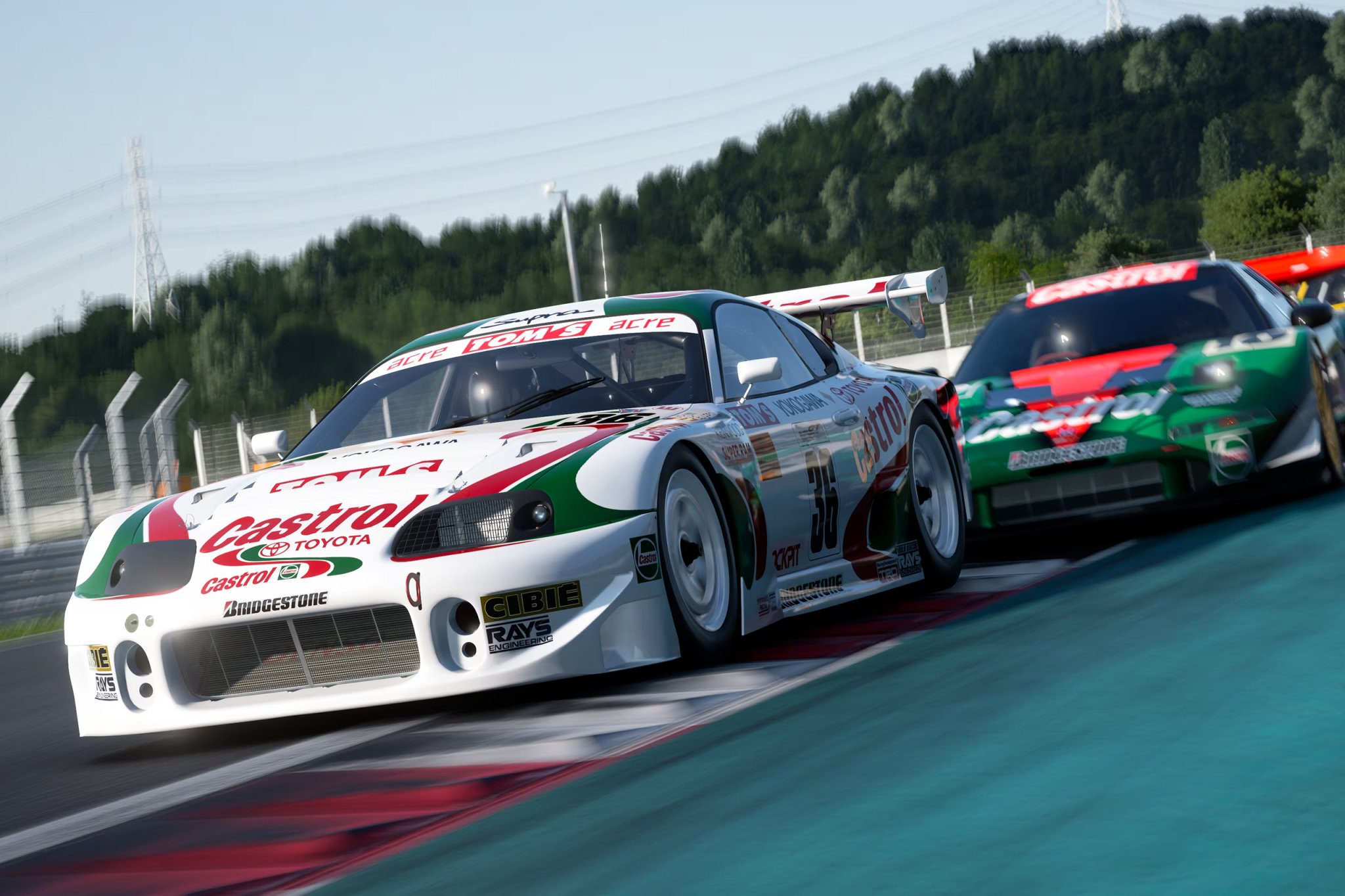
Regular Gran Turismo 7 players know that the game has transformed by leaps and bounds since its release way back in 2022. Sure, some bugbears will seemingly never vanish—chase-the-rabbit AI is eternal—but in most respects, it’s a very different experience today than on day one, and generally for the better. Unfortunately, that last point does not apply to GT7’s physics model, which seemingly everyone can agree reached a nadir after update 1.71 a few months back.
The conversation around GT7’s latest handling changes, and especially the way that conversation has slowly grown louder since August, has been remarkable. Polyphony Digital has never shied away from sweeping physics updates to its driving sim over the years, much to the chagrin of fans. The adjustments are often so significant that the studio will wipe the leaderboards clean when a big patch drops, because the old times reflect totally different dynamics. It’s the insult added to the injury of cars you may have enjoyed in the past suddenly behaving like they never have before, and those changes aren’t usually welcome.
With every update, then, there will naturally be folks who consider it a step backwards or an improvement. But this patch, which predated Spec IV dropping last month, has people speaking up that usually don’t, myself included. Initially I dismissed the chatter as nothing out of the ordinary, until I started noticing players from the game’s own official esports league, the Gran Turismo World Series, and influencers making their displeasure known in recent days.
Everyone might have a slightly different read on what’s precisely wrong with GT7’s physics, but the critics seem to share a basic, overarching sentiment: there’s just far too much grip. In my experience, cars don’t break traction like they used to, and nothing feels as playful as it was before. On paper, that would suggest that the game is far too easy to drive now—and it is easier, certainly—but I actually find that the front-axle grip is so extreme, and the centering on controller so strong, that it’s actually made my steering much jerkier.
I can’t tell if I’m faster or slower now, but I know for sure that, with these physics, I’m an extremely awkward driver who can’t hold a consistent line anymore. There’s zero flow. That sucks, especially because GT7, for years, has been the sim I’d point to that mastered optimization for pad players. Nothing else handled as naturally on a controller, but that’s certainly not the case anymore.
I wanted insight from the pros, though, so I got in touch with Mikołaj Sedziak, a two-time GT World Series Manufacturers Cup finalist who races for Vanquish eSports. Just hours before we started chatting, Mikołaj posted a YouTube video that I recommend anyone interested enough to read this article should watch, because he breaks down the problem and lays the issues so bare, you’d figure there’s no way Polyphony can let the state of things persist.

Gran Turismo 7's Physics NEED CHANGING
“First and foremost, I would say the main issue with the physics is that the tires are just way, way, way too glued to the road,” Mikołaj told me. This is a problem on its own, but in Mikołaj’s view, it’s exacerbated by tires having less grip than ever on curbs. Drivers will exploit this unnatural discrepancy by taking more curb than anyone ever would in real life, to rotate the car enough to improve cornering speed. “If you can hook yourself right on the curbs, you can gain yourself quite a lot of lap time, it’s honestly quite ridiculous,” he says in the video above.
“You also get a very weird driving dynamic where you have to have the car as straight as possible on corner exit in a GT3 car, which just shouldn’t really happen,” he told me. “That’s that’s the main thing for me. It’s just that the tires are have too much contact with the road, which just makes it really unenjoyable to drive on the whole. And it also means the cars are considerably slow in a straight line, which has its own set of issues in my view.”
Konstantinos Konstantinou, another GTWS finalist, mostly agreed.
“Too much grip on the rear, brakes too strong,” Konstantinos said. “With some cars like the Porsche 992 GT3 R that sparked this discussion, you slam the throttle in first gear and it just goes straight on. Cars that struggled a lot to put the power down are nicer now, but it feels much less rewarding to get a corner exit right. Braking distances are noticeably shorter now and racing suffers for it because it’s harder to out-brake people.”
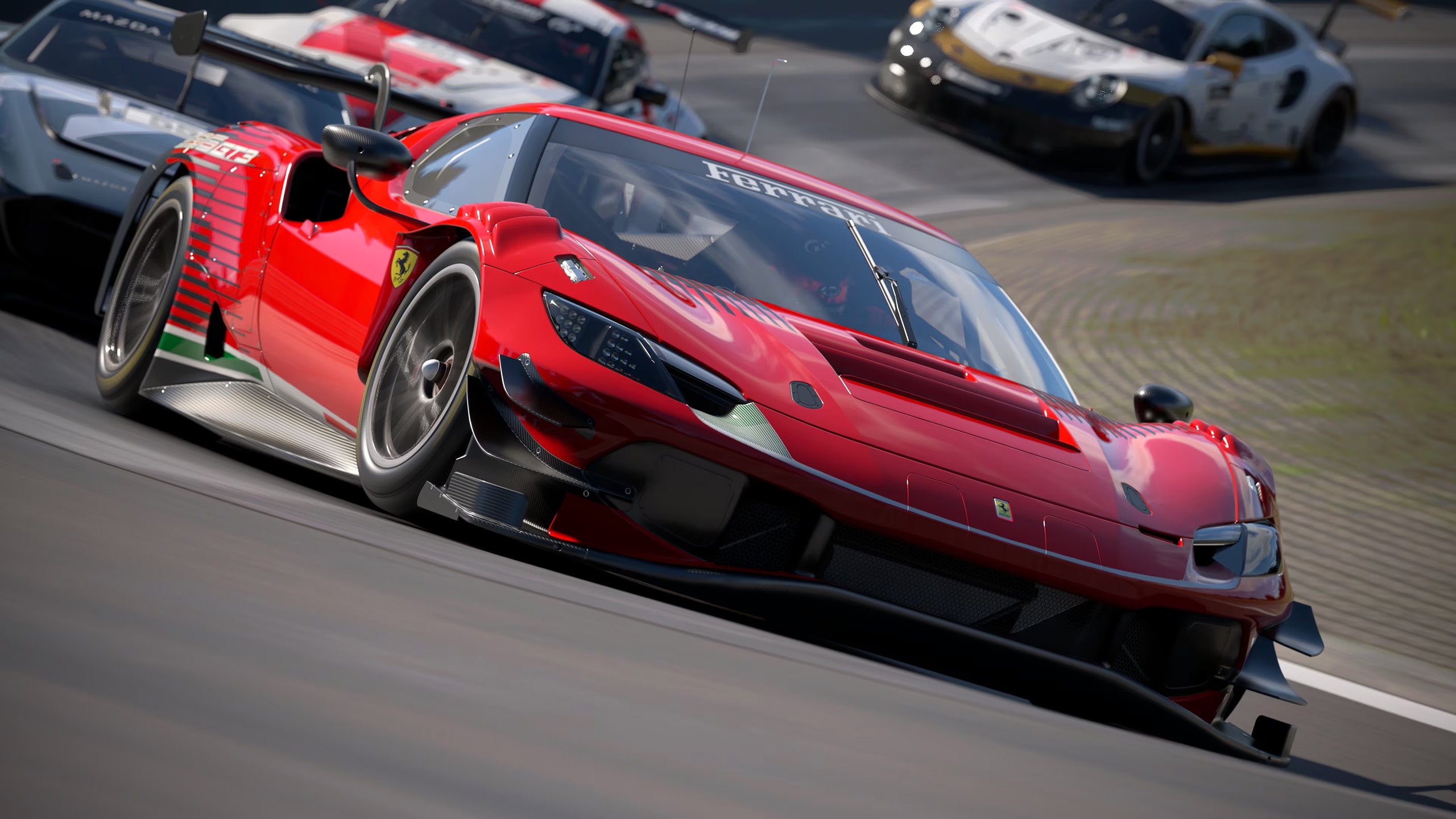
Both Mikołaj and Konstantinos concurred that GT7 felt the best after its 1.49 update in July of 2024, which is somewhat ironic because that’s the same patch that gave us bouncing Volkswagen Samba Buses. If you excuse those few vehicles that expressed some unnervingly strange behavior, though, the game did drive well at that time. “Good balance of grip on throttle, noticeable increase in trail braking and decrease in understeer from what we had before that,” Konstantinos summarized. And it took GT7 more than two years to reach that point, coming out of a day-one physics model that left some cars arguably undrivable, and others, the most thrilling they’ve ever felt.
That speaks to a larger problem: The magnitude with which Polyphony is flipping the proverbial table of physics a few times per year. The car behavior of GT7 circa March 2022 would be downright unrecognizable today. And if you’re wondering what sparked this latest shift, Mikołaj and Konstantinos are wondering the same thing.
“I’ve found pros and cons of the new physics, it’s not all bad, but what I still haven’t figured out is what the point was,” Konstantinos said. “Although the last physics had their flaws, I don’t remember anything majorly wrong with them, and I think most accepted them as GT7’s ‘forever physics.’ I could’ve seen some minor tweaks coming but nothing anywhere near this drastic.”
“What I think [Polyphony is] getting at is they’re looking at the tire development in in the real world and seeing how much the tire technology’s improved,” Mikołaj said. “And what I’m assuming has happened—at least as to the recent physics update—is they’ve looked at the data that [tire partner] Dunlop have given them and said, ‘Right, well, let’s try and translate this as much as we can into the game,’ but—it’s a very big but—they’ve completely overstepped the mark and now the cars are just basically super-glued to the road and you’re basically driving on rails, which is again not something that’s really fun or natural to drive at all, especially with the the rear tire grip. It it needs to be dialed down considerably, otherwise you’re going to get issues where the the mid-engine cars in particular don’t really have many strong points in one-lap pace.”
It’s easy to look at the way GT7’s physics have evolved—dialing up the grip and braking power, tilting the balance more toward understeer than oversteer—and attribute everything to an overall shift to placate more casual players. The spectrums of pure enjoyment versus realism, or ease and challenge (not the same continuums, mind you!) are always subjects of debate among sim racers. Both pros I spoke to conceded that while it’s never possible to please everyone, a happy medium should be achievable.
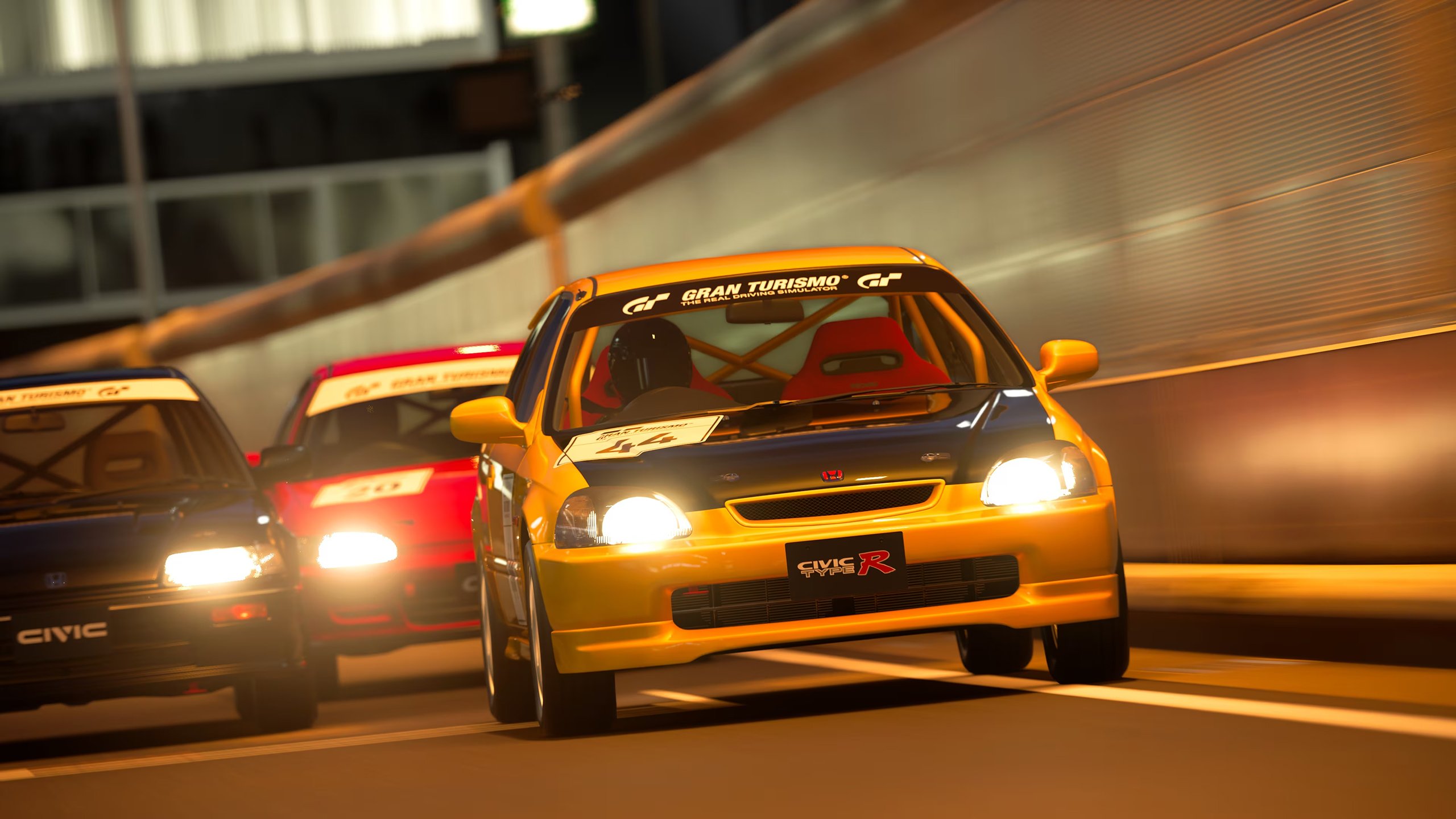
“I’m not really sure who they’re going for,” Mikołaj said. “I guess they are going for the casual audience, but they’re just making it so mundane and numb to anyone that has a modicum of driving skill, which I really don’t understand. With the day-one physics, OK—some of the cars were a bit ridiculous in terms of their handling and their traction in particular, but I’d honestly much prefer that than what we have at the minute because you can at least manipulate what the car is doing through just your own braking and throttle and not through the non-track surfaces—inside curbs and that kind of thing.
“I think it needs it needs a lot of refinement, but with enough persistence I think they can they can definitely get there,” Mikołaj added. “I think they can come up with a reasonable compromise and then hopefully more people will start to enjoy the game again. But that’s just my opinion.”
“GT is huge because it’s so accessible despite having a general aim of realism, and it does strike that balance better than anything else,” Konstantinos said. “It’s impossible to give both sides exactly what they want, but I think it’s just about possible to have decently fun and rewarding physics for a high-level player without making it too hard for a casual player to learn the basics.”
That used to be Gran Turismo’s strength. Here’s hoping it can be again.
What do you think of GT7’s physics changes? Let us know in the comments below!
Loading comments…
Comments couldn’t be loaded. Please refresh the page.