
Good morning and welcome to The Downshift, a daily sweep of today’s top headlines from the auto industry and car culture, curated by The Drive’s editorial team. Each story gets a short summary and a link to the original source if you want to dive deeper.
Here’s what’s cooking on Wednesday, September 16, 2026:
🔊 A new episode of The Drivecast, The Drive’s weekly podcast, will go live later today on Apple Podcasts, Spotify, and wherever you get your podcasts.
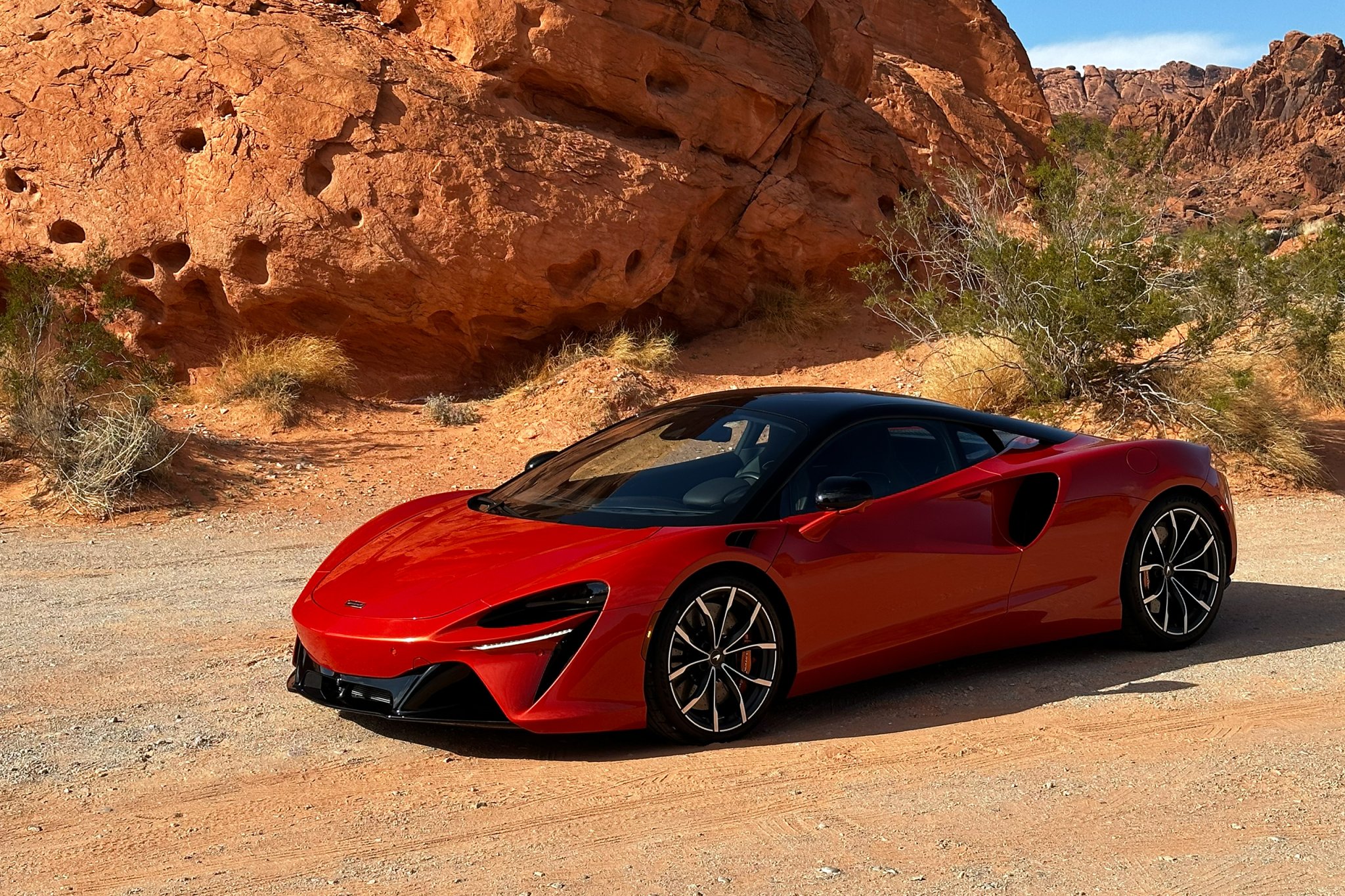
✂️ The McLaren Artura may not be long for this world, according to an anonymous source familiar with the British supercar maker’s plans. The V6 turbo-hybrid coupe, which debuted in 2022, may be retired after the 2027 model year and replaced with a new car, codenamed P34. The Artura suffered a few snags at launch, between the chip shortage earlier in the decade delaying its arrival, and quality issues that even emerged in the car’s initial media drives. [Automotive News]
🏭 In other big McLaren news, the company finally confirmed the development of its first SUV ever, which will rival the likes of the Ferrari Purosangue and Lamborghini Urus. “We will do it very much in a McLaren way,” CEO Nick Collins said, promising that it will bring “something unique” to the category. McLaren is also receiving a $2 billion investment from Abu Dhabi-based L’IMAD, which will be used to overhaul its Woking Production Center, expand its Composites Technology department, and start manufacturing its own engines in house, rather than sourcing them from supplier Ricardo. [Automotive News]
🌶️ Porsche is updating the Cayenne Electric as it enters its second model year with more colors and new tricks, like the ability to open all doors electronically, and more sophisticated massaging seats with “4D audio.” Order books are open now and U.S. availability will begin in the first quarter of 2027. [Porsche]
🪫 General Motors’ big bet on electric vehicles at the start of the decade and spurning of hybrid models—Corvette aside—has played out poorly. While GM’s far from the only automaker to put all its eggs in the EV basket, it has demonstrated an inability to swiftly redirect its resources to hybrids compared to its peers. That’s particularly a problem now, as hybrid sales are booming. [Reuters]
3️⃣ Today in “EVs America will never see” is the Volkswagen ID 3 GTI, which is the first GTI-badged vehicle to use a rear-drive powertrain. The hot hatch offers 322 horsepower and 402 lb-ft of torque, which is the same as the outgoing GTX. Indeed, this is mostly a branding exercise for the company to cash in on an established label, but the GTI is at least based on the updated ID 3 Neo, which sports a less frustrating interior than the original EV had, so that’s a plus—for the folks able to buy one, anyway. [Autocar]
🚕 The National Highway Traffic Safety Administration says that Tesla must show its work as to how it self-certified the Cybercab for deployment by September 30. The regulator is also seeking insight on whether the vehicle offers any touchscreen-based controls to allow occupants to move it in an emergency, as well as its max speed, any time-of-day limits, and other restrictions. [Reuters]
🤏 Porsche isn’t in the business of building new examples of its storied vehicles, but it has allowed a British company to make an 80% scale version of the 550 Spyder, powered by an electric motor that isn’t legal to drive on any roads, anywhere, and costs $94,000. [Motor1]
Got a tip or feedback for TDS? Reach out to tips@thedrive.com
Loading comments…
Comments couldn’t be loaded. Please refresh the page.