
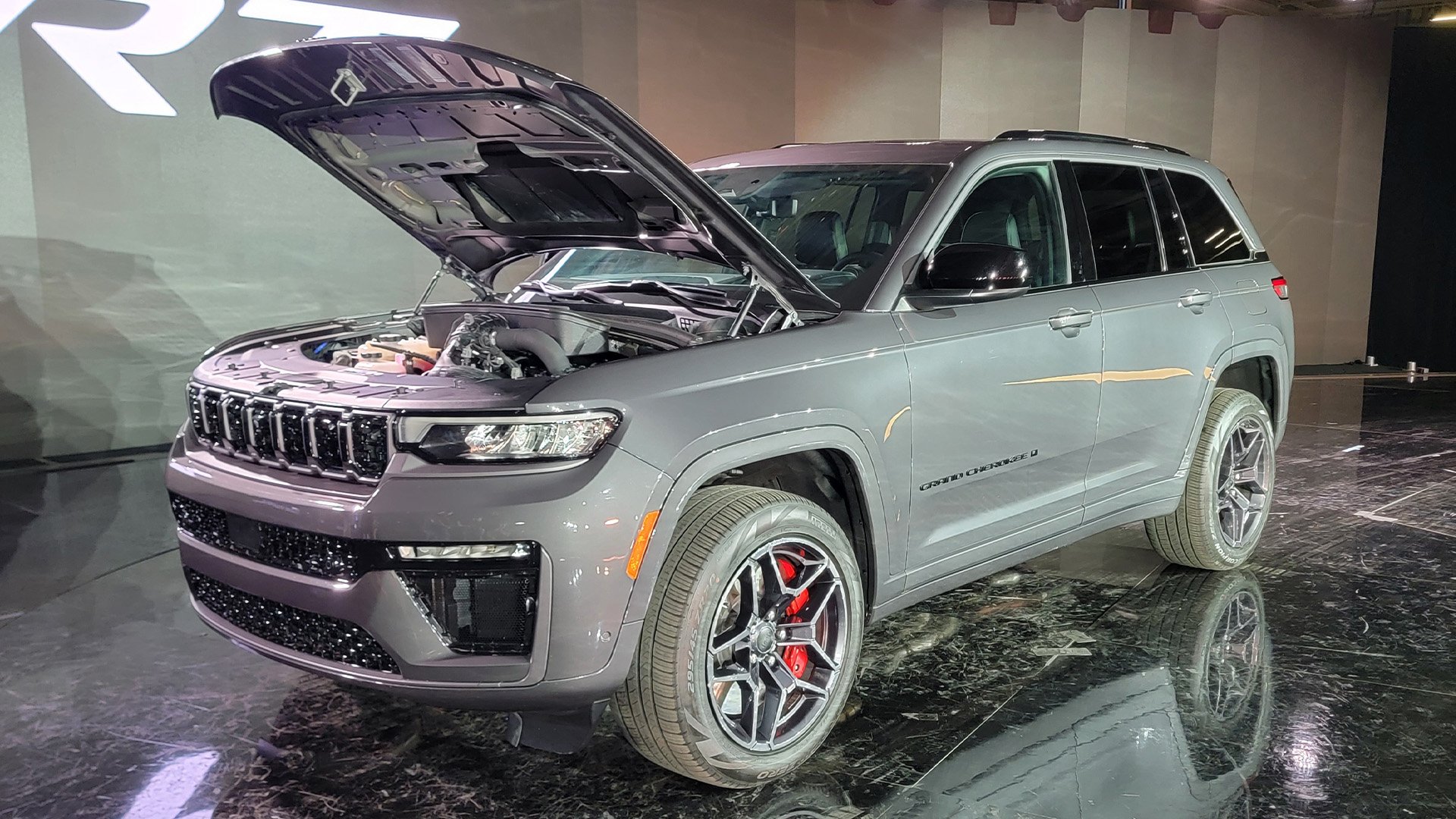
Turbo lag can be cool, but it’s the enemy of sheer performance. While early boosted cars walloped drivers with frantic acceleration at high revs, engineers have thought and thunk for years on how to eliminate the power delay. There are a few ways to do it—like running sequentials, with a smaller turbo and another larger one for higher horsepower—but Stellantis’ SRT Performance Division has another solution. It involves an e-compressor that spools big turbos quicker than exhaust gas can.
Now, you might be like me and wonder, “Doesn’t that already exist?” It’s actually quite a bit different from what Porsche does on the 911. Whereas that tech features an in-built motor-generator unit that sits between the compressor and inducer, SRT’s device—called eBoost Air—sits upstream of the Hurricane inline-six’s twin turbos. And while Porsche uses the MGU to directly spin the turbo, this SRT doo-hickey is simply force-feeding air to the turbos more quickly.
SRT explained in a press release that the whole idea is to make the engine drive more like a supercharged V8. Of course, that’s what a lot of people want anyway, but Stellantis developed the Hurricane engine family for a reason. Ram might be embracing the Hemi all over again, but it seems like this technology could find its home in future high-performance Jeep models.
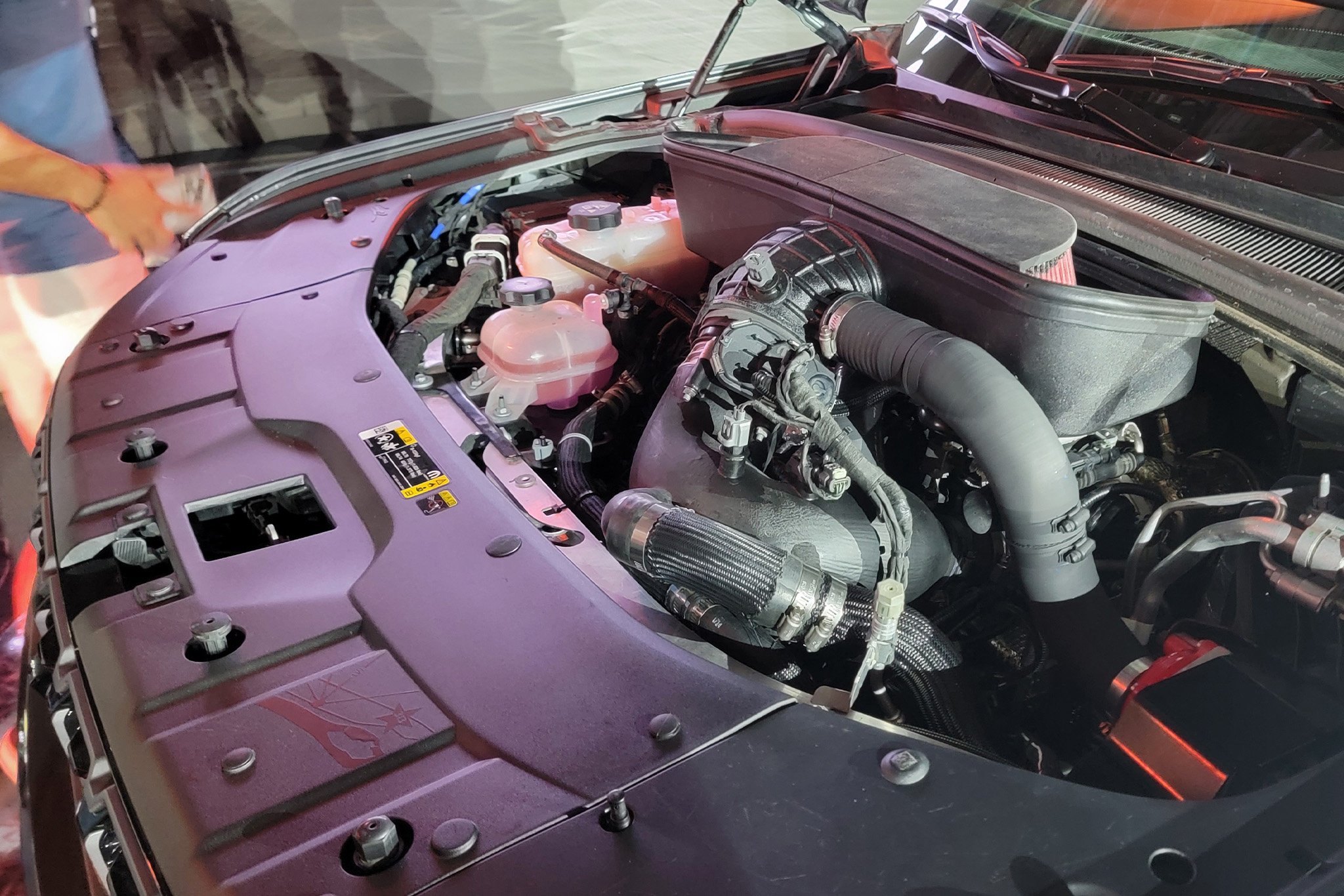
When the exhaust gas flow finally catches up to the eBoost Air, the compressor simply disengages, and the feature is bypassed entirely. It doesn’t recuperate any spent energy, although it does require a 48-volt electrical system to function. The eBoost Air is only a “rapid-development proof of concept” for now, and Stellantis has work to do before it implements the tech on any Hurricane-equipped model in the United States. (At present, only certain non-Hurricane Jeeps and Ram 1500s with the Hemi V8 have a 48-volt mild-hybrid eTorque setup, so a potential solution could involve a secondary battery—though that’s unconfirmed and potentially undecided at this stage.)
Fitting this into the Grand Cherokee’s engine bay took some doing. The six-cylinder Hurricane has yet to make an appearance in a production version of Jeep’s midsize SUV, so even the basics needed to be addressed. On top of that, SRT engineers had to make room for what is effectively a third air intake for the little electrical compressor. Somehow, the team still managed to stand the project up in just seven weeks. Yes, weeks.
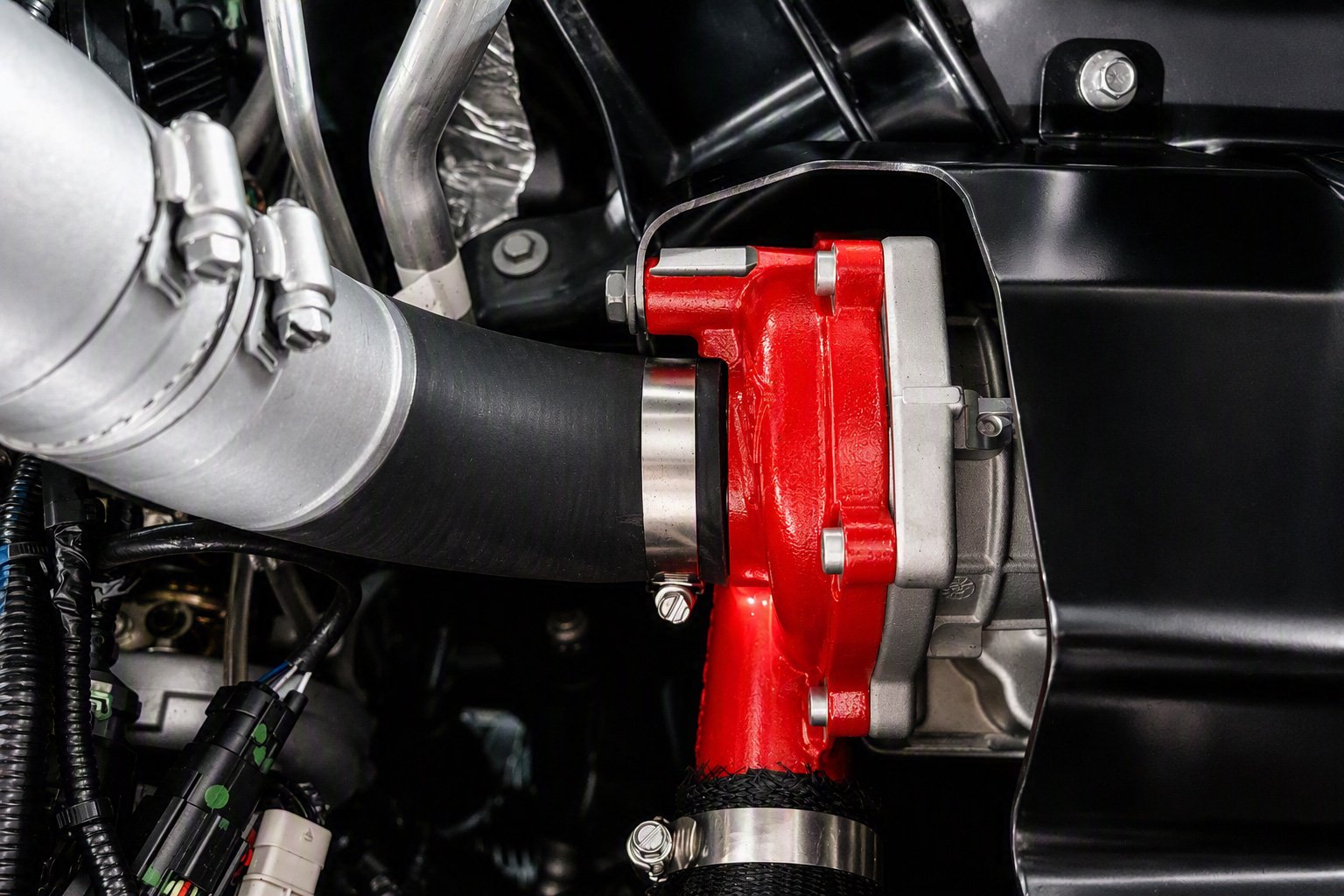
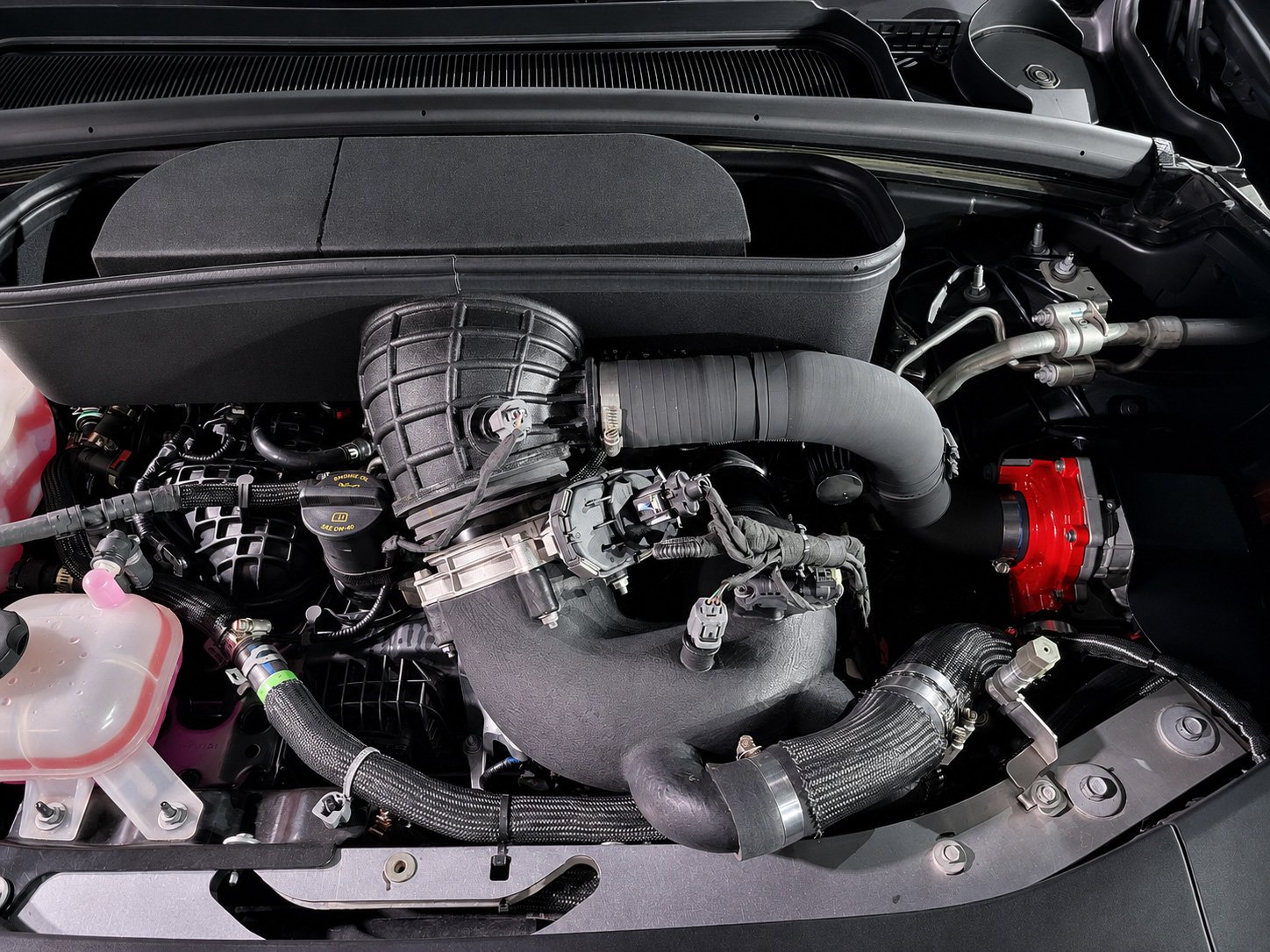
SRT notes that eBoost Air doesn’t add any extra power to the Hurricane; it only helps the engine reach higher power levels in a quicker fashion. The twin-turbo, 3.0-liter inline-six is already potent on its own, especially when it comes to the high-output variant with 540 horsepower and 510 lb-ft of torque. I personally enjoyed the momentary lag when I tested the Ram 1500 Tungsten a couple of years ago, but if you’re racing the quarter-mile, this eBoost Air gadget should be a real help.
Got a tip or question for the author? Contact them directly: caleb@thedrive.com
Loading comments…
Comments couldn’t be loaded. Please refresh the page.