
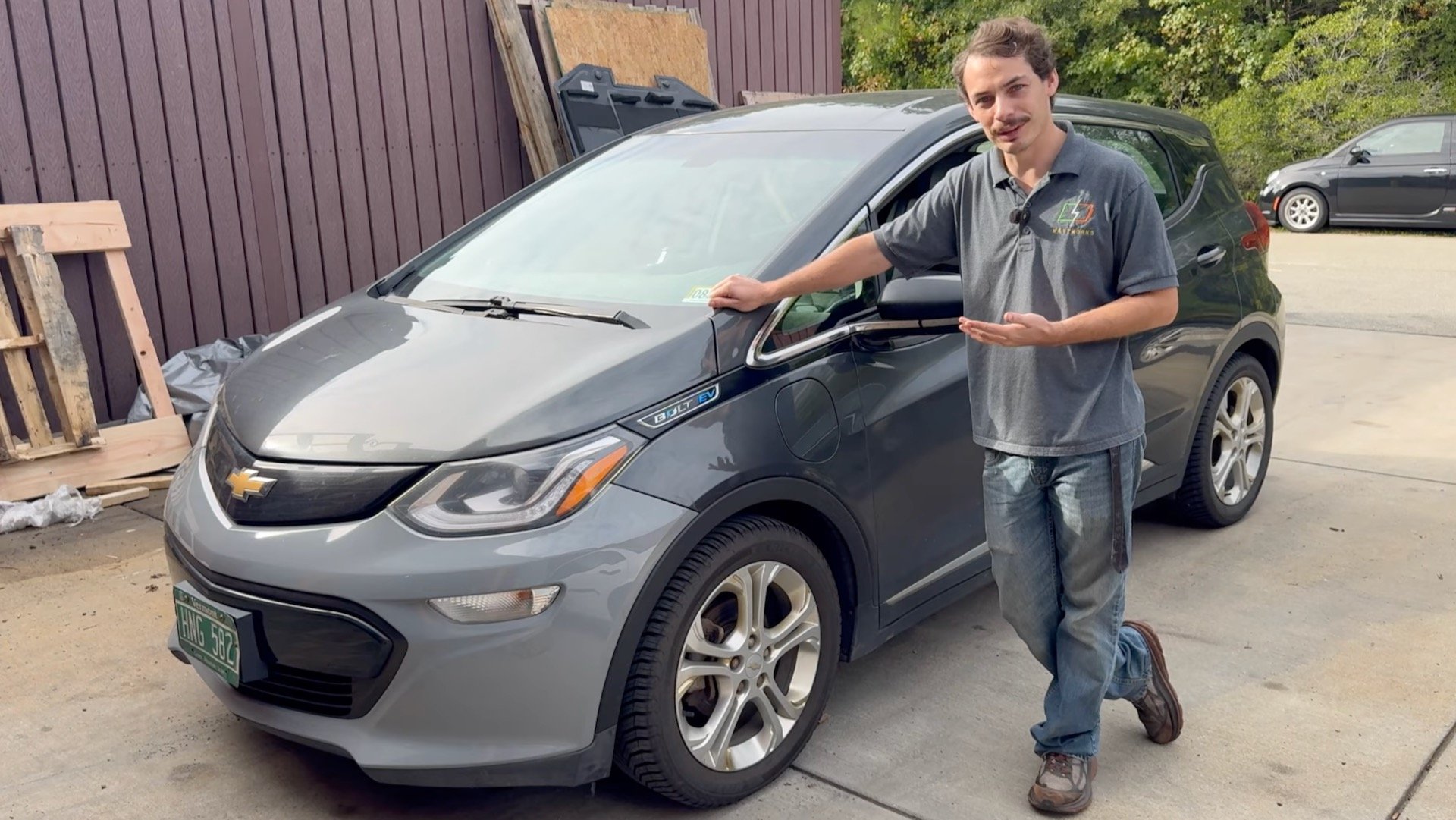
A common misconception about electric cars is that their batteries don’t last long enough. While there have been some high-profile battery recalls for cars such as the Chevrolet Bolt EV, those have been largely be due to manufacturing issues, something that can also affect internal-combustion engines. And this Bolt EV has covered more miles than the average car—internal-combustion or otherwise.
This 2019 model had 471,616 miles on its odometer before it entered the Out of Spec Renew garage. The YouTube channel previously did a battery replacement for a 2022 Ford F-150 Lightning that had just under 234,000 miles, so this isn’t a one-off thing. Like that truck, the Bolt EV has some expected wear and tear, including a few scrapes on the rear bumper and a mismatched front bumper. It’s also had suspension, wheel-bearing, and steering-rack work done, which is also not unusual for a car with nearly half a million miles.
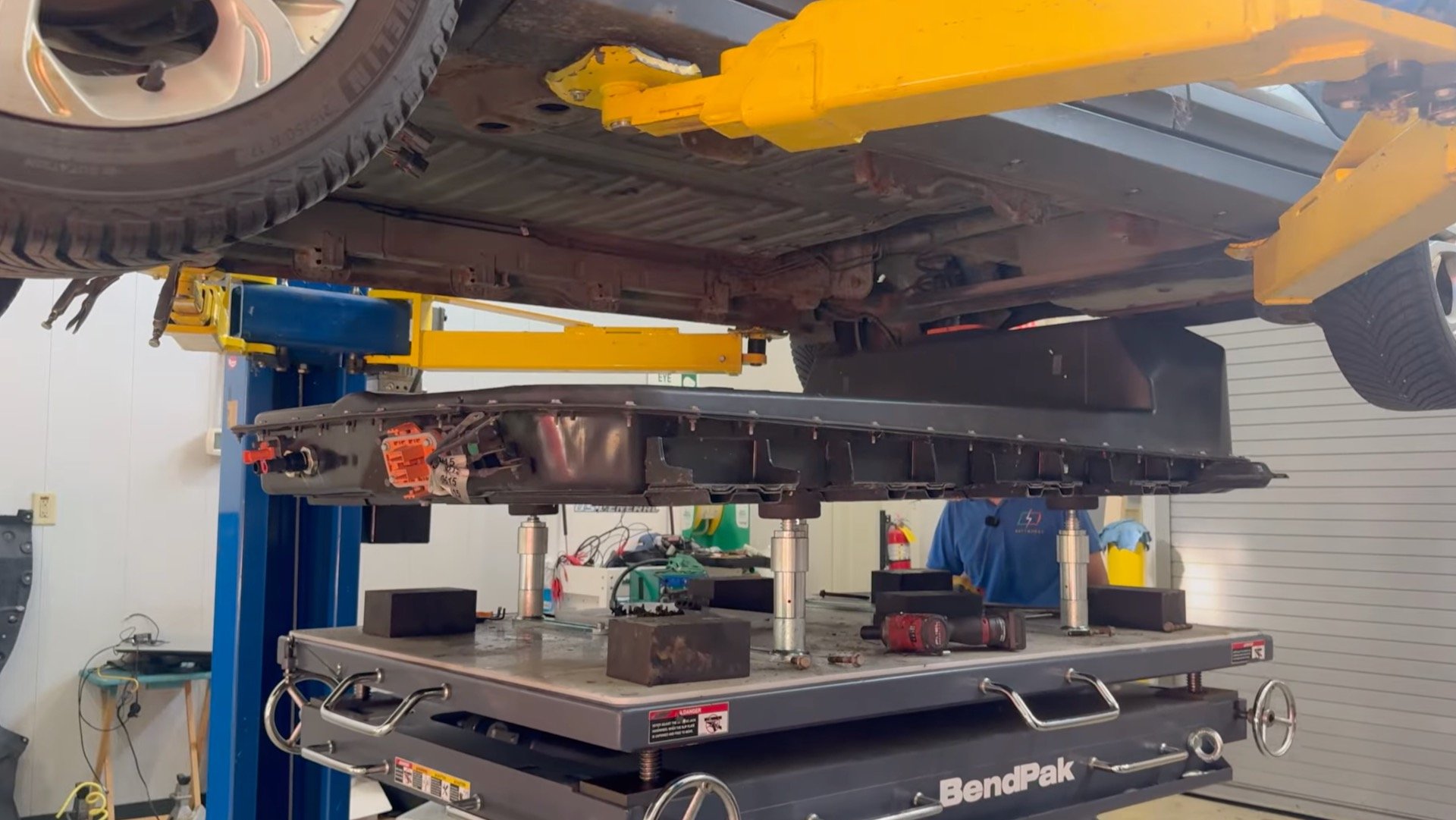
This car also had a previous battery replacement due to the aforementioned recall. Announced in 2021, it eventually grew to cover all of the roughly 140,000 Bolt EV and related Bolt EUV models in North America. It stemmed from manufacturing defects that created a potential fire risk and led to the replacement of modules, and in some cases entire battery packs. That meant owners of some 2017-2019 models got new packs with increased range due to chemistry changes made later in the production run. At least some owners were also eligible for compensation under a class-action settlement against General Motors and battery supplier LG Energy Solution.
According to the video, the replacement pack had survived over 330,000 miles of use after being installed in 2022. That’s a pretty impressive figure itself, and seems to be the upper limit for these packs without a major overhaul. The Bolt EV arrived at Out of Spec Renew’s garage unable to be shifted into drive, with a “battery fault” message in the instrument cluster.

I’m Replacing A Chevy Bolt Battery At Half A Million Miles!
The replacement pack used in this video is the same recall-replacement spec as the one being removed. It was originally installed in a 2017 Bolt EV in 2023, but only had an estimated 10,000 to 15,000 miles on it. Aside from having to switch some parts from the old to the new pack (which may have been damaged during transport or removal from the donor car), the swap is pretty straightforward. You can get all the details from the full video, which is over an hour long.
Despite the recall, the Bolt EV and Bolt EUV remained popular right up until the end (it’s almost like people want a reasonably-priced EV with decent range, or something). It was so popular that GM brought it back, temporarily, for the 2027 model year. That was very much a last-minute decision, and one that puts a hard time limit on the car’s return. GM just doesn’t have a long-term home for Bolt production.
Loading comments…
Comments couldn’t be loaded. Please refresh the page.