
When Jeep ditched the CJ model in favor of “Wrangler” back in the late ’80s, it was the end of an era for more than just a nameplate. With its pivot, Jeep also ditched the long-wheelbase CJ-7’s AMC-sourced V8, leaving the 4.0-liter inline-six as the range-topping engine in the Wrangler. Consequently, Jeep has never sold a factory two-door Wrangler with more than six cylinders.
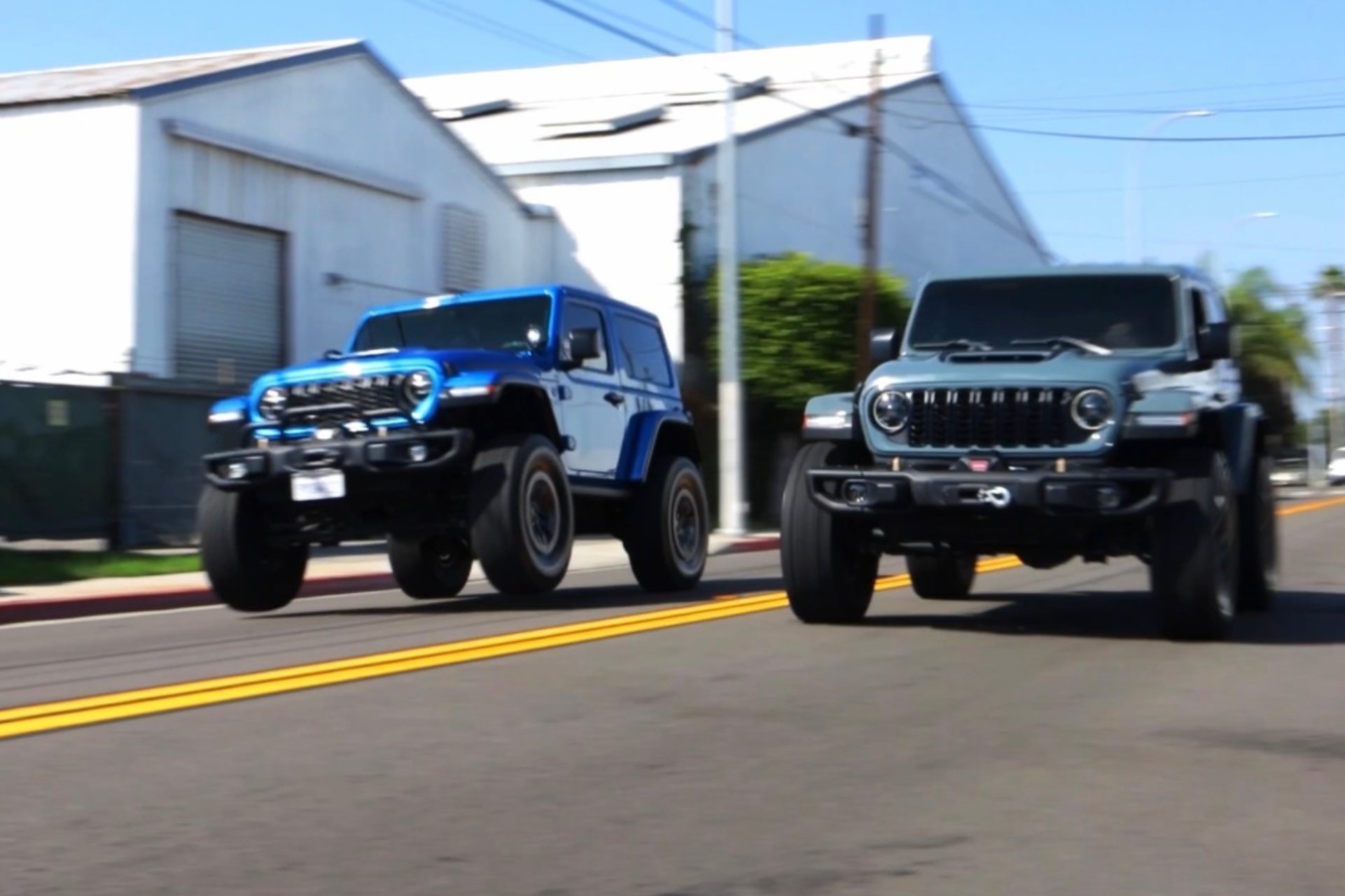
It was long rumored that the Hemi wouldn’t fit in the last-generation (JK) Wrangler, but the aftermarket suggests otherwise. Now that we have a factory Jeep Wrangler 392 in the JL, some fans have expressed disappointment that it’s not available in the two-door model. Once again, it’s not a matter of fitment; there are Hellcat swaps available in the aftermarket if you’re really feeling frisky. Instead, we suspect it has something to do with the fact that a short-wheelbase V8 Wrangler is basically an insurance agent’s worst nightmare come true.
Why? One word: Wheelies. OK, three words: Glorious, glorious wheelies.
Just take a look at these swaps from baby_392jeep if you don’t believe us. Some are 392s and some are Hellcats; either has enough torque to paw the air at what amounts to walking speed. Just scroll through their massive video backlog for countless examples (most real, a few AI-augmented) of JL Wranglers hopping down side roads like juiced-up quads.
Why does the short wheelbase matter? Physics. When the Jeep accelerates, the chassis itself becomes a giant lever pivoting around the car’s rear axle. The shorter the chassis, the more weight you need at the opposite end to counter this rotation. Even the weight of a Hemi or Hellcat V8 isn’t enough to counter the torque of a V8 paired with a Wrangler’s gearing. This is the same exact thing that happens with a sport or dirt bike—lots of torque relative to the weight and length of the vehicle being propelled.
Keep it shiny (or canvas) side up, boys.
Got a story tip? Let us know at tips@thedrive.com!
Loading comments…
Comments couldn’t be loaded. Please refresh the page.