
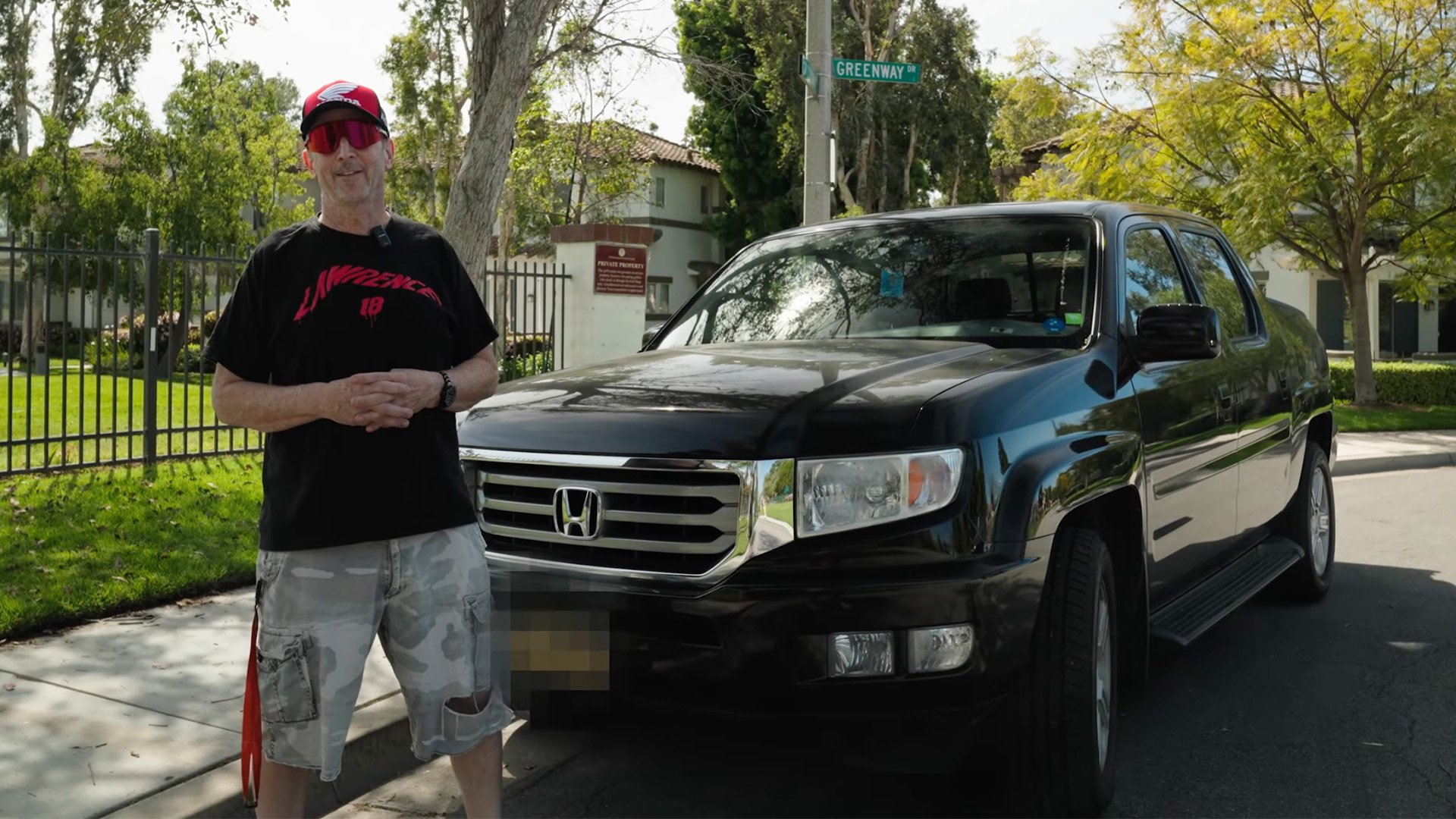
When the first-generation Honda Ridgeline arrived in 2005 (as a 2006 model), it was a head-scratcher. Honda blasphemed against truck orthodoxy by making the Ridgeline unibody instead of body-on-frame, and proudly showed that off by integrating the bed and cab with unusual styling. That’s because Honda wasn’t benchmarking traditional pickups. In fact, the first-gen Ridgeline wasn’t even called a truck internally.
Don Herner, the Ridgeline’s exterior design lead, explains this and the rest of the Honda pickup’s origin story in an interview with YouTuber Jack Bontatibus. Herner spent most of his career at Honda, joining the automaker right after graduating from California’s ArtCenter College of Design and interning at General Motors in the Corvette design studio. His project was the third-generation Acura Integra; he also led design of the first-generation Acura RDX and worked at Fisker.
As Herner tells it, both the Ridgeline and RDX were inspired by boredom. Not much was going on at the time, so Herner and a few other designers got together and started sketching. A marketing executive eventually saw some of the truck sketches and began pitching them as the basis for an actual production vehicle. But it wasn’t labelled as a truck.
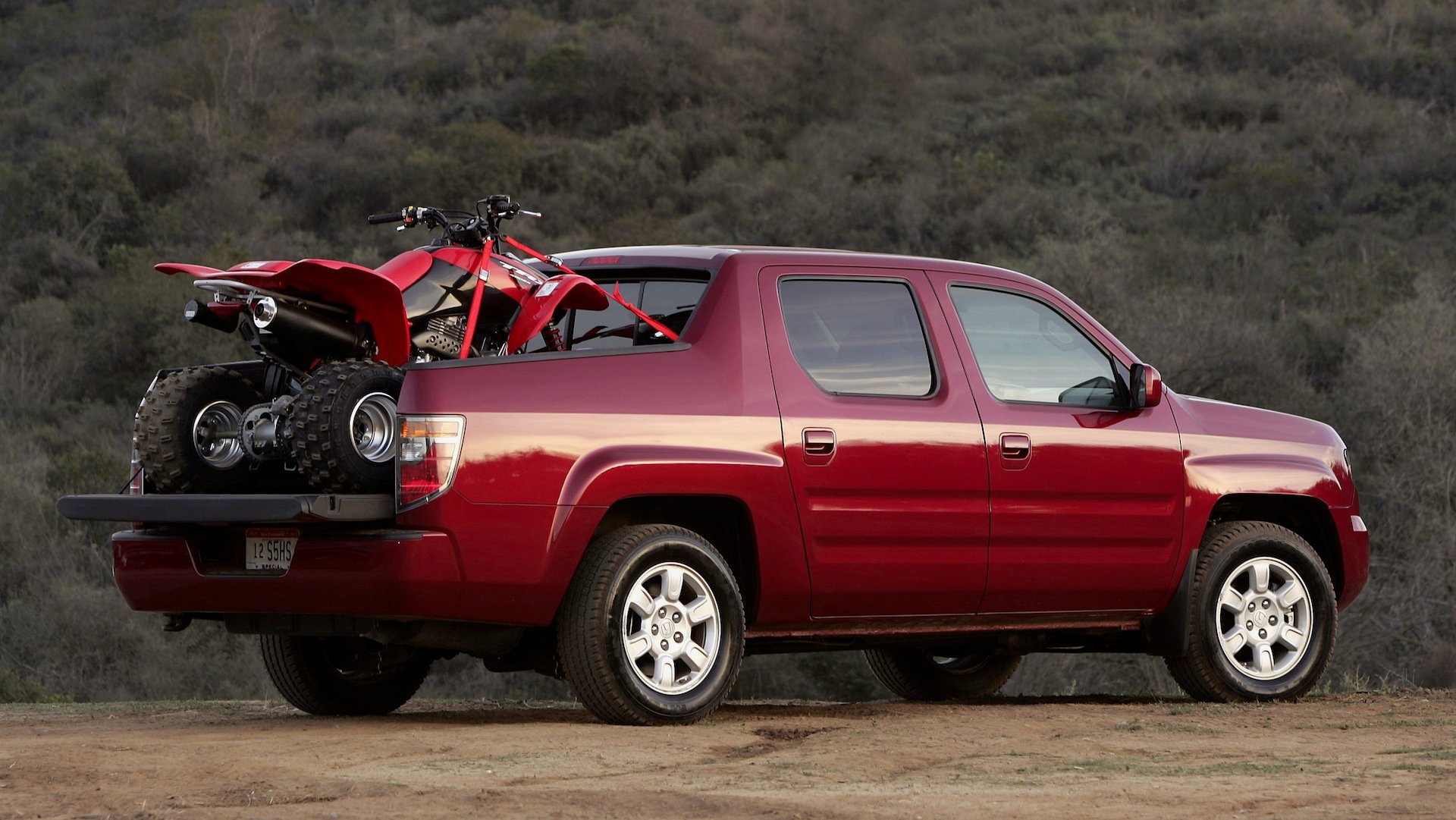
“This never really started out to be a truck project per se, because Honda doesn’t make a transmission robust enough to turn gigantic wheels and tires,” Herner explains. “We were calling it internally the ‘Advanced Capabilities Vehicle.’” While it was never used publicly, that designation was taken so seriously that Honda tried to do a collaboration with Nike, which had an “Advanced Capability Gear” line at the time, according to Herner.
Typical of studio sketches, designers did initially play with oversized wheels and tires—32s and 35s, Herner says—but that got nixed by engineering, which wanted to go with the smallest wheel-and-tire sizes possible to maximize at-wheel torque from the Ridgeline’s 3.5-liter V6. Coupled to a five-speed automatic transmission, that engine made 255 horsepower and 252 pound-feet of torque; enough for a 5,000-pound towing capacity and 1,550-pound payload capacity.
That payload went into a fiberglass cargo box that was chosen for its durability. This is Honda, after all, so long-term reliability was paramount. Simulations were run overloading the bed to find the point where the rear suspension would collapse. And the mechanism for the dual-action tailgate (a feature still used on the Ridgeline today) ran almost the entire length of the bed so that it would be robust enough to support the weight of multiple people.

The Ridgeline's Designer Finally Explains Everything (1st Gen Honda Ridgeline)
The OG Ridgeline also had lots of cool, functional features like a CD loader hidden behind the head unit, a storage spot for handbags between the dashboard and center console, and fold-up rear seats. CDs are no more, but the latter two features have become common in newer vehicles.
The Ridgeline broke new ground for Honda, and not just as the automaker’s first production vehicle with a bed. Based on a modified version of the then-current Odyssey platform, it was the largest Honda production vehicle to date, necessitating some modifications of assembly lines. And it had the “Honda” name spelled out in the company typeface on the tailgate. This violated Japanese corporate mores and had to be personally approved by the company’s president.
While some people never understood it, the first-gen Ridgeline created a niche for Honda in the truck market. The current-generation Ridgeline has more conventional styling, but it’s still unibody and retains a lot of the features of the original. The next-generation Ridgeline will look even more like a truck, but hopefully it doesn’t lose the uniqueness of its predecessors.
Loading comments…
Comments couldn’t be loaded. Please refresh the page.