
It’s easy to get frustrated with the pace of innovation—especially these days, when we’re told that electric cars are the future, even as the technology behind them continues to develop to meet its full potential. But it’s important to remember that internal-combustion engines of today are the result of the same process, which led to plenty of false starts and engineering dead ends way back when.
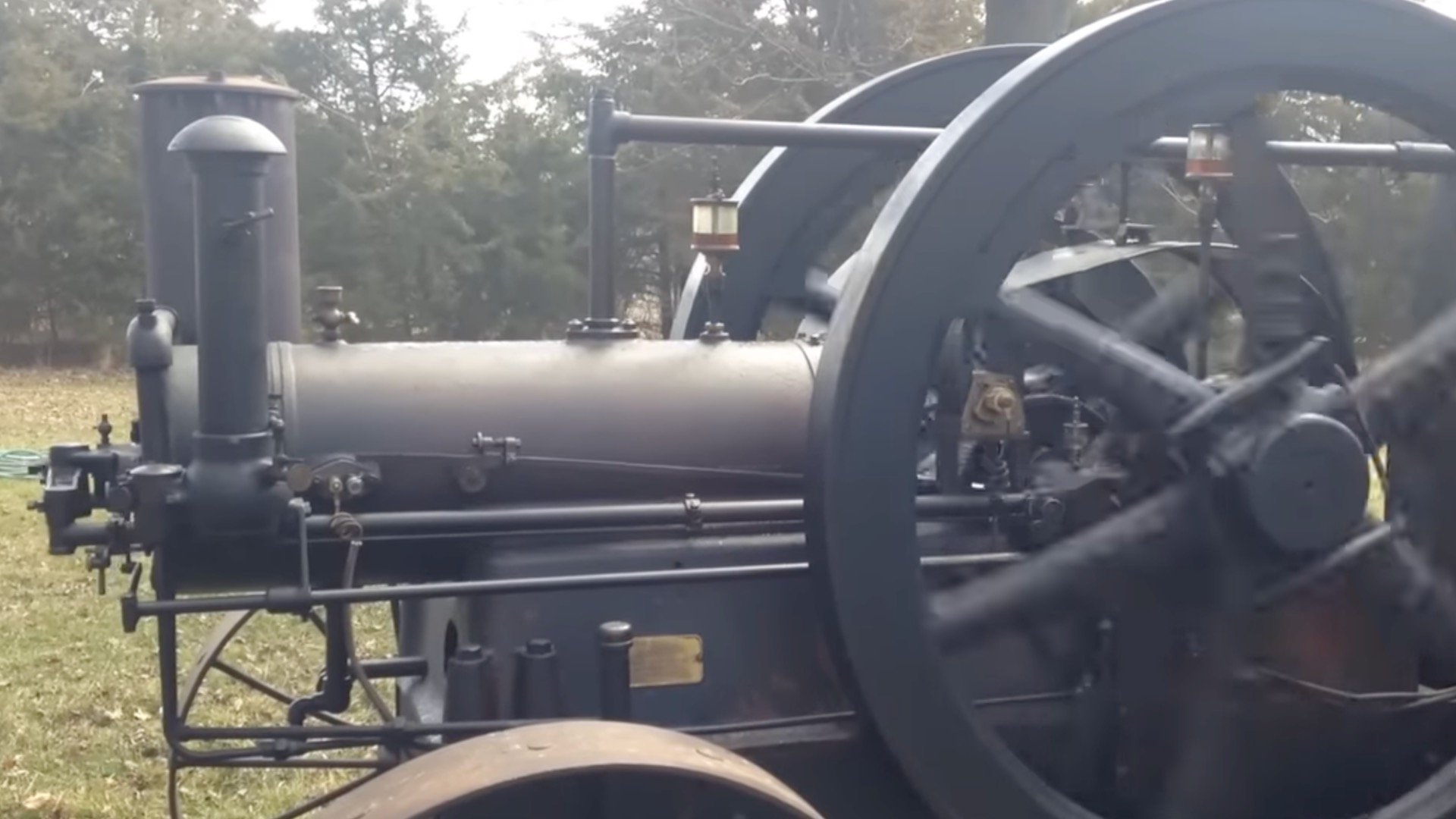
One of those dead ends was hidden away for 70 years, and it’s fascinating. It’s a 25-horsepower single-cylinder “hit-and-miss” engine built by International Harvester in 1915. According to a video recently posted on the YouTube channel Antique Tractor Life, it is one of just three thought to still exist today. The engine ran inside a planing mill for 70 years before being sold at auction in the 1990s, and remains in remarkably original condition.
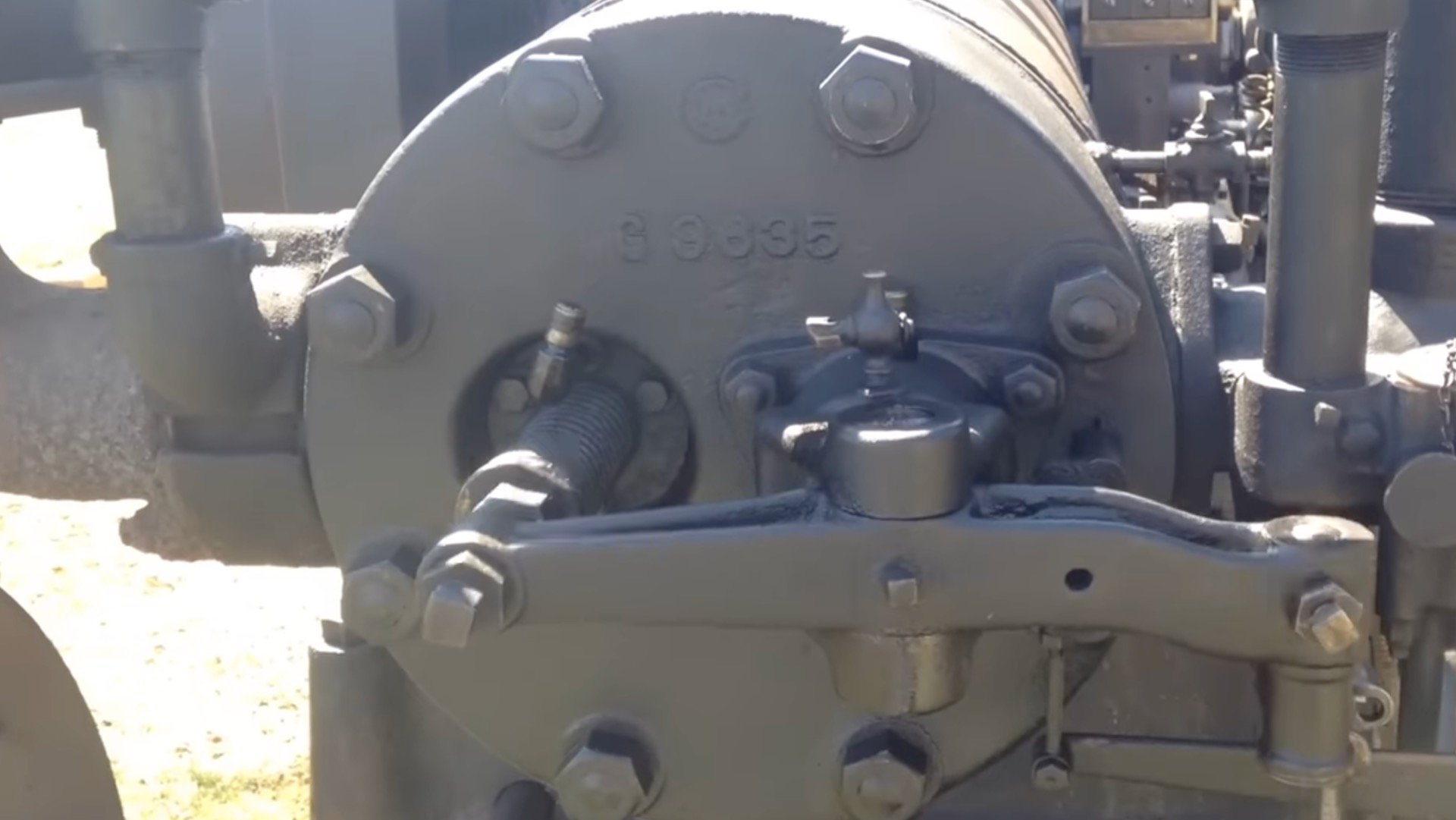
The name “hit-and-miss” comes from the way these engines only get ignition (“hit”) when running at a certain speed, otherwise they cycle without ignition (“miss”). The speed is determined by the opening and closing of the exhaust valve, which is attached to a rocker arm like in more conventional engine designs. A governor holds the exhaust valve open to maintain speed. The intake valve is operated purely by the suction of the combustion chamber, so it won’t open if the exhaust valve is open. Like most early internal-combustion engines, it’s not the last word in efficiency. This engine generates its 25 hp from 1,100 cubic inches—about 18 liters—of displacement.
According to the video, International Harvester built hit-and-miss engines in Milwaukee from 1904 to 1917. The company started with gasoline-fueled 6-, 8-, and 15-hp models. Other variants were added later, with the 25-hp version entering production in 1910. In 1913, International began building kerosene-fueled versions, as demand from booming car production was causing gas prices to spike. Horse-portable and wagon-portable versions were offered for farm work, and stationary versions were also available to provide power in the days before electricity mains. Although it spent most of its working life stationary, this engine was originally built on a wheeled chassis.

Hidden in a Planing Mill for 70 Years — One of Only 3 International Harvester Engines
The primitive hit-and-miss engines worked well enough compared to more labor-intensive steam engines and muscle power, but they were pretty much obsolete by the 1930s. In fact, this engine was already consigned to the scrap yard before finding its long-term home. It was given a second life at a Pennsylvania mill in 1935 after a fire caused by the steam engine that originally powered the operation. The ongoing Great Depression made affordability a priority, and the discarded engine was available cheap. It turned out to be a good investment.
The engine continued powering the mill until it was sold at auction in 1997. Some mechanical work was needed to get it running again, but a coating of oil and sawdust from its long working life kept it well preserved for engineering nerds to admire.
Loading comments…
Comments couldn’t be loaded. Please refresh the page.