
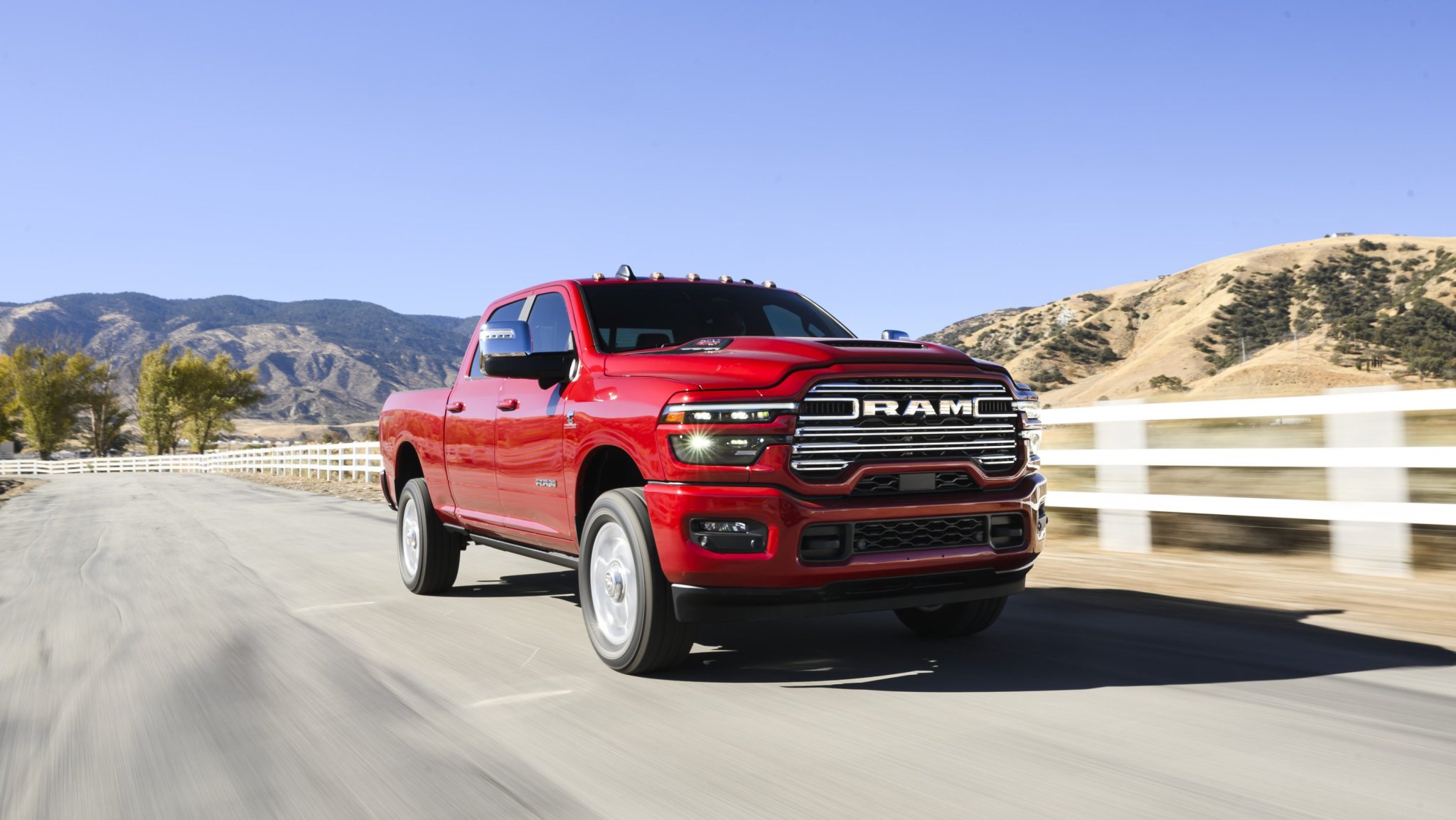
The disparity in vehicle size is a major concern on America’s roads, particularly as passenger cars trend bigger and heavier, with electrified models pushing curb weights up even further. On Thursday, the Insurance Institute for Highway Safety published a list of the most dangerous vehicles to crash in as well as get hit by, which is a level of detail the group rarely explores, but is extremely important.
IIHS calls this the “other-driver death rate.” It’s expressed in the number of deaths per million registered vehicle years—not to drivers in that car, but to whoever they collide with. The study incorporates data from 2021 through 2024, and mostly concerns 2023 model-year vehicles. Unsurprisingly, heavy-duty trucks and muscle cars dominate the top of this list.
Per IIHS, a Ram 3500 Crew Cab Long Bed is the last vehicle you want to crash into, with a calculated other-driver death rate of 204 deaths per million registered years. Second and third are both Dodge Chargers, at 161 and 136, respectively, with the V8 model claiming more lives. Then there’s the Chevy Silverado 3500 Crew Cab (126), two Ram 1500s (124, 113), and a 2500 (113).
The first SUV doesn’t appear in the list until the No. 10 spot, and it’s the Cadillac XT5 (100). And, strangely, we don’t see a Ford pickup—the F-150 SuperCrew—appear until No. 12.
When we flip to the worst cars to be inside during a crash, this list is also full of the usual suspects, and you can likely guess many of them. The Kia Rio and Nissan Versa far and away lead the running, with death rates of 170 and 164 per million registered years, respectively. Those were followed by the Chrysler 300 (132), rather surprisingly, and then Dodge Charger (127) and Challenger (125). This of course gives the Charger the unenviable distinction of being a vehicle that is both statistically more dangerous to be inside in the event of a crash, as well as increasing the chances of another driver dying whenever one is involved.
The vehicles with the lowest rates of other-driver deaths, as IIHS notes, don’t correlate in terms of size but definitely present a bias toward luxury makes, such as BMW, Volvo, Mercedes, and Porsche. Presumably, these cars have the best slate of active safety features, demonstrating that safety tech does indeed make a difference on the outcome of a collision. You can take a look at the full results over at the IIHS’ website.
Got a tip? Reach out to tips@thedrive.com
Loading comments…
Comments couldn’t be loaded. Please refresh the page.