
One of the reasons internal-combustion engines have been around for so long is that they scale up really well. I’m not just talking about car engines, although the range of sizes and cylinder counts in the automotive world alone is pretty impressive. Because the basic concept of igniting a mixture of fossil fuels and air to push a piston and spin a crankshaft works just as well on much bigger things.
YouTuber Mr Hewes is familiar with those large-scale applications. Hewes specializes in bringing vintage agricultural and military equipment back to life, and also collaborated with fellow YouTuber Scott Nothing To Do With You on modernizing a Rolls-Royce Meteor engine from a Centurion tank. The Meteor was a mere 27.0 liters though. Hewes’ latest project has almost four times the displacement.
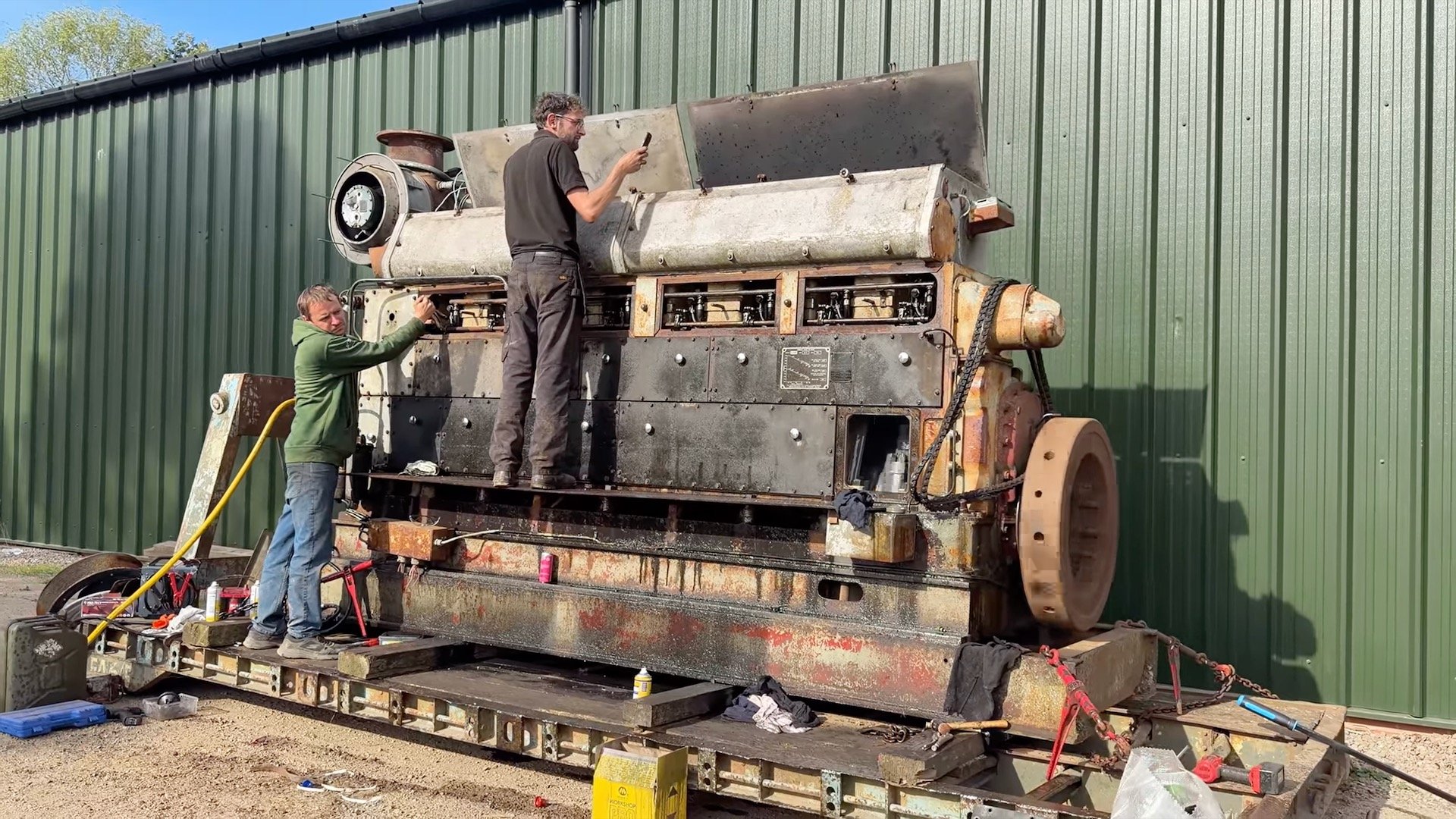
This Mirrlees Blackstone JS8 is a 102.4-liter straight-eight turbodiesel that was delivered to the U.K. Air Ministry in 1953. Given its immense size and ownership, Hewes surmises that it was used as part of a generator set on a Royal Air Force base. Sometimes referred to as gensets for short, these are stationary engines, generators, and associated hardware in one self-contained package. You’ll typically find them in the basements of large buildings, or on concrete pads outside, as emergency backup power sources. There was also a less-than-successful attempt to use gensets in locomotives.
The engine had an indicated 720 hours of accumulated operating time, which is not bad for something that’s over 70 years old. But it hadn’t run in a very long time, as evidenced by the thick layer of patina. It had many of the same problems as smaller engines that have been left sitting for awhile, including stuck valves and injectors, and a nonfunctioning oiling system. All the oil passageways were filled with water, which had to be manually pumped out of the engine and vacuumed out.

THIS 102.4 LITRE ENGINE HASN’T RUN IN YEARS…
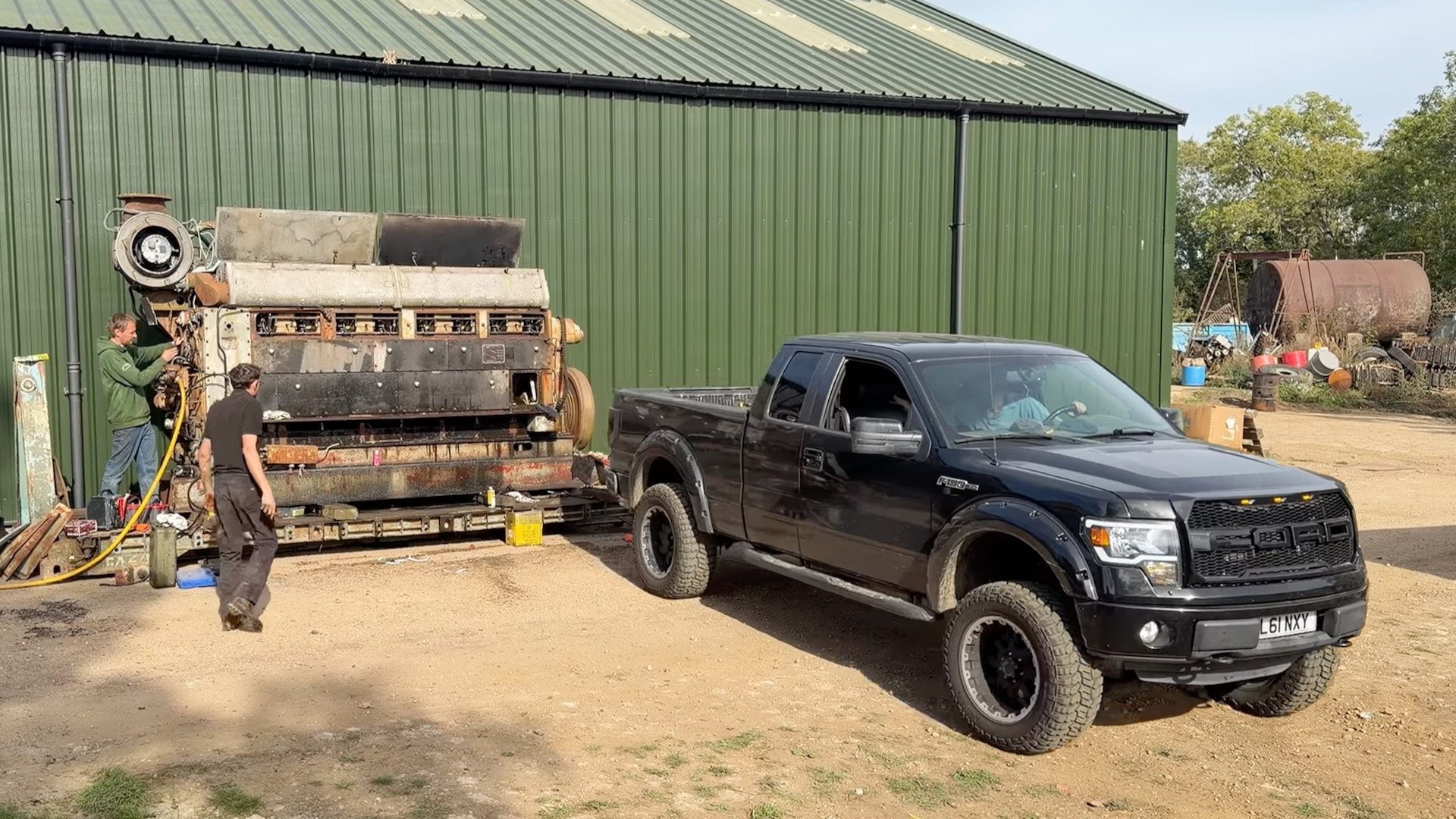
Even with the engine turning freely, starting it proved challenging. These engines are supposed to be started with compressed air, but the available supply didn’t cut it. Neither did rotating the flywheel by pushing a handle with a forklift. The winning solution was tying a ratchet strap around the flywheel and yanking it with a Ford F-150.
After all that buildup (the full video is nearly an hour long), it’s great to see this antique engine belch into smoky life. Check it out for yourself.
Loading comments…
Comments couldn’t be loaded. Please refresh the page.