
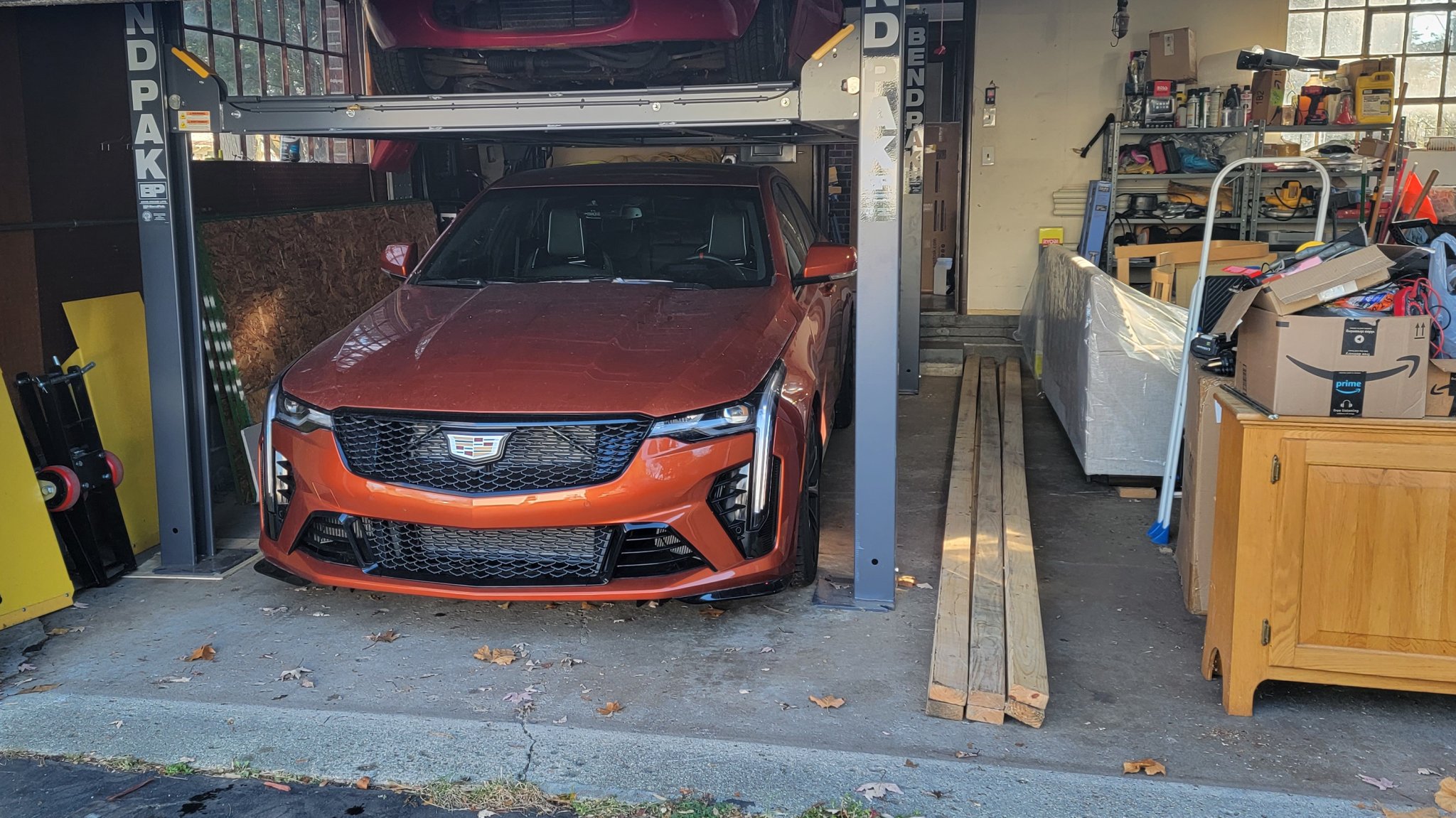
If you’re a car enthusiast with a home and car-hole to call your own, chances are you actually store a vehicle in it. At least, that’s the case based on a brief and completely unscientific survey of my immediate circle of friends/colleagues. But if you believe surveys of the general public, only about a third of people with a garage actually use it to store a car. That makes us the weird ones, apparently, but the logical follow-up question is simple: Why?
The answer to that question is twofold. The first is pretty straightforward. If you’ve been paying attention over the past, oh, 30 years, you’ve noticed that cars and trucks are getting bigger. Meanwhile, garages are getting smaller. Yep, ironically, one of the most American elements of the modern household is actually shrinking—especially for newer builds in popular suburban areas, where property values are high and lots are aggressively subdivided to milk as much single-family real estate out of them as possible.
Let’s put some numbers to it. The typical F-150 (a SuperCrew with the 5′-5″ bed) is 230 inches long—or a little over 19 feet. That means you could just squeeze it into a garage that is about 20 feet deep, assuming you have full clearance inside, but unless you don’t care about your bumpers (or for that matter, your drywall job), the smallest garage most people would feel comfortable parking it in is about 22 feet deep, and even then, you’re not walking around either end of the truck with the garage door shut. 22 feet is still smaller than the average attached garage depth in many parts of the country, where the average attached garage measures 20’x20′.

The Bizarre Reason American Garages Are Shrinking
That’s long enough to park a typical compact crossover (Think Honda CR-V or Toyota RAV4) with room to room to walk around it. Even a midsize truck would fill the space; the shortest Toyota Tacoma on the market is still nearly 18 feet long.
What gives? It should be no surprise that this comes down to dollars and cents. For starters, real estate is at a premium near urban centers, and local building code often prevents the obvious alternative of simply expanding the home’s footprint. Developers instead cannibalize garage space to create more livable square footage. To make matters worse, these attached garages often need steps up to the main house that can further compromise the actual interior space. 20 feet on paper may only be 17 or 16 feet in real life.
Simultaneously, space that was traditionally available for storing seasonal or bulk items is quickly vanishing—not to make more livable room, necessarily, but instead due to modern construction methods. Old-school, high-pitched roofs largely went out of fashion decades ago, replaced instead by low-pitch, colonial-revival and ranch-style roofs that significantly limit available attic configurations. On top of that, modern roof trusses are often engineered only to hold up the roof on top, the drywall below, and the insulation in between, rendering them inadequate for supporting an attic load. Add to all that the popularity of slab-on-grade construction, rather than traditional basements, and you have a recipe for a storage crisis.
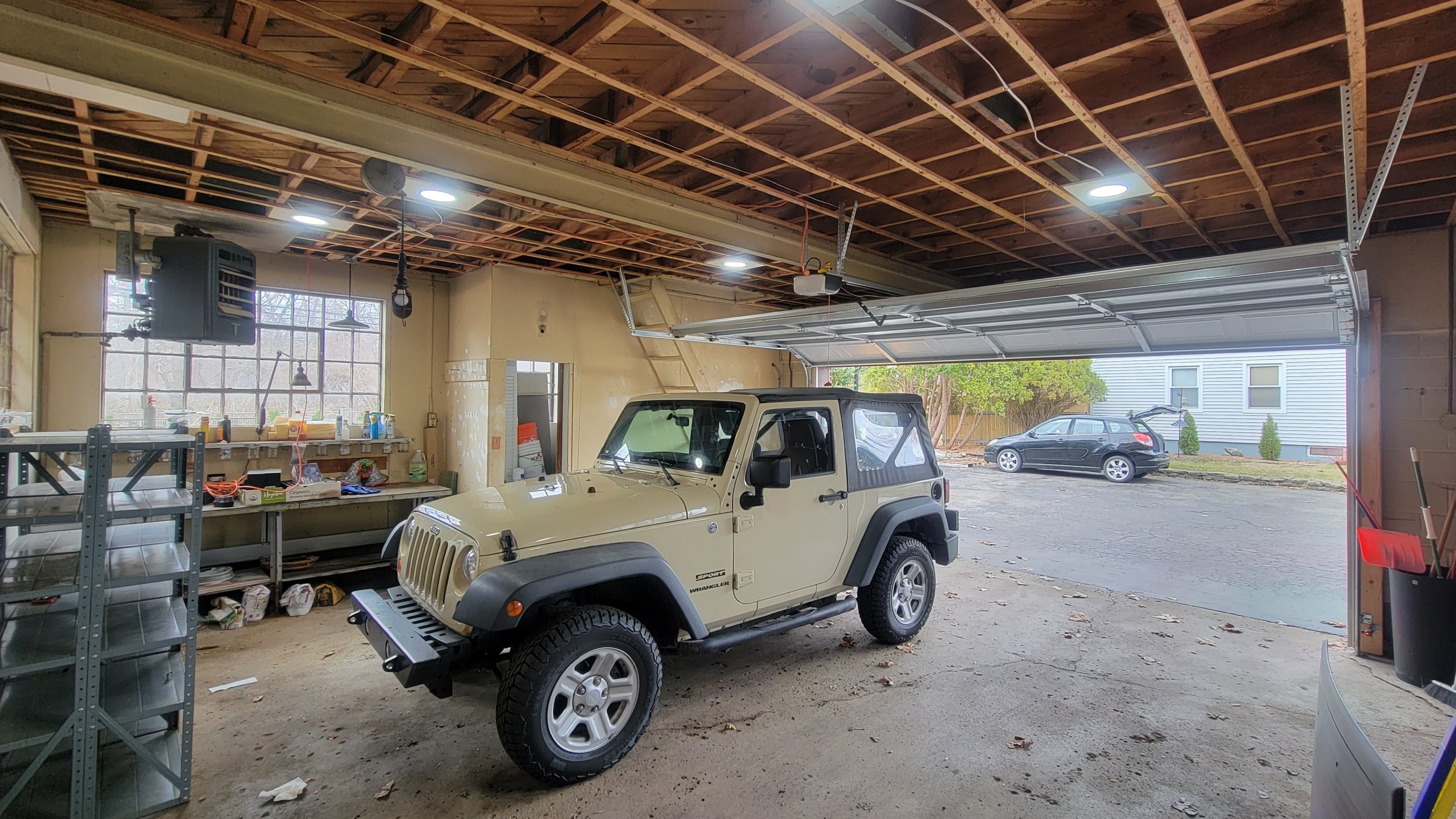
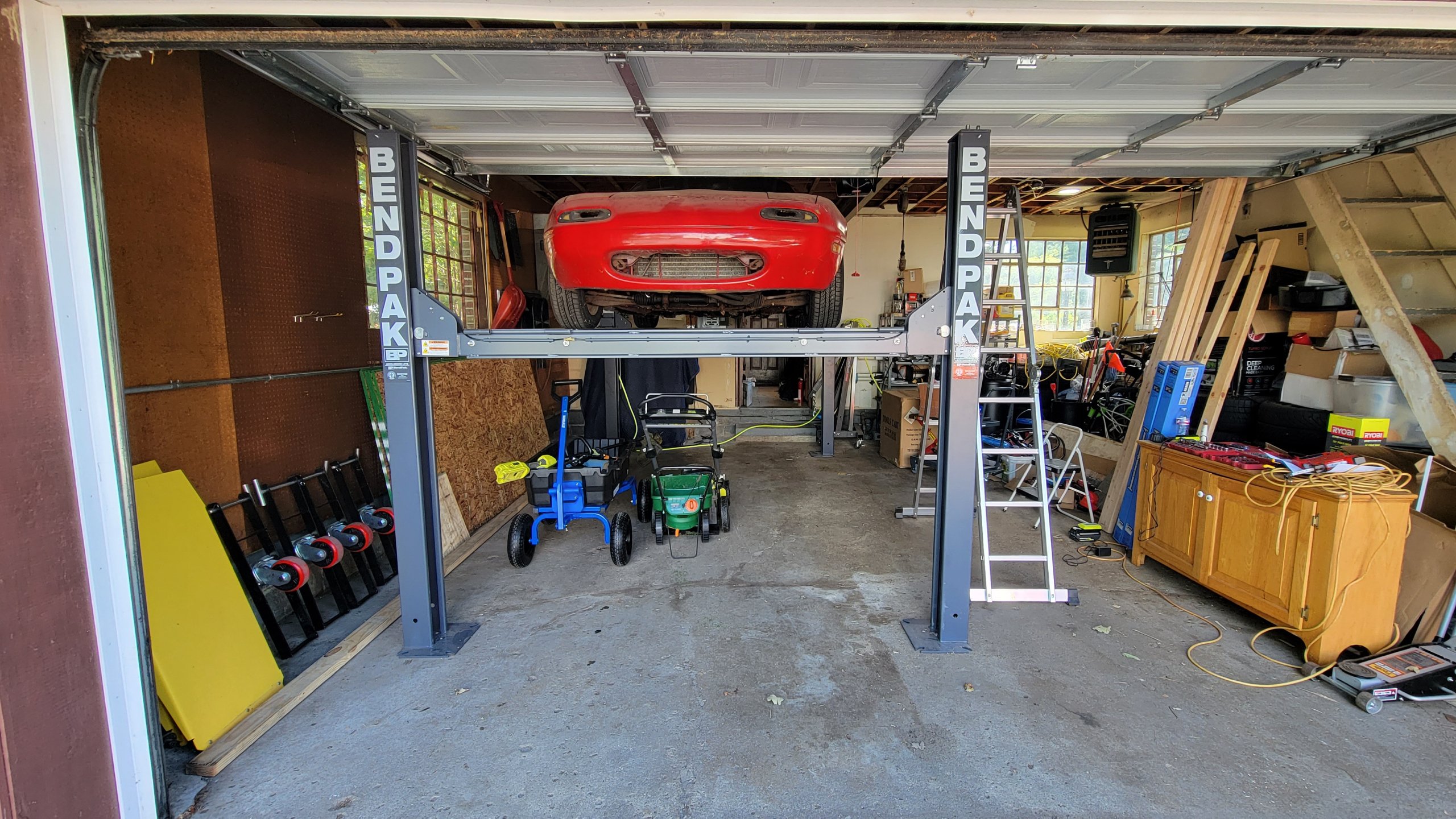
Where does all that crap go instead? Yep, right into the garage. As you can see in the pictures above, even I am not immune to stuff-creep. We own a 1920s house (with a 1940s garage) in an urban neighborhood. Since our attic and knee walls are both encapsulated and our basement was built before they were expected to be perpetually water-tight, our “stuff” ends up in and above the garage too. It’s something we’re looking to mitigate by building a new, bigger garage… but one that won’t be any deeper.
Why? Well, for starters, being someplace where code officials hold real power, we’re limited to just 800 square feet. Most three-car garages designed with that footprint in mind are 32’x25’—just deep enough for even a relatively big pickup truck, but if you’re like me and you’re more inclined toward low-slung, two-door coupes and roadsters, you might cringe at the thought of only having 10 feet per bay, and it’s actually less than that once you factor in the space the garage walls themselves take up. So I went wider, aiming for 12 feet instead, landing at 36’x22′. That’s a foot shallower than our existing garage, but it won’t have the foot-thick, brick-over-stick walls of our 1940 structure, so the interior depth will actually work out to be about the same.
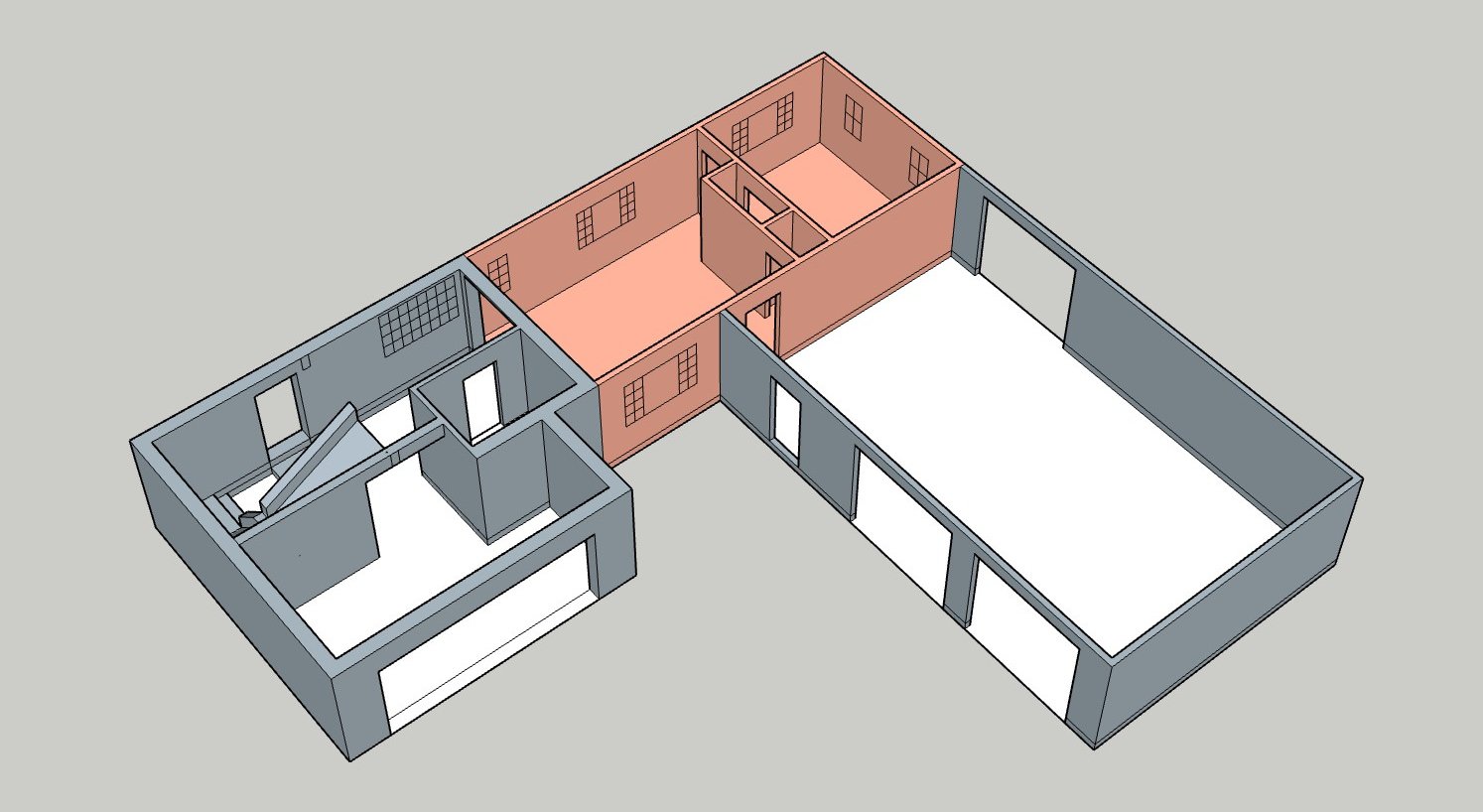
While it may be small by Super Duty standards, it was at least designed for my automotive use case, not just to tick a box in a Zillow listing. So don’t feel guilty if your car doesn’t fit into its designated spot. Garage space is simply yet another thing at a premium in the modern economy.
So how about you? Does your daily actually fit in your garage, or are you suffering from the pressures of stuff creep just like the rest of us?
Got a news tip? Let us know at tips@thedrive.com!
Loading comments…
Comments couldn’t be loaded. Please refresh the page.