
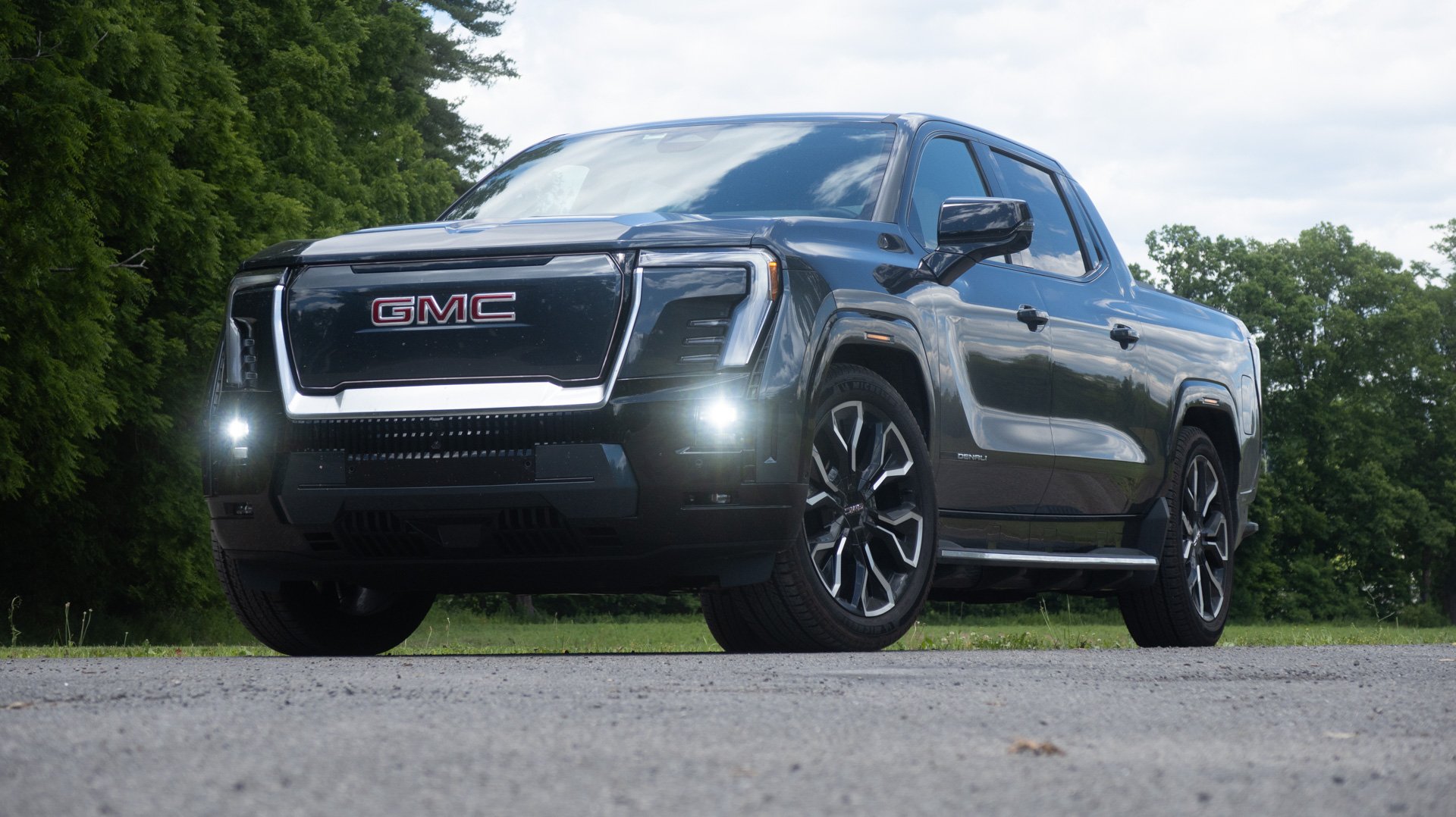
This summer, I drove a 2026 GMC Sierra EV to my buddy’s farm in Maine. He has a diesel, manual, OBS Ford dump truck, and he said the same thing we’re probably going to get in the comments section below this article: “That ain’t a real truck.” This $100,000 luxury vehicle feels a little too nice to load sheep into, but the cargo bed is huge, towing capacity is strong, and the view from behind the steering wheel is commanding. So while it’s not really set up to be an agricultural workhorse, it’s a pretty perfect solution for someone who wants to cruise in comfort and occasionally carry heavy loads.
I had plans to tow a derelict International Scout on a U-Haul trailer across New England with this thing, but that fell through, so I had to make do lugging around moving boxes and other unwieldy junk. It did that very well, and between its 400-plus-mile range and impressive charging speed, I didn’t really feel like I was sacrificing any road-trip convenience by going electric. Even if the trailer had cut my range in half, I don’t think it would have been that big a deal to add a couple more fast-charger stops.
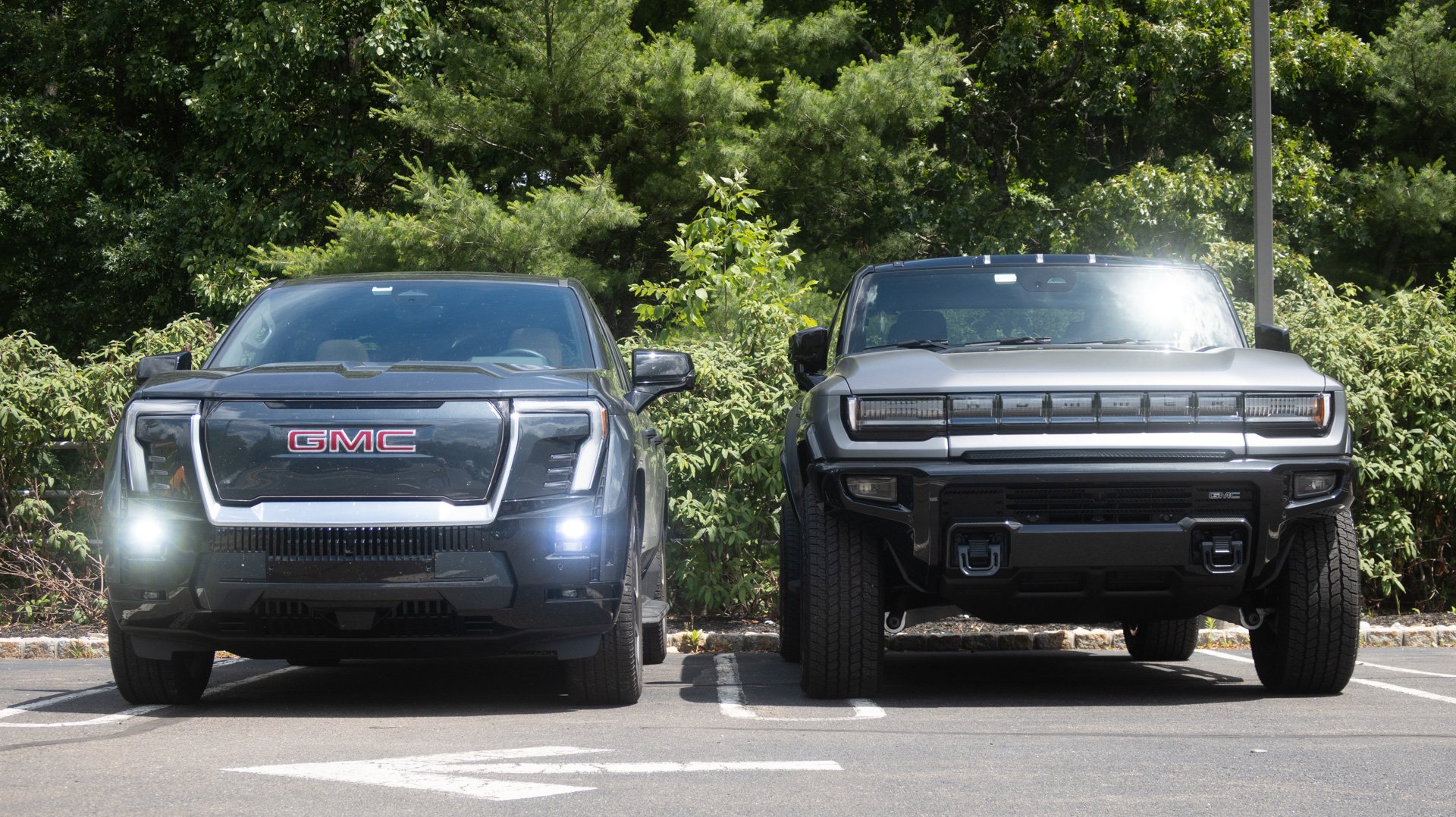
Six-figure price tags are commonplace among high-luxe trucks now, so that aspect of this thing isn’t even eye-watering anymore. If you’re seriously considering something in the luxe-truck vehicle class, you really owe it to yourself to at least look closely at one of these. It’s absolutely immense, which is an understandable turnoff for some. This air-suspension variant delivered distinctly comfortable driving dynamics, a high-class interior, and plenty of headroom for towing and hauling when you need them.
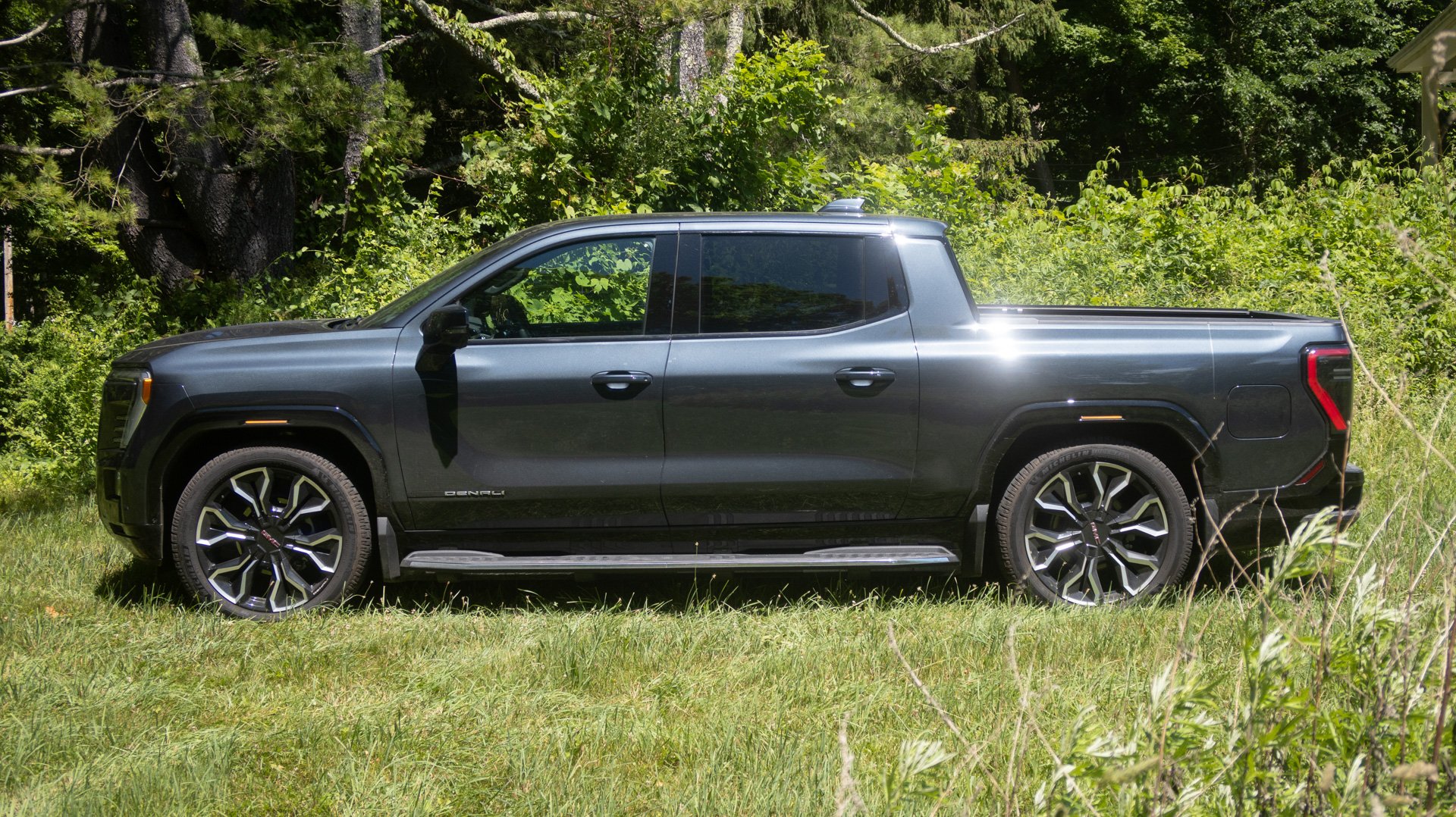
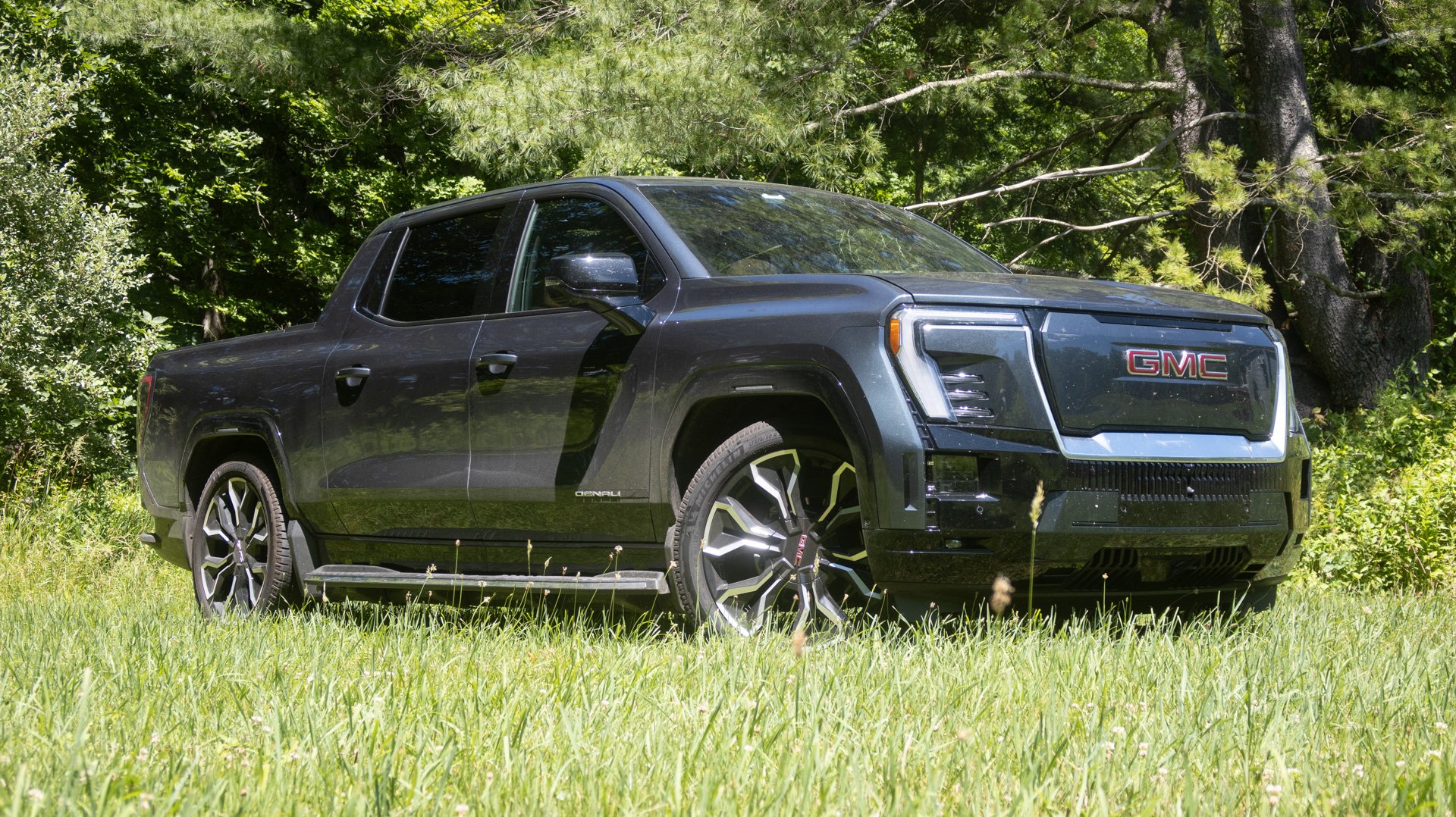
Something like this is never going to make sense if you need to haul livestock every day and do all your own maintenance. But if you want a truly comfortable, super-modern daily driver that also works as a truck when you need it to, the Sierra EV is excellent.
Pros
- The power delivery is excellent; it feels very powerful without being overwhelmingly fast, and it doesn’t need to be.
- Ride quality is great too, staying smooth over bumps
- The heads-up display is perfect on this truck, with navigation, speed, and cruise control settings that are clear but small enough to stay non-distracting, and the permanently displayed arrival time is a thoughtful touch
- Google Maps, which the vehicle runs natively rather than with Apple CarPlay, is nicely optimized for the vehicle. It shows the expected battery level at your destination, highlighting charge options along the route, to the point that I never missed Apple CarPlay
- This truck has a “midgate,” which means the rear seats and rear window basically fold away to extend the cargo bed significantly or give you a little open-air driving experience. It’s a huge advantage of having the cargo bed and cab be contiguous
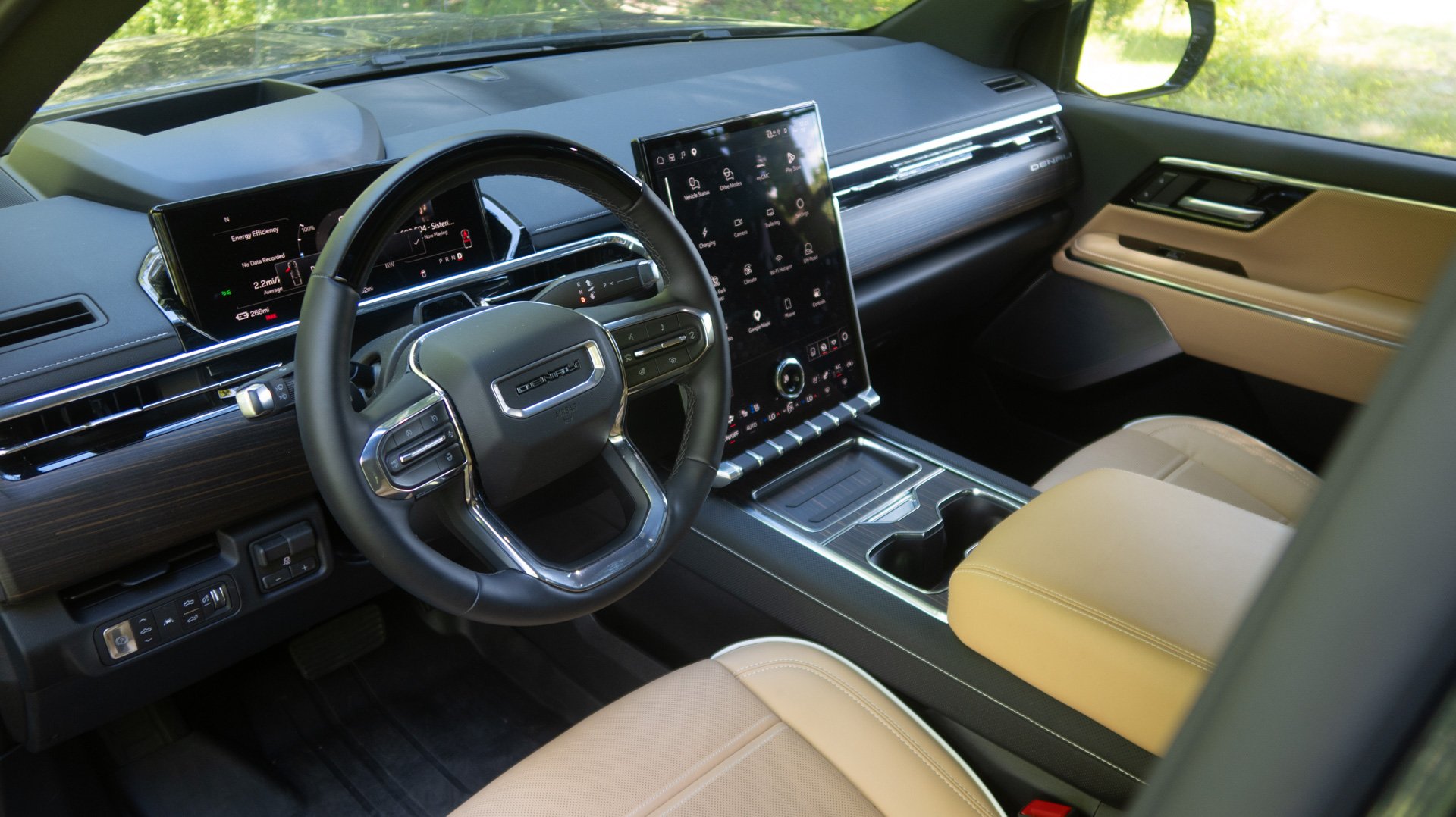
- The interior design is really nice, with excellent lighting
- All touch points, including leather upholstery and hard buttons, feel great
- The ingress grab handles (up on the A-pillar) are perfect—my shorter wife could easily hoist herself into the immense truck. A lot of vehicles miss this
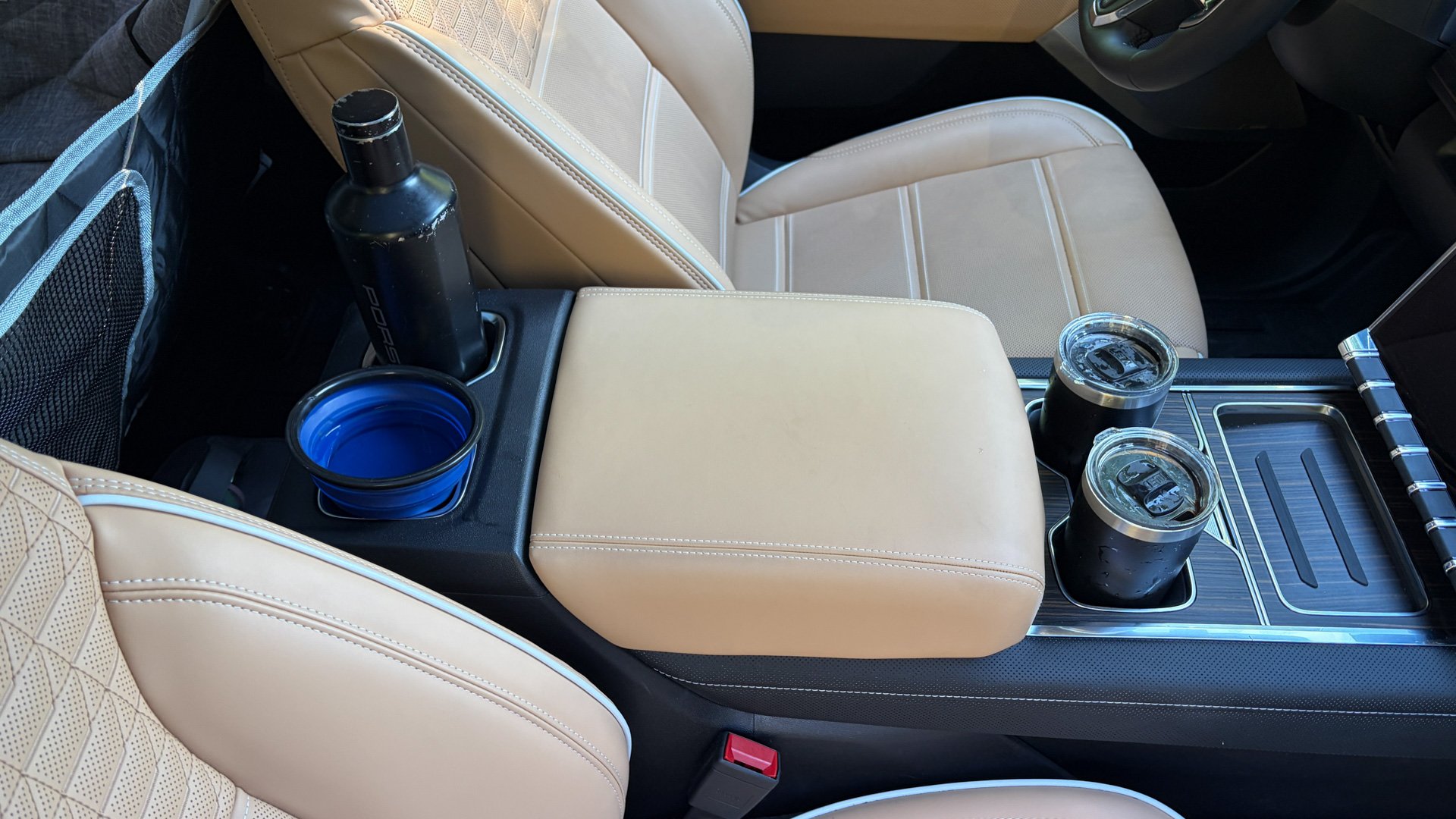
- Interior storage is great, including the spacious center console and sliding cup holders
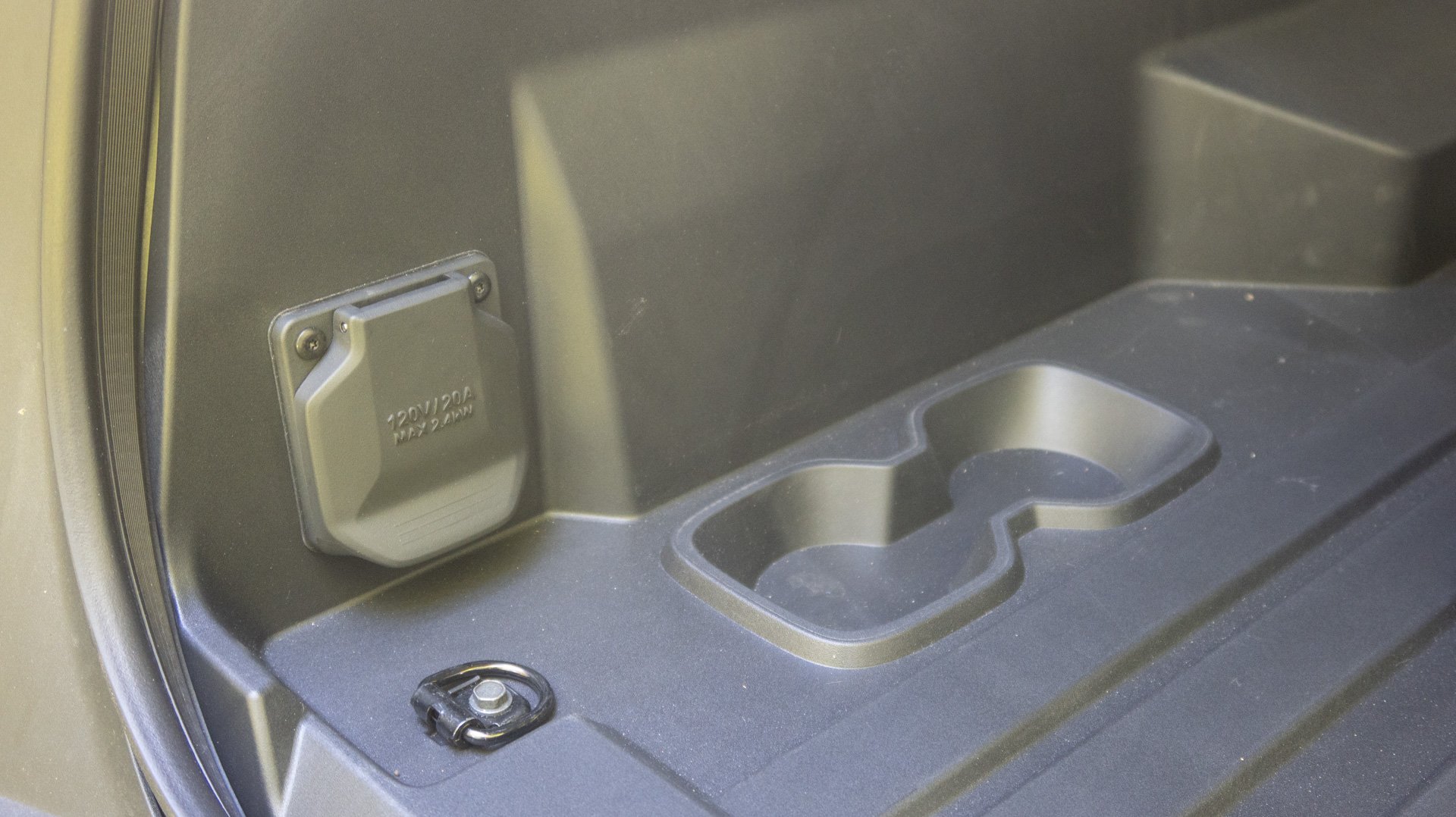
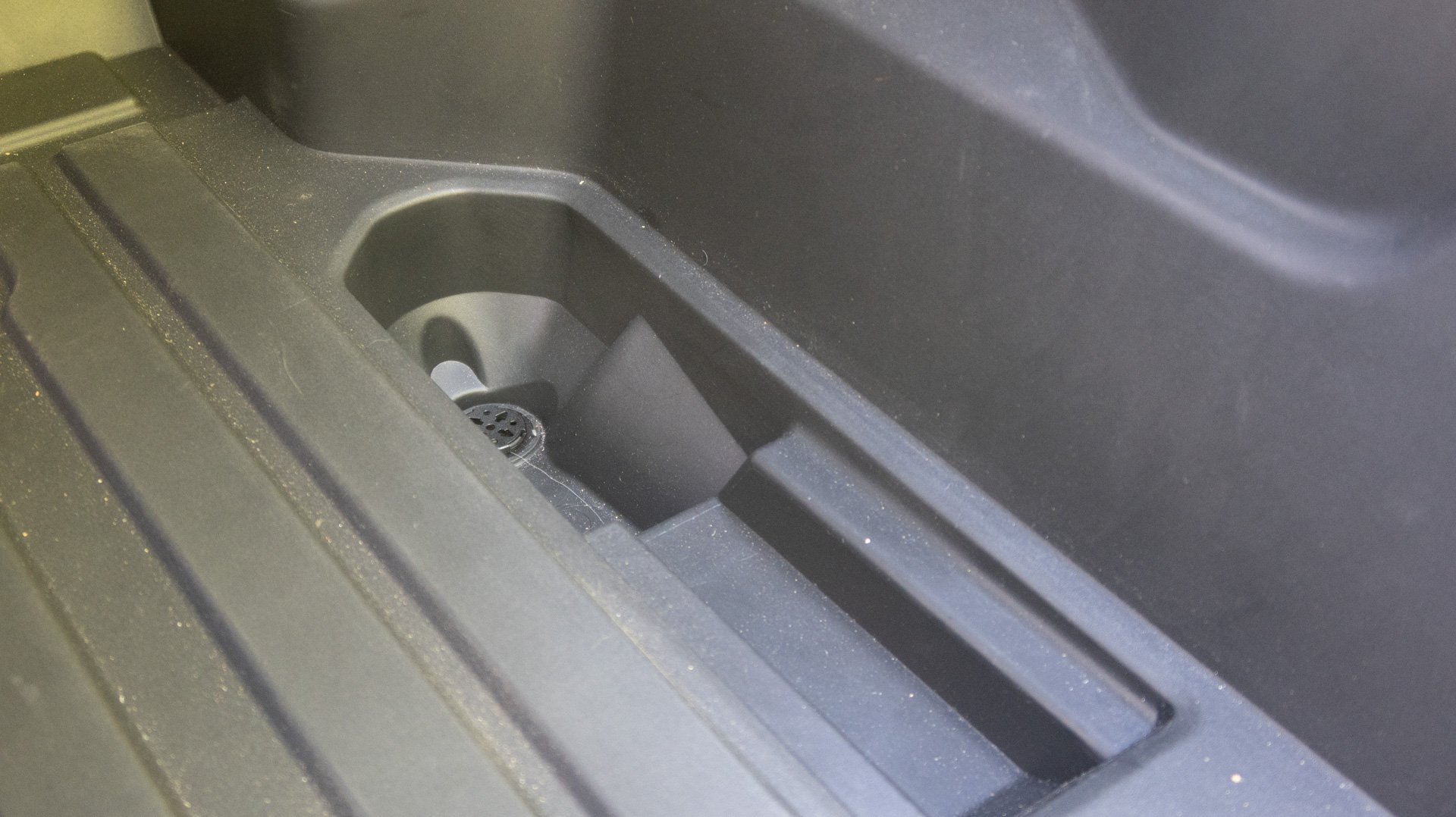
- The front trunk is surprisingly roomy and includes charging options
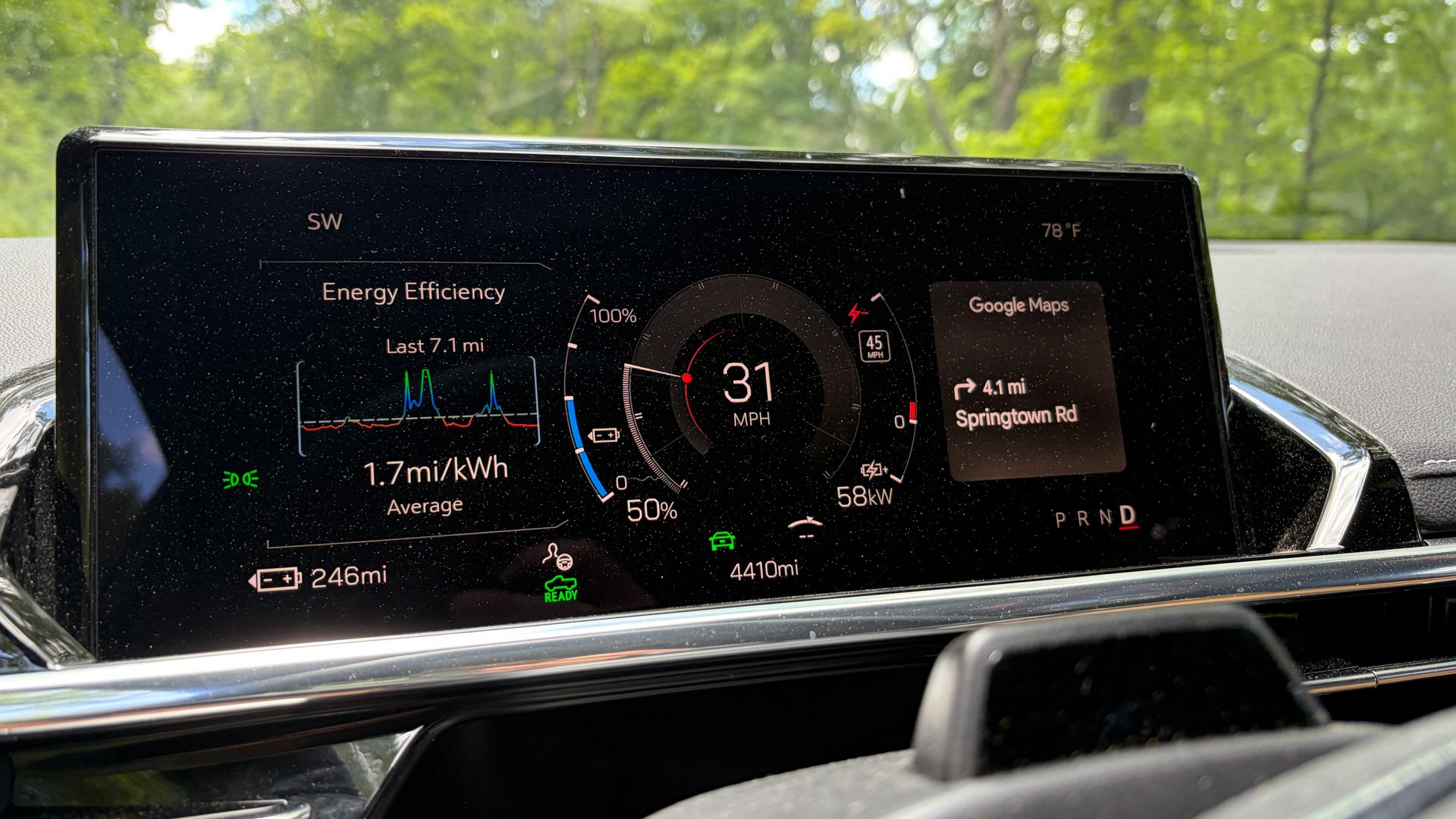
- The gauge cluster strikes a really nice balance of good design and a modern look without being overwhelmed by pointless animations—it uses all the pixels without flooding the screen with distracting lines and colors
- The column shifter takes a little getting used to but is pretty intuitive, and I love how it stays nice and out of the way
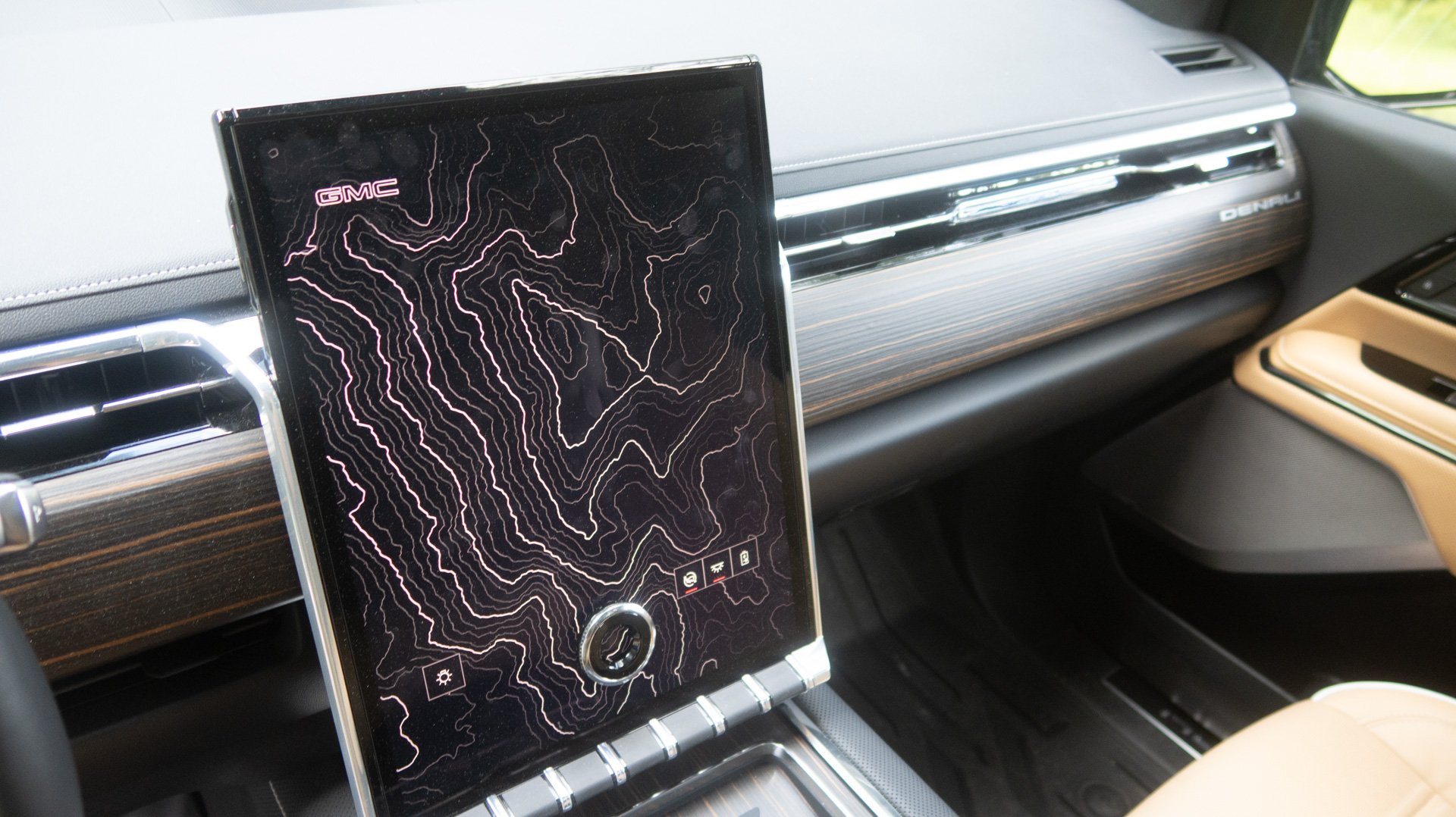
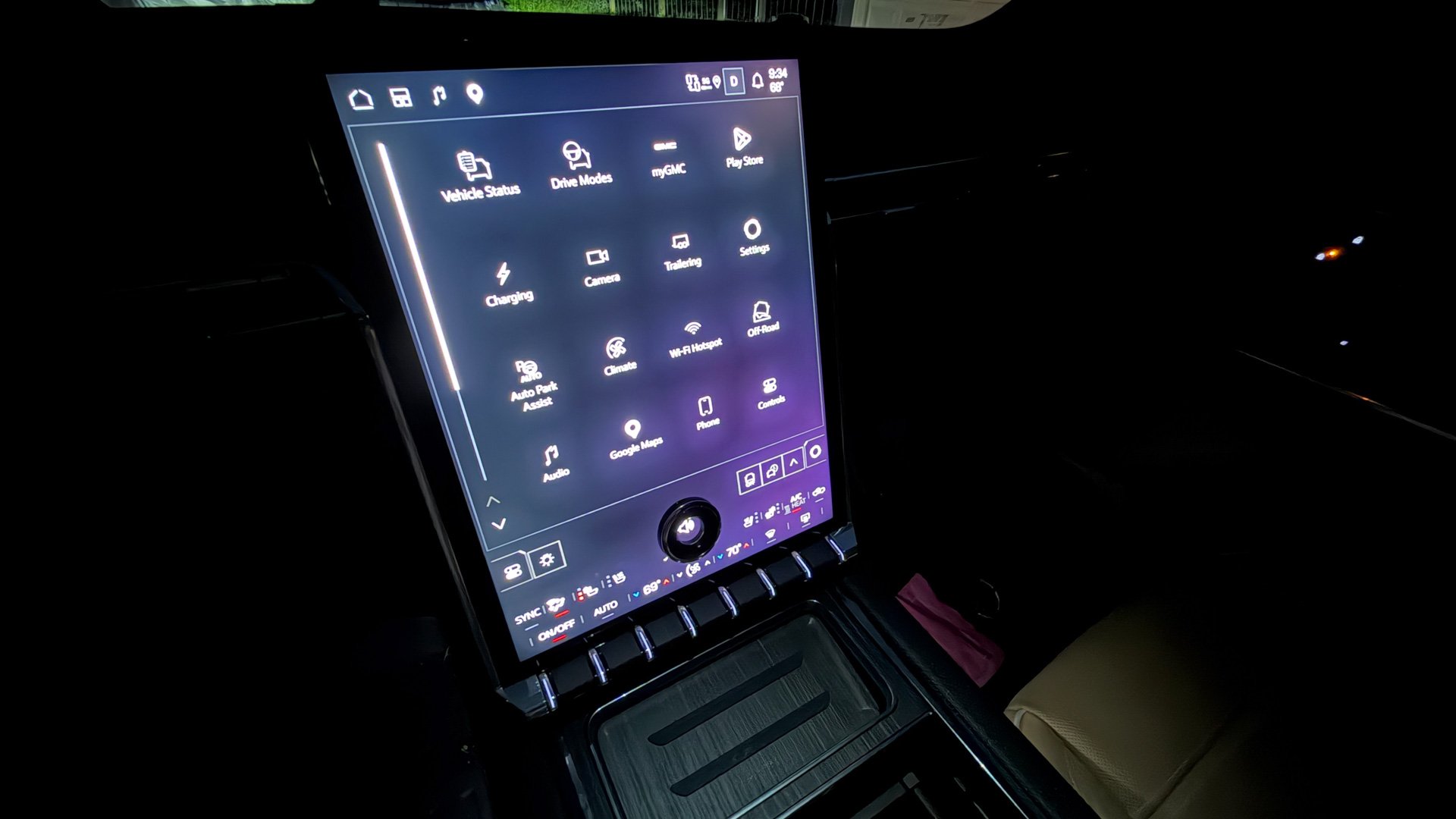
- The large central tablet infotainment display somehow fits well here and looks like it belongs, even though it’s basically just a slab
- The row of buttons along the bottom of the tablet is very satisfying, as is the volume knob
- This truck feels like it splits the difference between heavy-duty and luxury even better than the high-end gas trucks I’ve driven. It seems substantial but also swift and executive-ish
- The rear-wheel steering makes maneuvering pretty manageable
- The bed is low enough to actually load cargo into, and deep enough to give you a big cargo area with the tonneau cover on and an absolutely huge one with it off
- Unbelievably roomy rear seat, which means a surplus of interior cargo room
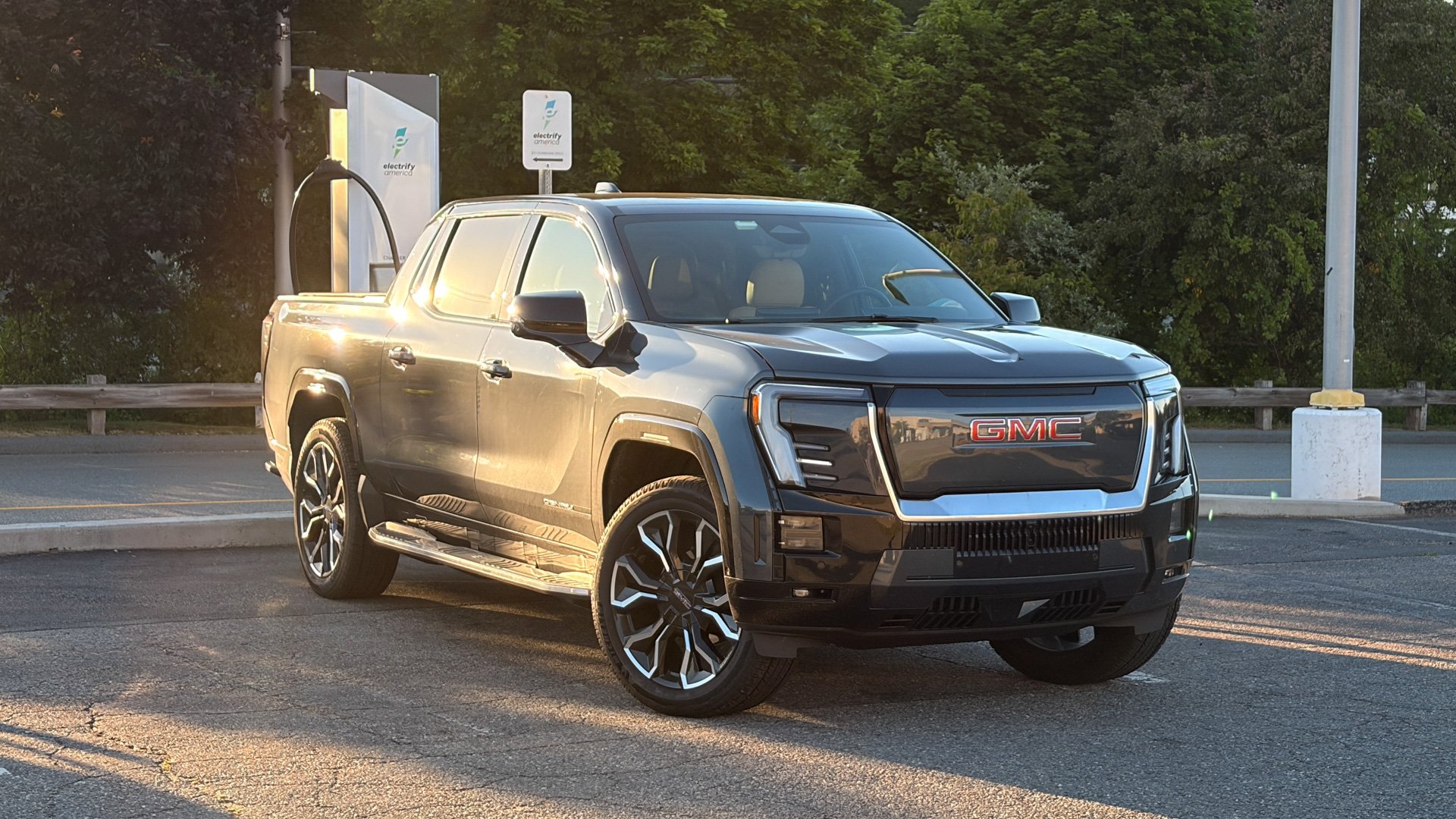
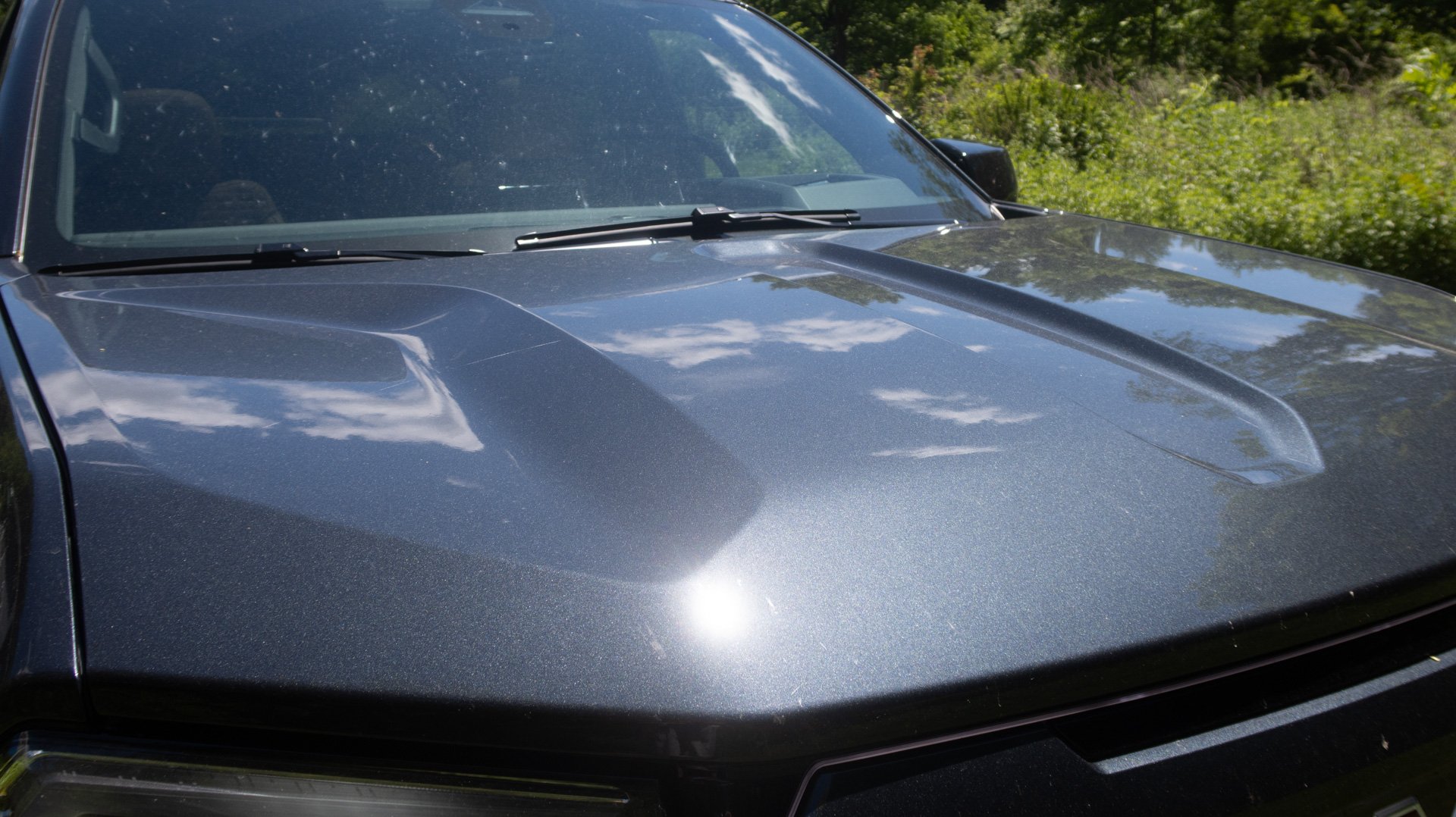
Great sculpting on this hood. 
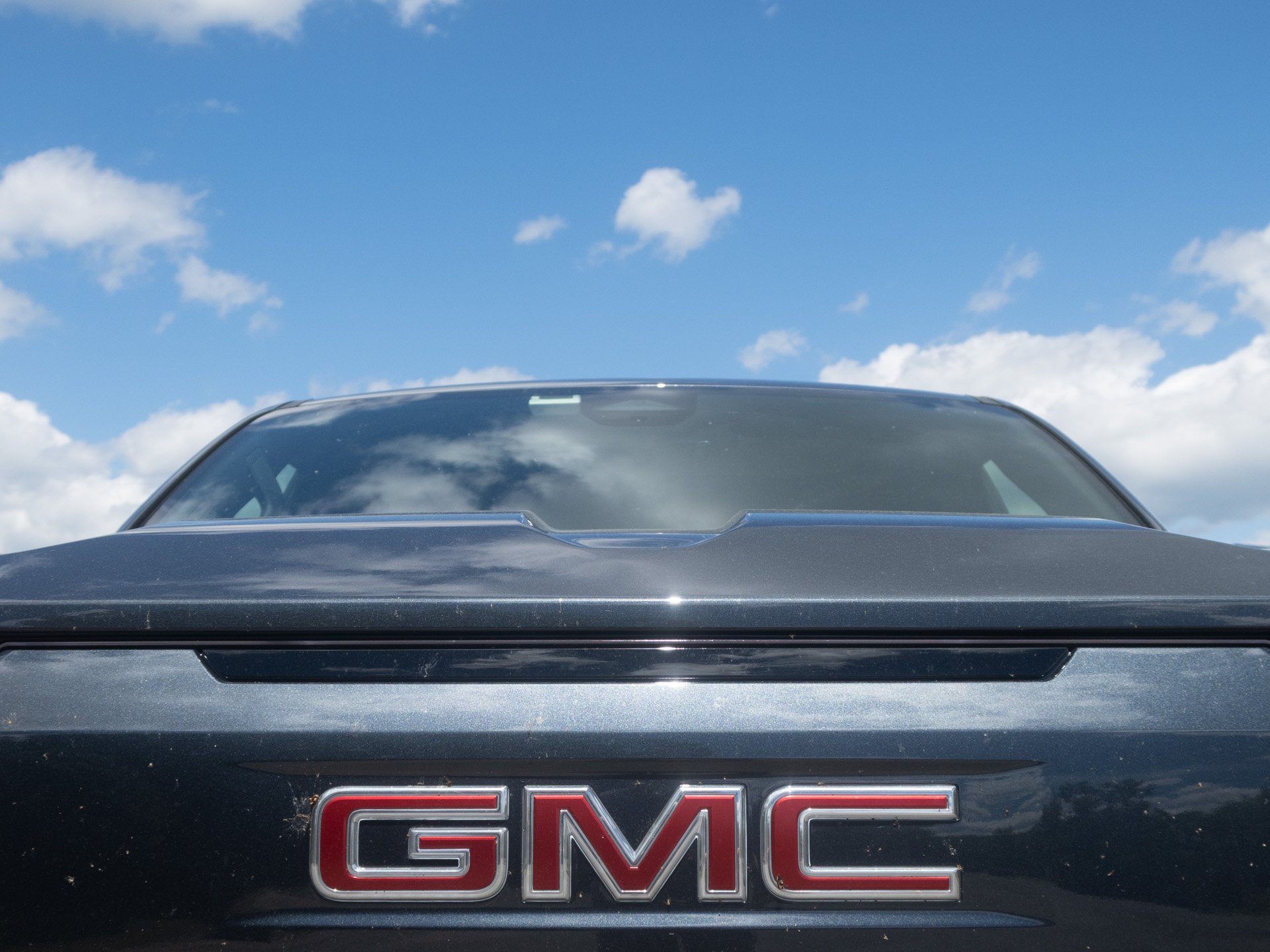
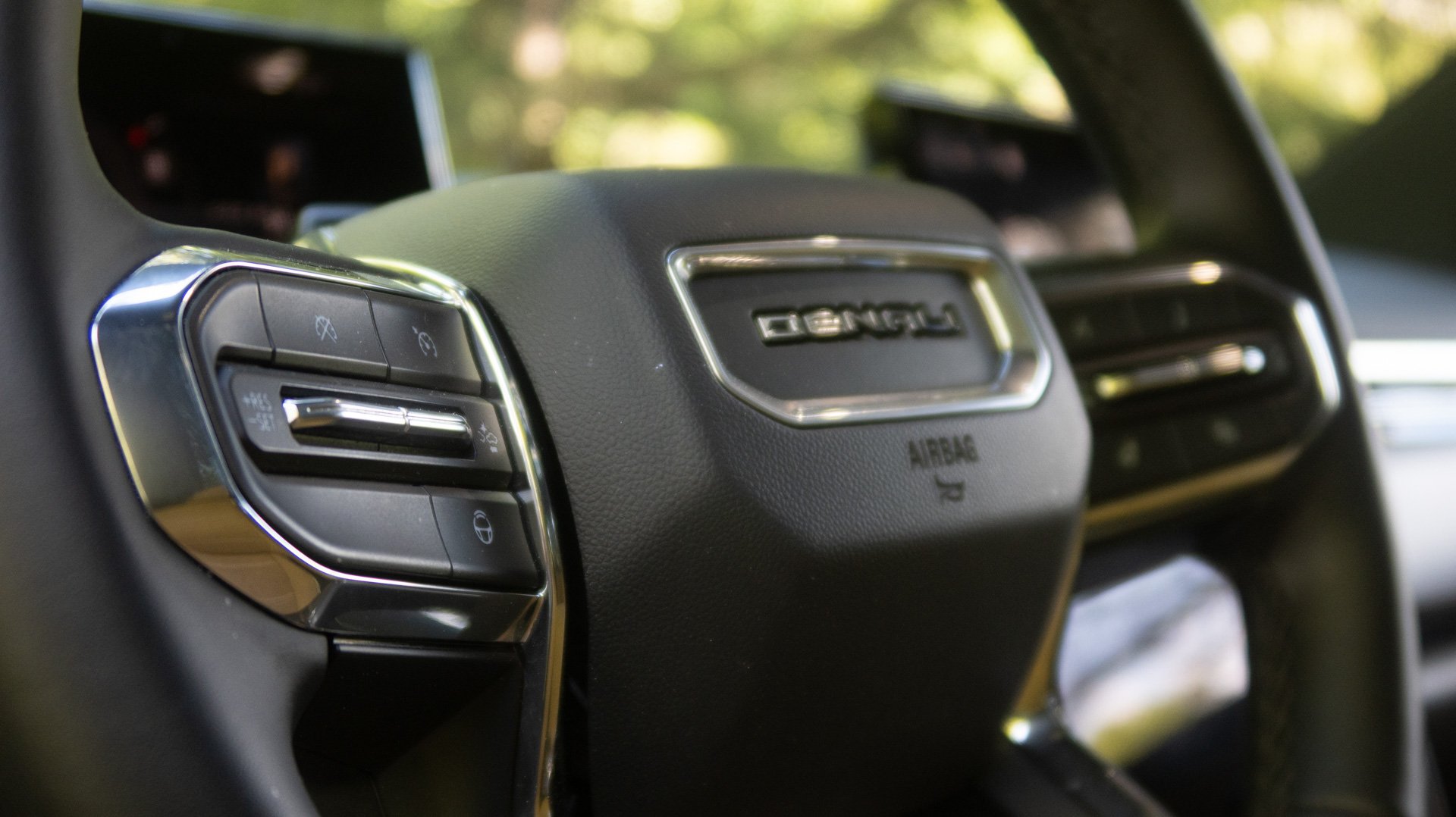
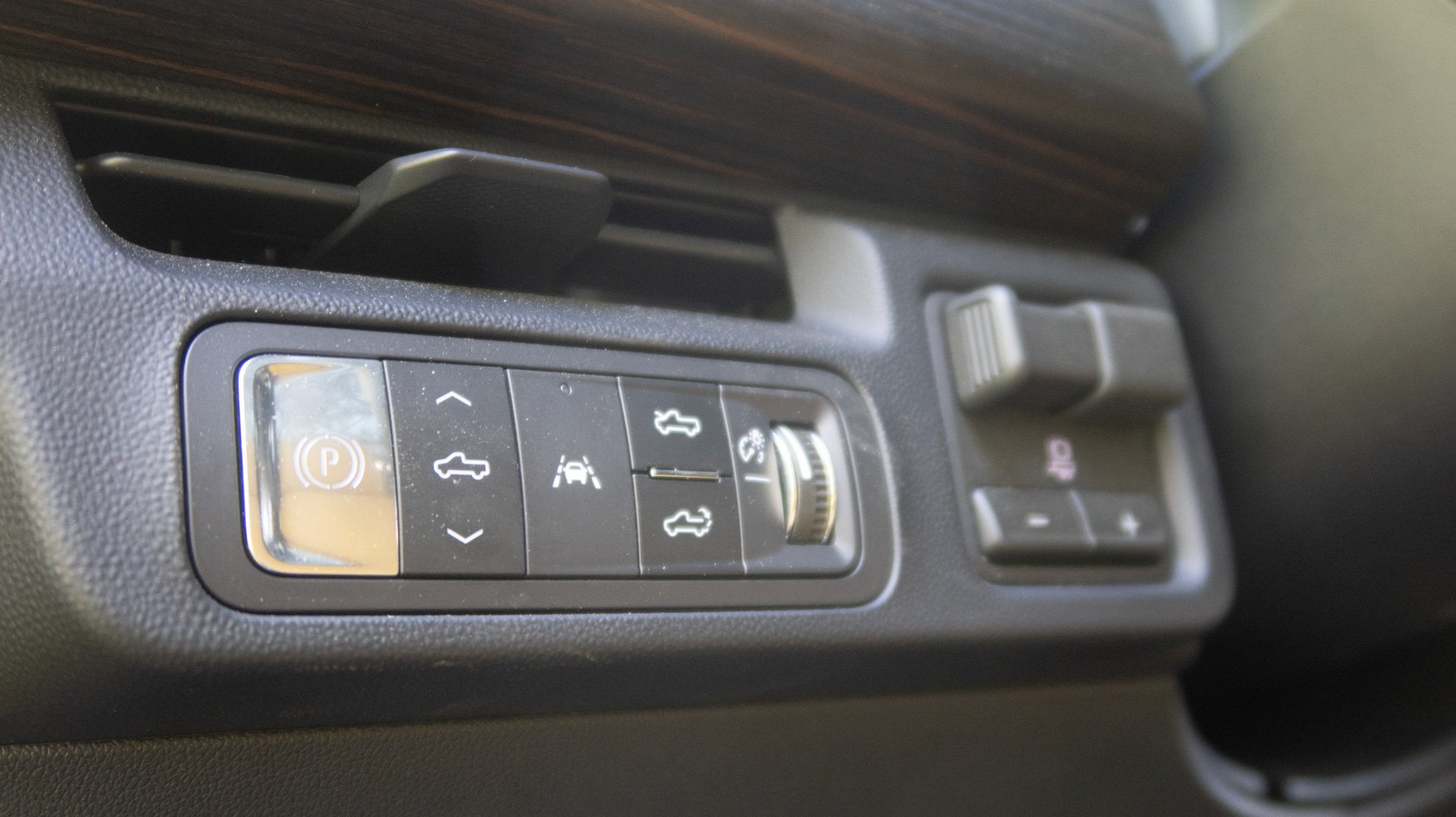
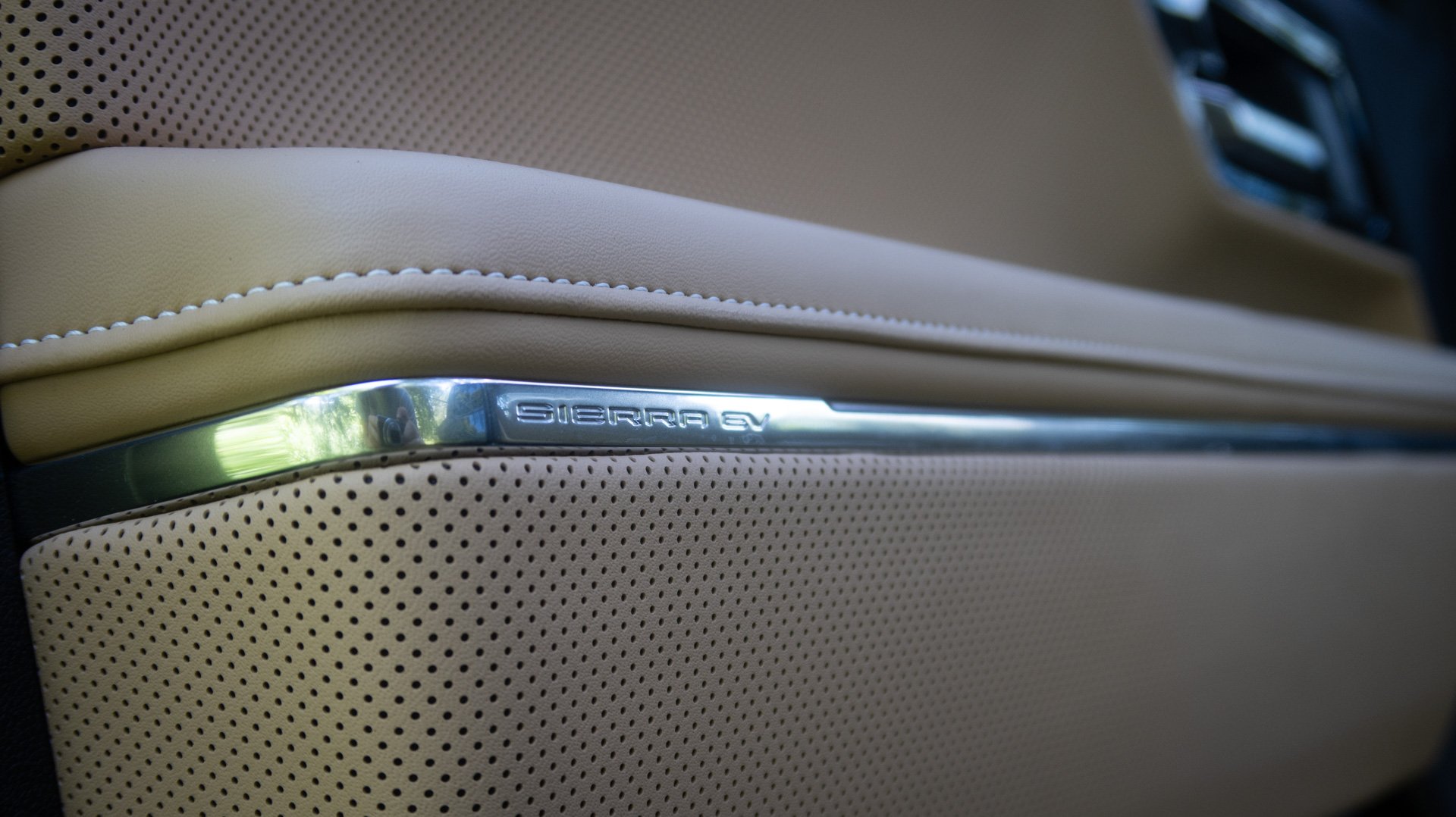
The chrome-on-tan combo of this truck is very classy. 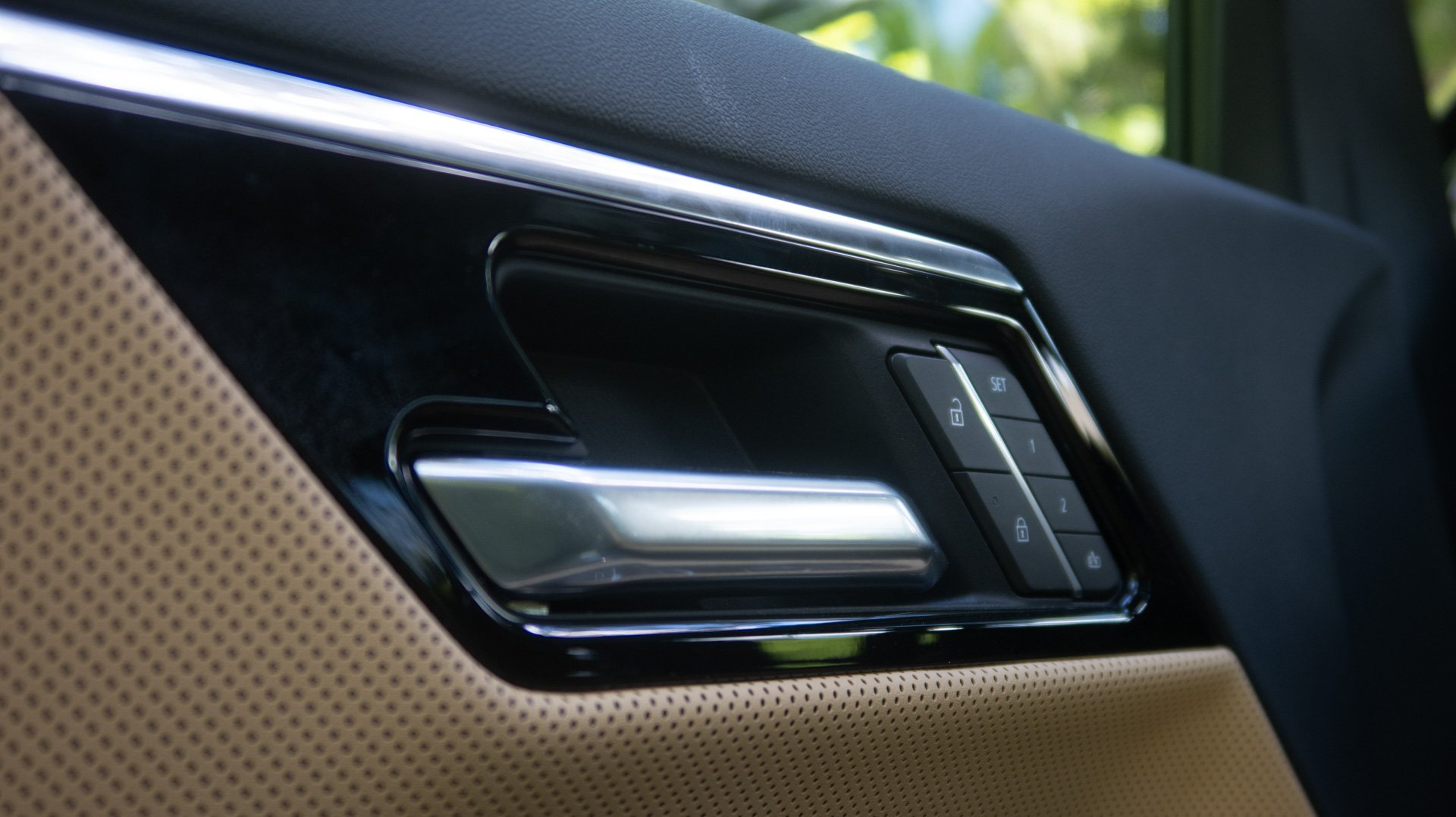
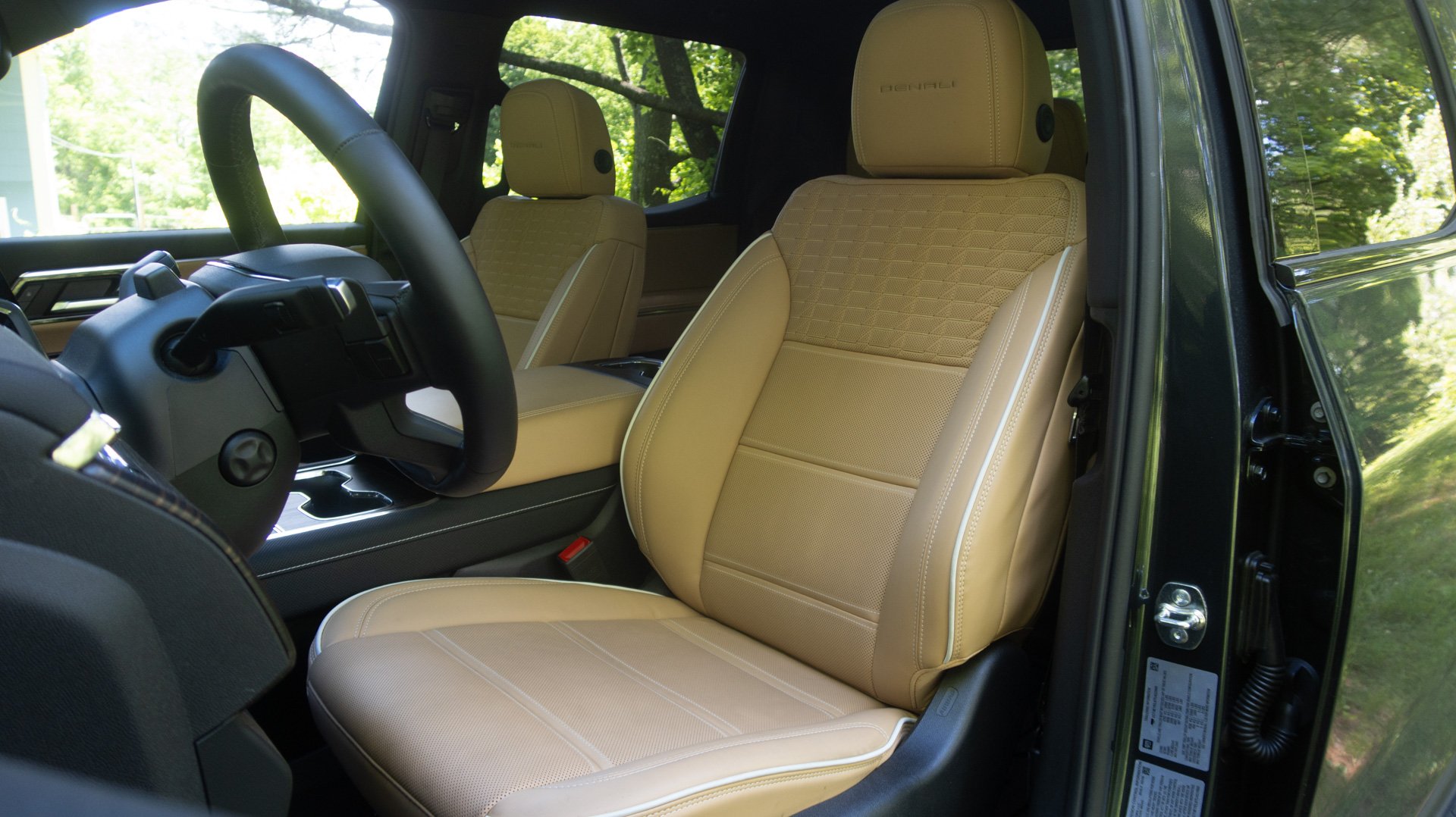
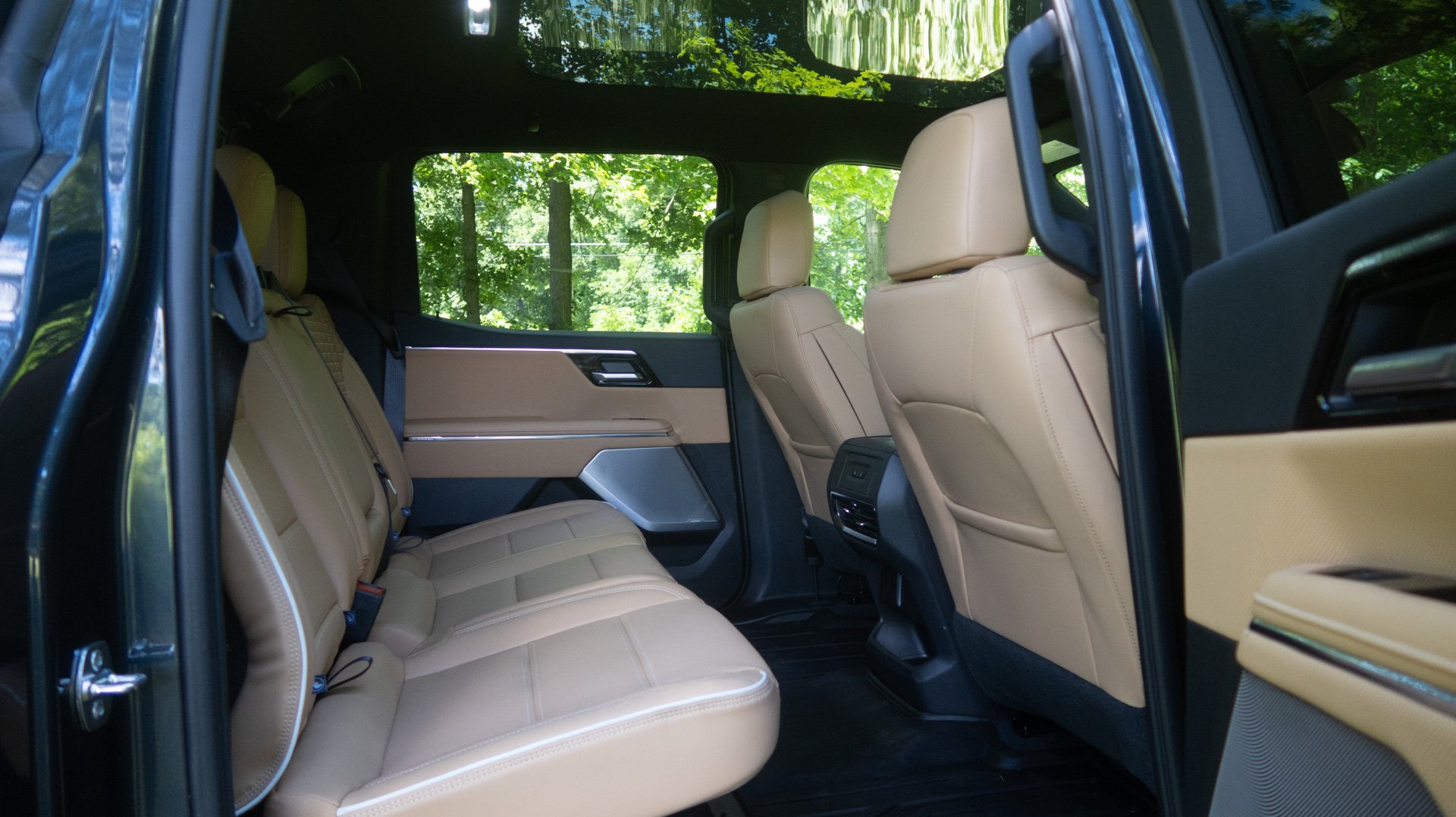
Abundant rear-seat room. And the B-pillar grab handle is great for getting up in there. 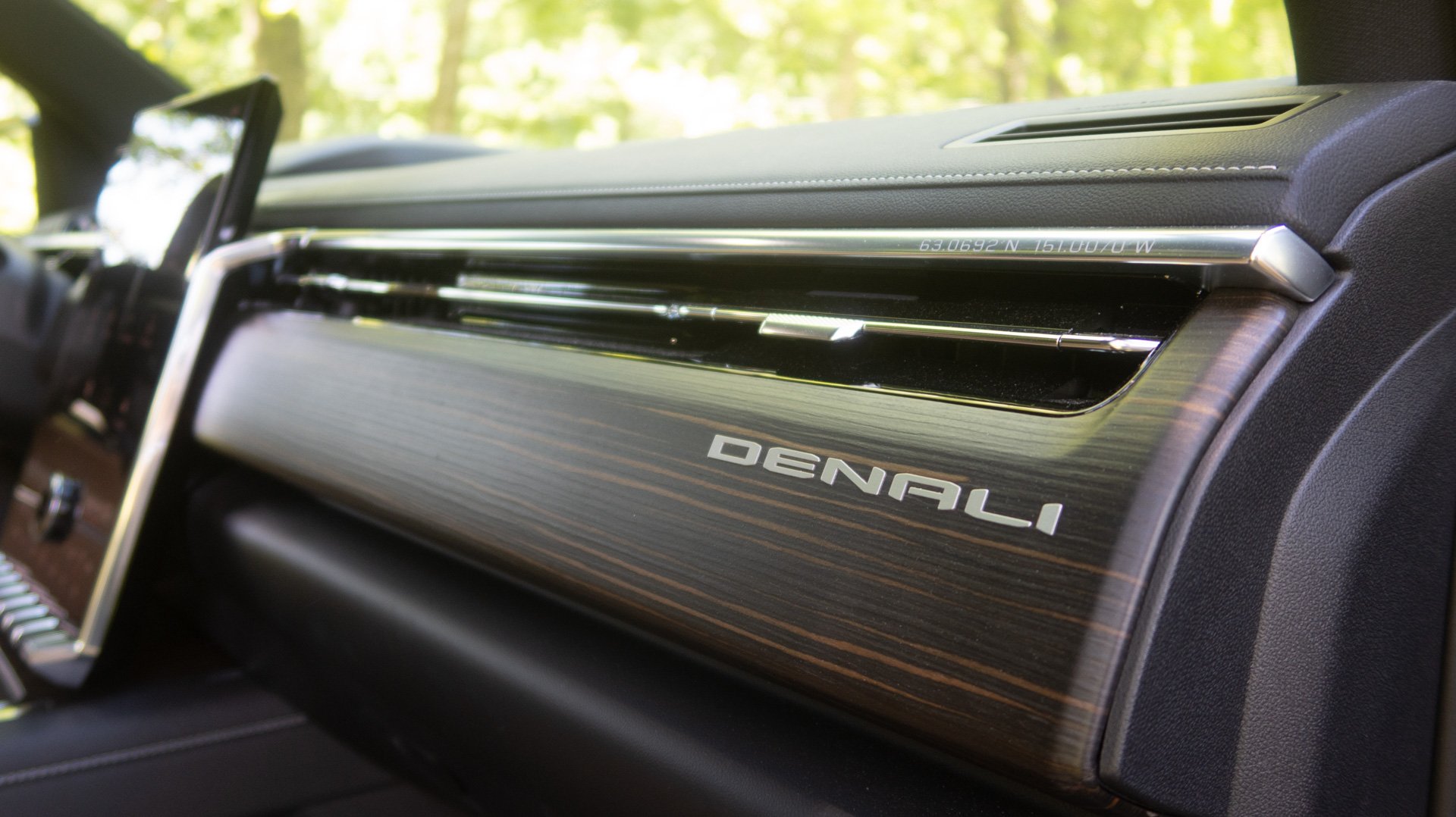
This wood material is the only real letdown inside. It looks OK, feels, not great. 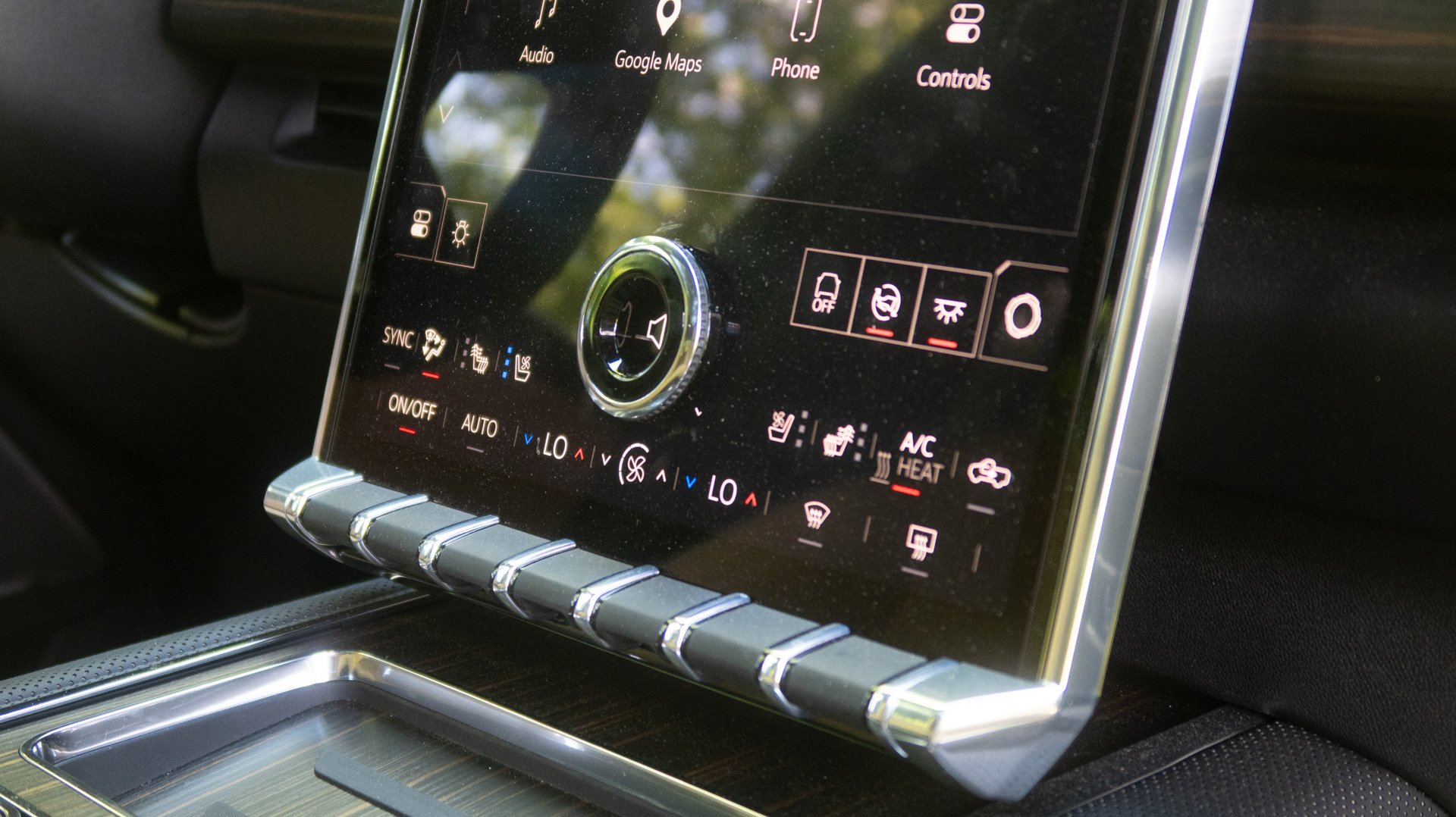
But these toggles integrated with the infotainment screen are great. 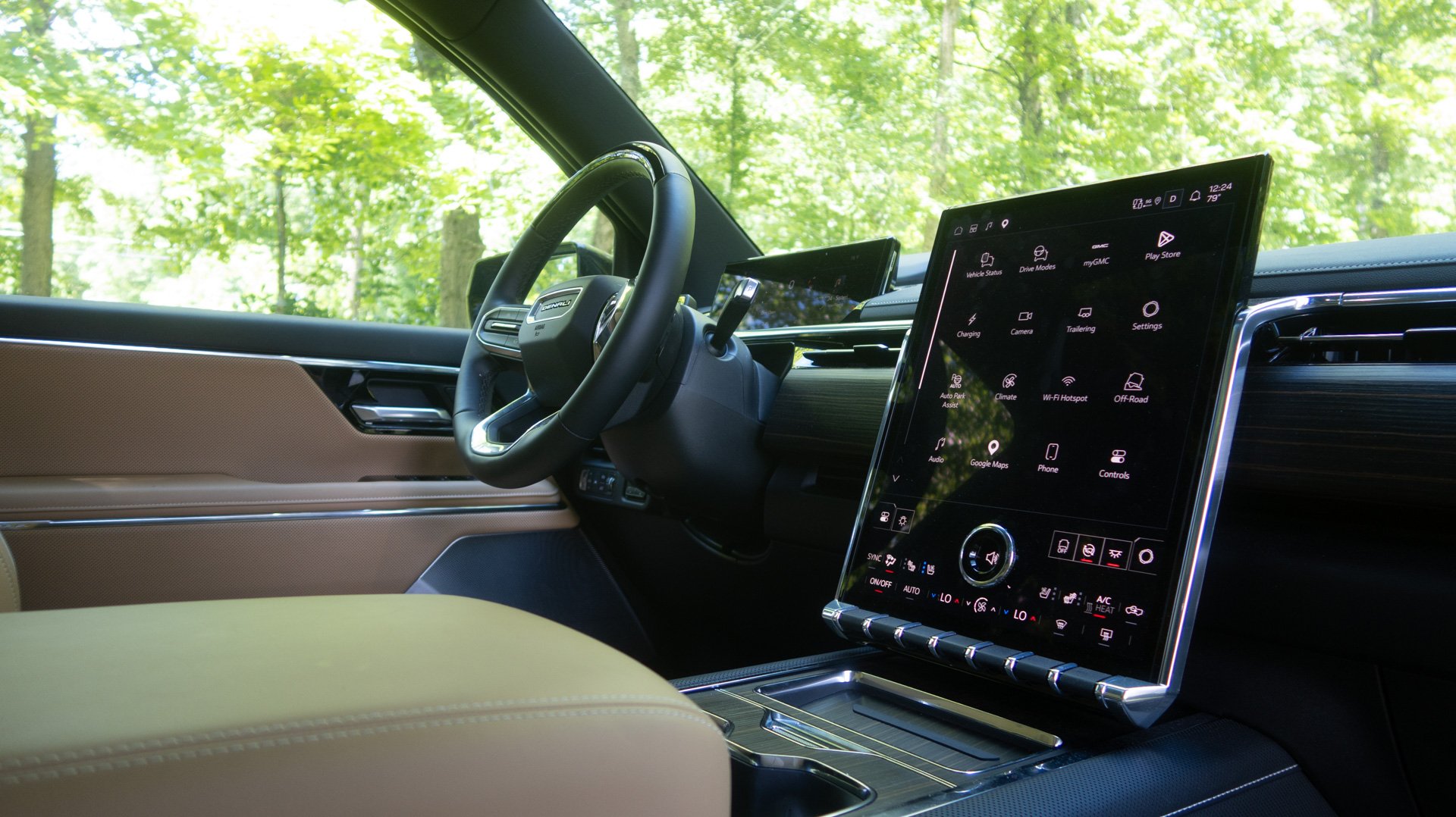
The screen’s huge, but it fits with the interior. I hate screens in general but this is well done. 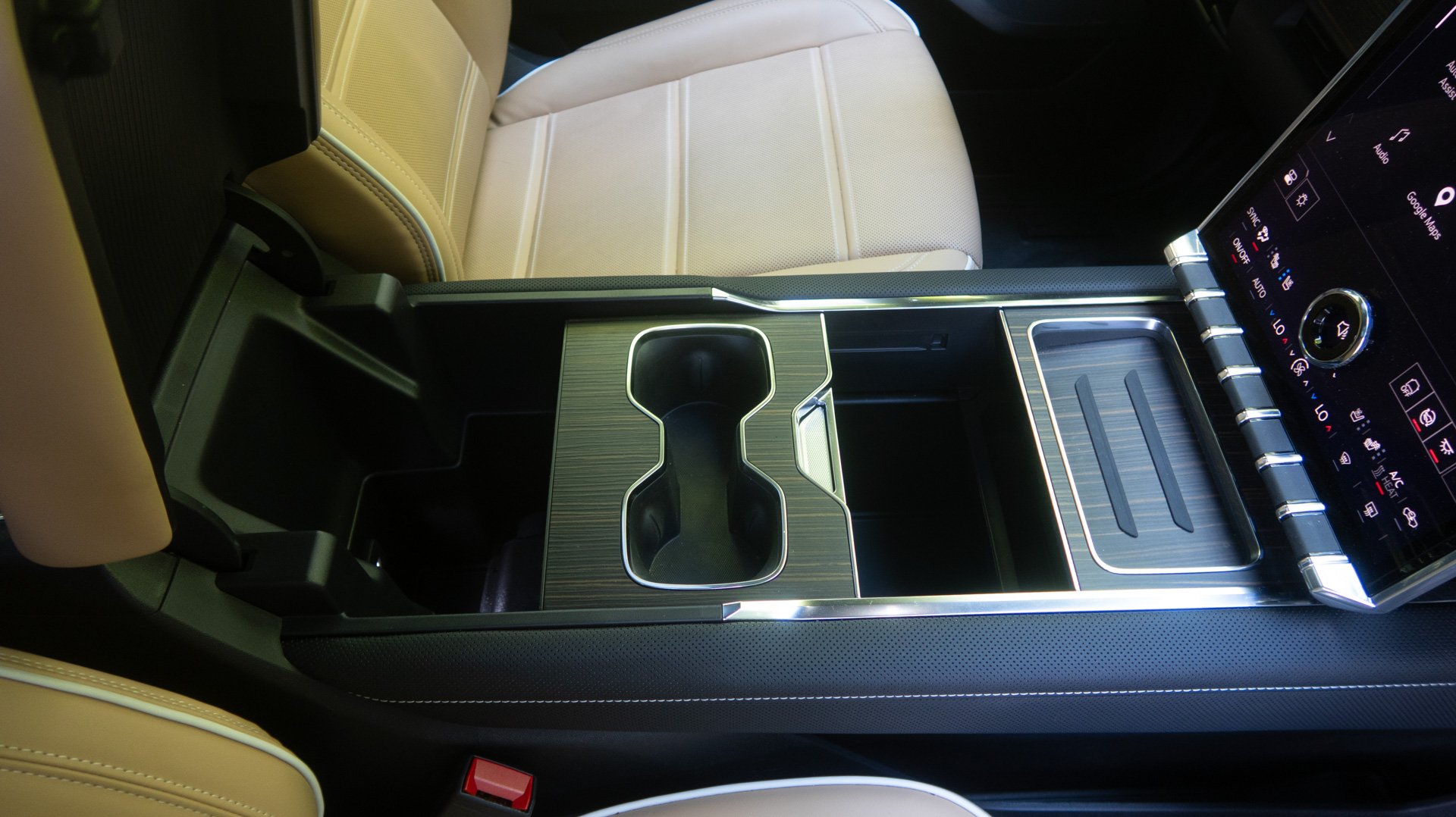
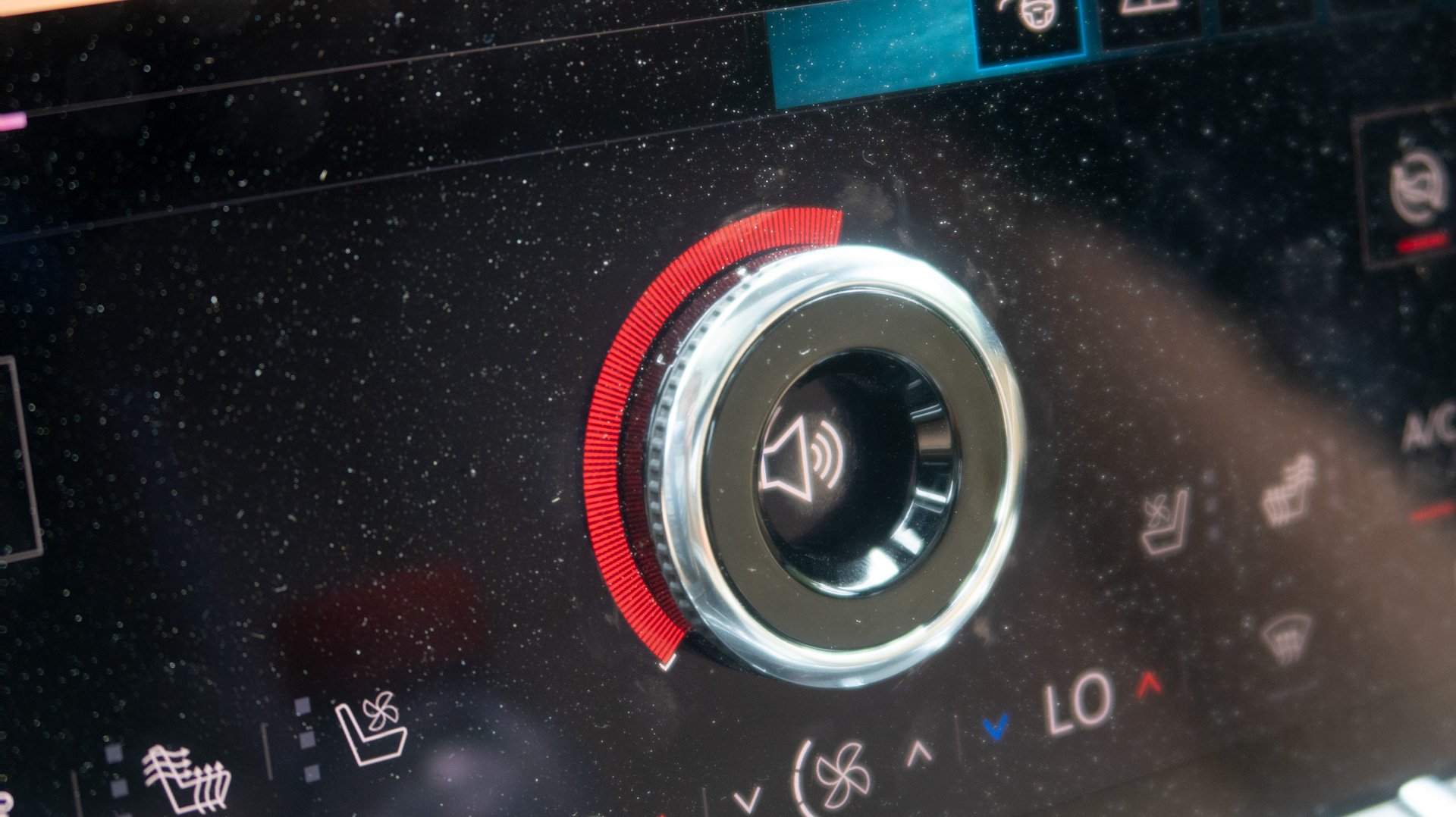
Just a neat example of how the physical inputs are connected to the digital display. 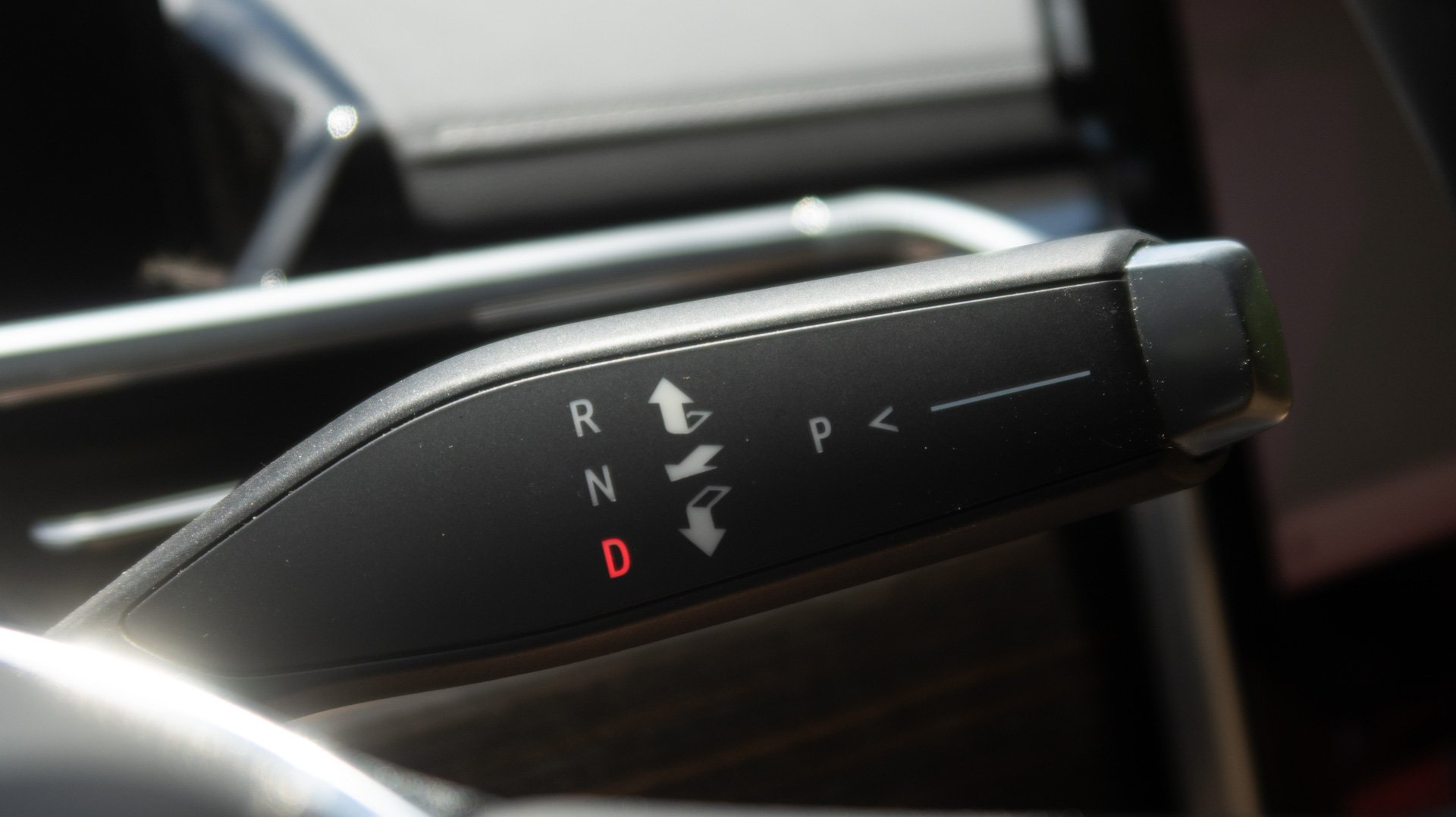
The column shifter takes a tiny bit of getting used to, but it’s good. 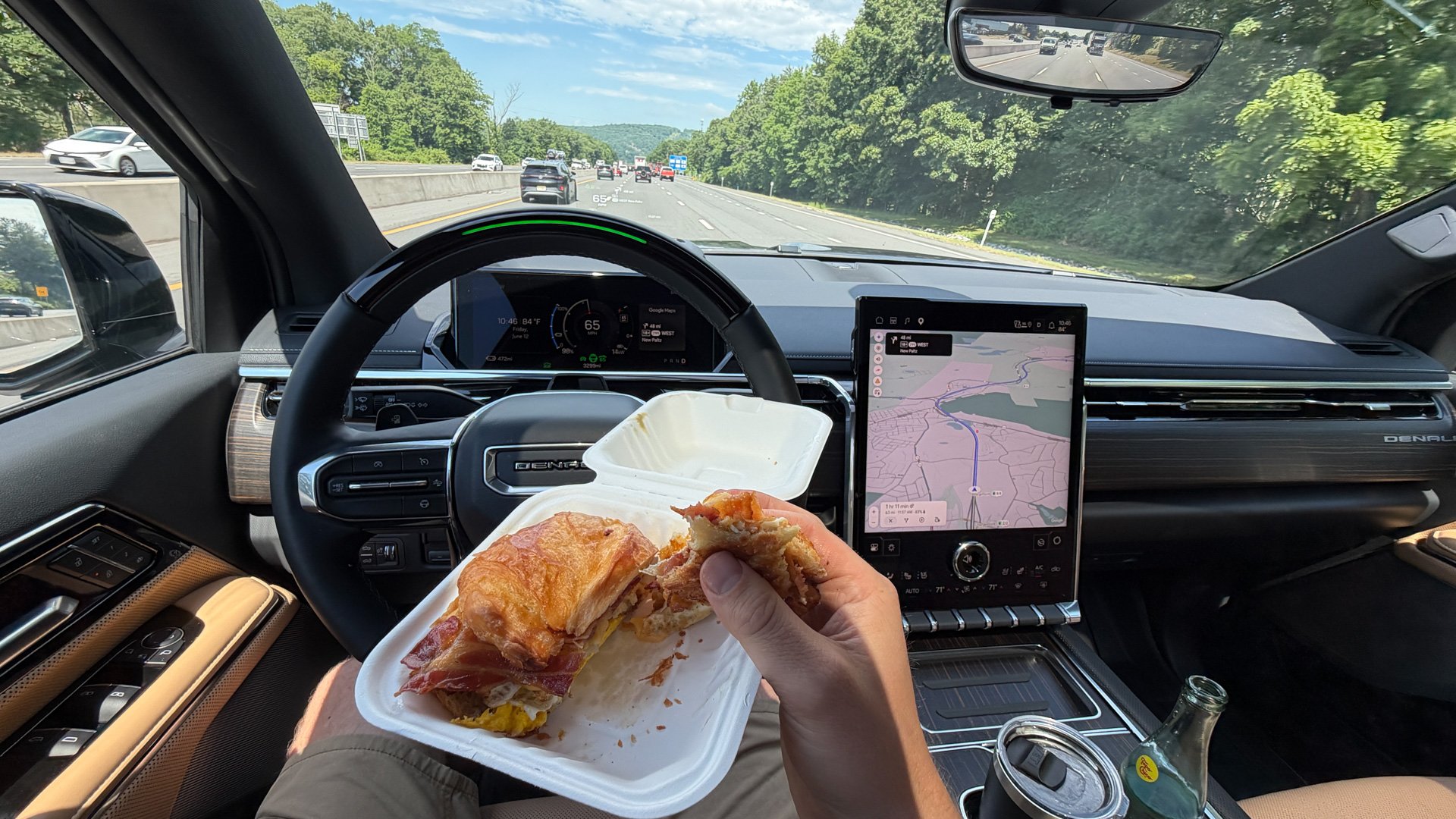
It didn’t take long to sell my on SuperCruise. It’s not perfect, but it’s pretty sweet. 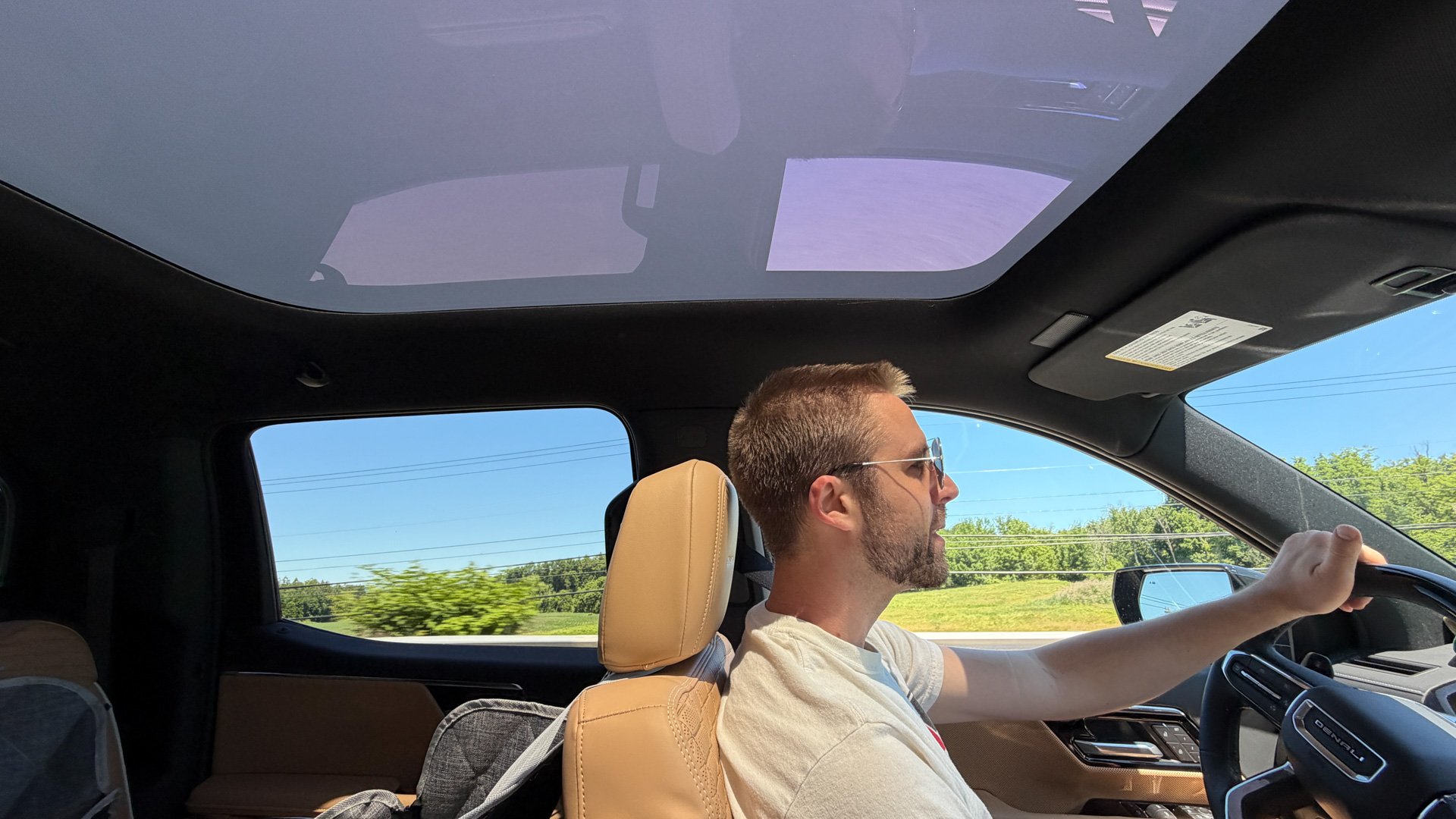
This sunroof seems like a cool idea, until you realize how hard the A/C has to work to keep up with it in the summer. 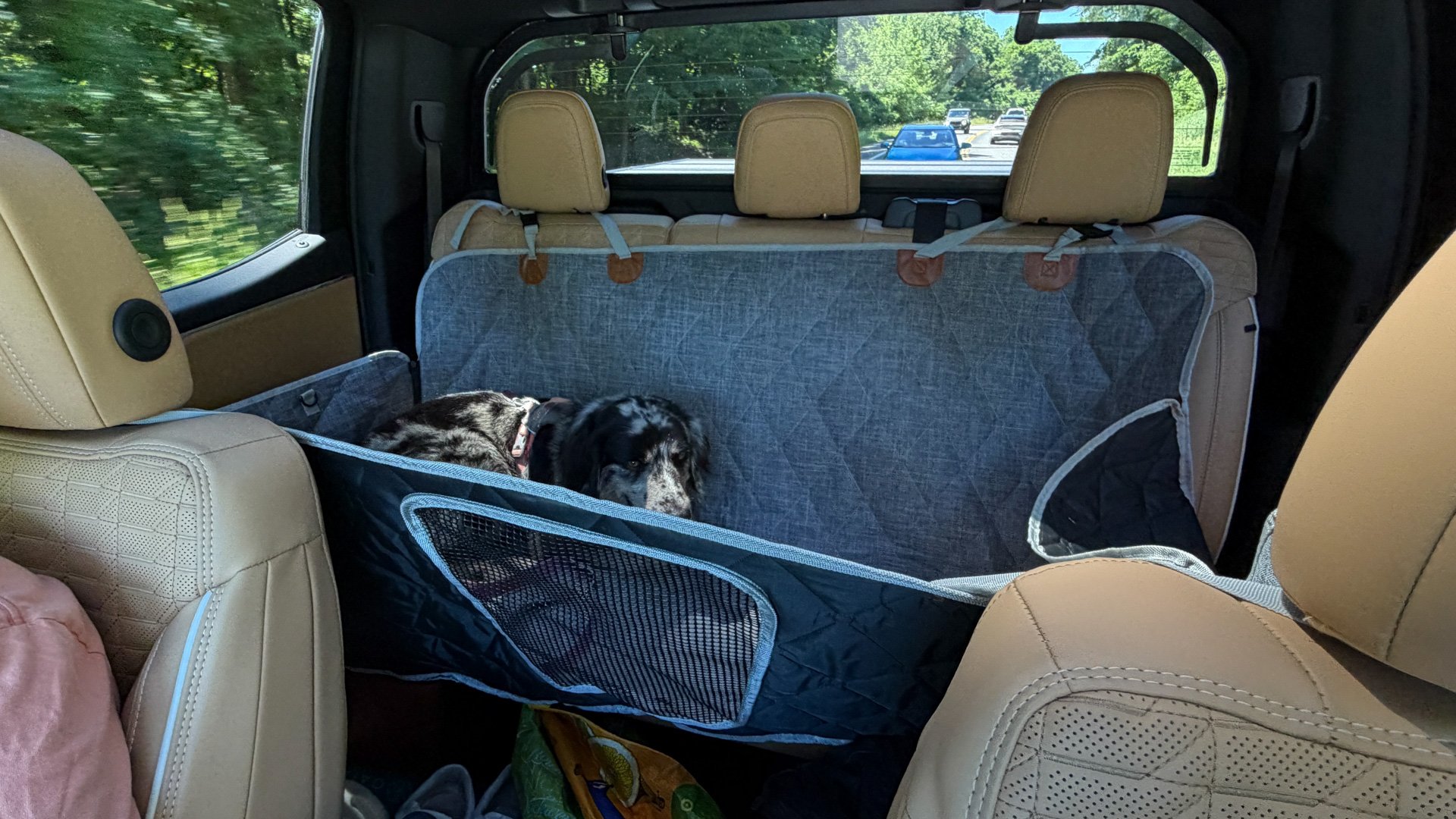
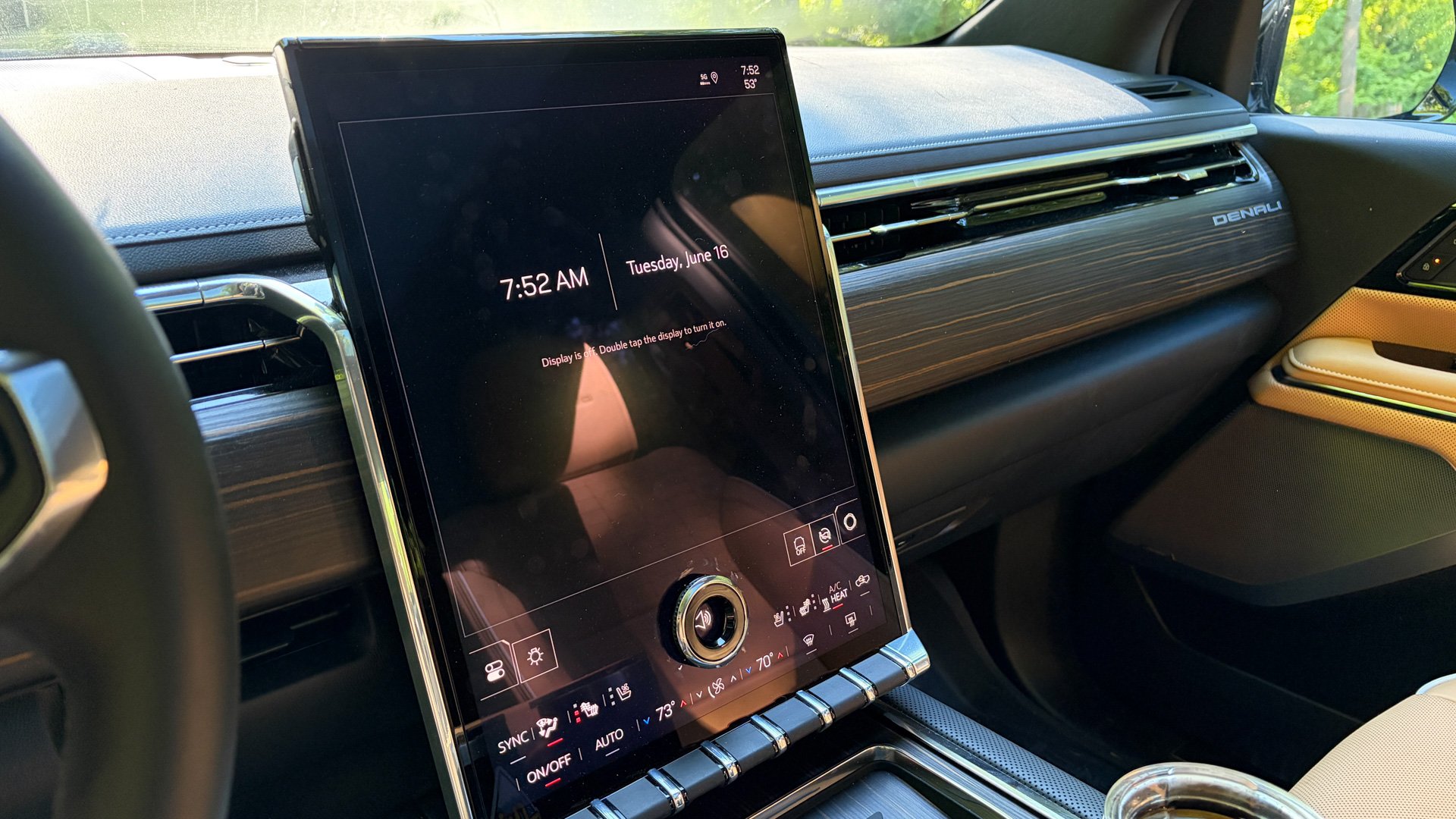
Off? Is it, though? 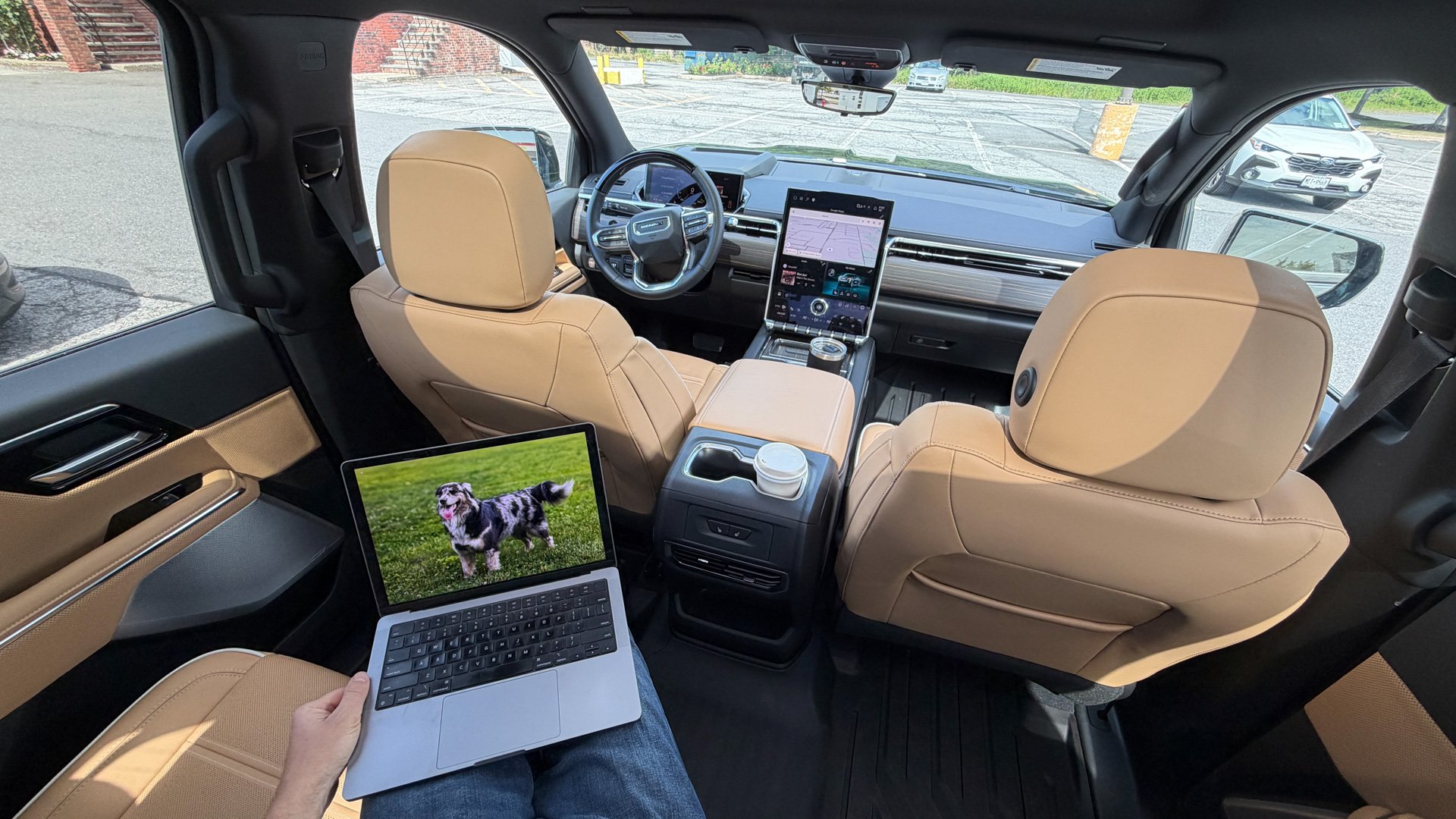
Working from the back seat of this is downright luxurious. 
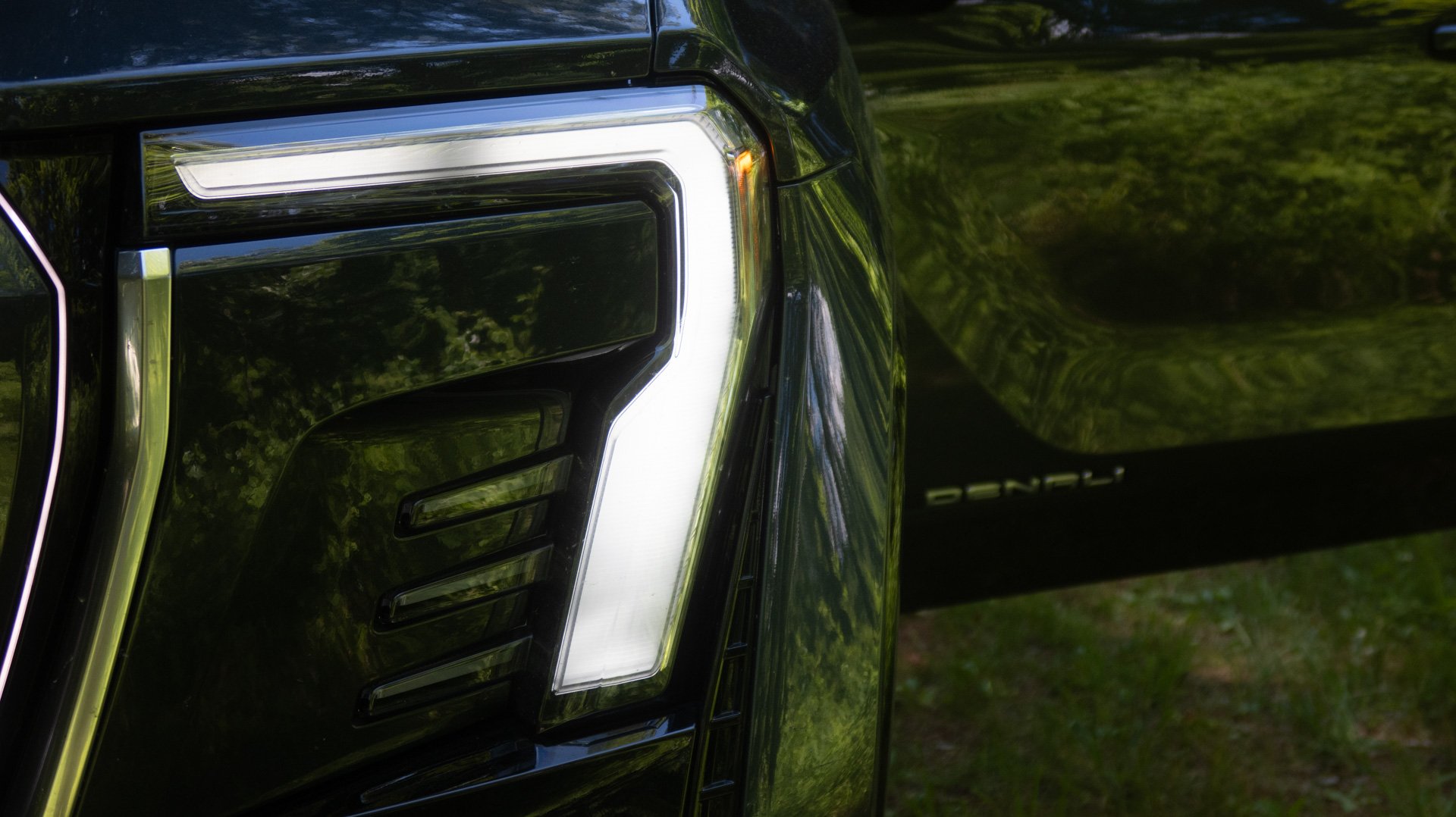
Here you can see the HUD and headlight spread. 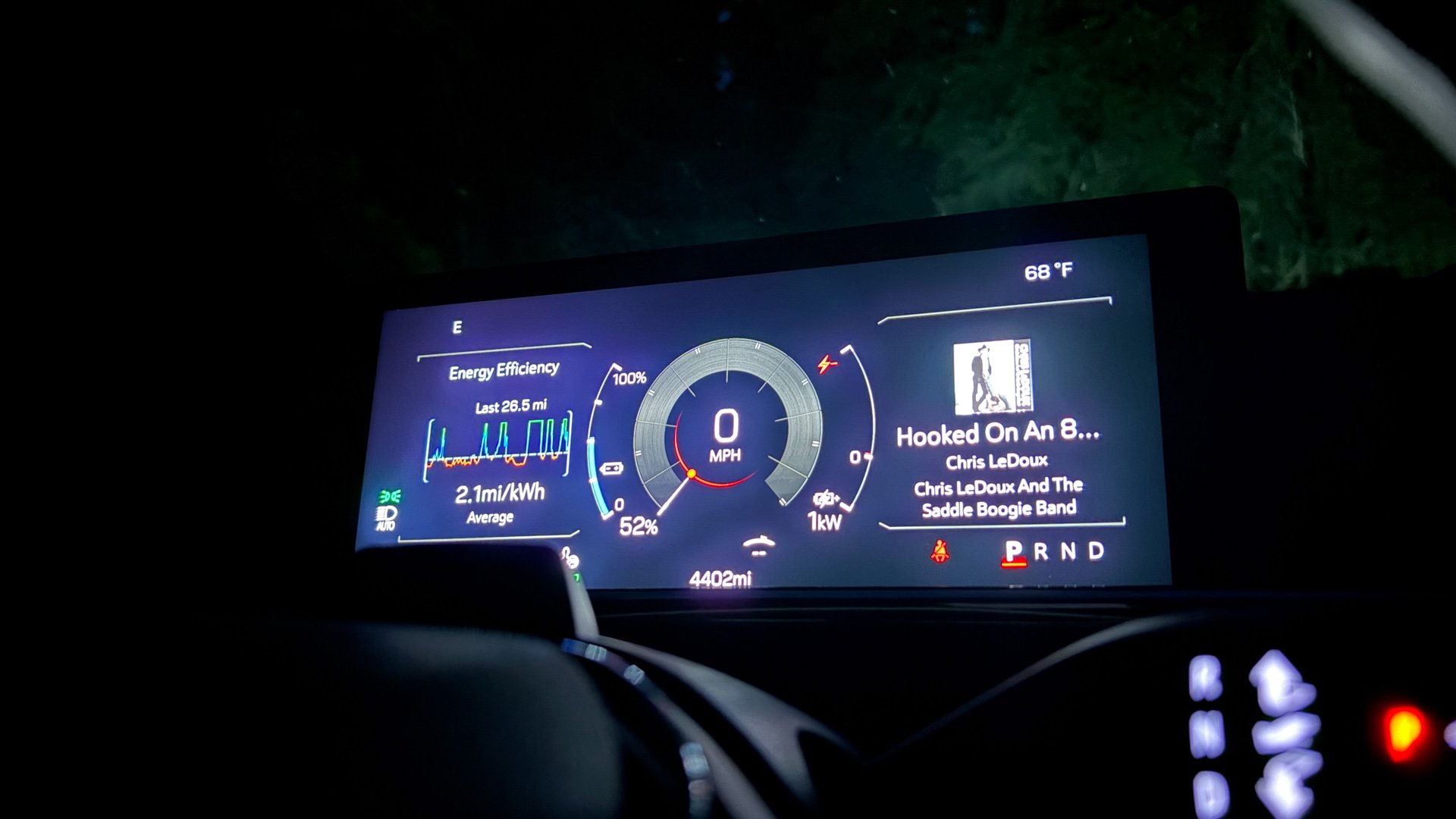
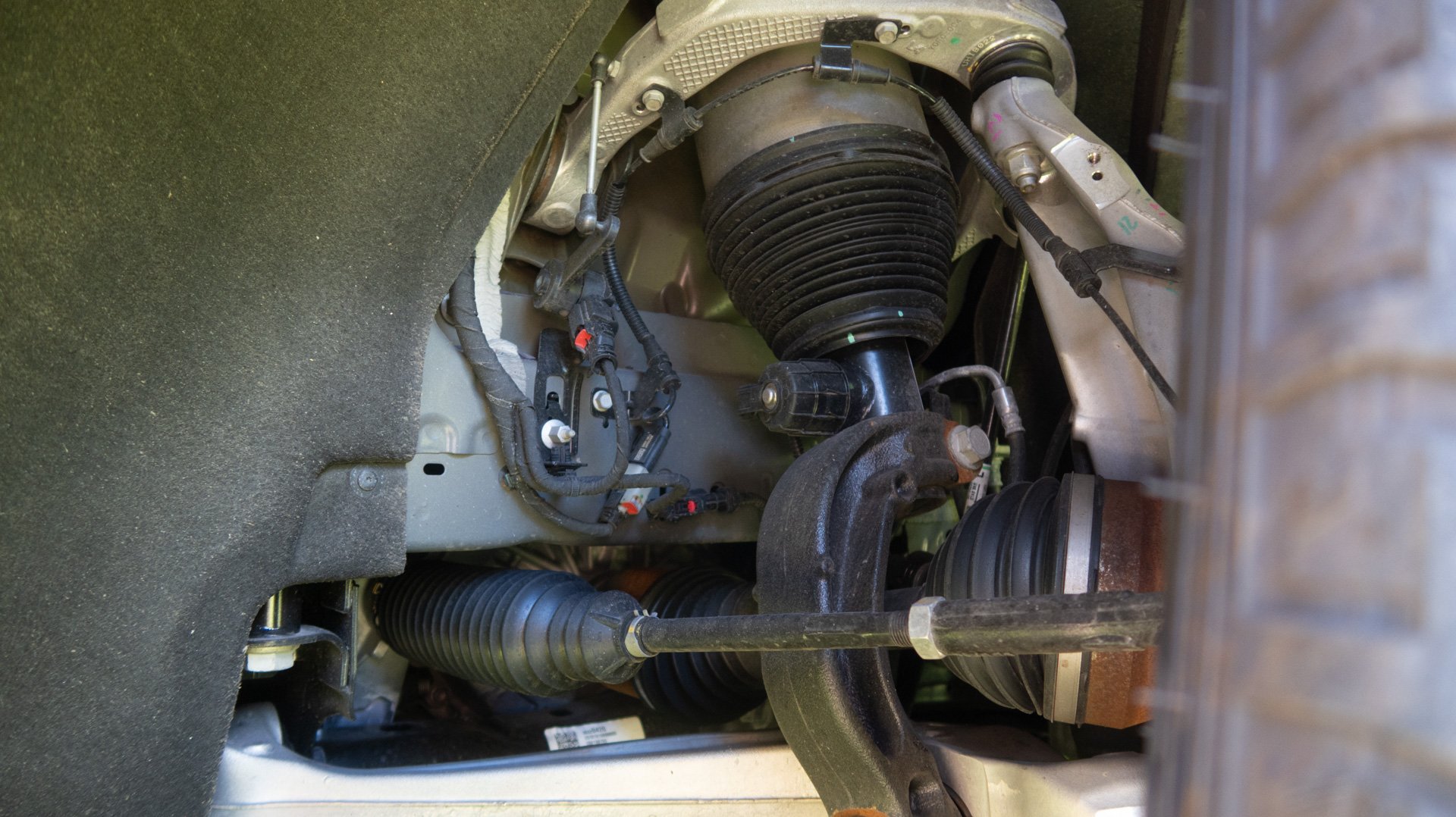
If you know what you’re looking at here, you’ll understand why this vehicle is a lot more money than an old truck. Check out those gorgeous aluminum arms and upright! 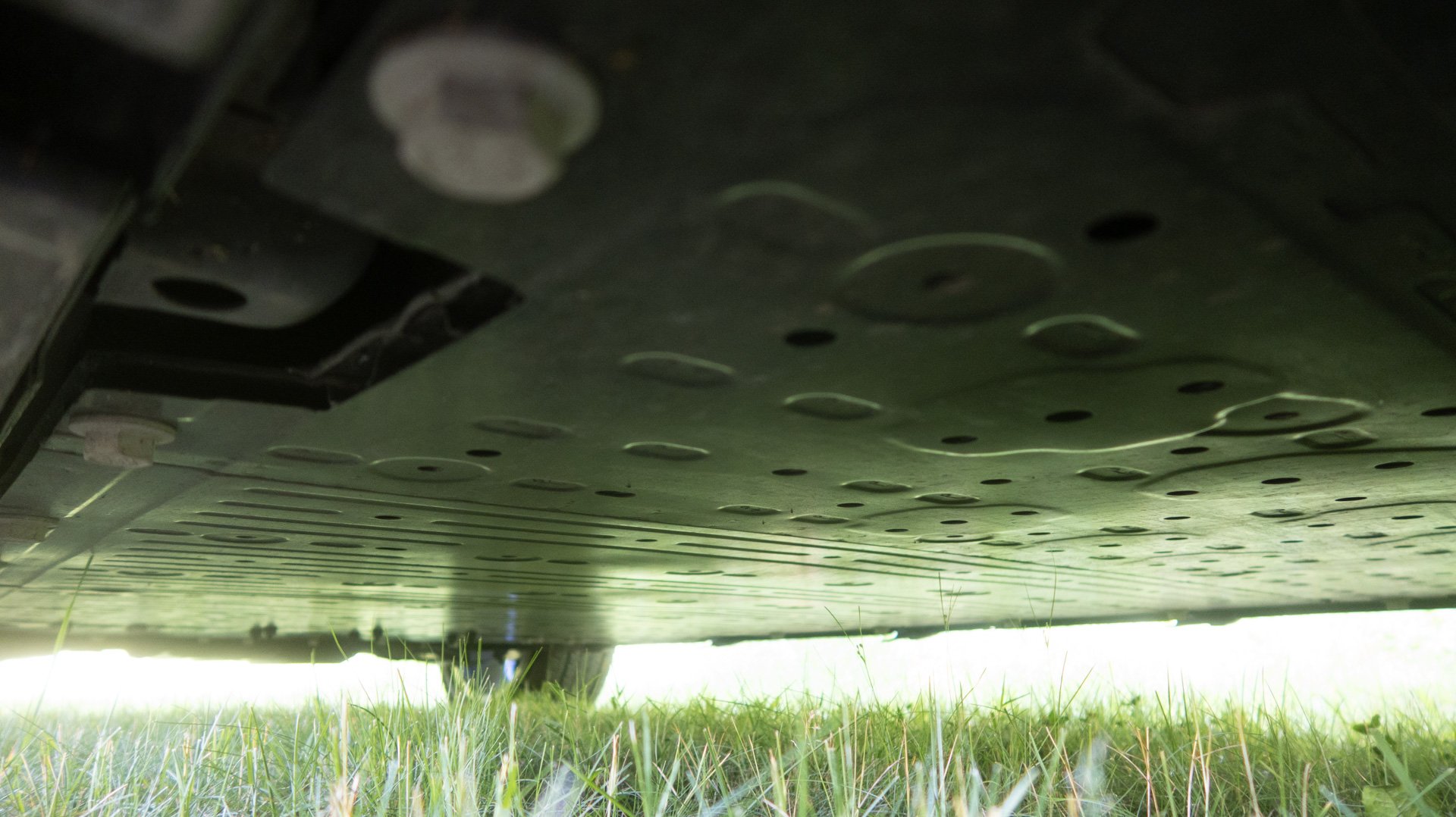
Here’s the GMC Sierra EV’s underbelly. 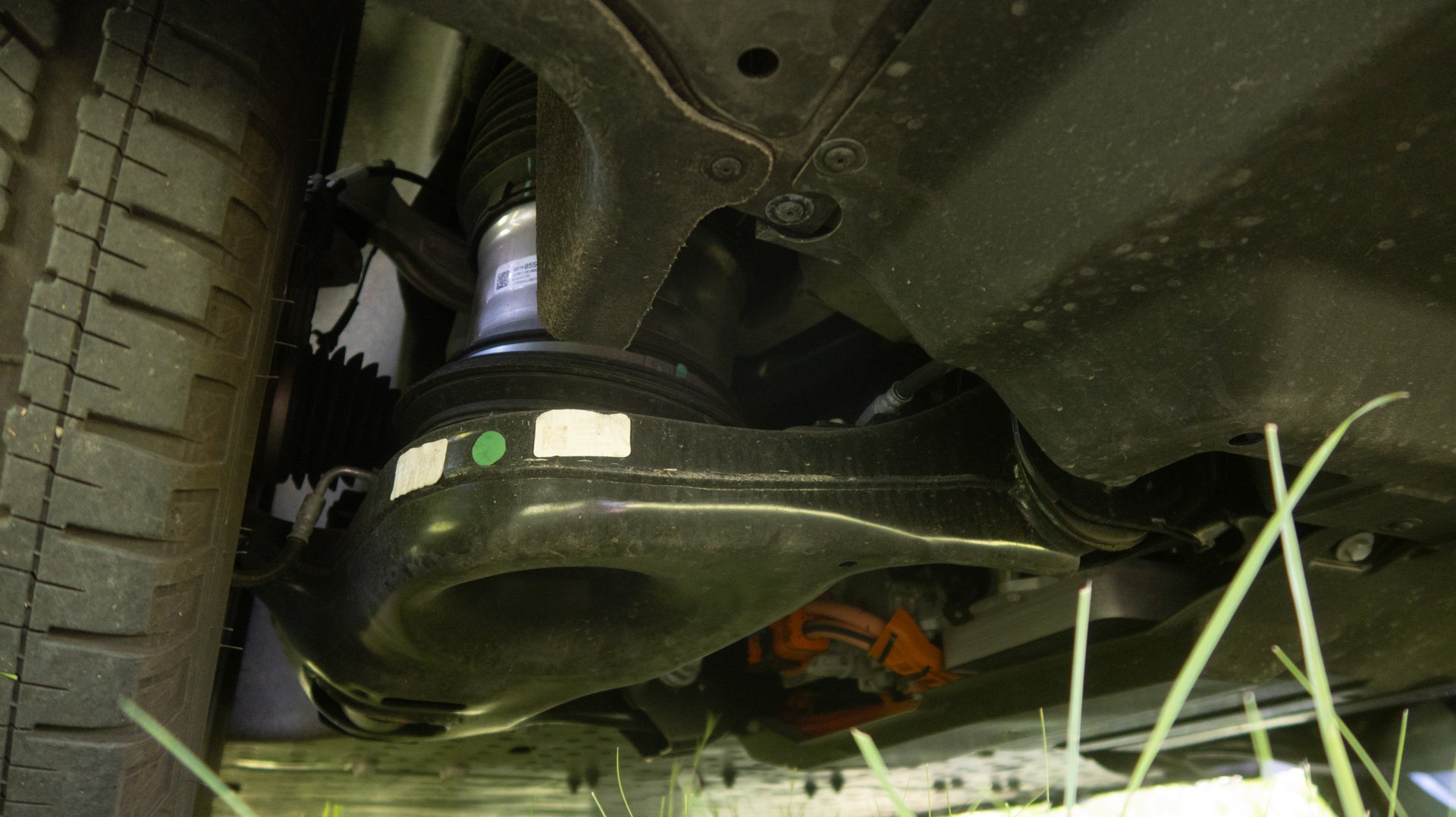
The rear suspension isn’t quite as intricate-looking, but it bears a whole lot of weight.
Cons
- Doing anything on the infotainment system was enough to trigger the “pay attention to the road” alert, so by the vehicle’s own logic, it’s too distracting to use
- The wood trim is a bit of a letdown. It looks kind of mid-quality, then you tap it, and it really seems cheap
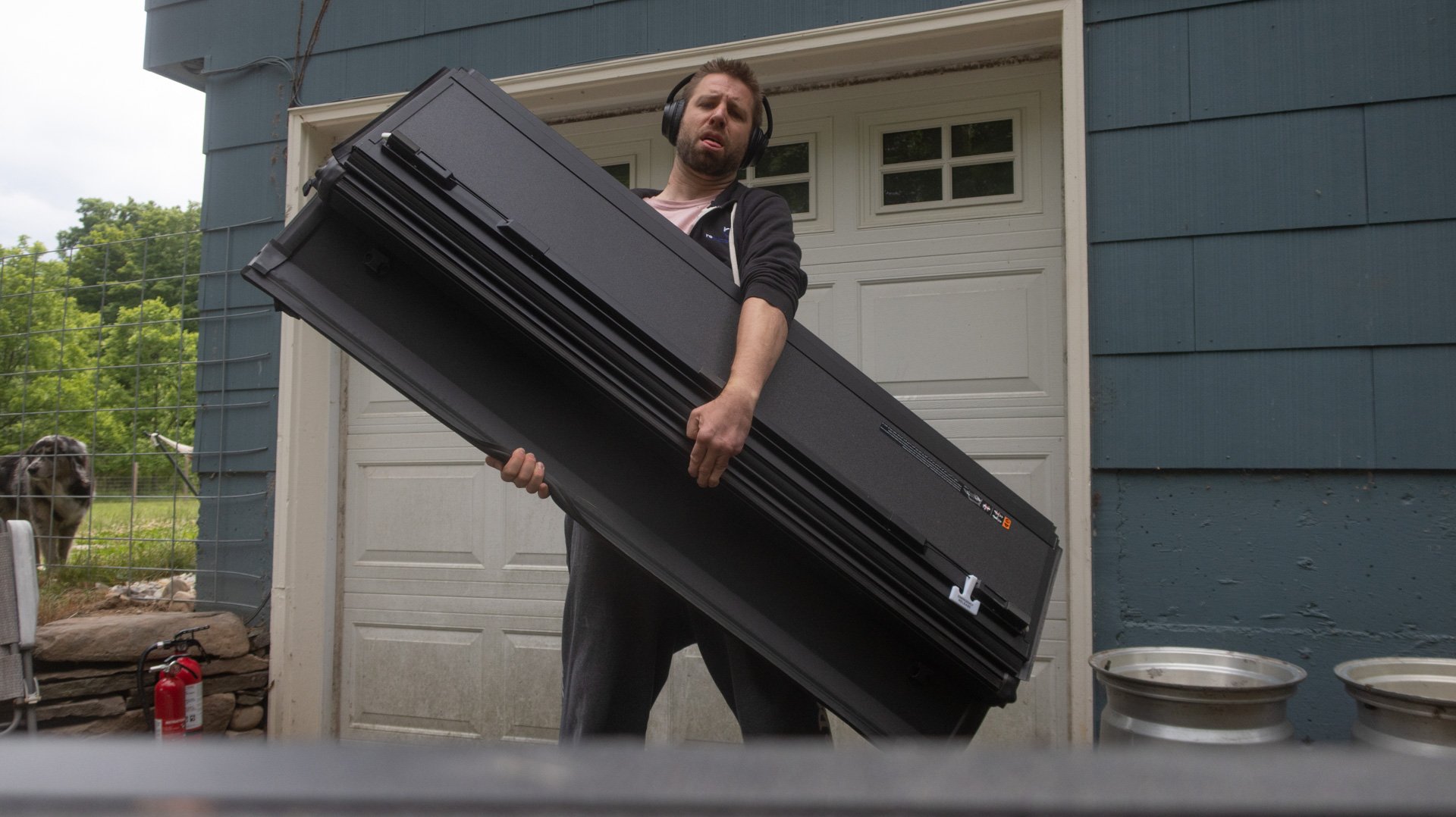
- The tonneau cover is unbelievably unwieldy—both heavy and cumbersome. If you only need to retract it partway, it’s totally fine. But when you want to take it all the way out, dealing with it is absolute hell
- The sunroof is terrible, and this is coming from someone who loves overhead glass. It lets in way too much heat, to the point that I had to wear a hat while driving to keep the sun off my face
- You can’t really turn the central tablet off—you can, but it just leaves you with an illuminated display that constantly reads “the screen is off.” Why?
- I wish there were a little more home-screen customization; I should be able to add a cargo-bed monitor camera to the home screen so I can view it while the map is up
- You can’t get a battery temperature or motor temperature gauge, which seems like an easy and useful addition for a truck meant for towing and heavy hauling
- Public charging didn’t seem cheaper than fueling a gas vehicle
Real-World Cargo Capacity
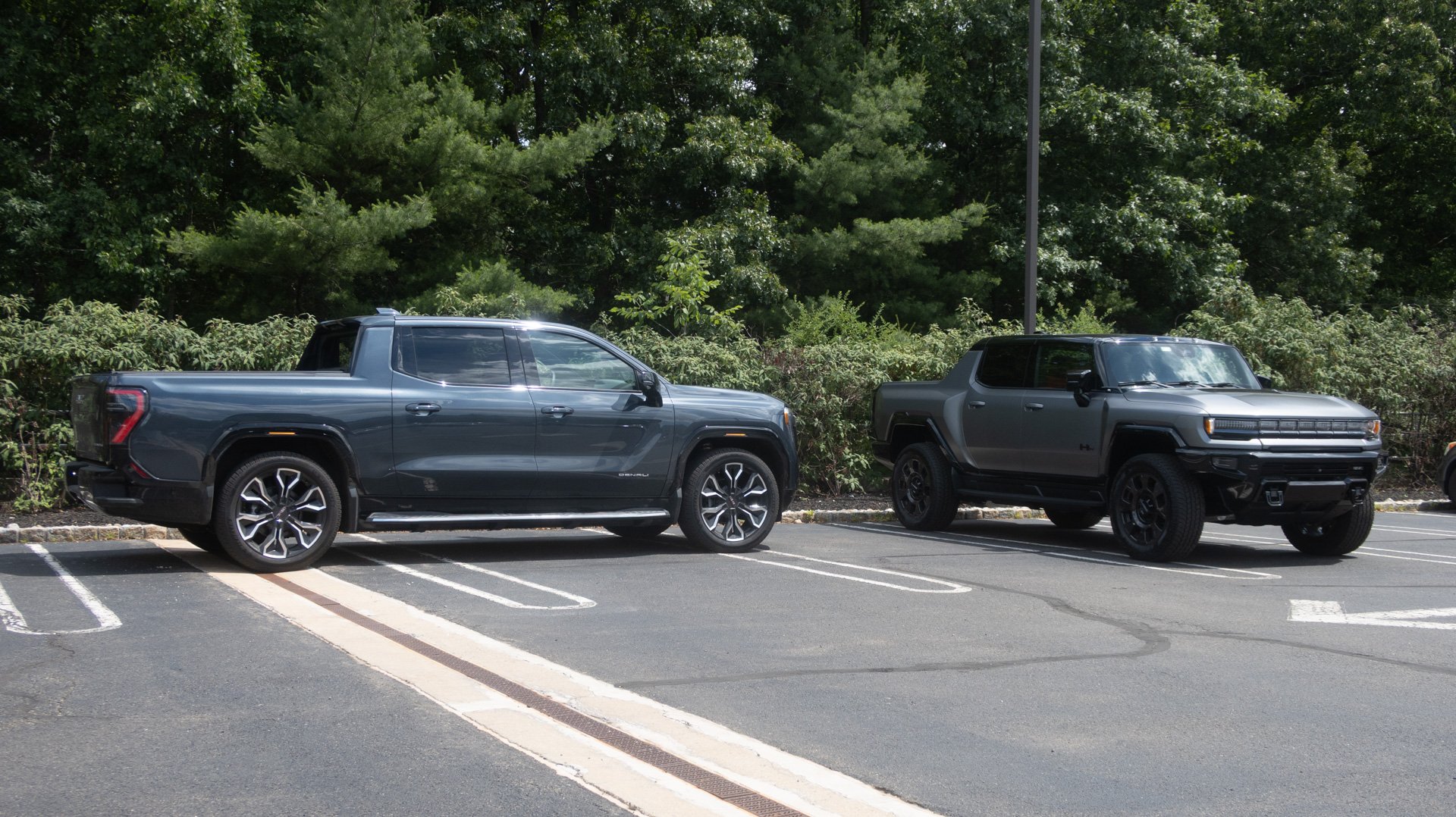
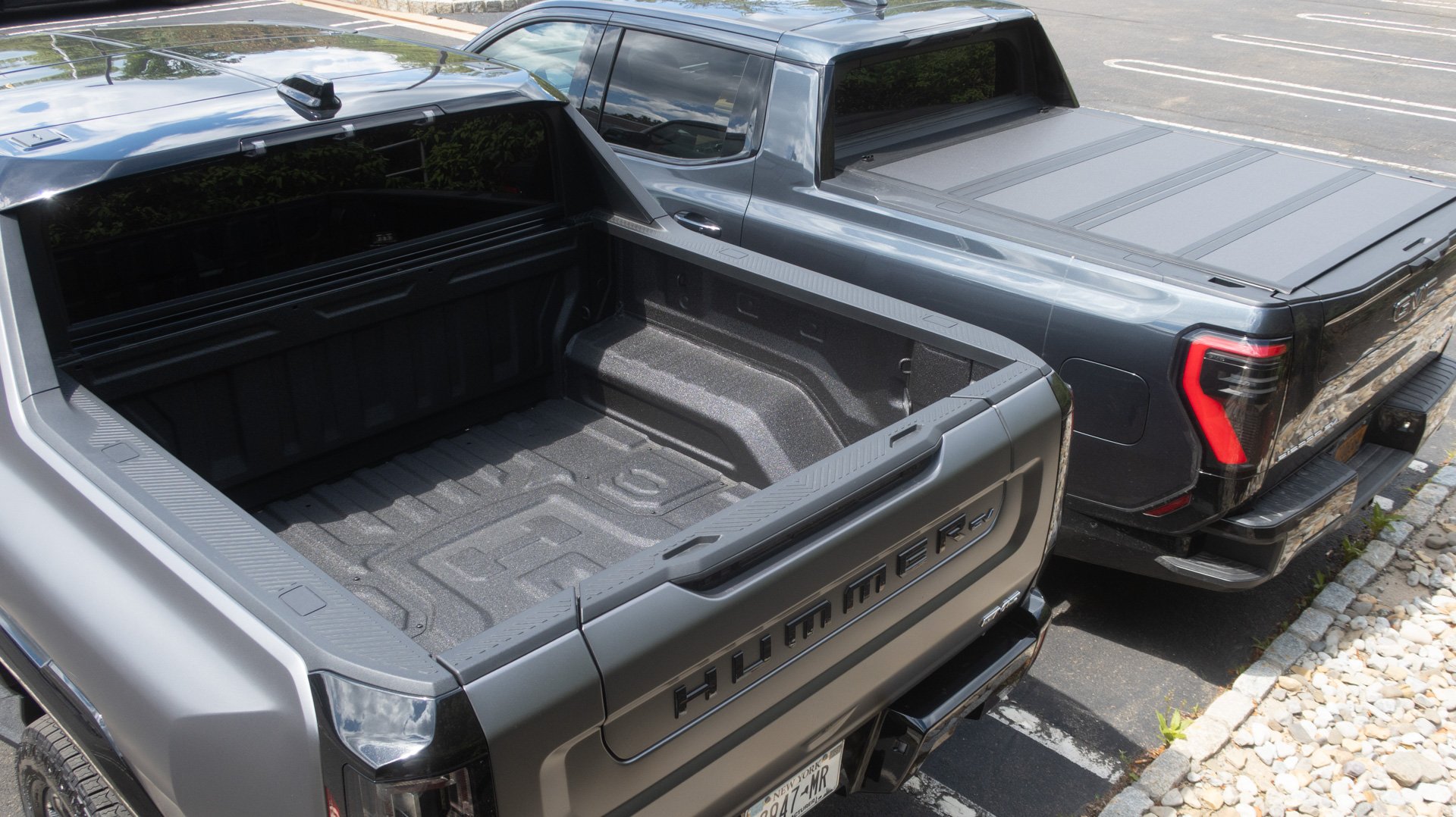
It’s hard to get a sense for how big this truck and its bed really are from photos. It’s enormous—and the cargo bed is no joke. Here are the real-world tape measure distances I got, not spec sheet claims:
- Truck bed length, tailgate closed:
- 70″
- Truck bed length including tailgate-as-cargo-floor, tailgate down:
- 95″
- “Practical max length,” midgate open, from the frontmost hard floor to the back of the bed, tailgate closed:
- 95″ (the length of true cargo floor you get by opening the midgate is the same as the tailgate’s length)
- Same, but tailgate down:
- 119″
- Using all space behind driver’s seat, through midgate, to the end of the bed, tailgate closed:
- 110″
- Same, but tailgate down:
- 134″
- Longest thing you could safely carry without really annoying the driver or front passenger or hanging off the edge of the tailgate (item resting on center console):
- 160″
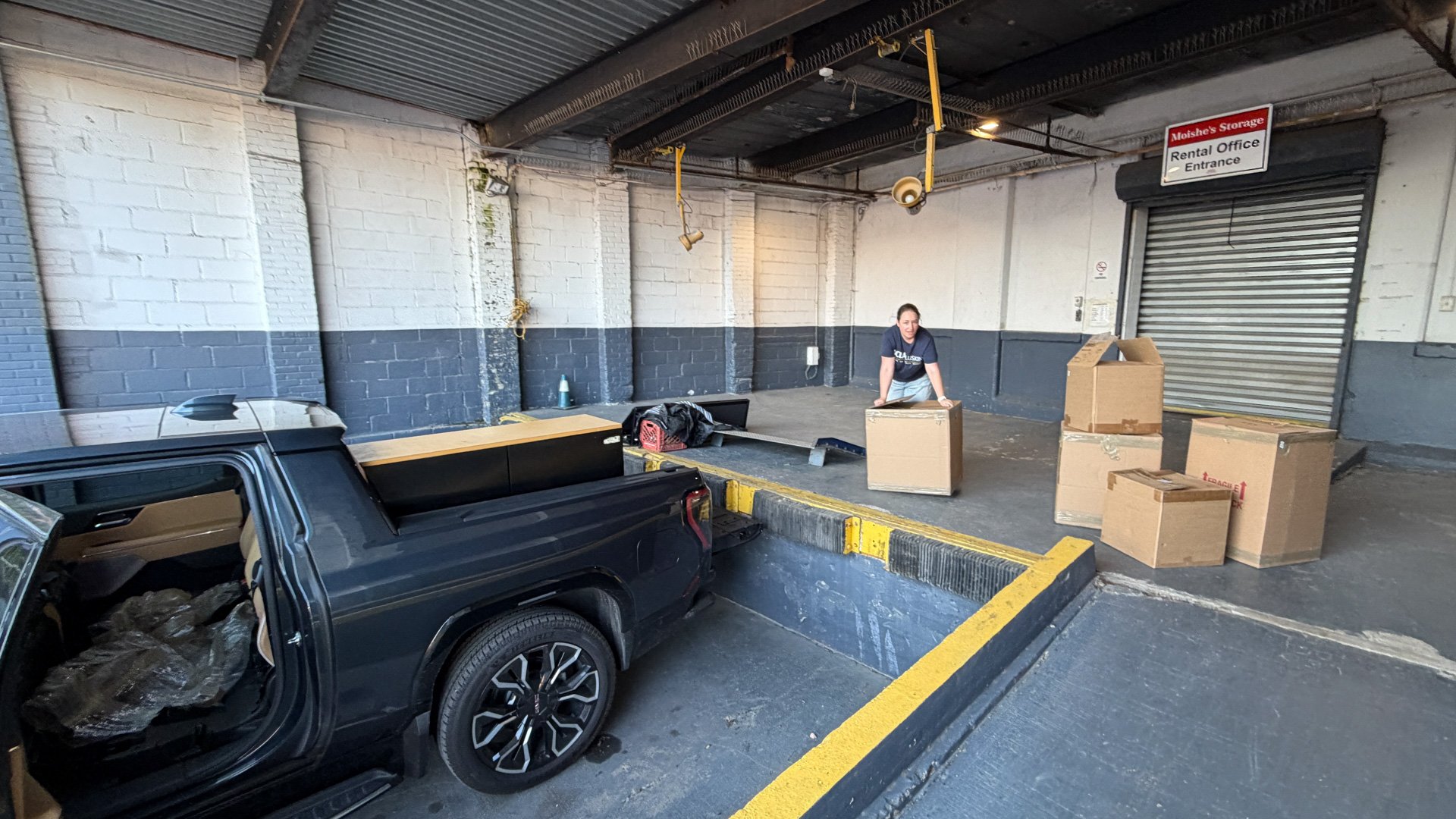
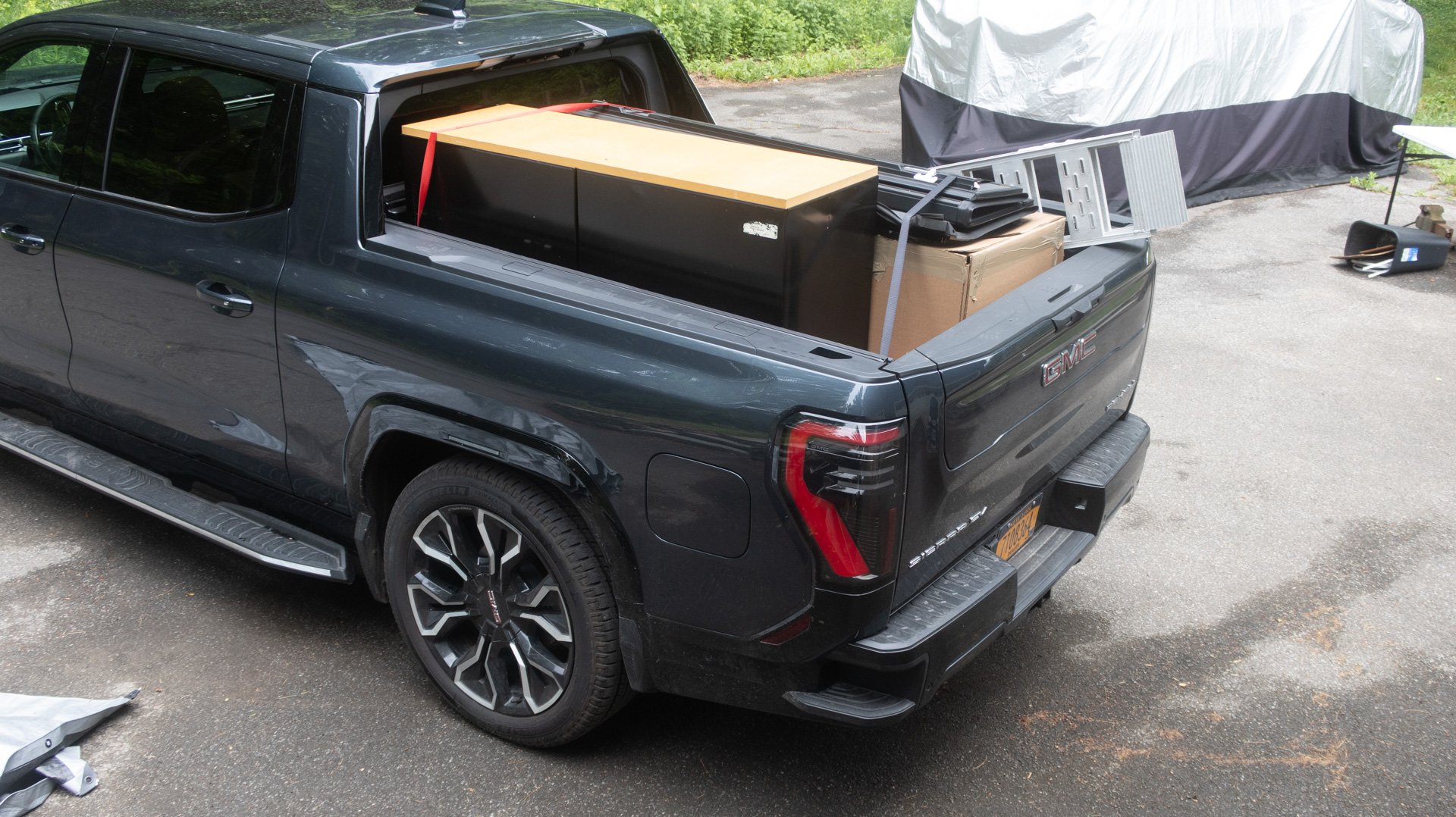
We were able to pack a huge amount of stuff in this thing. 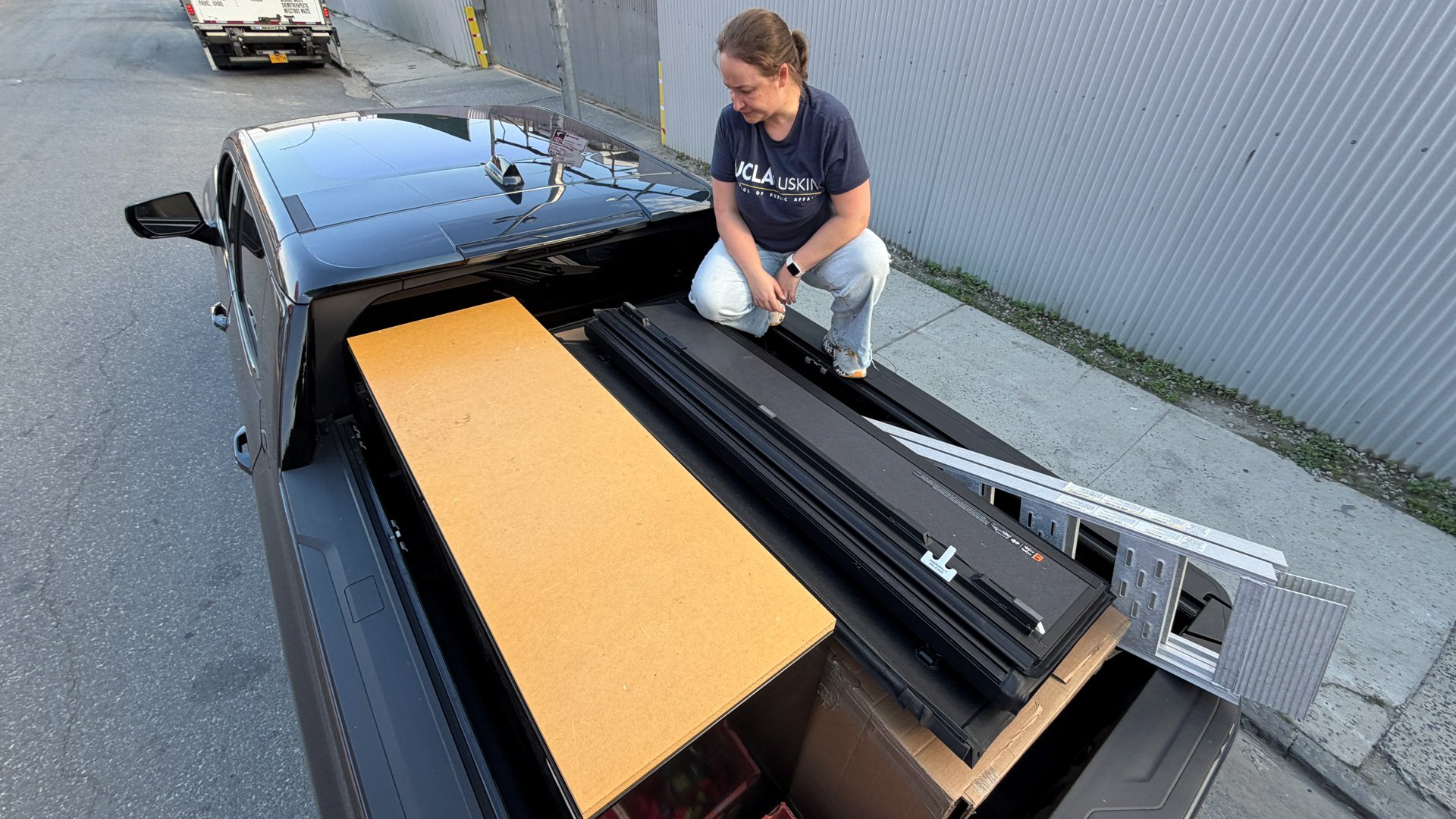
The tonneau cover was much chunkier than I’d expected. It became a big piece of the cargo once we had to remove it from its tracks. 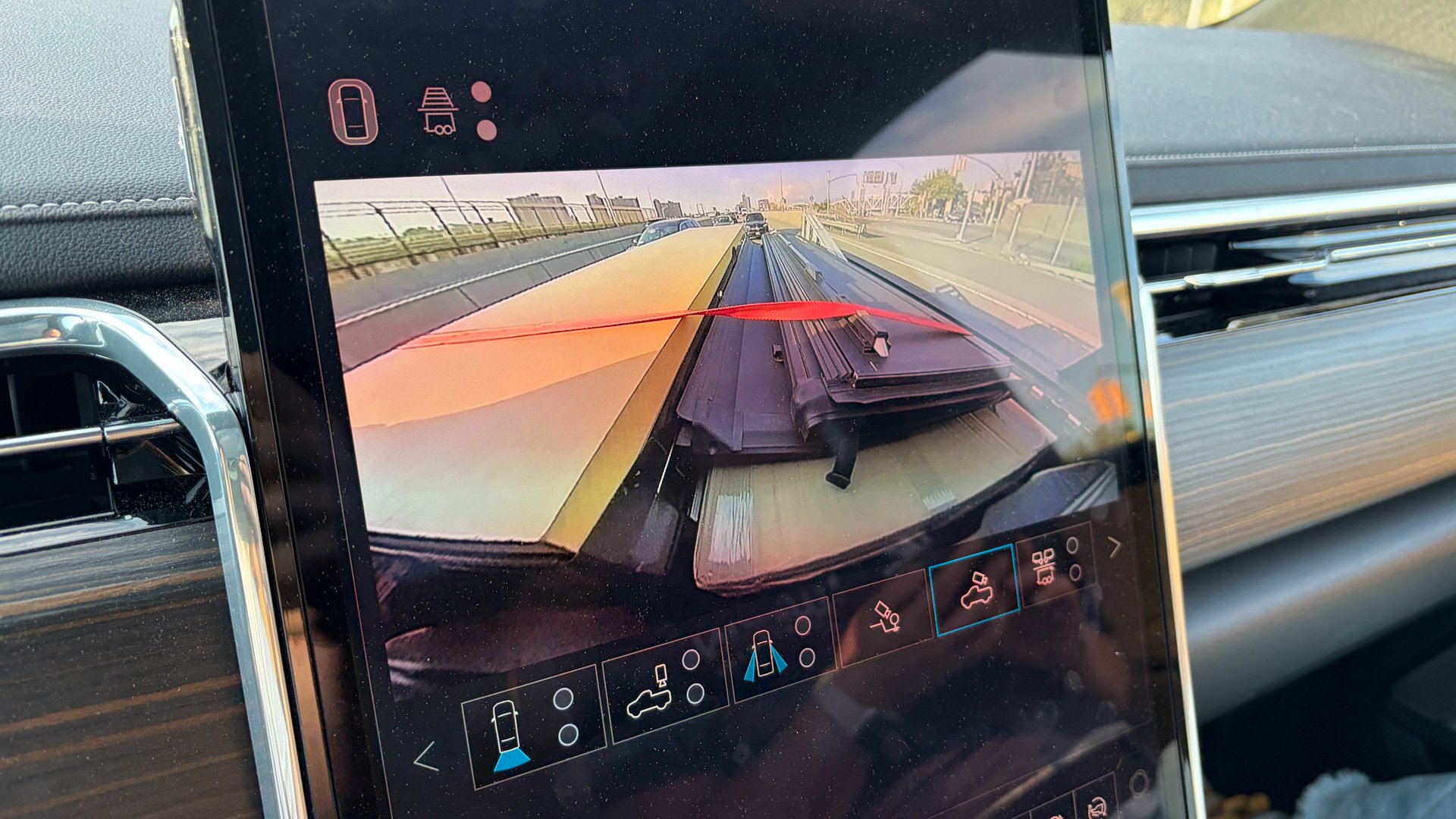
Cargo-box view is useful on the highway. 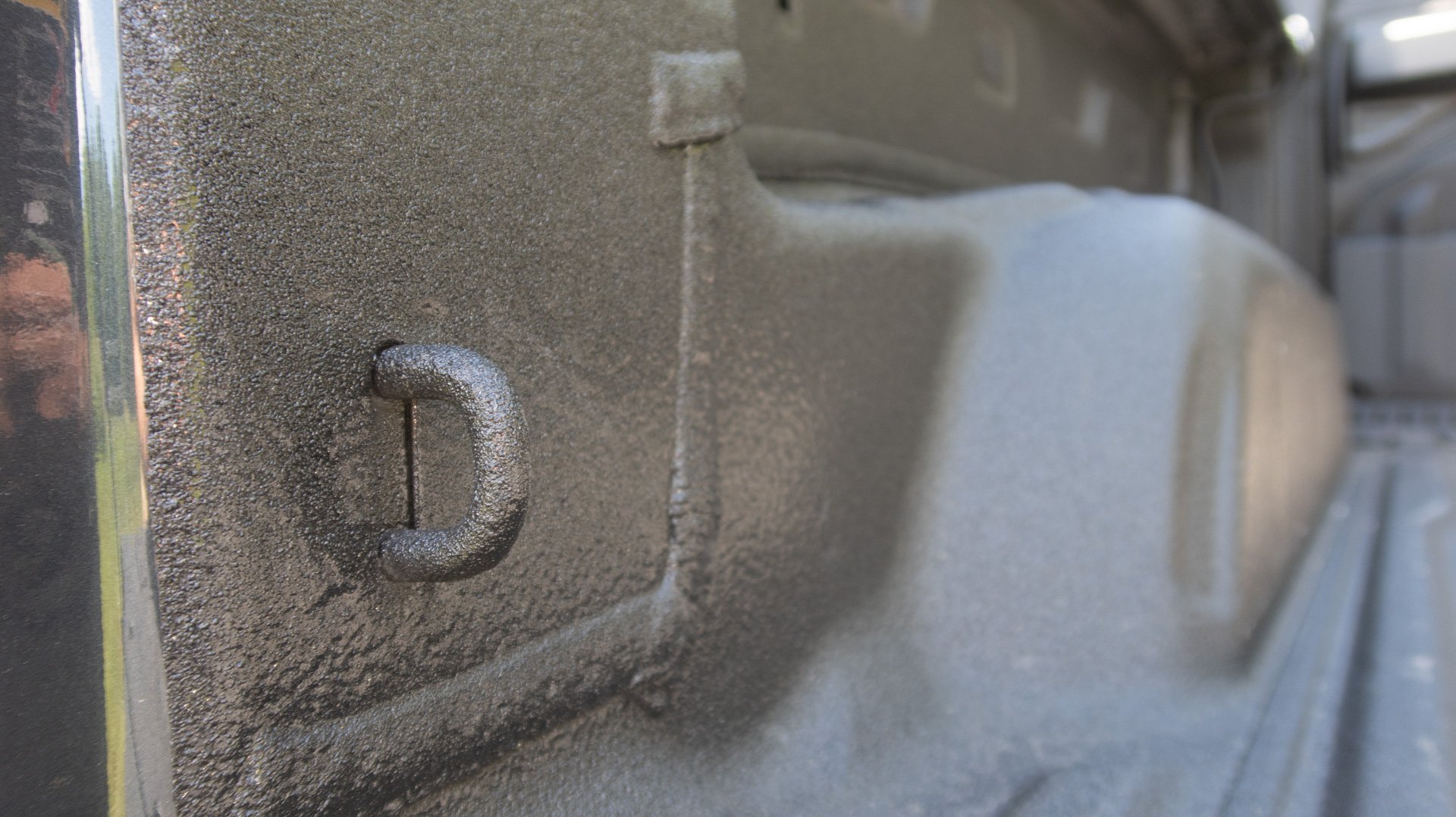
Bedliner looks pretty thick. 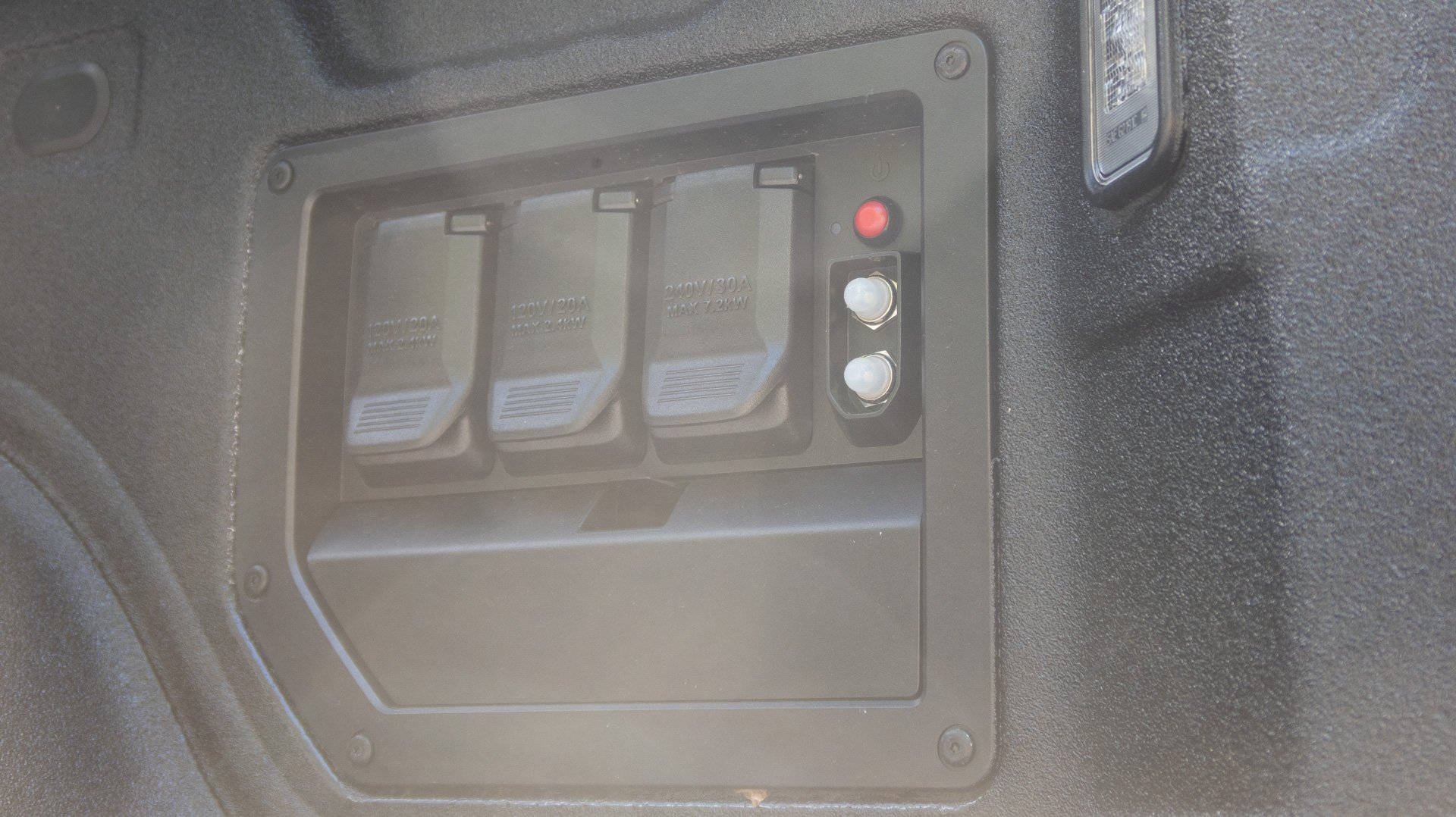
Plentiful power options in the bed. 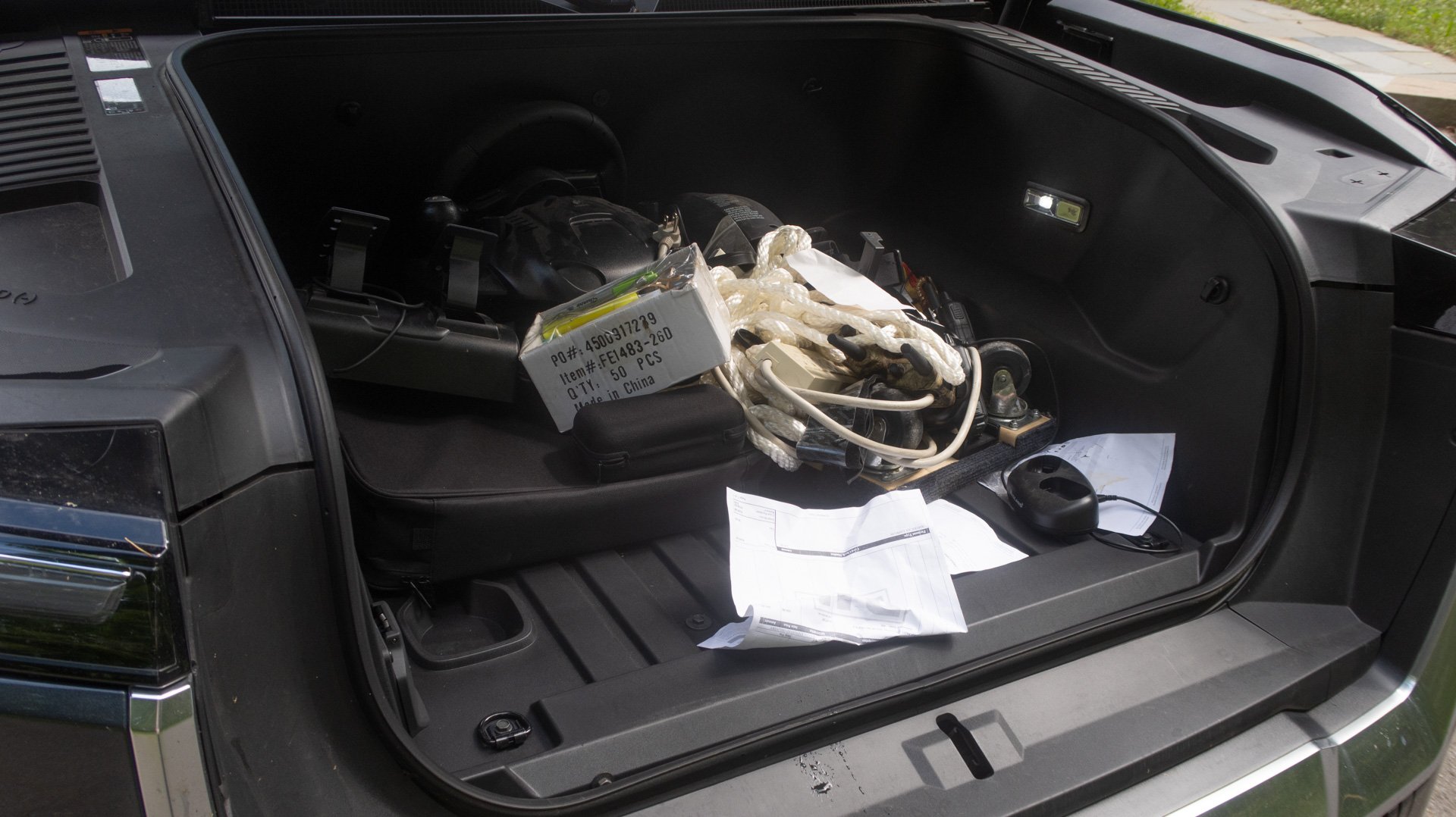
Some assorted junk in the frunk for scale. 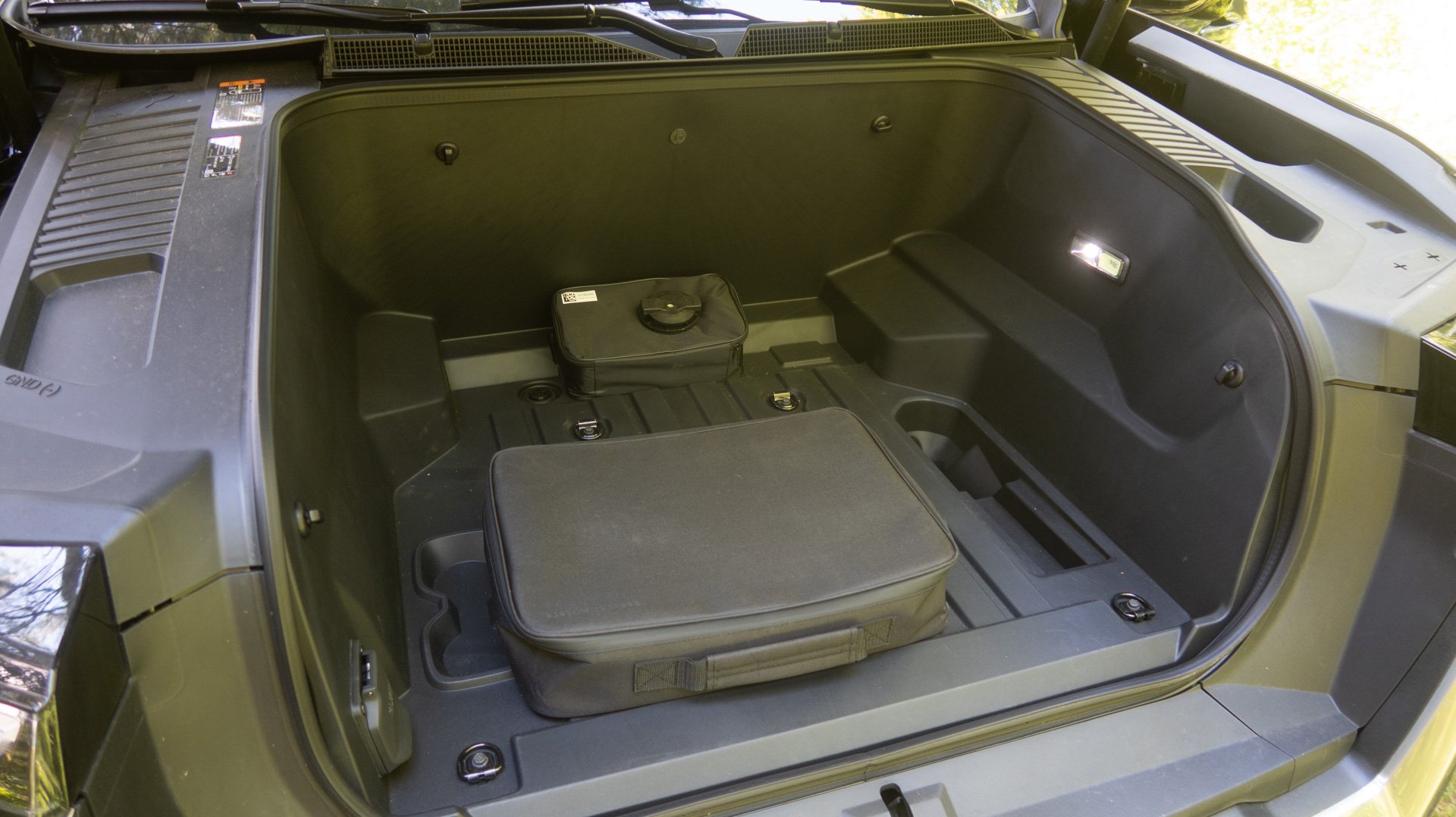
The math might be a little funky there because it’s hand-measuring. But that’s over 13 feet from the center console to the tailgate down—you could carry a few 12-foot boards without a safety flag if you were careful.
Verdict
I put almost 600 miles on this truck in the week I had it and, by and large, really enjoyed it. It’s smooth, cool, and comfortable, and the bed is plenty big enough for real truck stuff. I hated removing and reinstalling the tonneau cover (seriously, the thing felt like it weighed a ton), but the mid-gate function is awesome.
I’m optimistic I’d get better at using the infotainment system without staring at it if I owned the truck, but the sunroof is a real whiff. I don’t know how GM let this thing go to production without a real retractable cover—having to drive around with a hat on is wack, and a “stowable” fold-in solution is a major bummer at this price point.
Still, if I had money, I’d be thinking about this truck for the midgate alone—you get about 11 feet(!) of horizontal cargo space with the rear glass and seats folded away. And it’s a well-thought-out feature, not just a gimmick: The rear glass is stowed very safely within the seatback itself as the back seats fold flat.
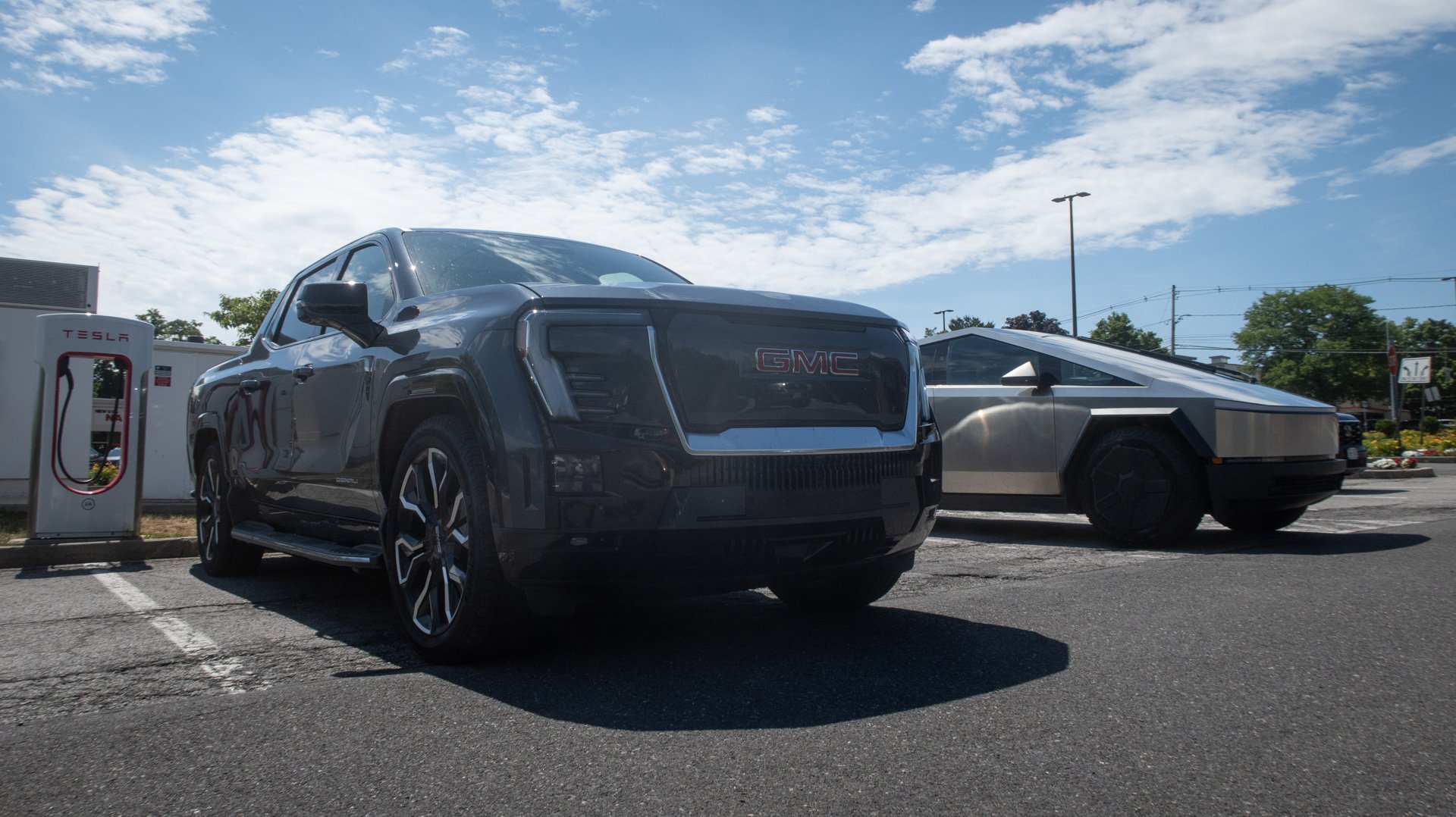
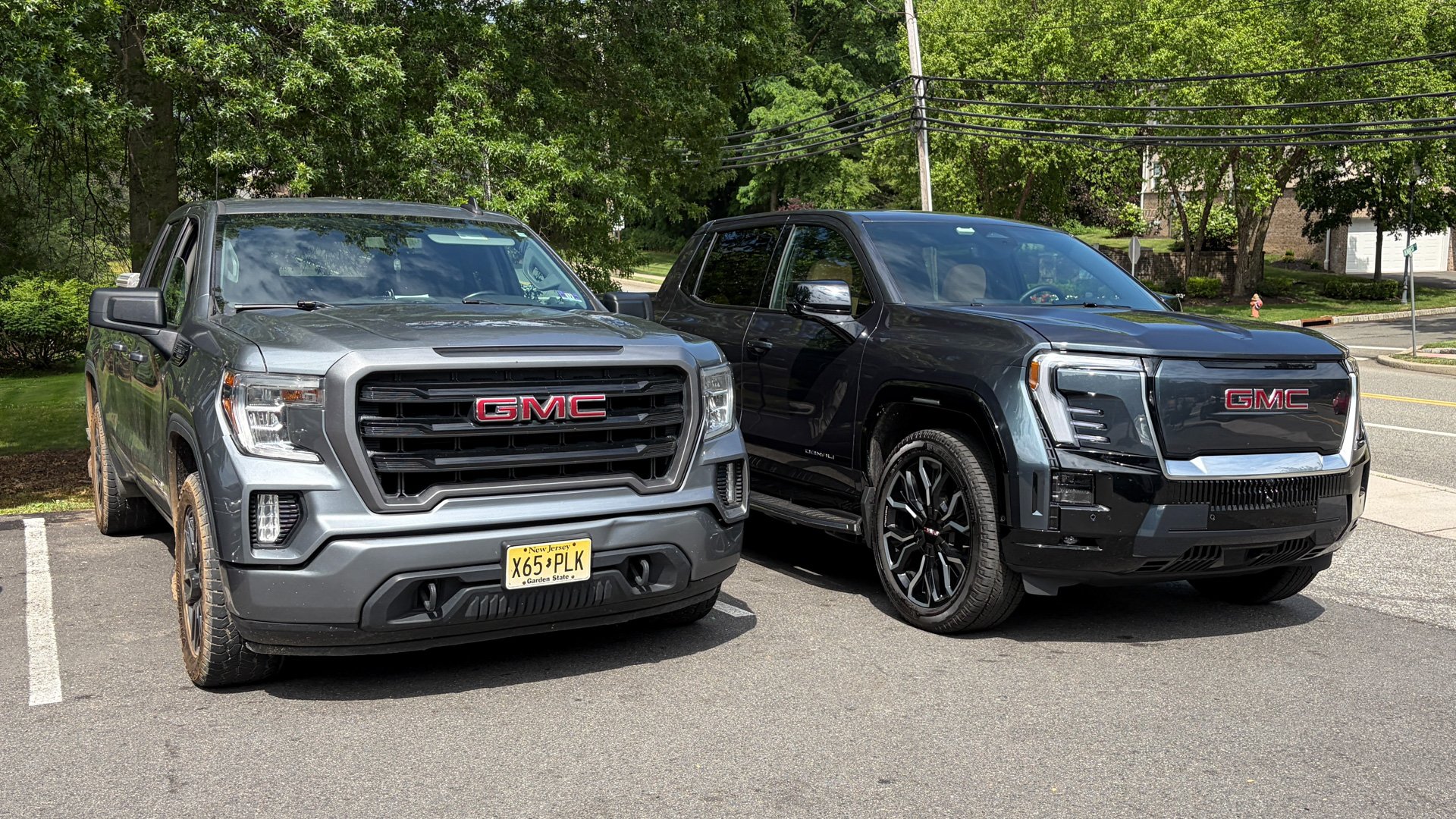
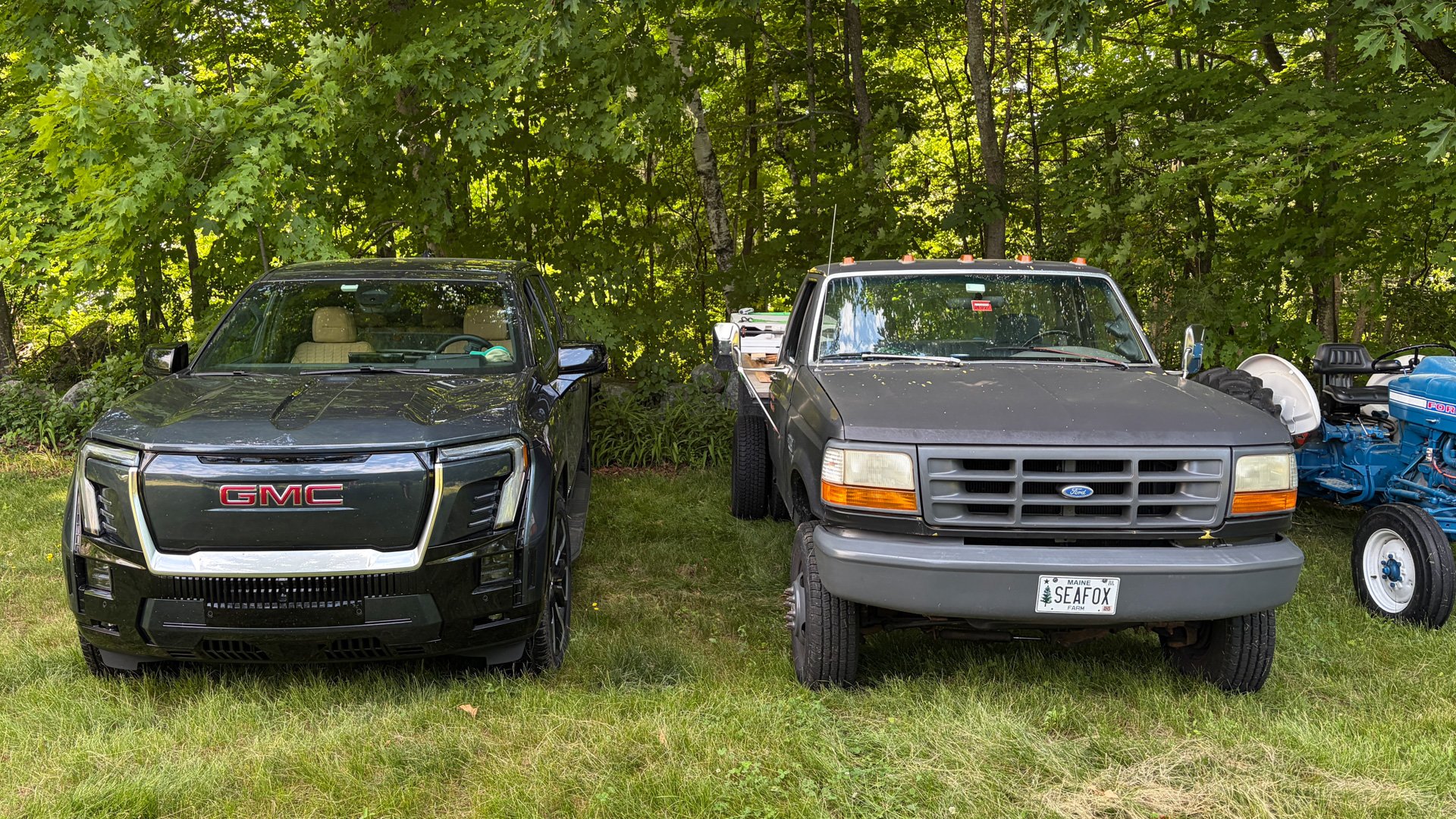
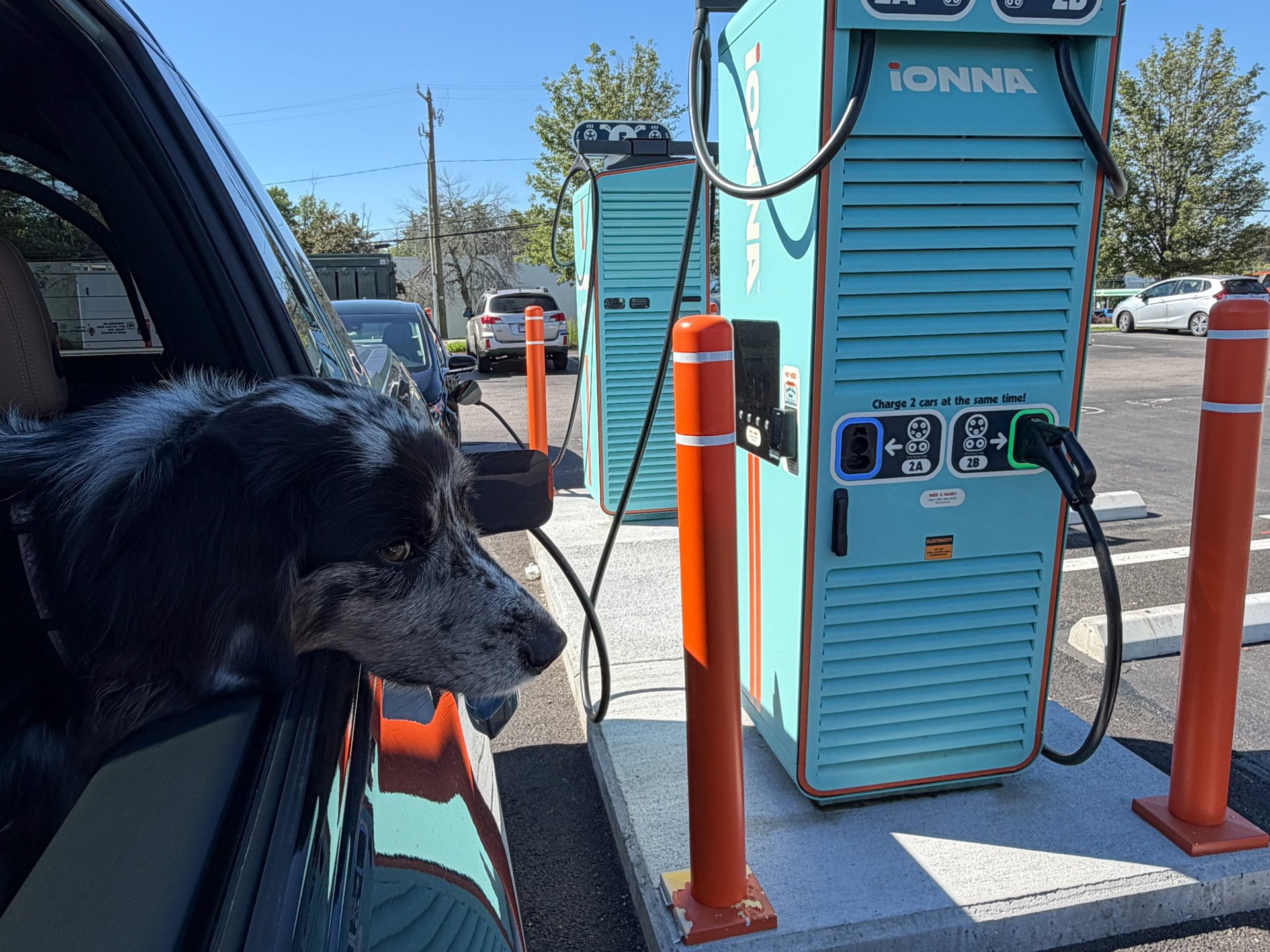
Having 400-plus miles of range meant I could drive all the way from New York to Maine and back pretty painlessly, choosing charging stops that were convenient for me rather than building my trip around the infrastructure. The truck charged quickly on DC Fast Chargers, though you won’t really be saving much money if you top up this way. I was paying almost as much to recharge this thing at public stations along the highway as I do to fill my own old truck’s 24-gallon gas tank.
The Sierra EV has plenty of power, though I won’t say it feels particularly fast. But it’s a great long-range cargo-carrying cruiser, and I was bummed to give it back.
GM provided The Drive with a seven-day loan of this vehicle for the purpose of writing this review.
2026 GMC Sierra EV Denali Max Range Specs
| Max Range Base (As Tested) | $98,600 ($103,715) |
| Powertrain | Dual-Motor e4WD | 205 kWh Ultium Battery Pack |
| Horsepower | 760 hp (in Max Power Mode) |
| Torque | 785 lb-ft |
| Seating Capacity | 5 |
| Curb Weight | 8,987 lbs |
| Towing Capacity | 10,500 lbs |
| Cargo Volume | Frunk (eTrunk): 11.0 cu ft | Interior Cabin Volume: 136.0 cu ft (73 cu ft front / 63 cu ft rear) | Bed: 57.5 cu ft (5’11” bed; expands into cabin up to 10’10” length with MultiPro Midgate open) |
| Ground Clearance | 8.95 inches (+/- ~2.0 inches in adaptive modes) |
| EPA Range | 478 miles |
| Charging Speed | 350 kW Max DC Fast Charging | 19.2 kW AC Level 2 Onboard Charger |
| Score | 8/10 |
Email the author at andrew.collins@thedrive.com
Loading comments…
Comments couldn’t be loaded. Please refresh the page.