
Key Takeaways
- High performance but lacks excitement. The Cadillac Optiq-V boasts 519 horsepower and impressive speed but fails to deliver an engaging driving experience.
- Luxury comes at a cost. With a starting price of $70,000, the Optiq-V offers style and luxury but sacrifices range and efficiency.
- Interior elegance with usability issues. The cabin features high-quality materials but suffers from confusing controls and lack of intuitive design.
- Range and charging fall short. The Optiq-V’s range is limited to 250 miles, and its charging speed lags behind competitors.
Bottom line: The Cadillac Optiq-V offers luxury and power but lacks the engaging drive and efficiency expected at its price point.
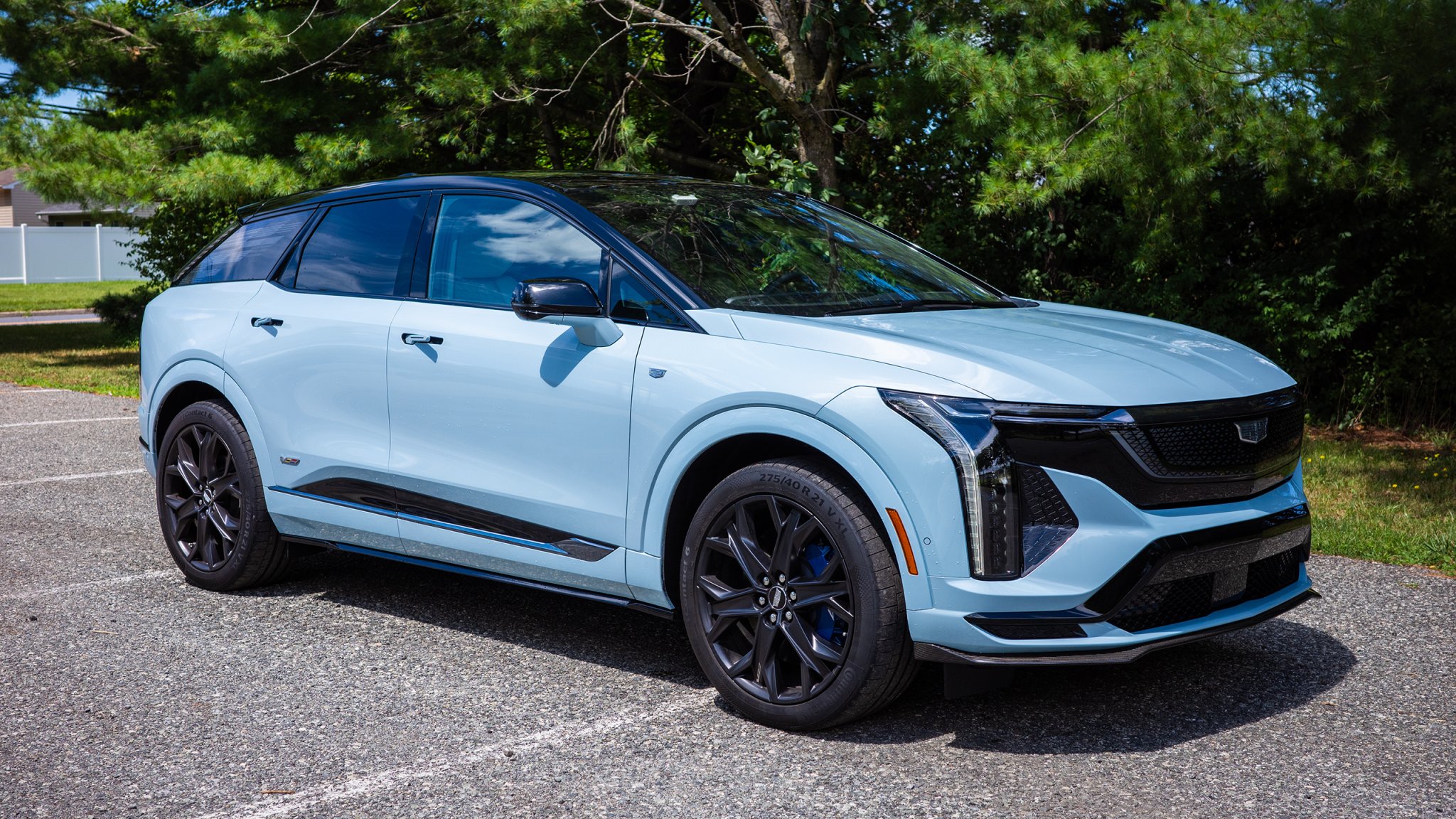
Modern car manufacturing is really something. Take the Chevrolet Equinox EV, a rather boring but totally competent electric commuter. Thanks to the modular nature of electric powertrains, General Motors can pop the lid off that SUV, pack in more powerful motors along with some other go-fast nuts and bolts, snap on a more stylish and luxurious body, and create this: The Cadillac Optiq-V. It’s a $70,000 version of a vehicle that Chevy sells for half that.
So, we started with one of the most affordable and popular EVs in America, and we ended up in the territory of a bona fide high-performance electric SUV. The Optiq-V makes 519 horsepower and 650 lb-ft of torque. It has massive six-piston Brembo brakes up front, stiffer anti-roll bars, and adaptive dampers; it also completes the 0-60 dash in 3.5 seconds.
The problem is, I didn’t really enjoy driving it. And that sucks all the wind from the sails of a vehicle like this, wearing the badge that it does, which is typically an initial for fun.
The Basics
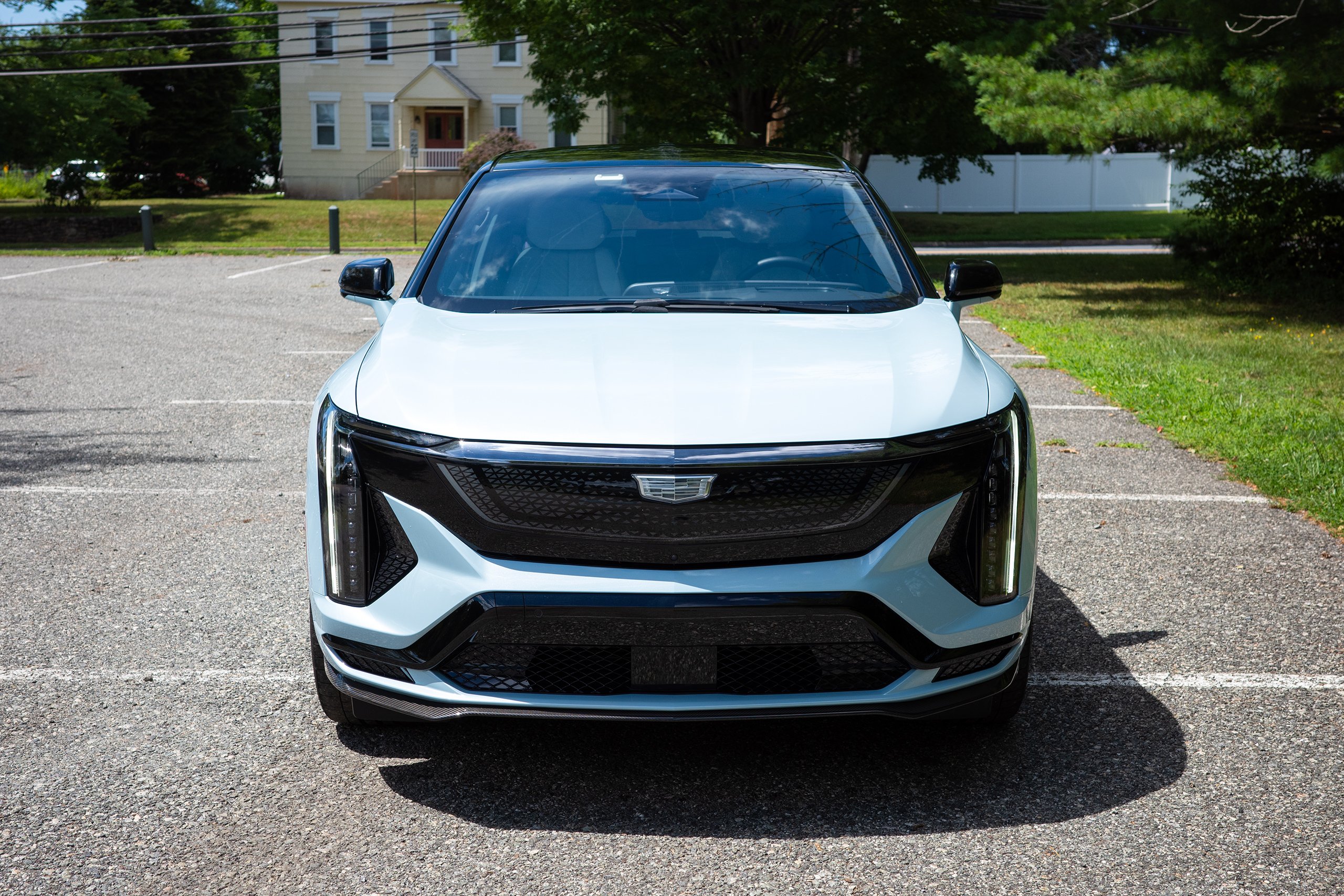
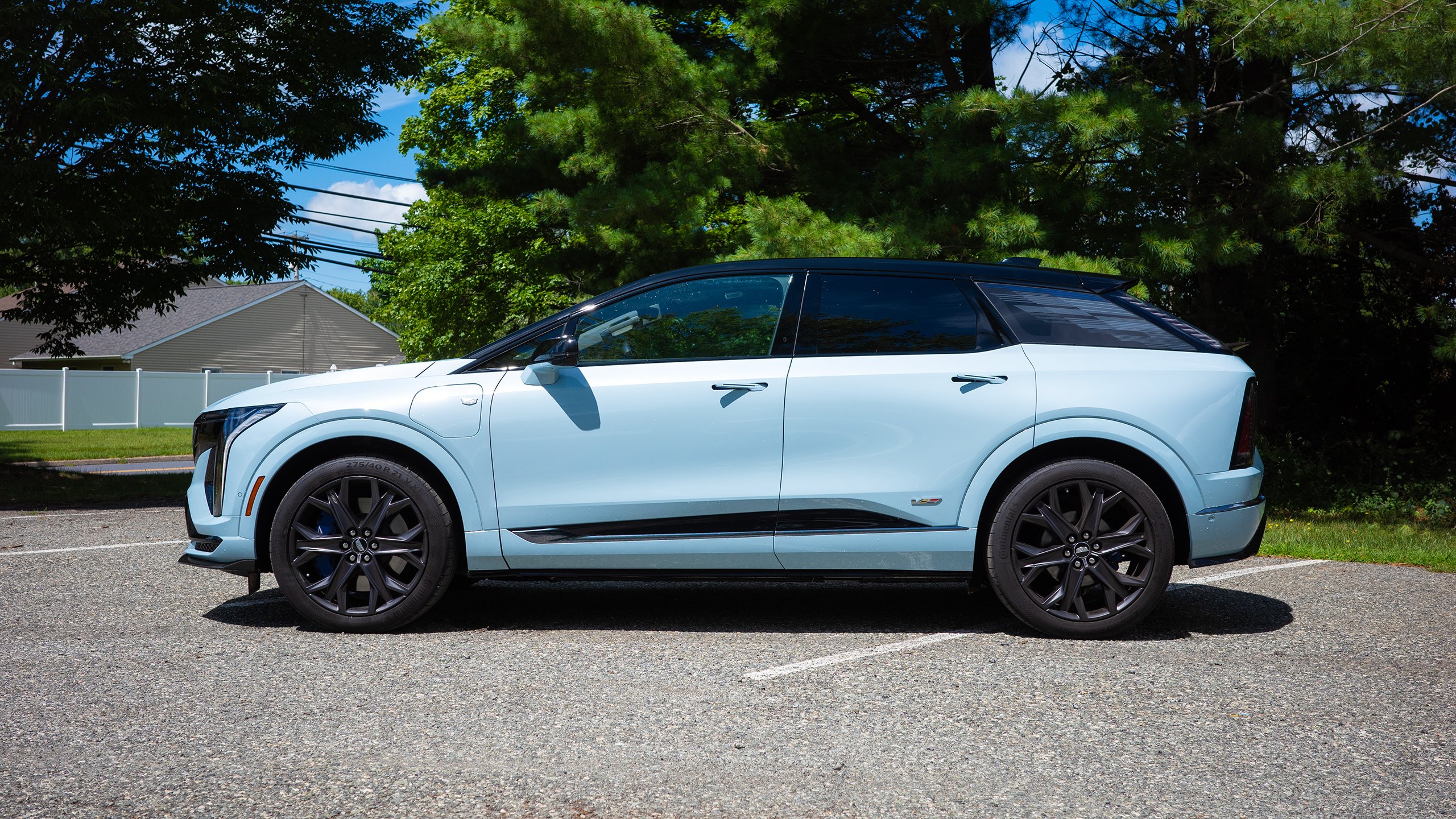
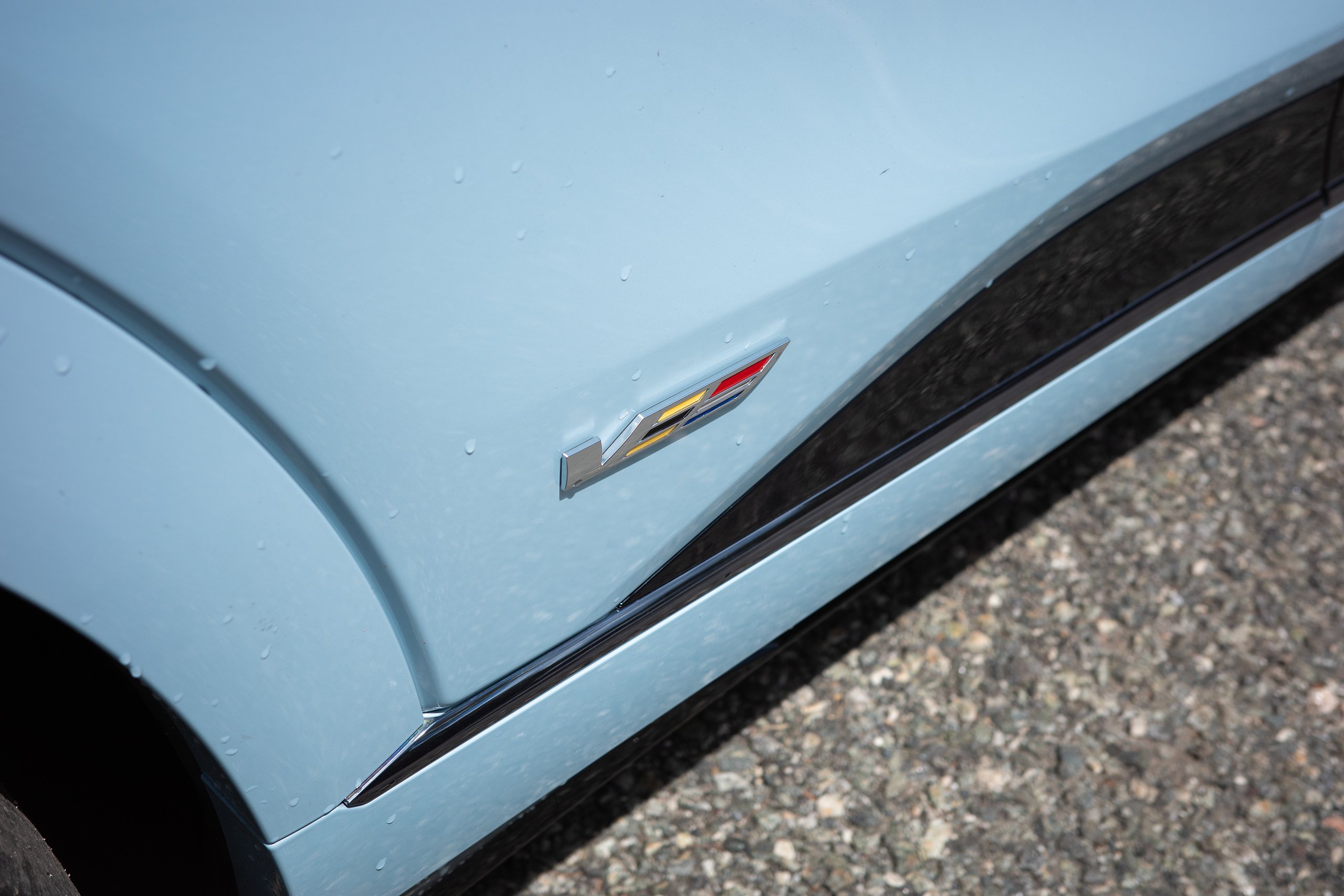
An ordinary Cadillac Optiq starts at $52,695 and is powered by a 315-hp motor on the rear axle. For about another $16,000, you can get into the Optiq-V, which considerably boosts not only the power and poise in the corners but also style and luxury.
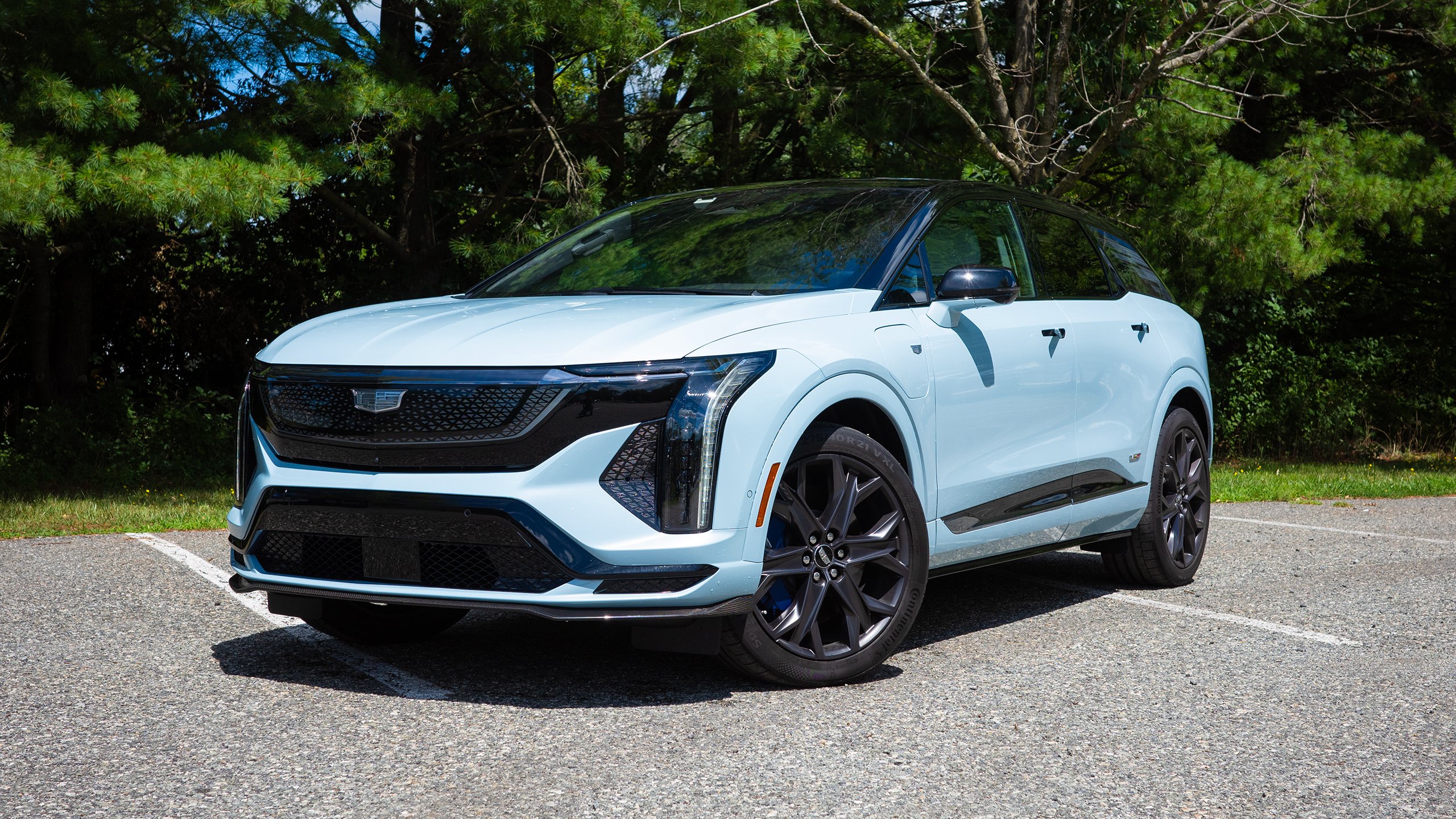
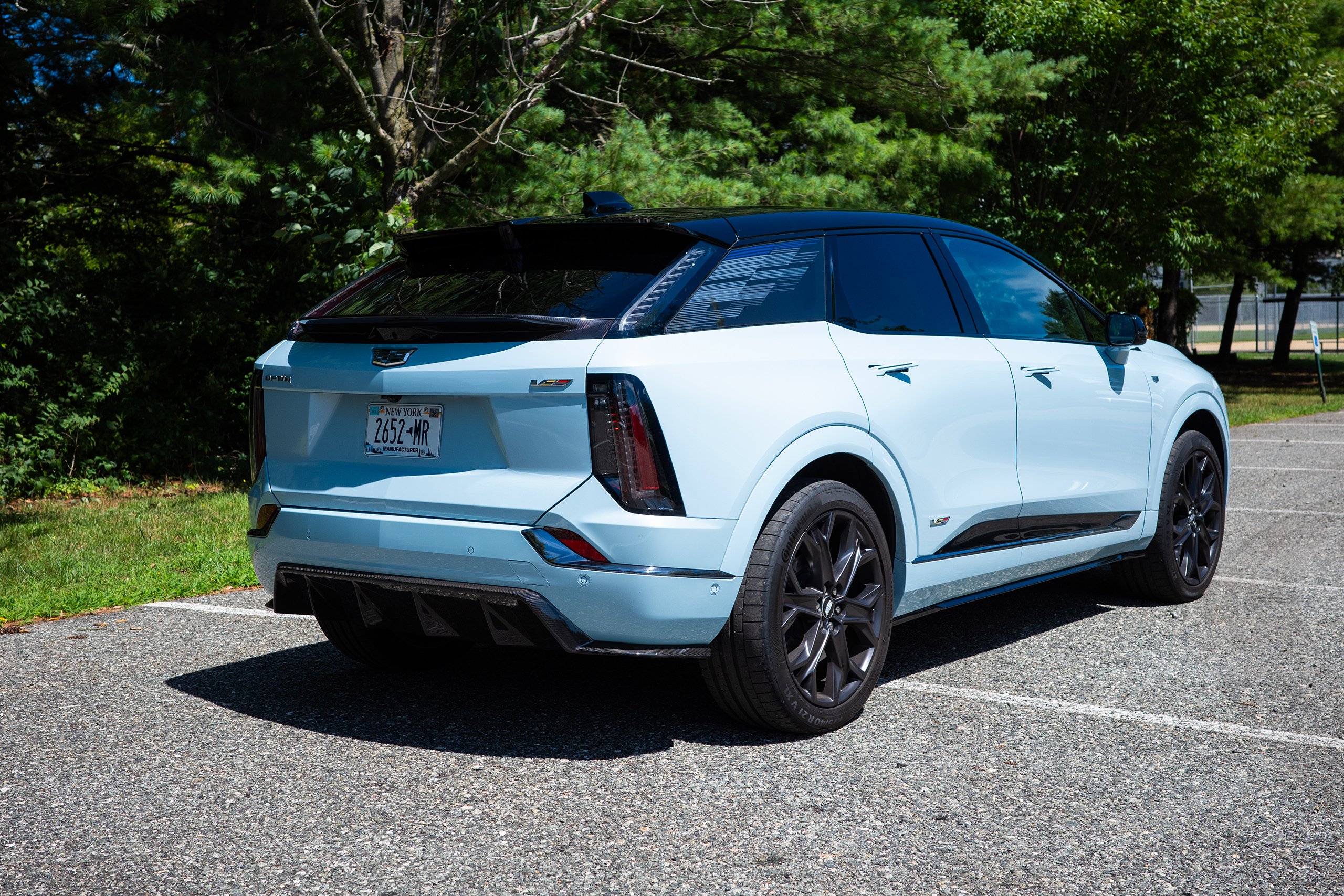
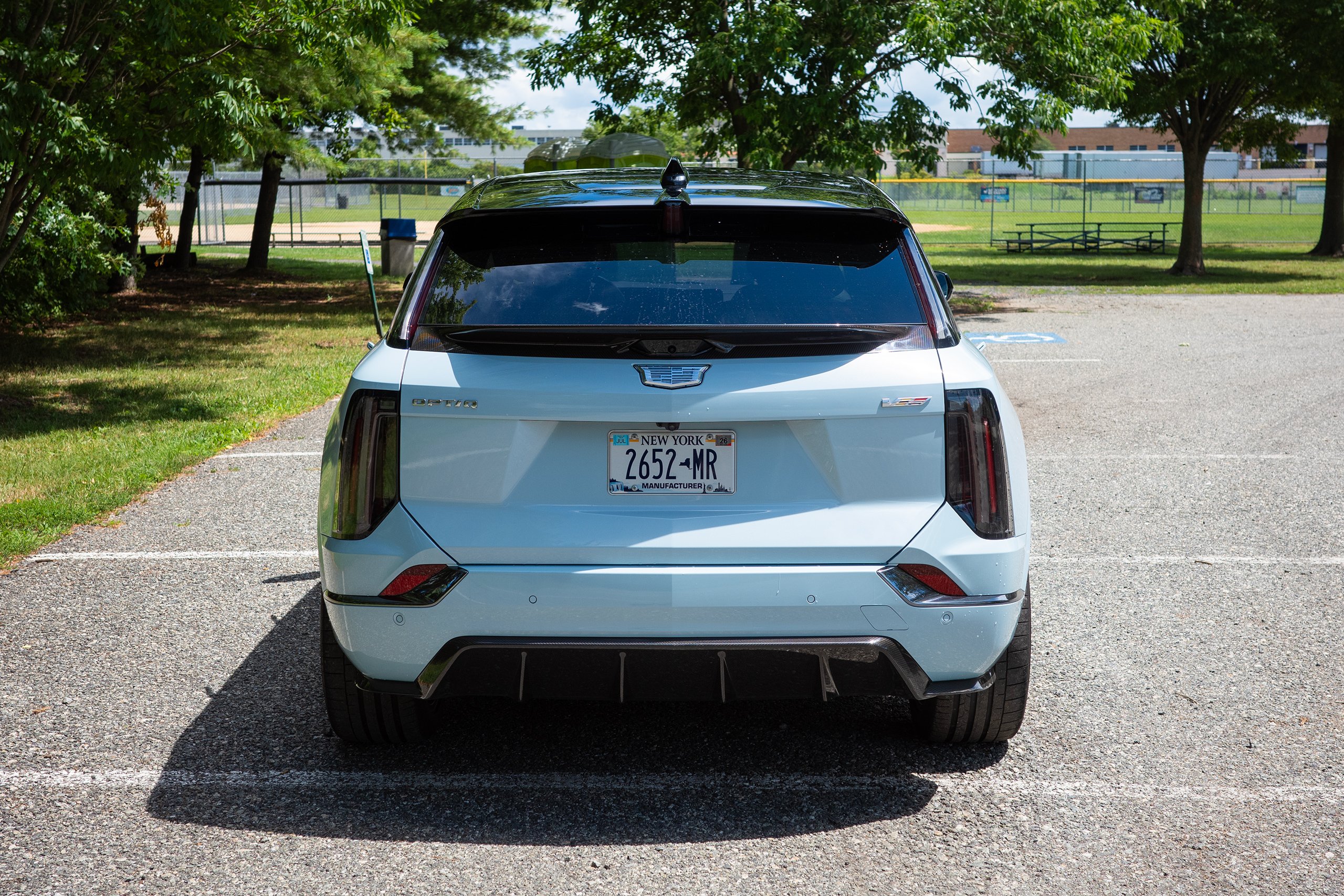
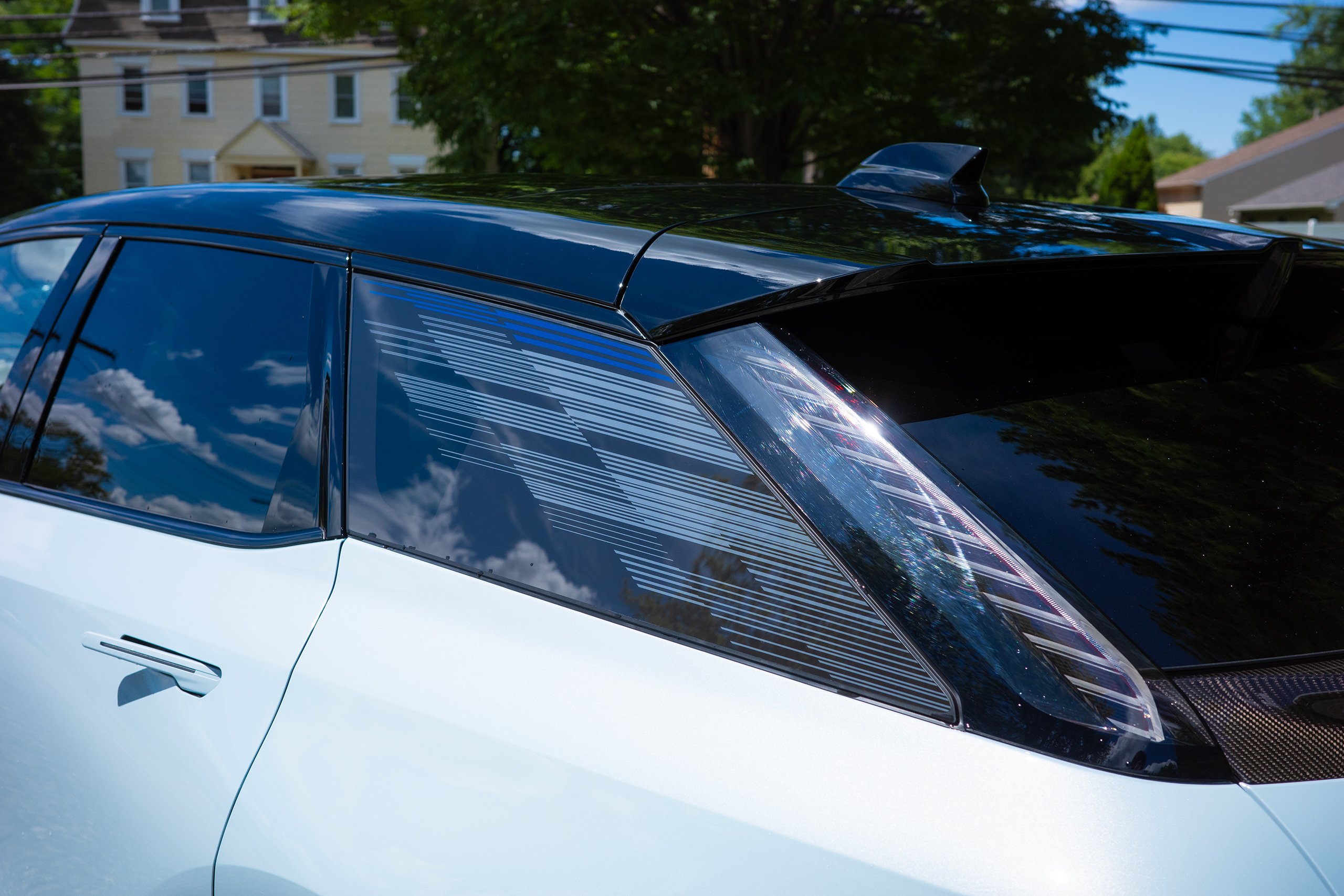
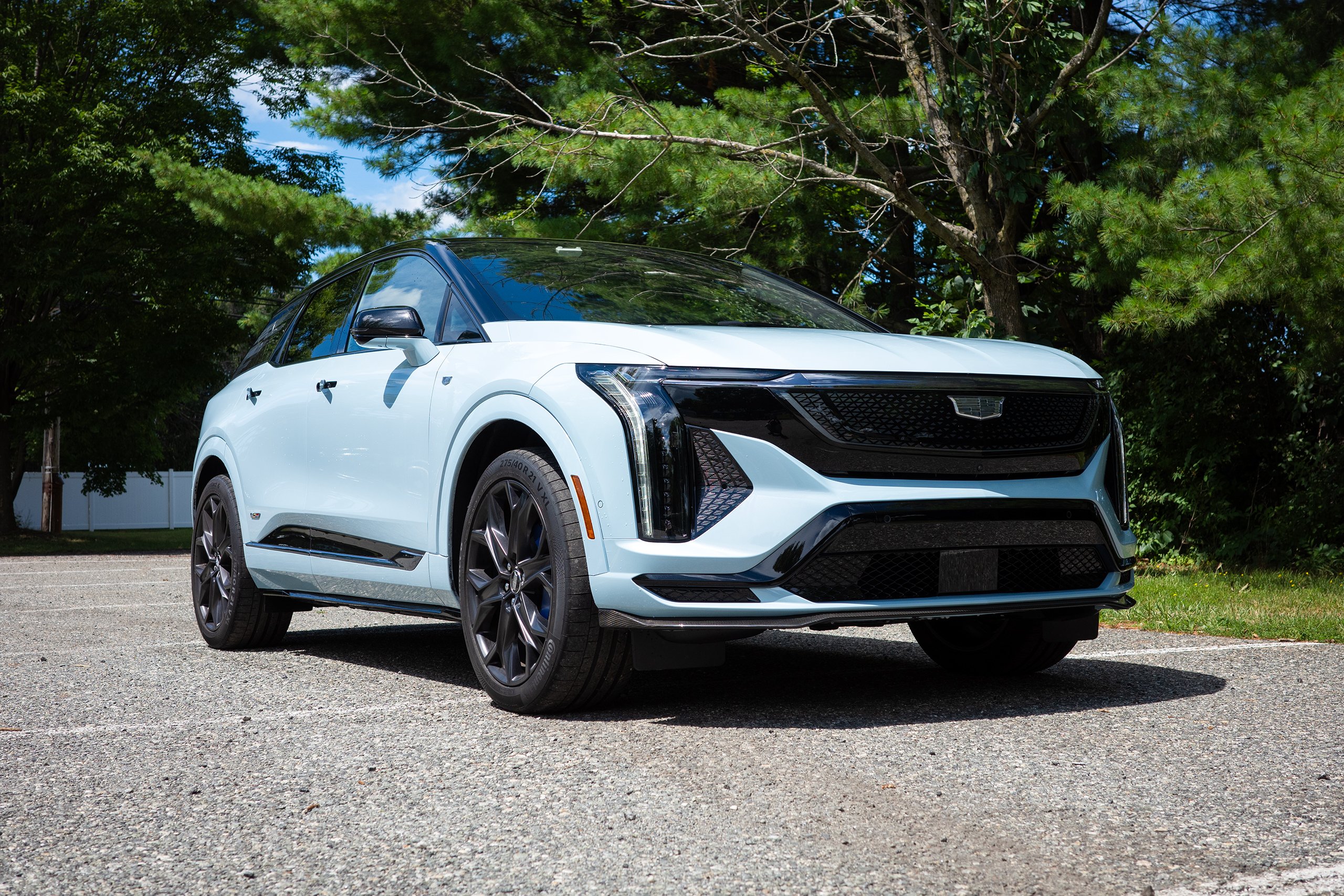
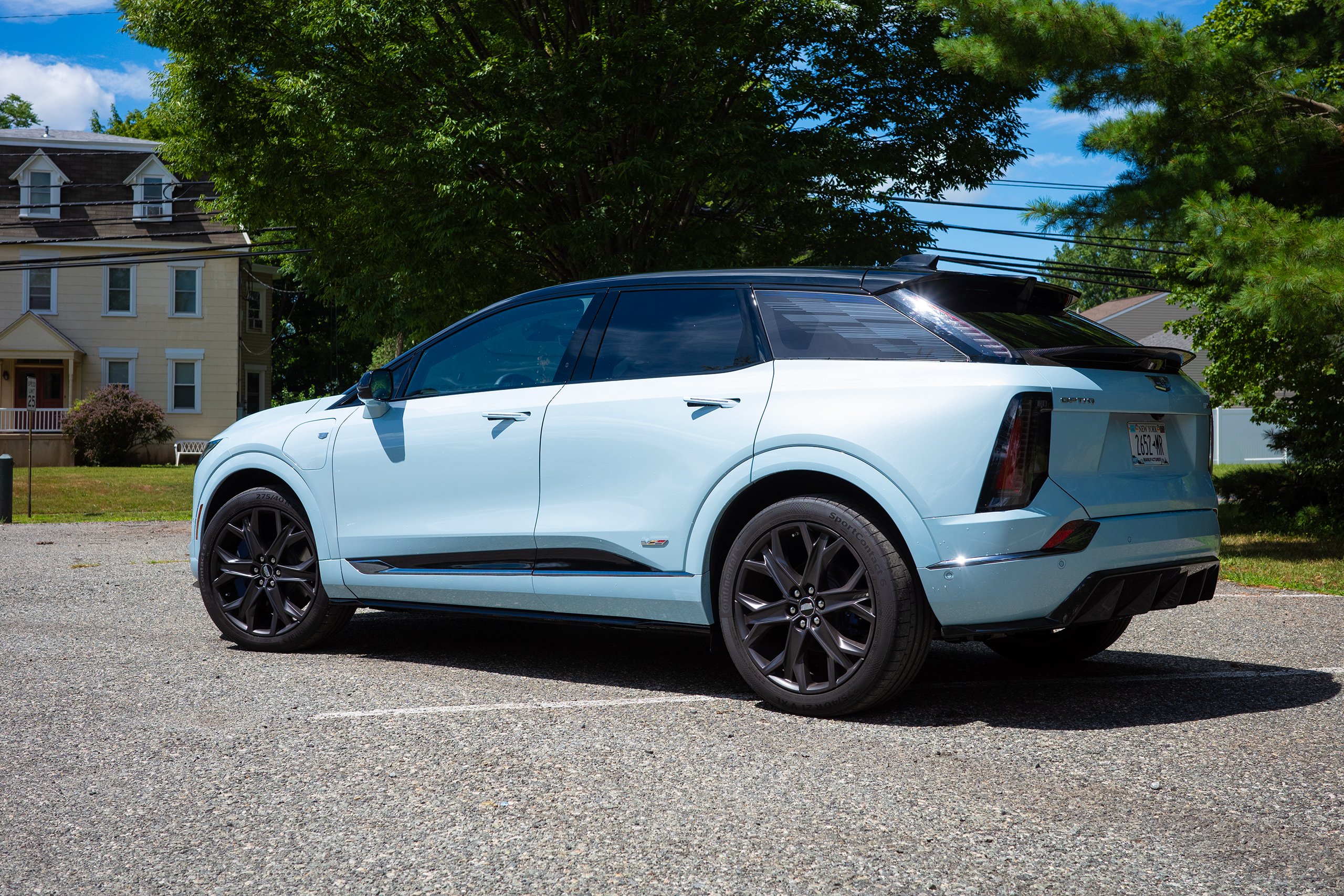
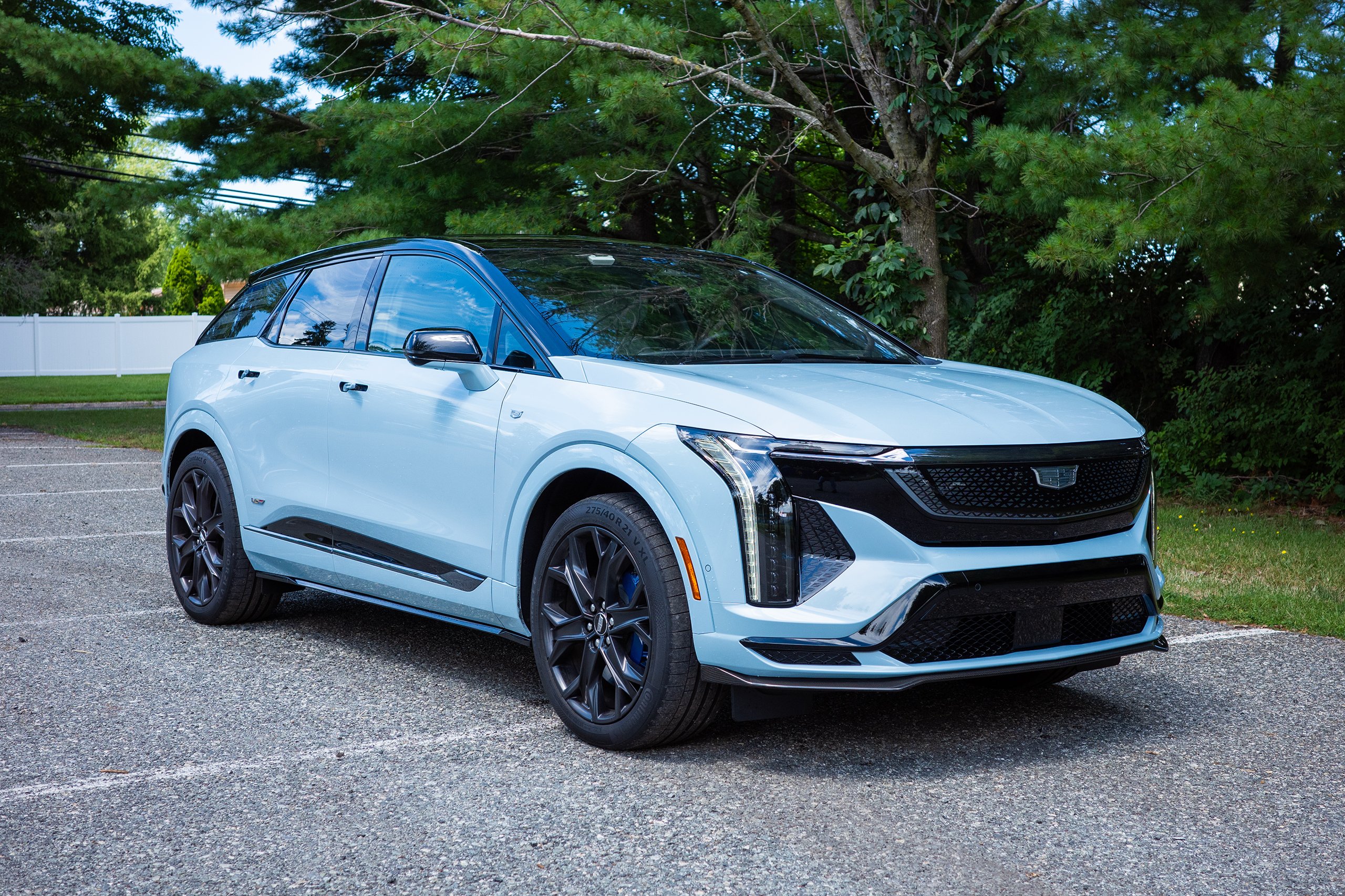
I think this is a handsome SUV with a nice profile, even if it’s not as dramatic as the Lyriq’s. The Nimbus Metallic paint on my tester here is a bit lighter than I’d probably go for, but it’s unique and still plays off the deeper hues of the interior trim and the graphic pattern along the C-pillar. I’m pleased to report that the panel is not opaque when viewed from inside the car and functions as a typical tiny quarter window.
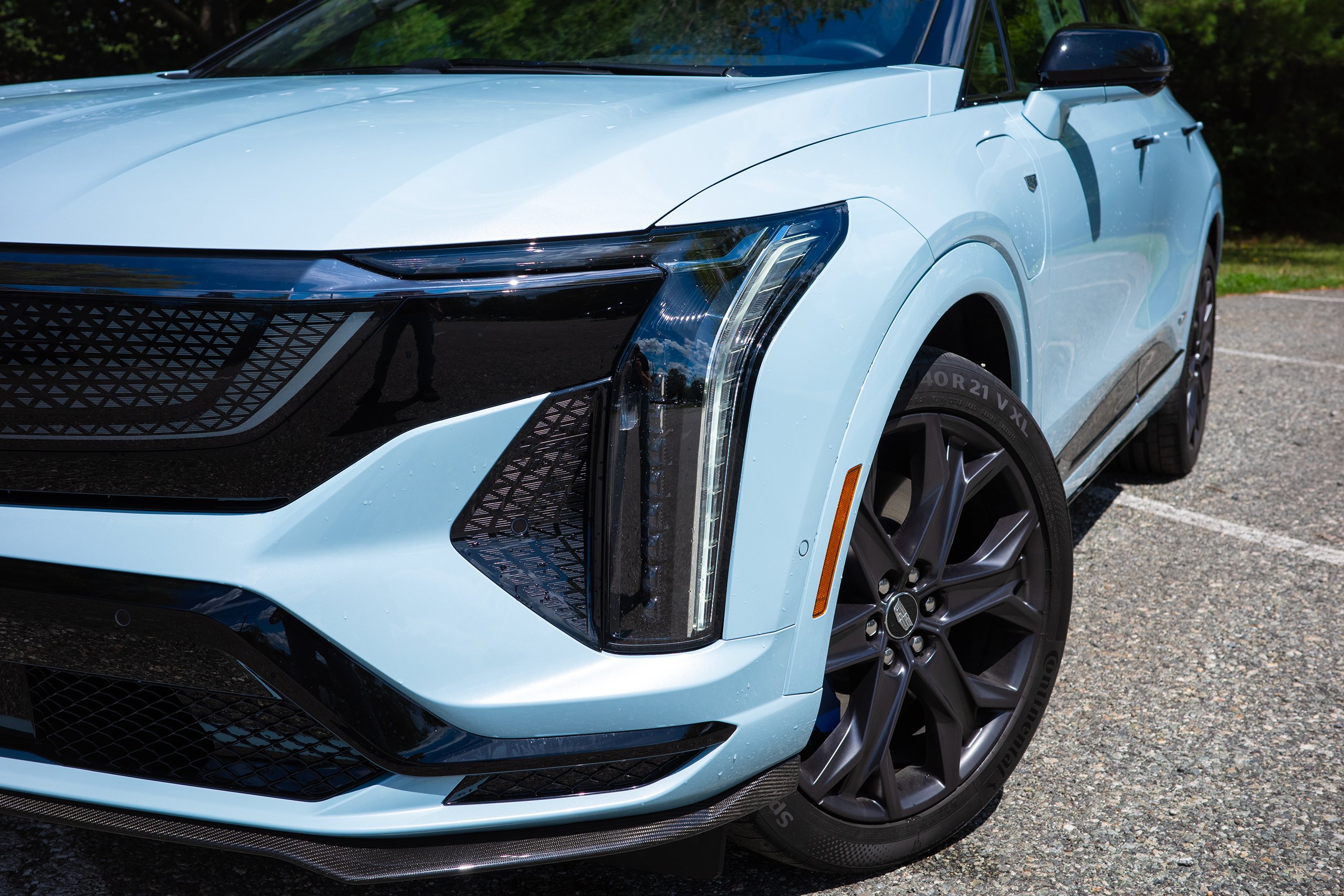
This particular example came in at $79,270, which is indeed a lot of money. Part of that is because of the paint, which is a $725 option. The $2,555 Charging and Convenience package upgrades the onboard AC charger to 19.2 kW, from the regular 11.5 kW. This has an adverse effect on range, unfortunately, reducing it to all but 250 miles with this configuration, down from the regular 278 miles. More on that later.
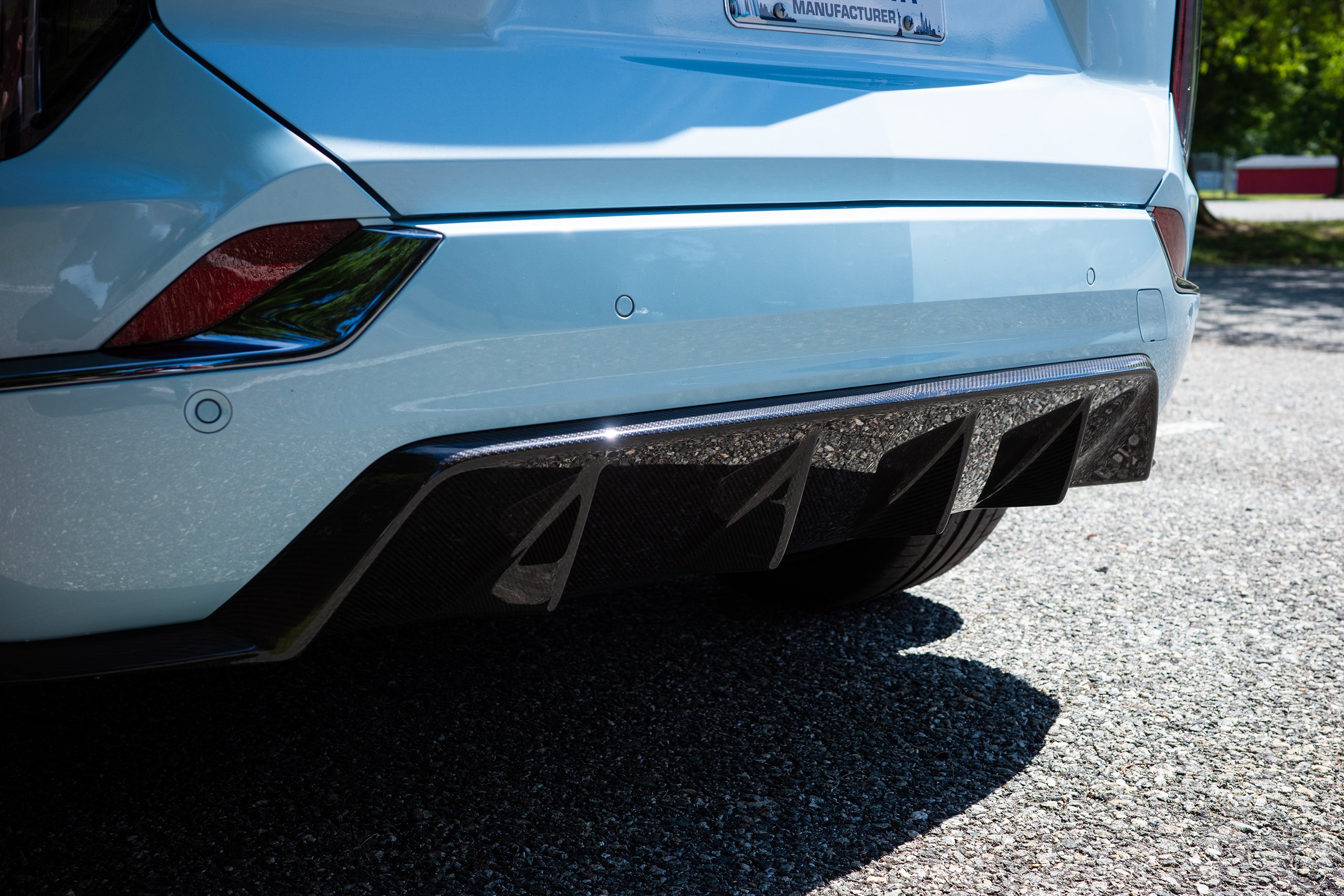
Rather, the bulk of extra dollars and cents comes courtesy of the $5,500 (!) carbon fiber exterior package, which clads the trim, including that rather prominent rear diffuser, in the stuff. It probably goes without saying, but I don’t think this option adds much of consequence to the vehicle.
Driving the Cadillac Optiq-V
Here’s the thing about the Optiq-V: Cadillac engineers say they seriously touched every part of this car, well beyond its powertrain, and I fully believe them. It is quick in a straight line, of course, but it’s also rigid, rides confidently but never punishingly so, and can hang on with loads of grip in high-speed corners.
But of course, like many electric SUVs, this one is heavy, and I don’t think enough was done to make it feel otherwise. Interestingly, the steering rack was one of the aspects Cadillac tweaked specifically for the Optiq-V, but they didn’t go far enough—the ratio is just too slow. Couple that with the effort required to turn it, and its unnecessarily large size, and you’re left with a vehicle that paradoxically can hold its own in the twisties, but almost discourages you from finding out how well.
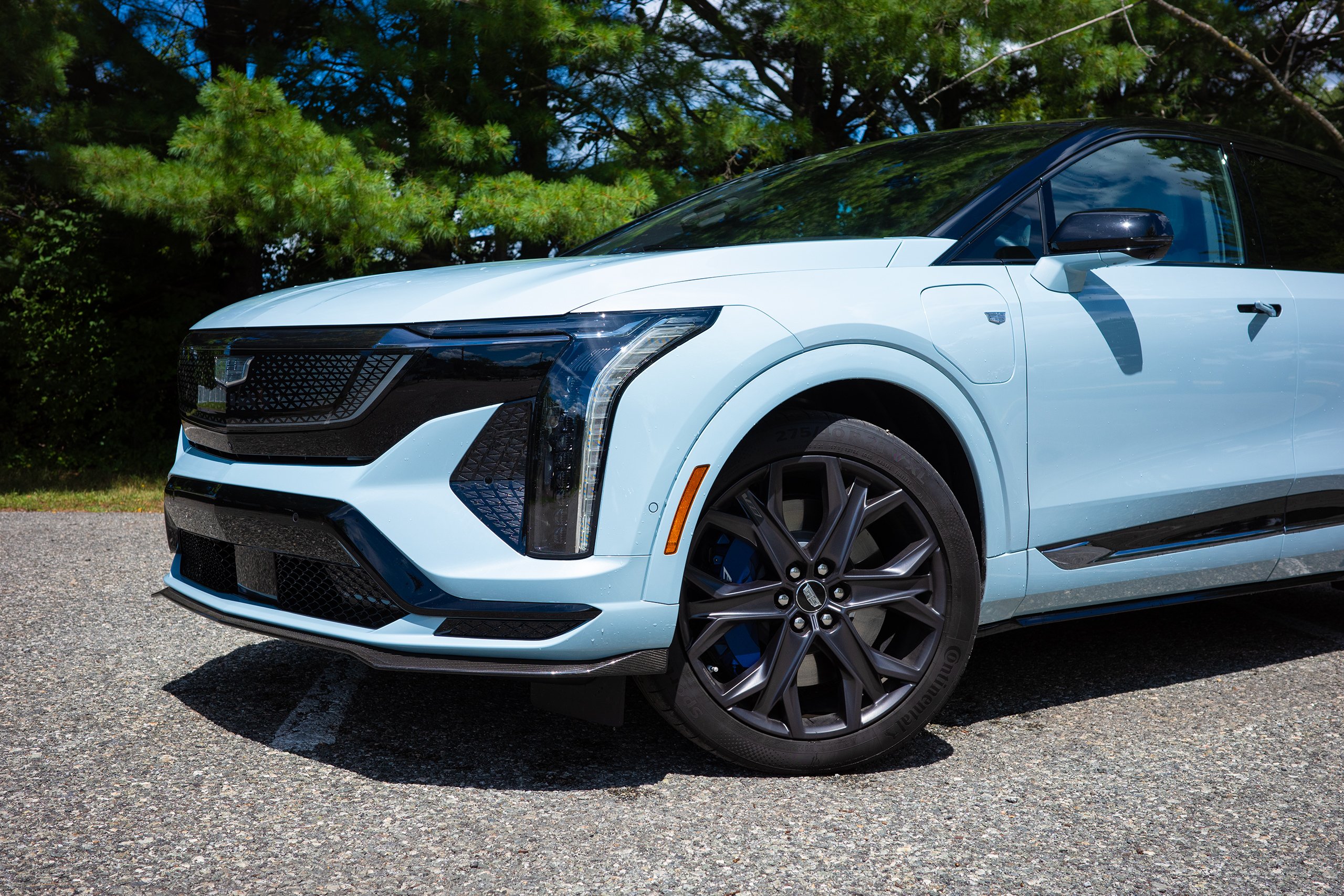
Again, it’s not that this thing doesn’t corner flat, because it very much does, but the disconnect between objective agility and perceived agility almost surprises you when you push it. You almost have to remind yourself that it wants to and is engineered to be driven hard, and I assume Blackwing owners don’t encounter that phenomenon.
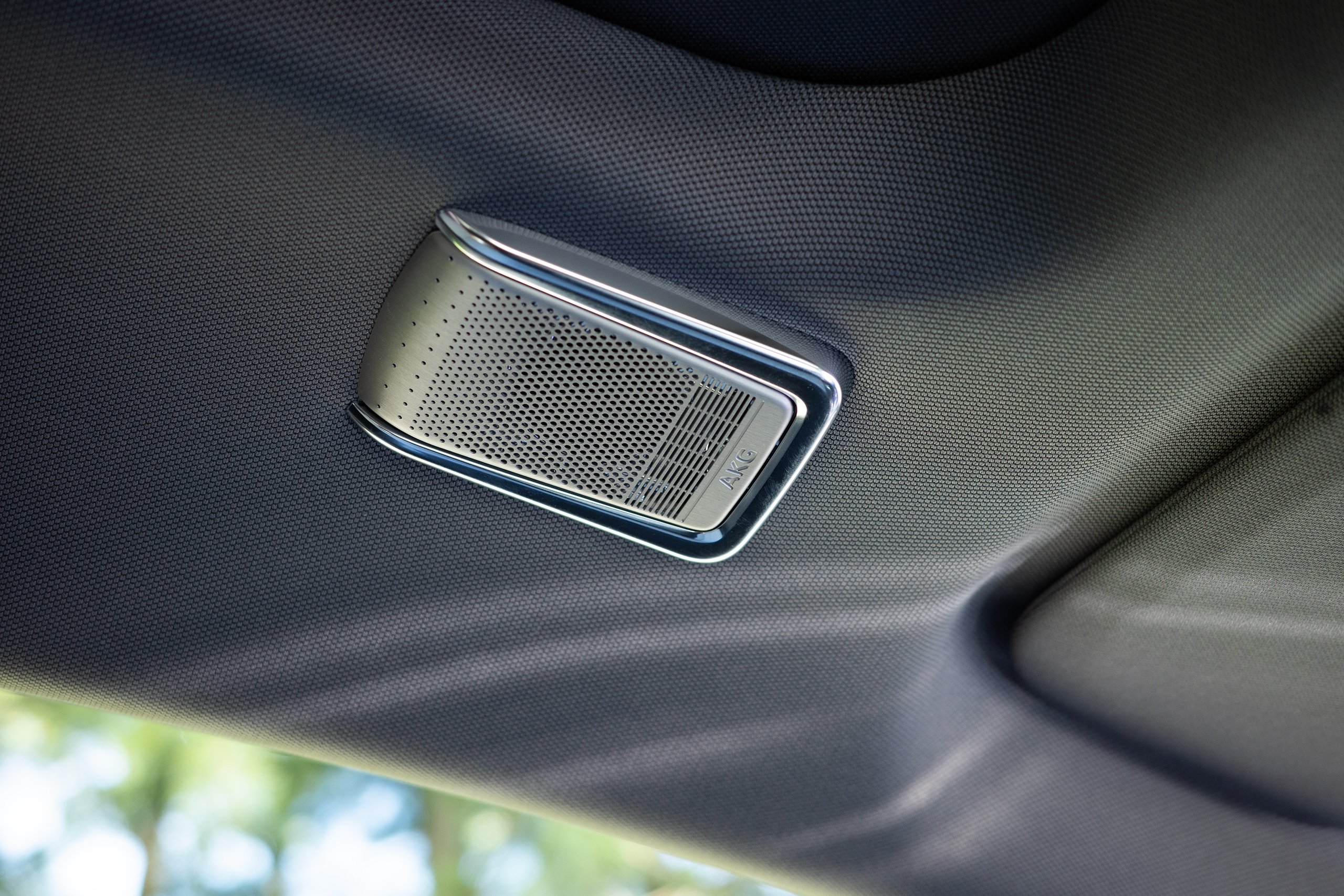
In less dynamic situations, the Optiq-V felt every bit the luxury EV it’s billed as behind the wheel, with a ride that lets you feel the texture of the road but is never too harsh, superb sound deadening, and seamless blending between regeneration and friction braking. I still turned off regen—it’s become a GM tradition for me, after all, as I can’t stand the strength with which their cars make the world stop turning the moment you lift your foot off the throttle—but the option is there if you want it. And even if I wish the steering was livelier, it is still nevertheless very accurate.
Interior and Tech
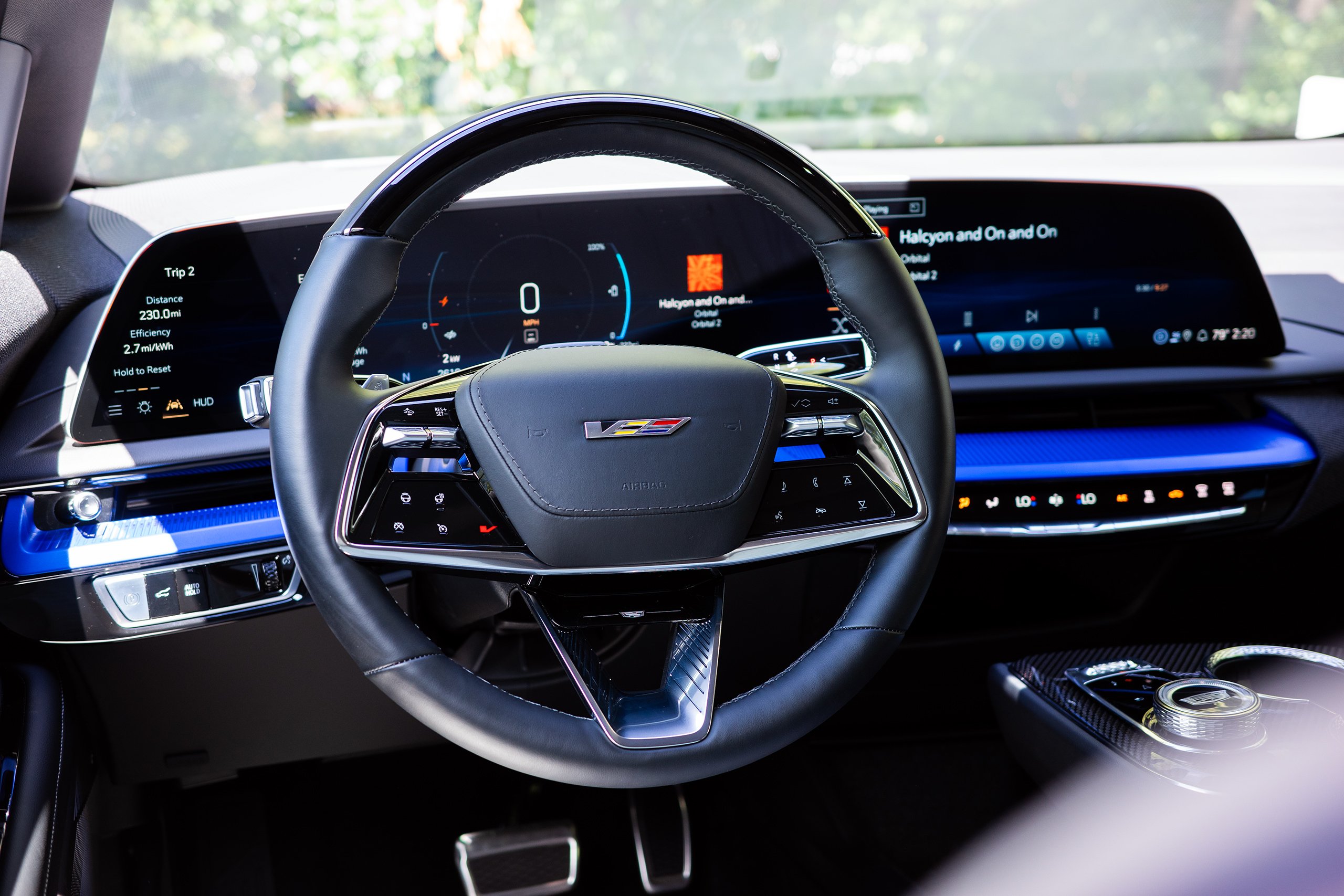
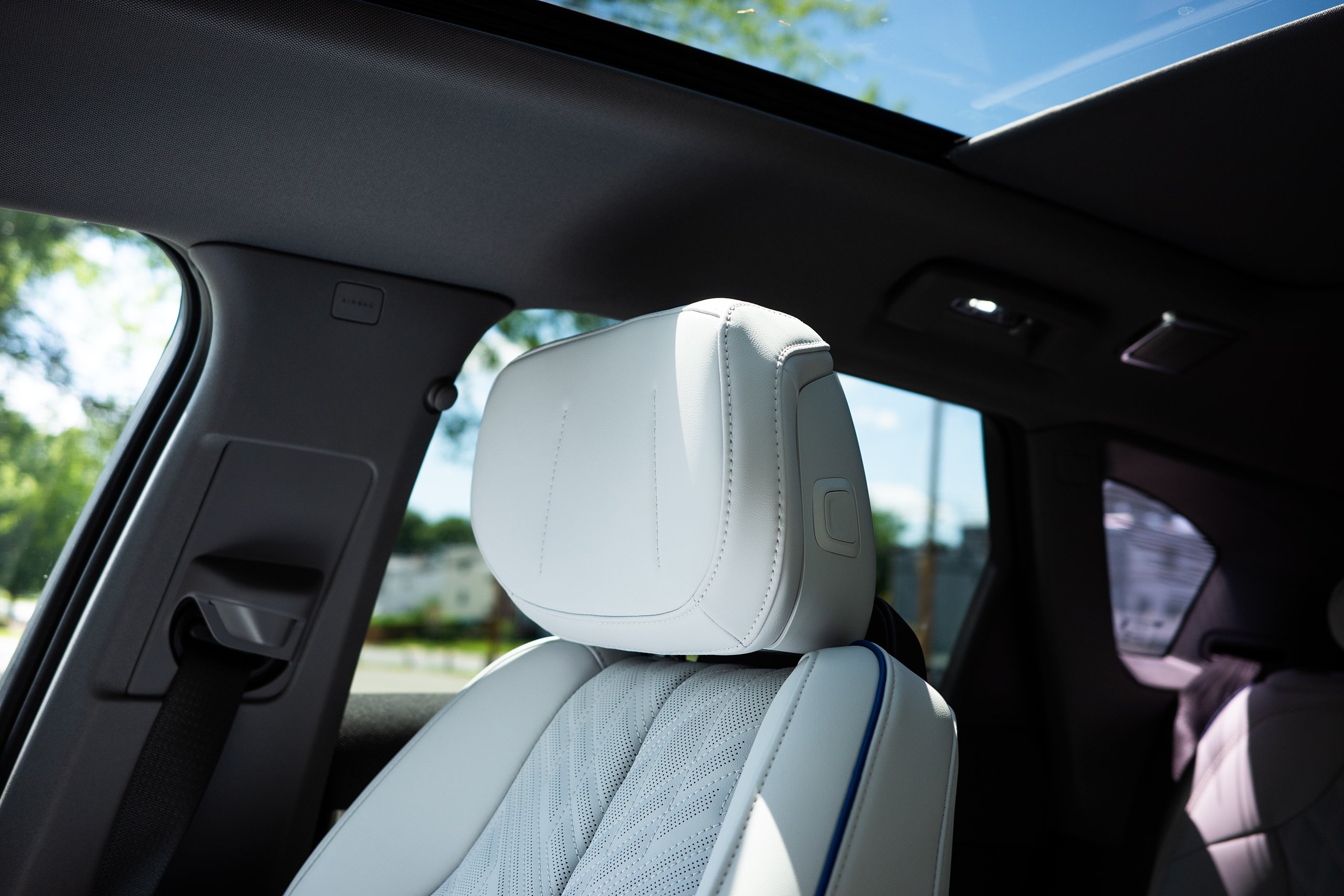
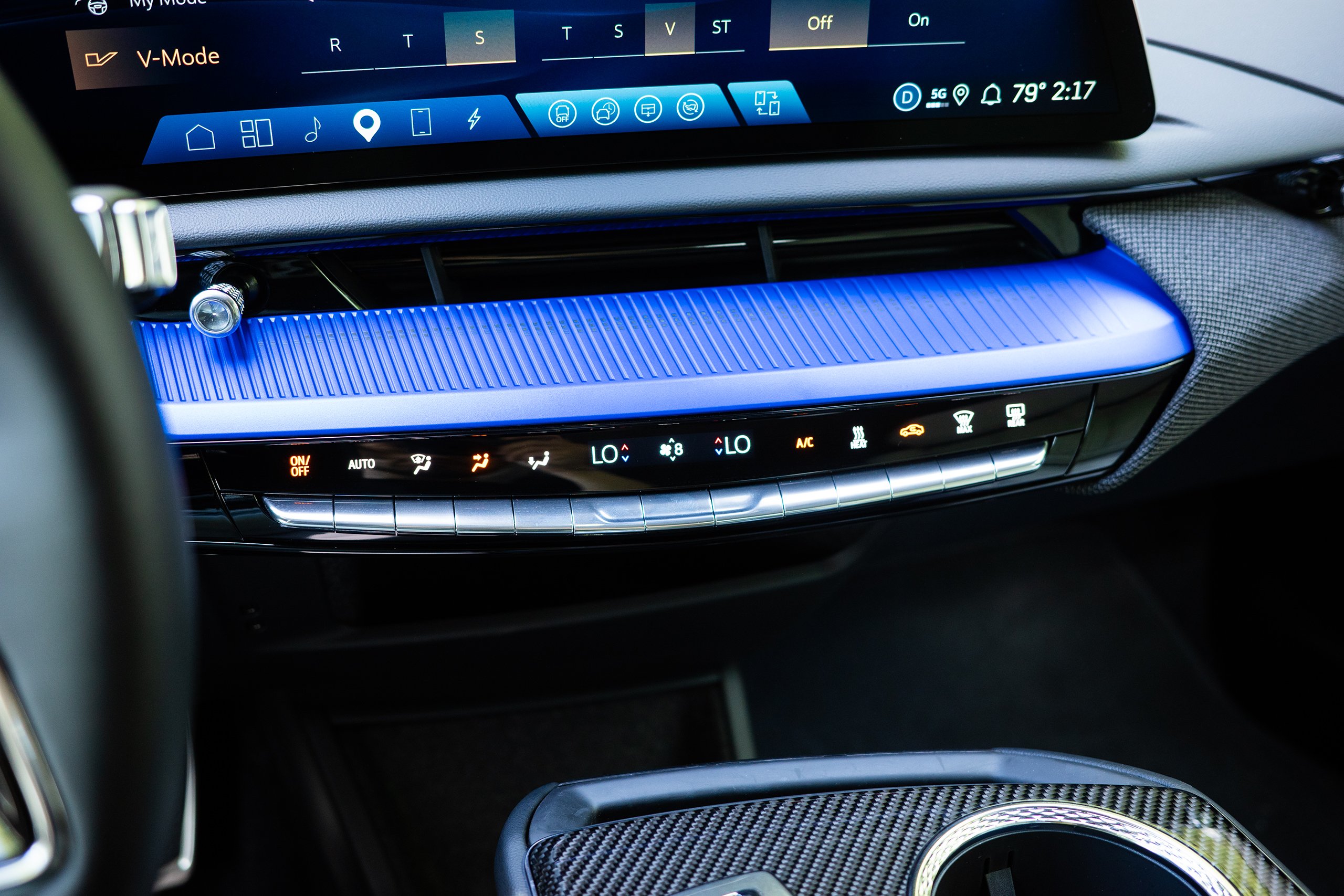
In some respects, the Optiq’s cabin represents everything Cadillac is doing well right now. It’s elegantly simple with fantastic materials, from the heather tweed dashboard upholstery to the matte-metallic pop of electric blue that runs from the driver’s-side A-pillar to just beneath the center stack. The fit and finish of the Optiq-V’s interior is unquestionably my favorite thing about it.
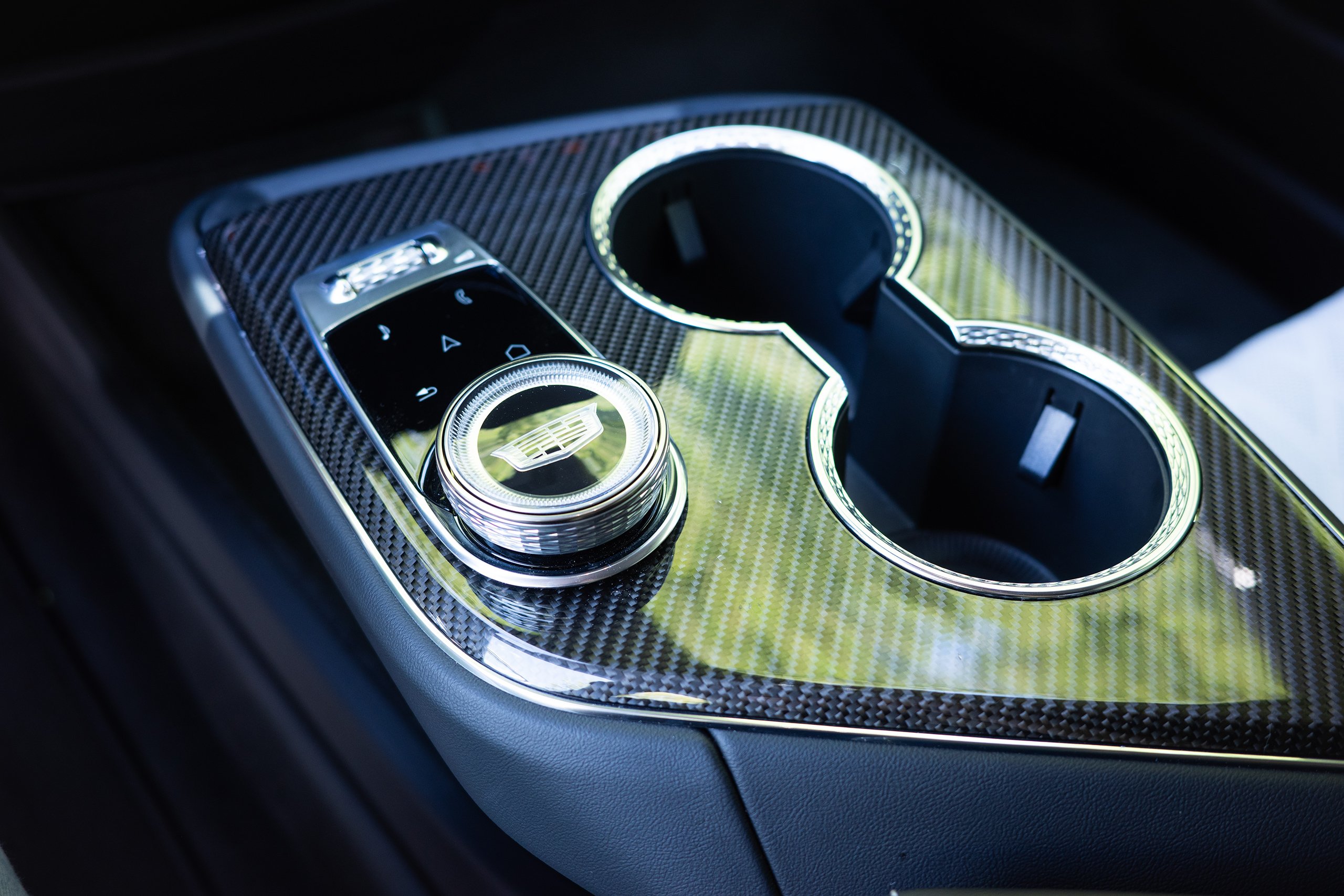
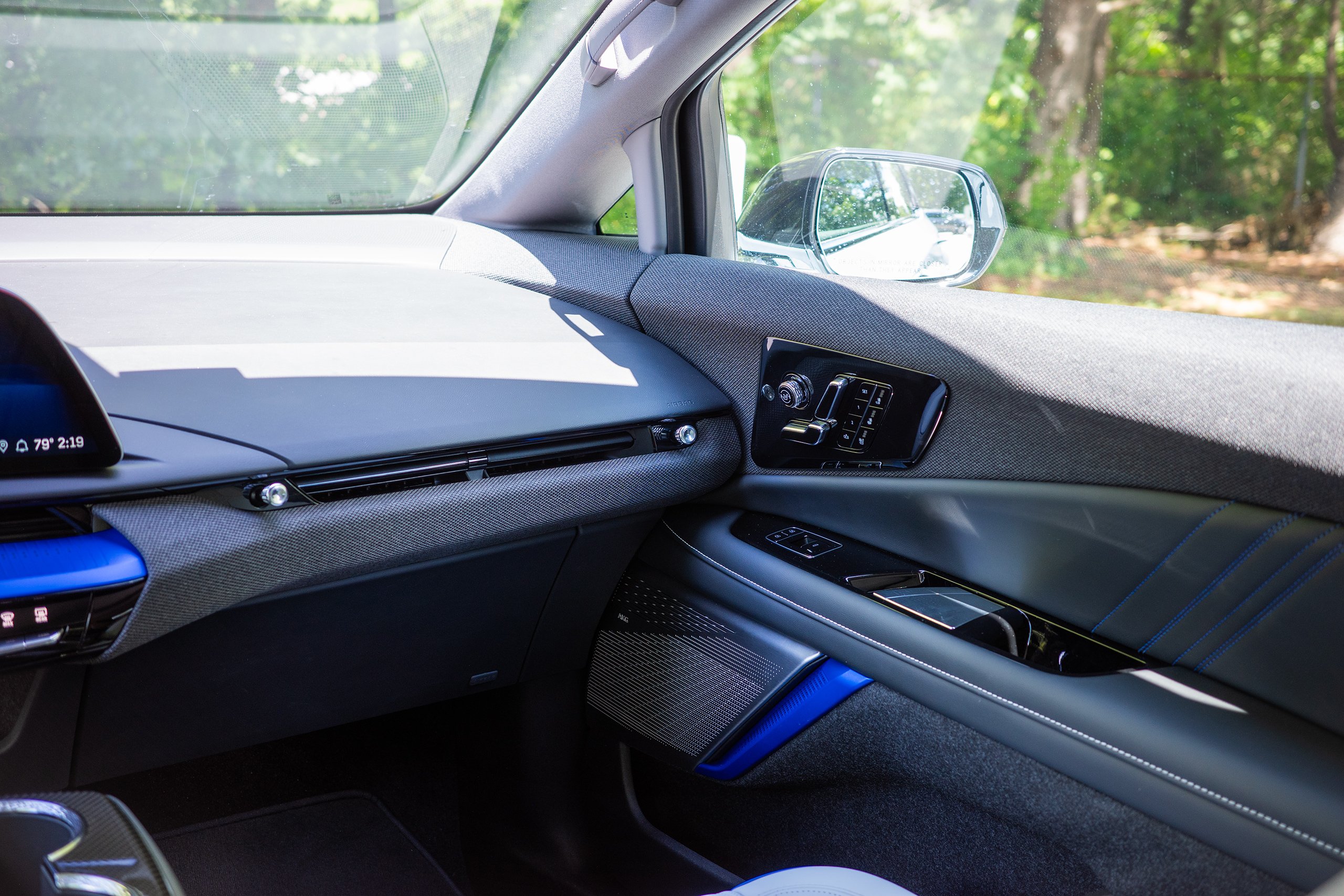
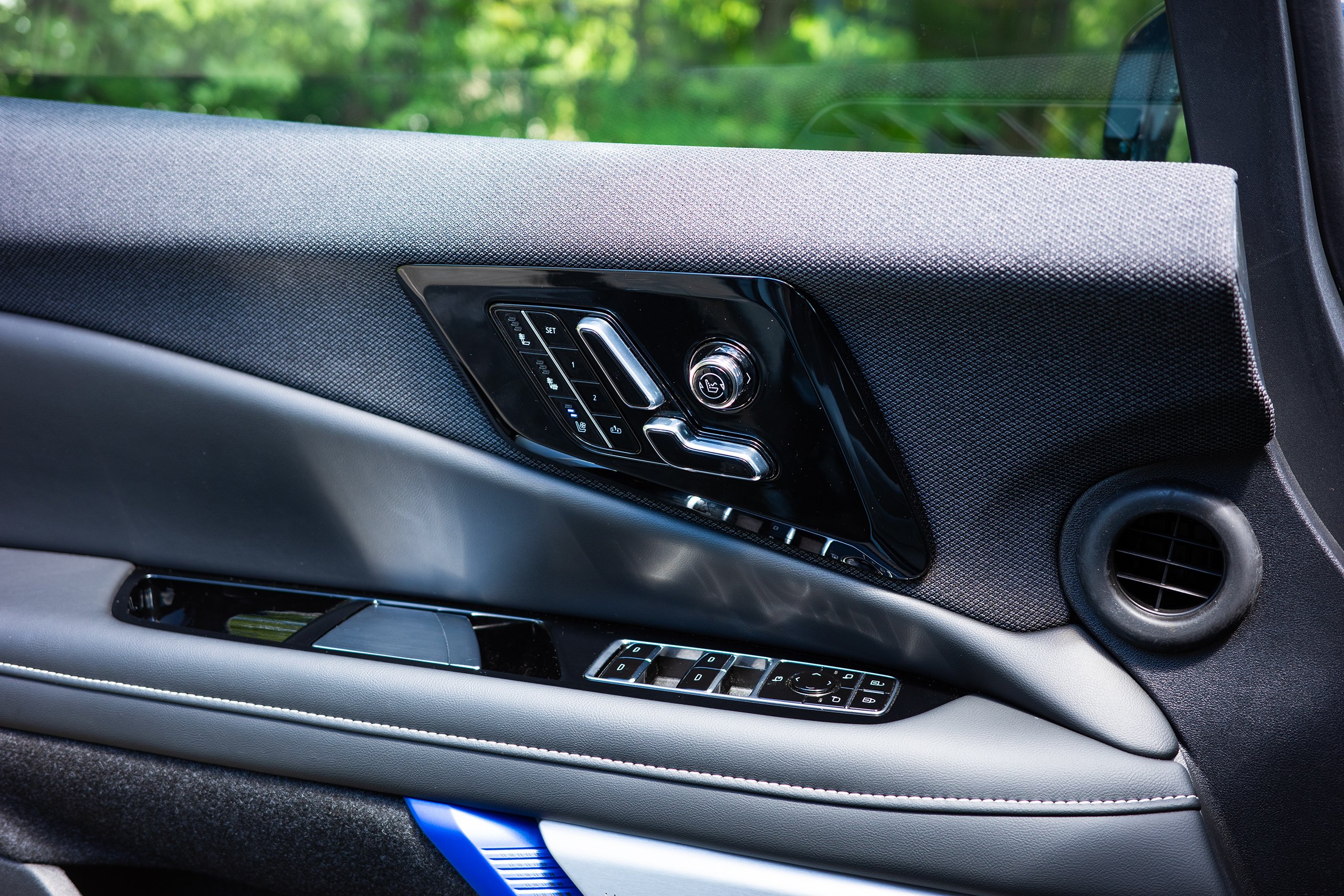
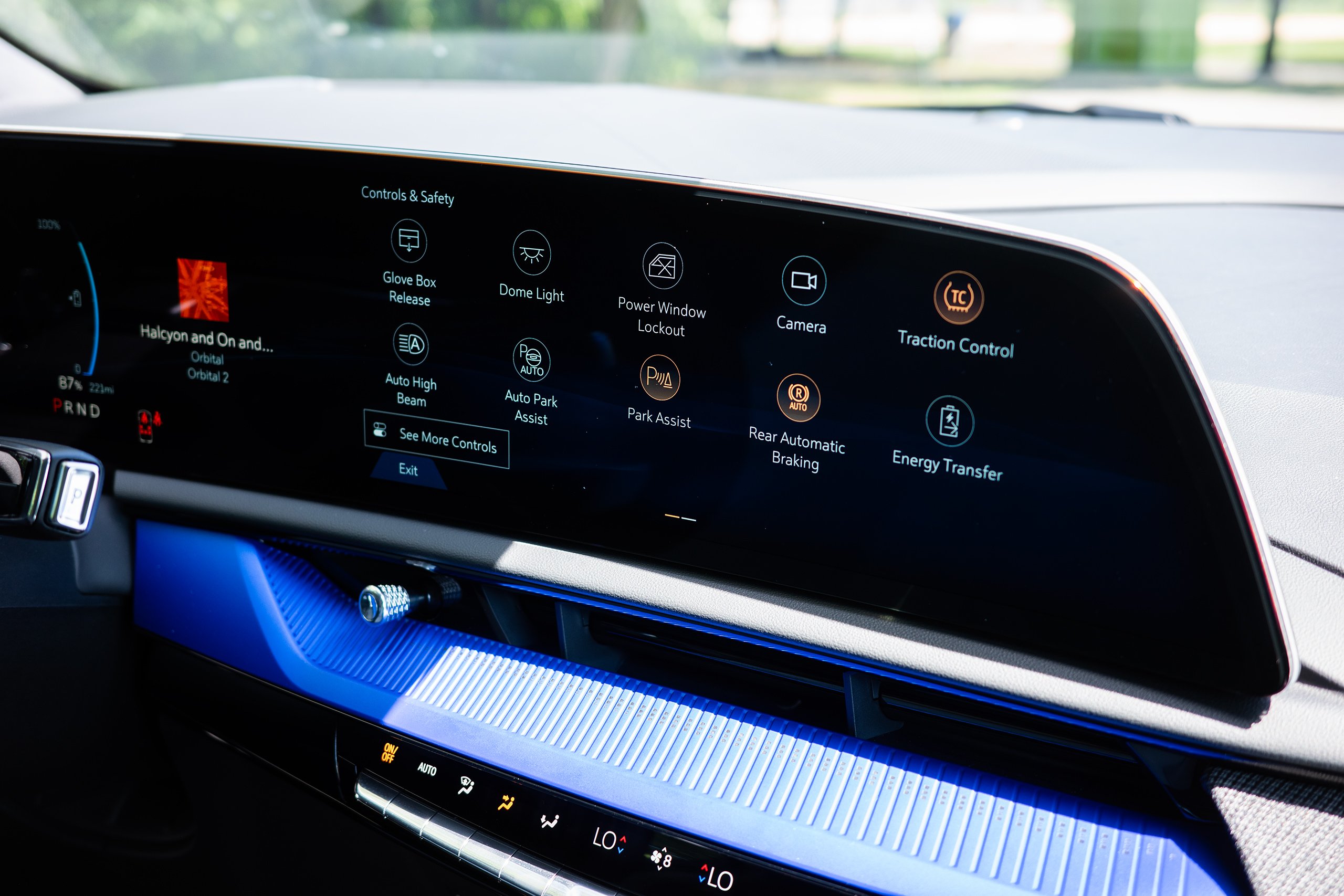
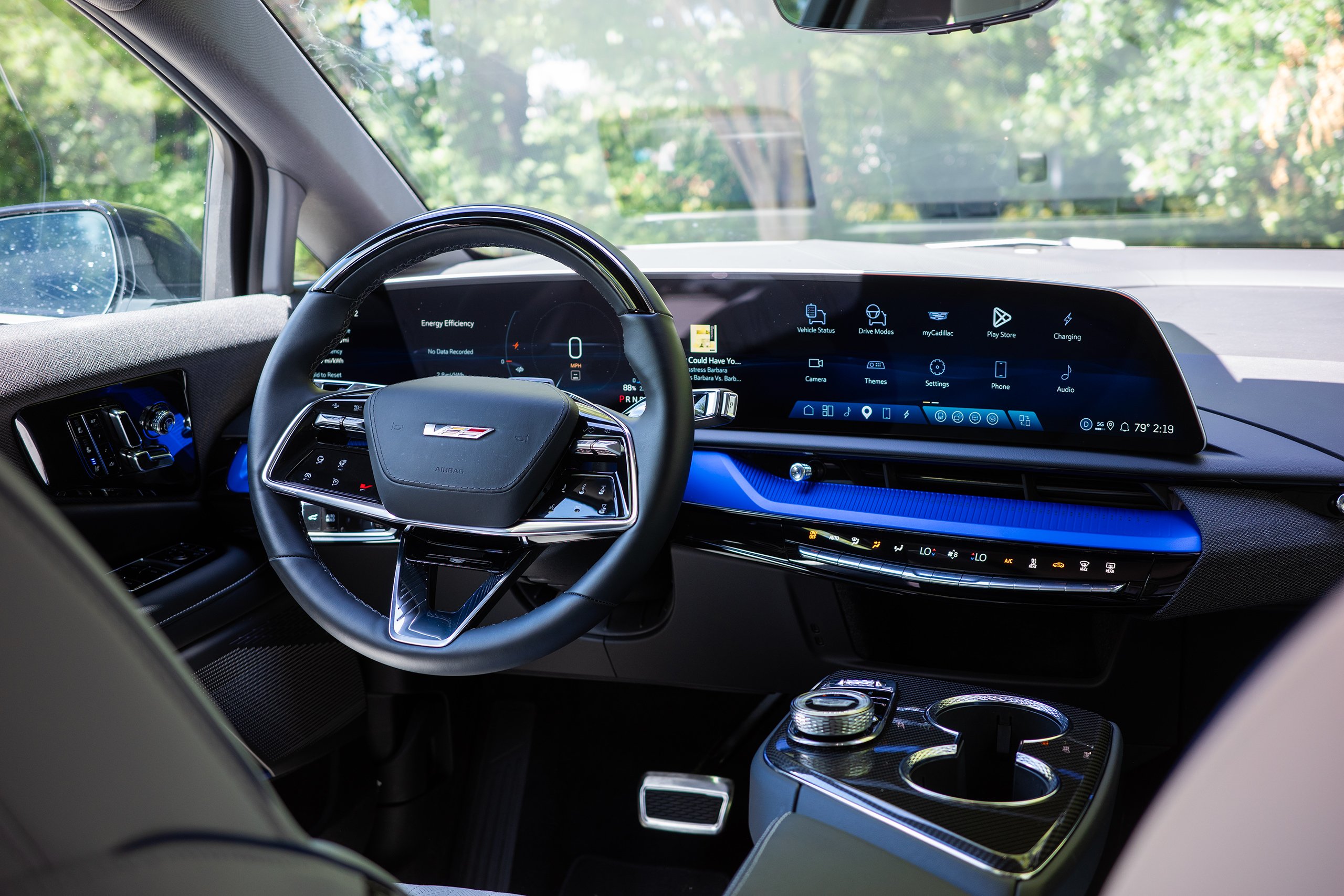
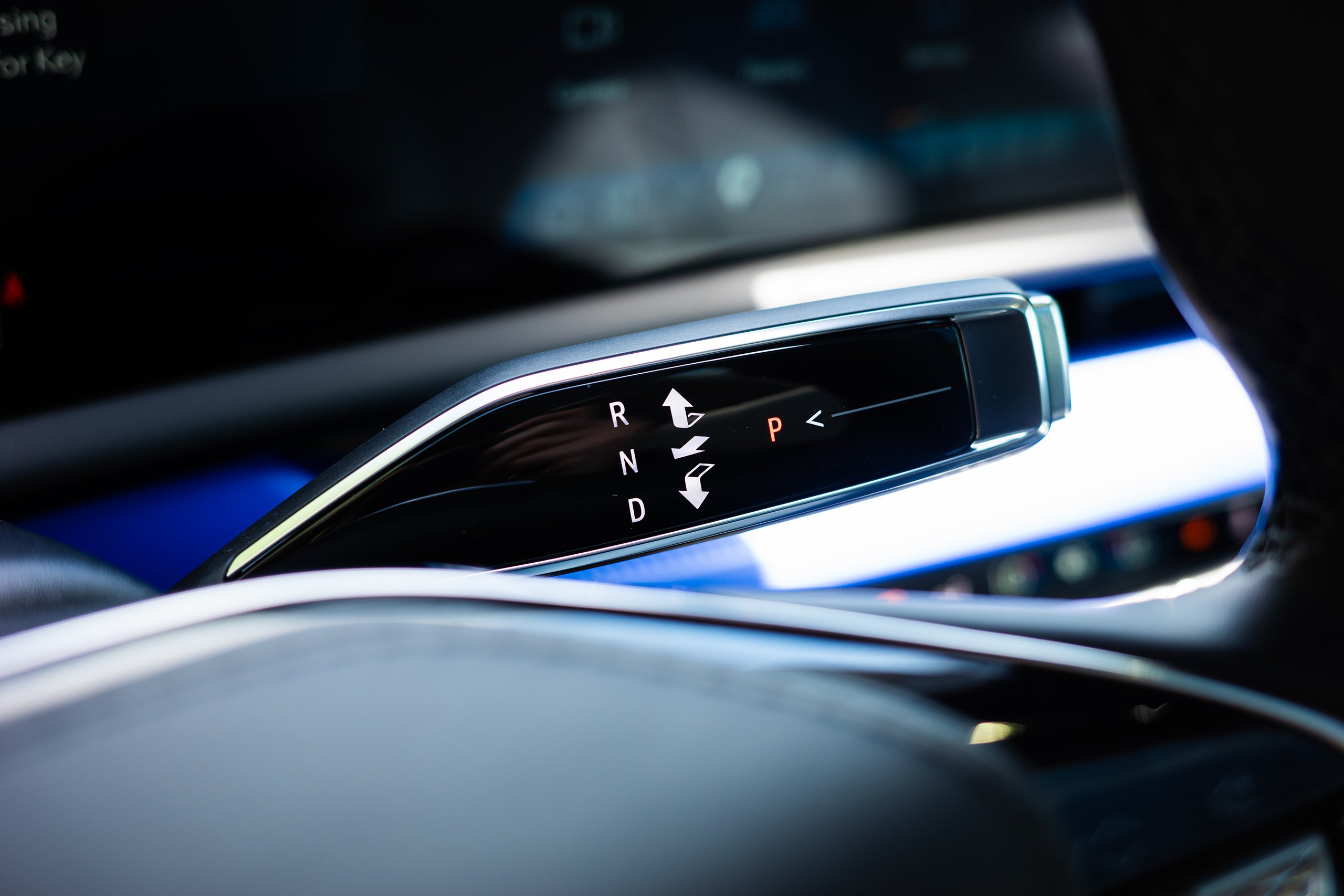
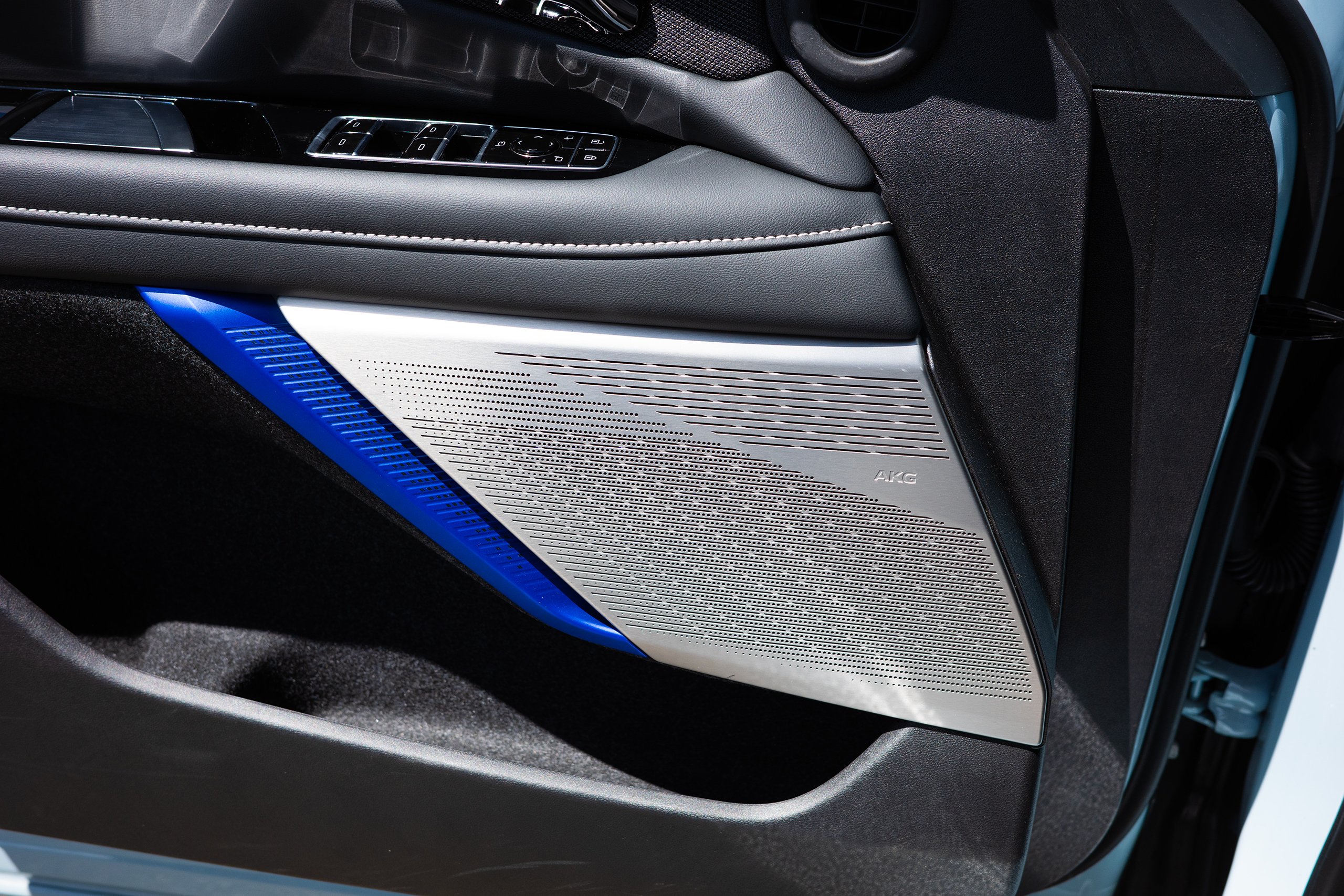
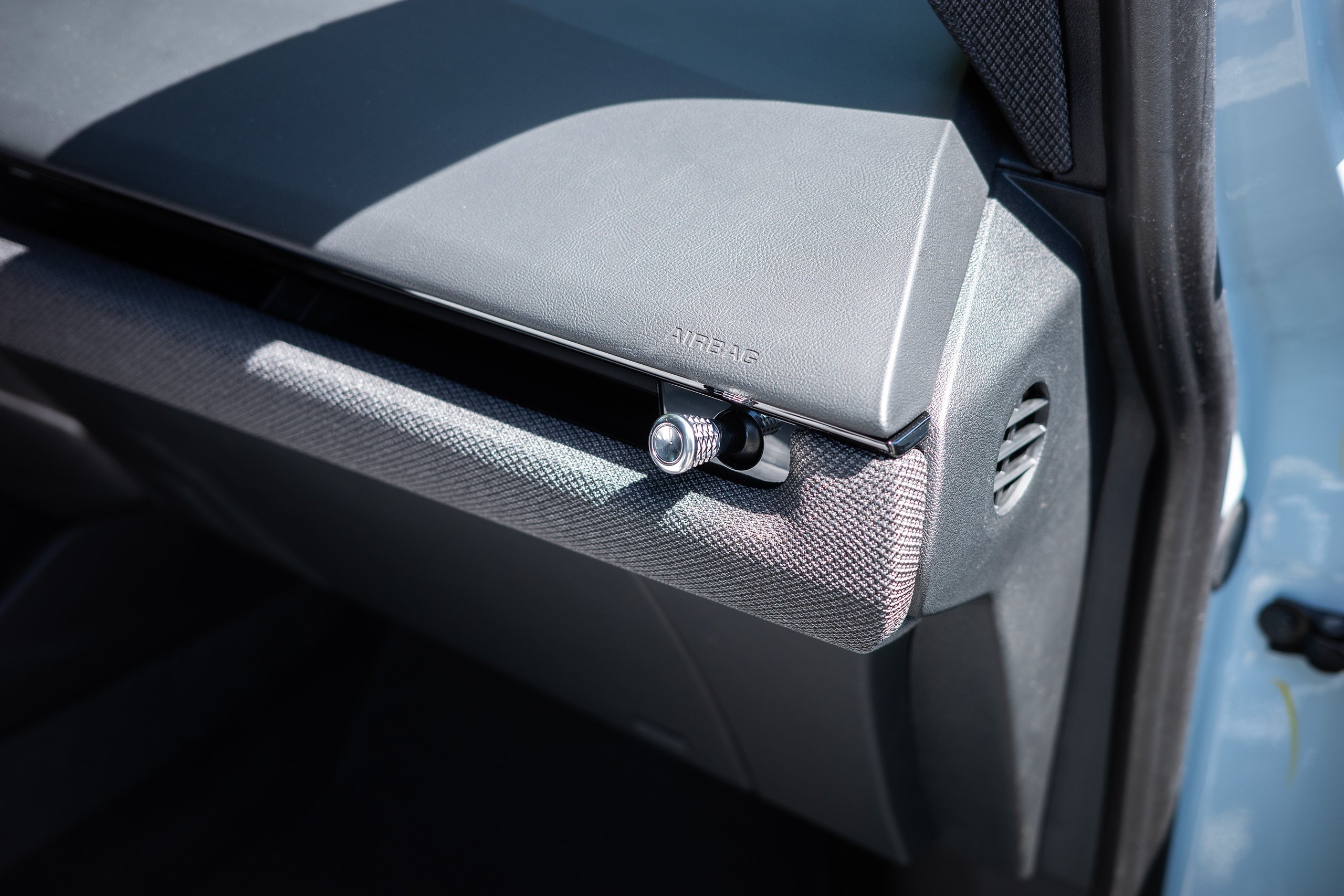
It would be nicer if it were just a bit more intuitive to operate. I’ve whined about CarPlay’s omission in enough reviews of GM EVs, so we won’t retread that ground, but even the climate vents are hard to direct with any kind of purpose. You can’t see the vanes on the vents themselves, and they’re really slender, so you kind of just have to yank the knobs around until a thin blade of air eventually brushes against you, which is never as obvious as you’d think. This trim comes with massaging seats, though they offer exactly one pretty underwhelming mode, and the dial they’re linked up to on the front door cards is very confusing to operate.
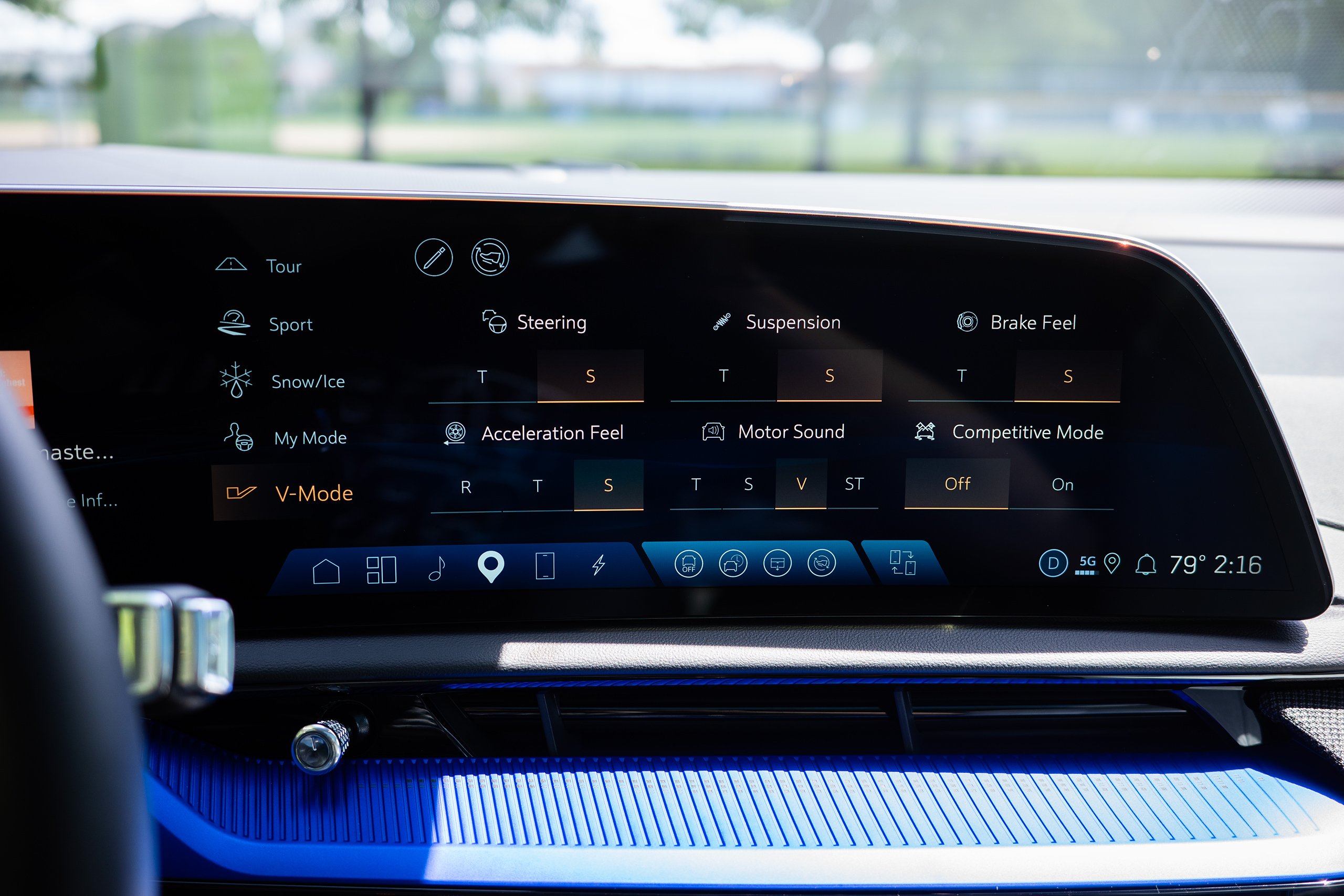
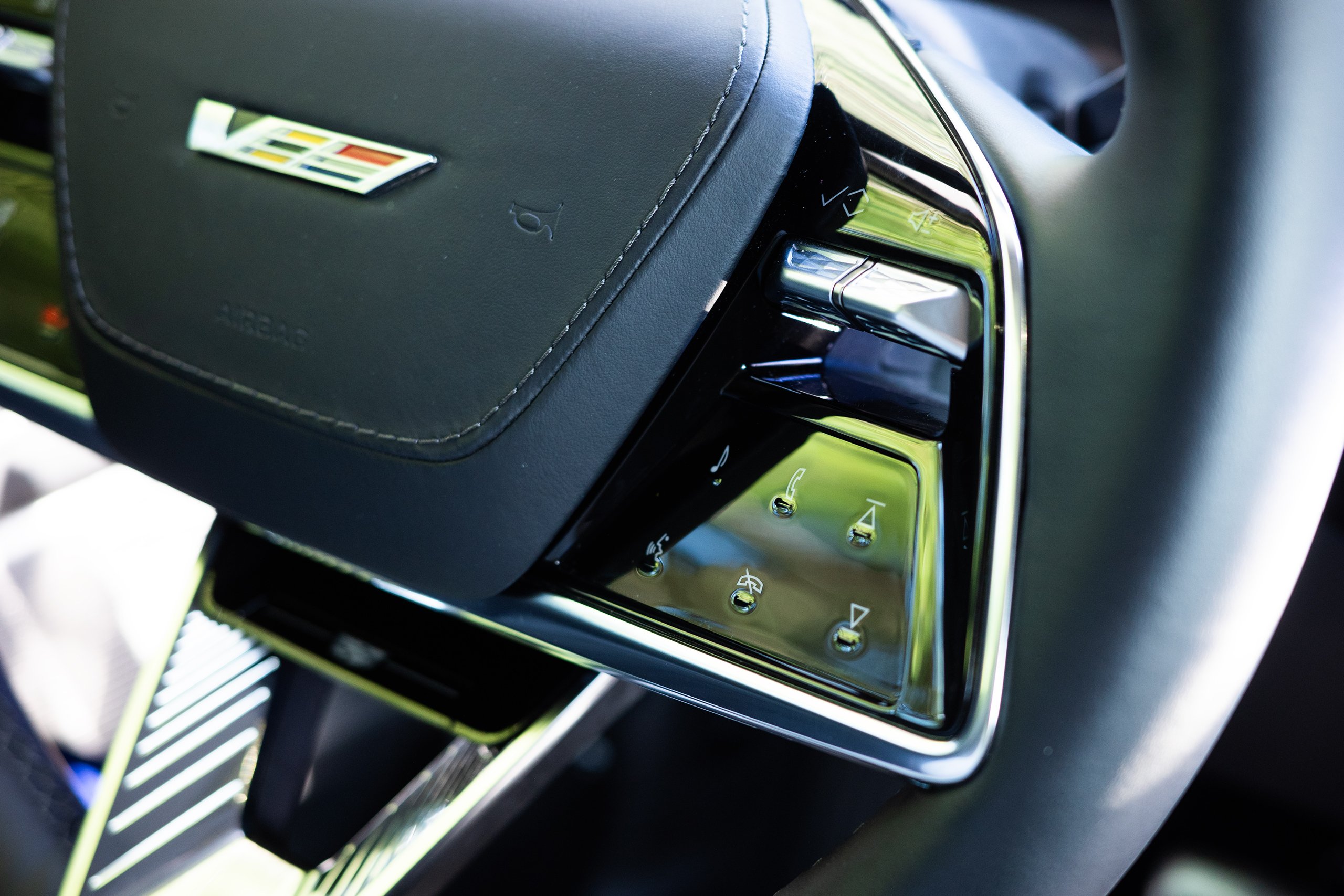
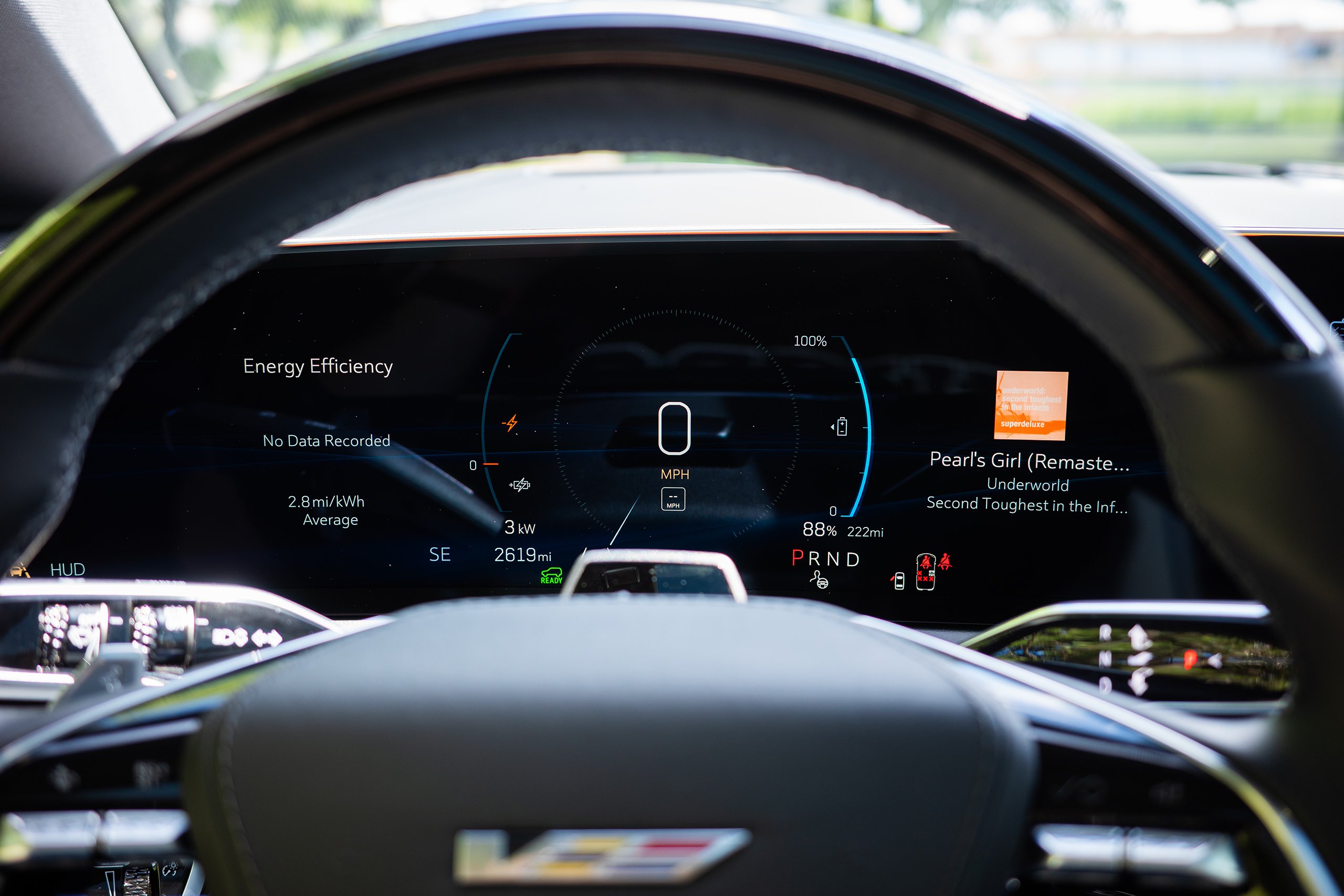
The steering wheel, in addition to being too large as we discussed, is entirely controlled through capacitive keys, which is frustrating. And while I know GM’s infotainment system has received high marks from some, I always find myself wishing it were more customizable and that it let me modify gauge cluster widgets with fewer taps.
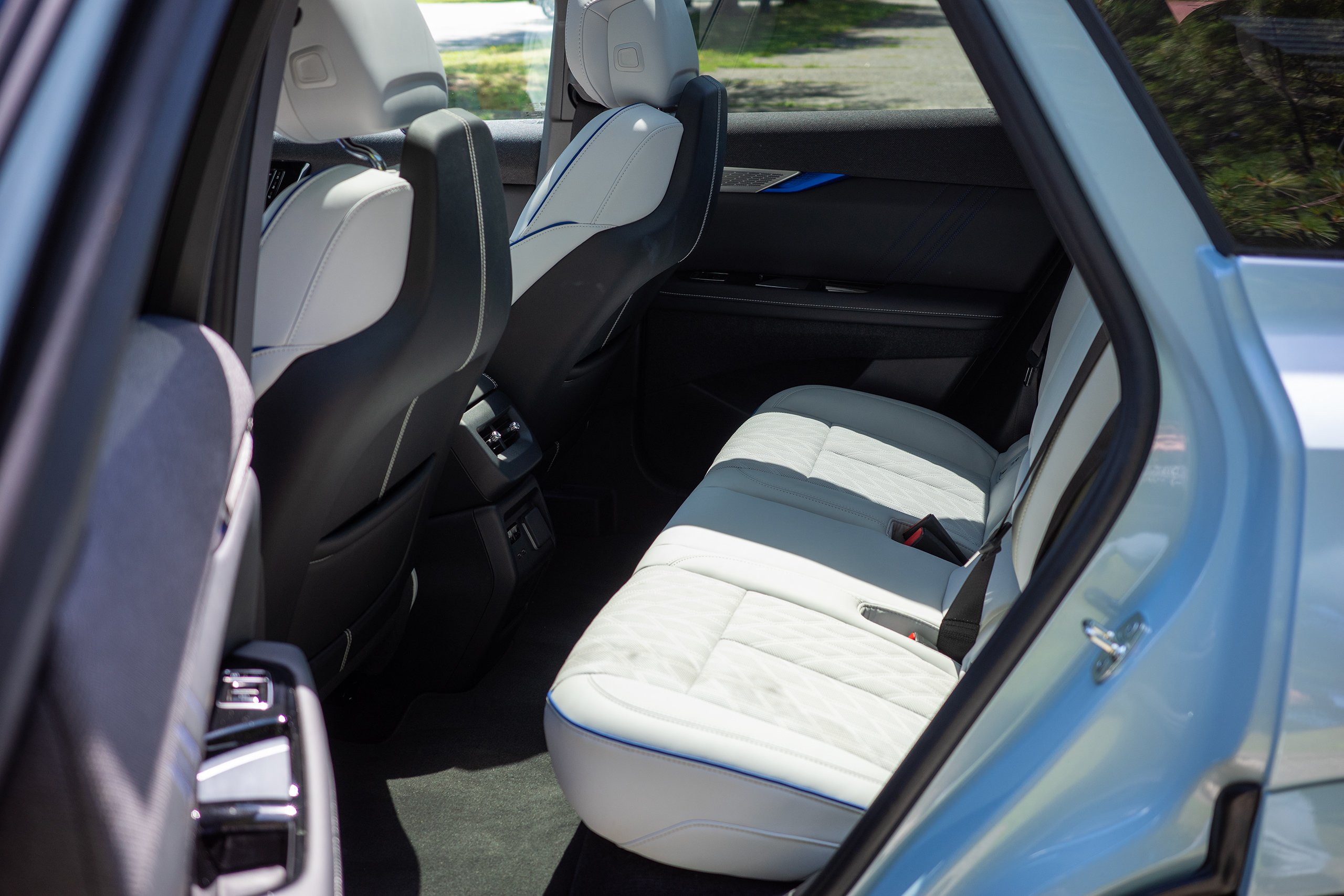
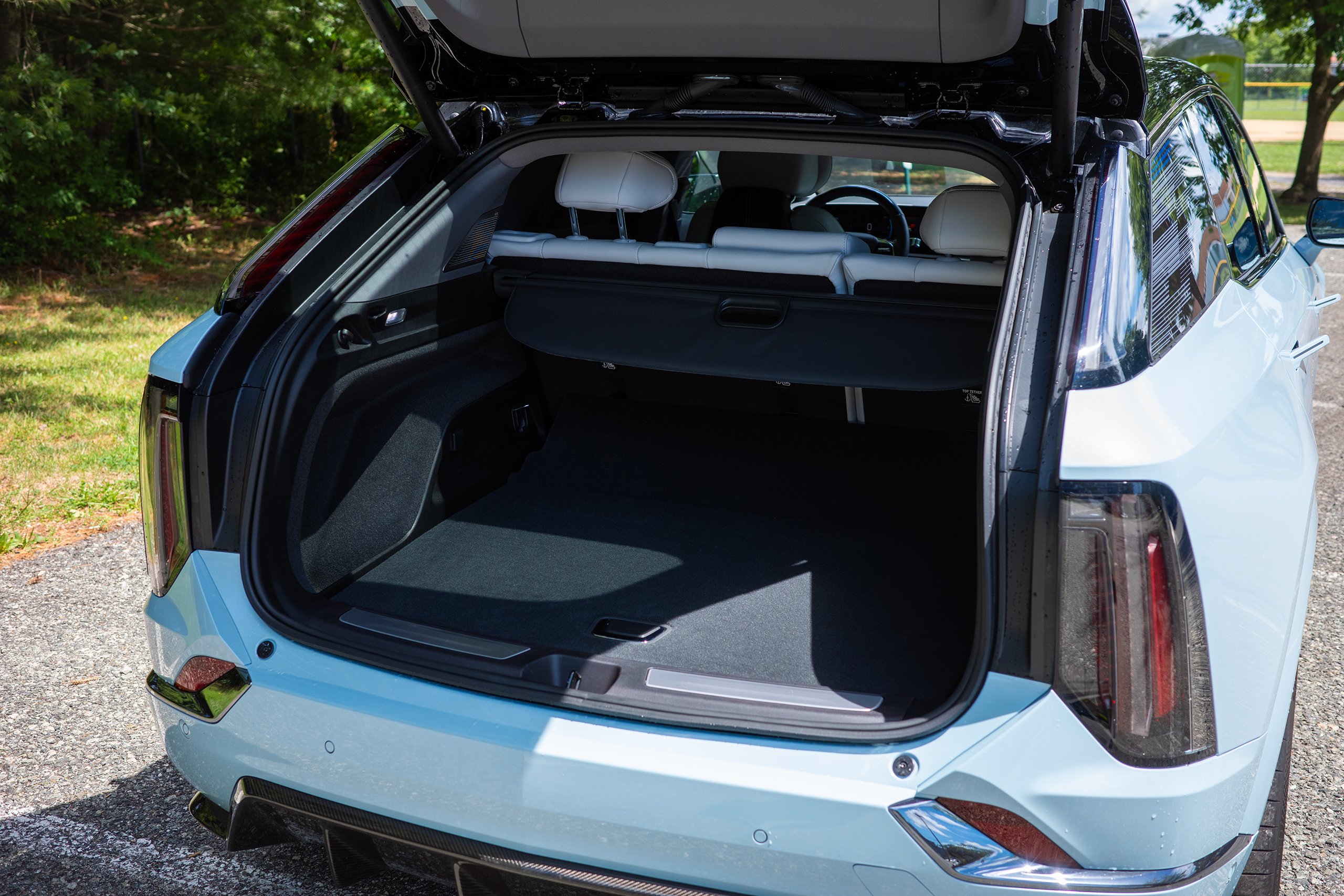
Although the lack of a frunk is frustrating, there’s plenty of space in here, and rear-seat passengers should be quite comfortable. Compared to the Equinox EV, legroom in the back is trimmed ever so slightly due to the fancier, thicker front seats, but the Equinox was already working with a ton of second-row real estate as it is, so this isn’t a problem at all.
Range and Charging
Range is where the argument against the Optiq-V in particular, compared to other trims, gets pretty damning. Technically, this vehicle can deliver up to 278 miles of range, depending on how it’s configured. Mine was limited to 250, which is simply not enough for a considerably sized SUV you’d haul the family in.
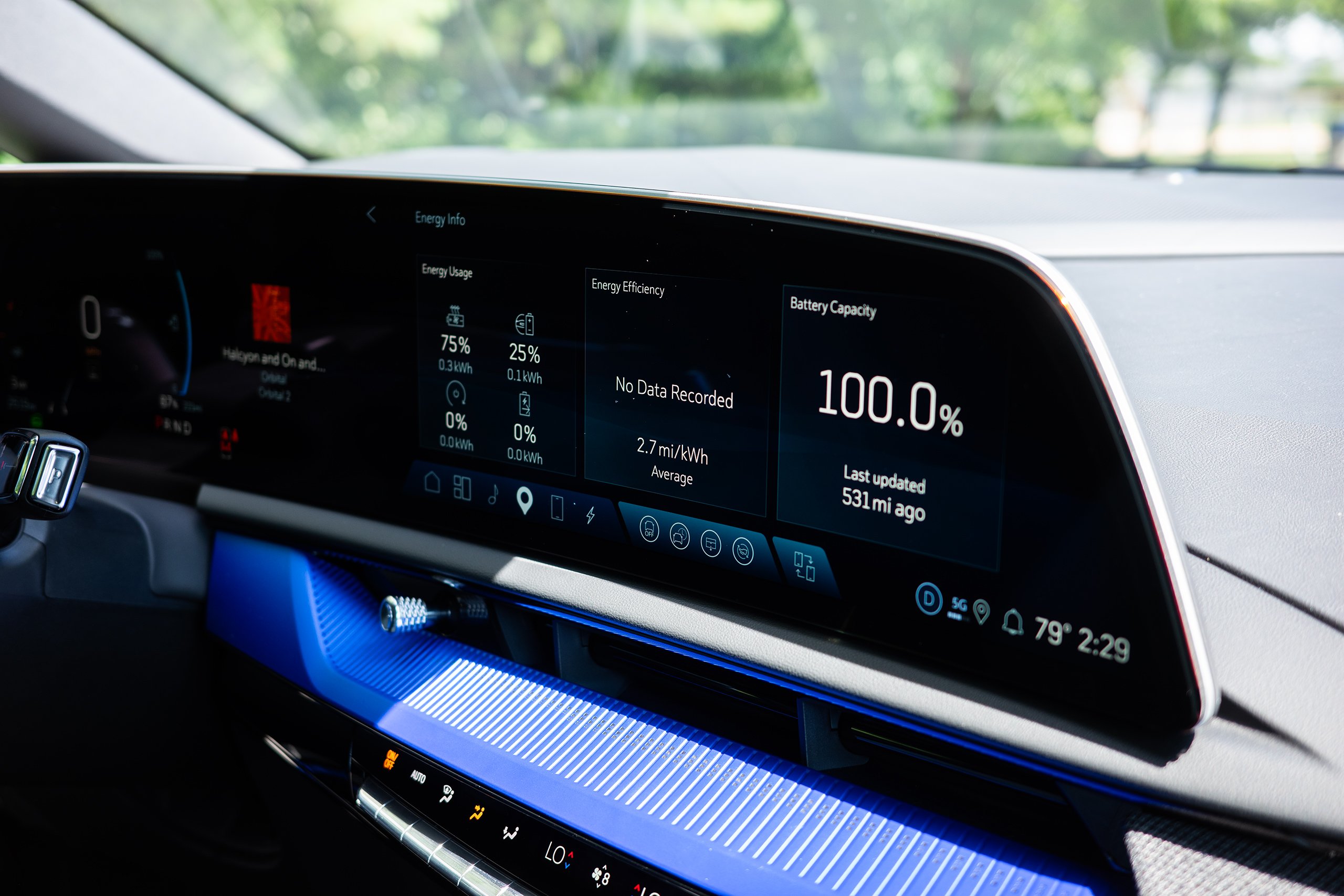
That’s Cadillac’s official estimation, and that’s pretty much exactly what I got, never seeing better than 3 miles per kilowatt-hour. At a time when more and more EVs, even fast ones, are landing in the high 3s or even breaking the 4 mi/kWh mark, efficiency needs to improve.
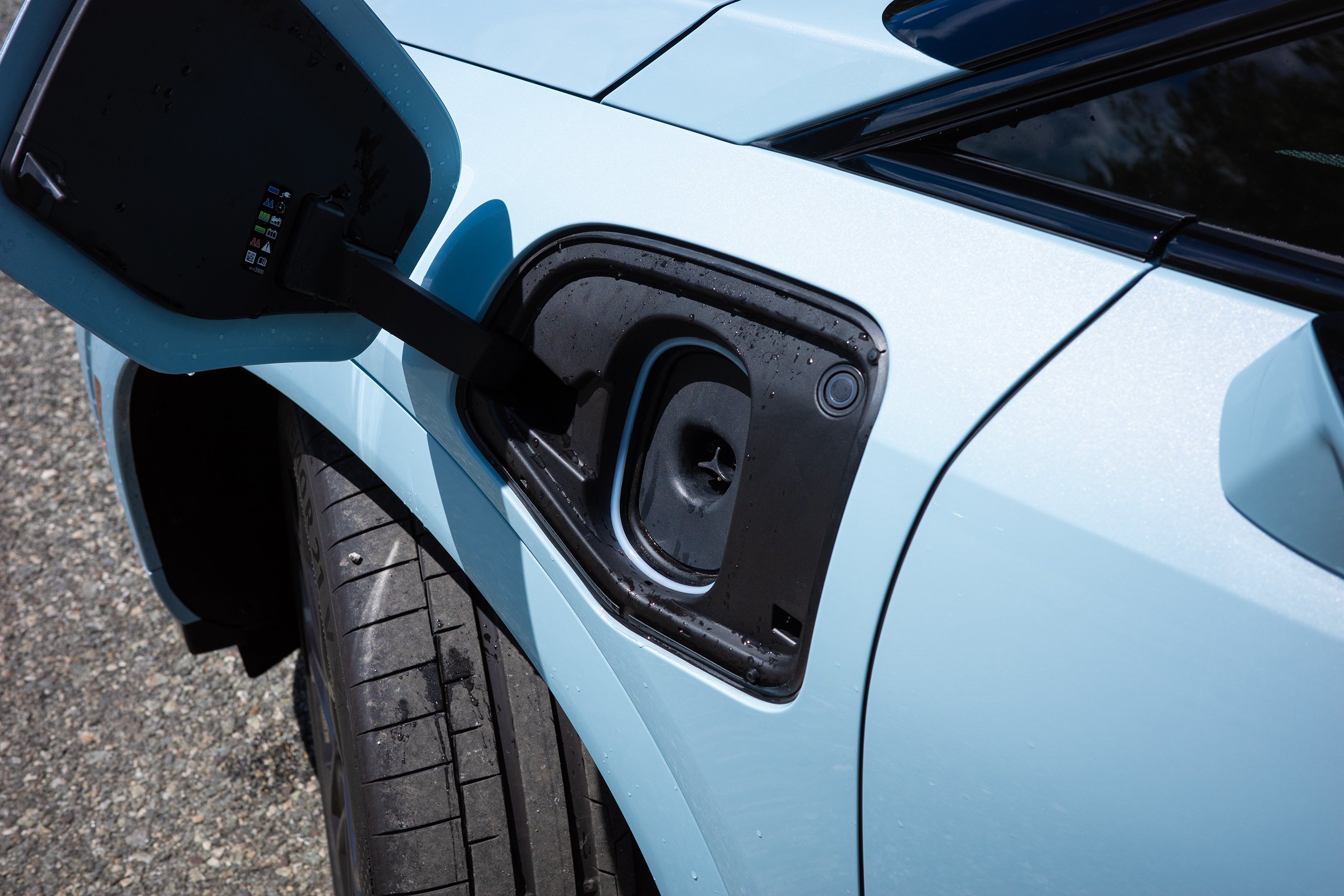
Of course, the ordinary Optiqs don’t have this problem. The rear-wheel-drive model is rated to return a very respectable 317 miles on a full charge, while the dual-motor non-V flavor calls for 303 miles. Making matters worse, the Optiq inherits the Equinox EV’s peculiar charging behavior, which limits you to 150 kW at a Level 3 DC fast charger, compared to the 250 kW or so that the Hyundai Ioniq 5 achieves. For a bargain, entry-level EV, 150 kW is totally acceptable. For an $80,000 one, though, that performance becomes harder to swallow. At least there’s an integrated NACS port, which means you don’t have to think twice about stopping at a Tesla Supercharger.
Verdict
Cadillac’s mission to take a basic electric crossover and transform it into a grand tourer with the Optiq-V is admirable. Yet, while I take no issue with its luxury credentials, it lacks the vigor you’d hope for at its price and concedes far too much range.
This isn’t a question of “Who is this car for?” because the market has long since proven that there’s an audience for premium SUVs with some sporting pretense. The problem is that Cadillac hasn’t nailed the sporty part of the equation, while other automakers—from Hyundai to Porsche—have.
Cadillac provided The Drive with a seven-day loan of this vehicle for the purpose of writing this review.
2026 Cadillac Optiq-V Specs
| Base Price (as tested) | $68,795 ($79,270) |
| Powertrain | 85-kWh lithium-ion battery | dual-motor all-wheel drive |
| Horsepower | 519 hp |
| Torque | 650 lb-ft |
| EPA-Estimated Range | 250 miles (278 miles with 11.5-kW charger and all-season tires) |
| Max DC Fast-Charge Rate | 150 kW |
| Seating Capacity | 5 |
| Curb Weight | 5,445 pounds |
| Cargo Volume | 26 cubic feet behind second row | 57 cubic feet behind first row |
| Ground Clearance | 6.0 inches |
| 0–60 mph | 3.5 seconds |
| Score | 5/10 |

Quick Take
The Cadillac Optiq-V feels premium but doesn’t drive with the liveliness that the label commands, and is frustratingly inefficient on a full battery compared to other trims.
Loading comments…
Comments couldn’t be loaded. Please refresh the page.